Launching a Rocketship Off
Someone Else’s Back
How to Build on Other Platforms
Josh Elman
Everybody warns you not to build on top
of other company’s platforms.

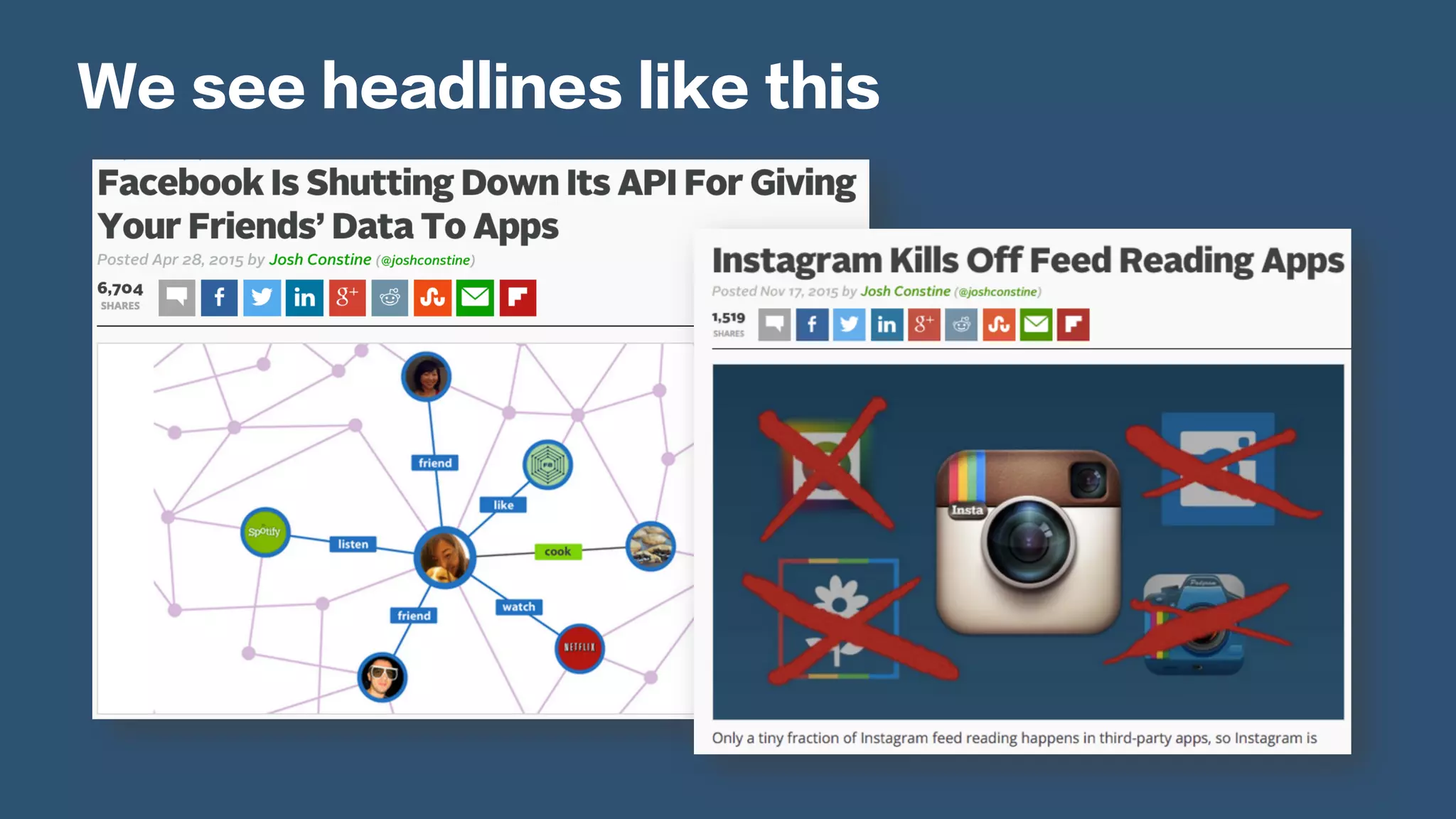
We see headlines like this
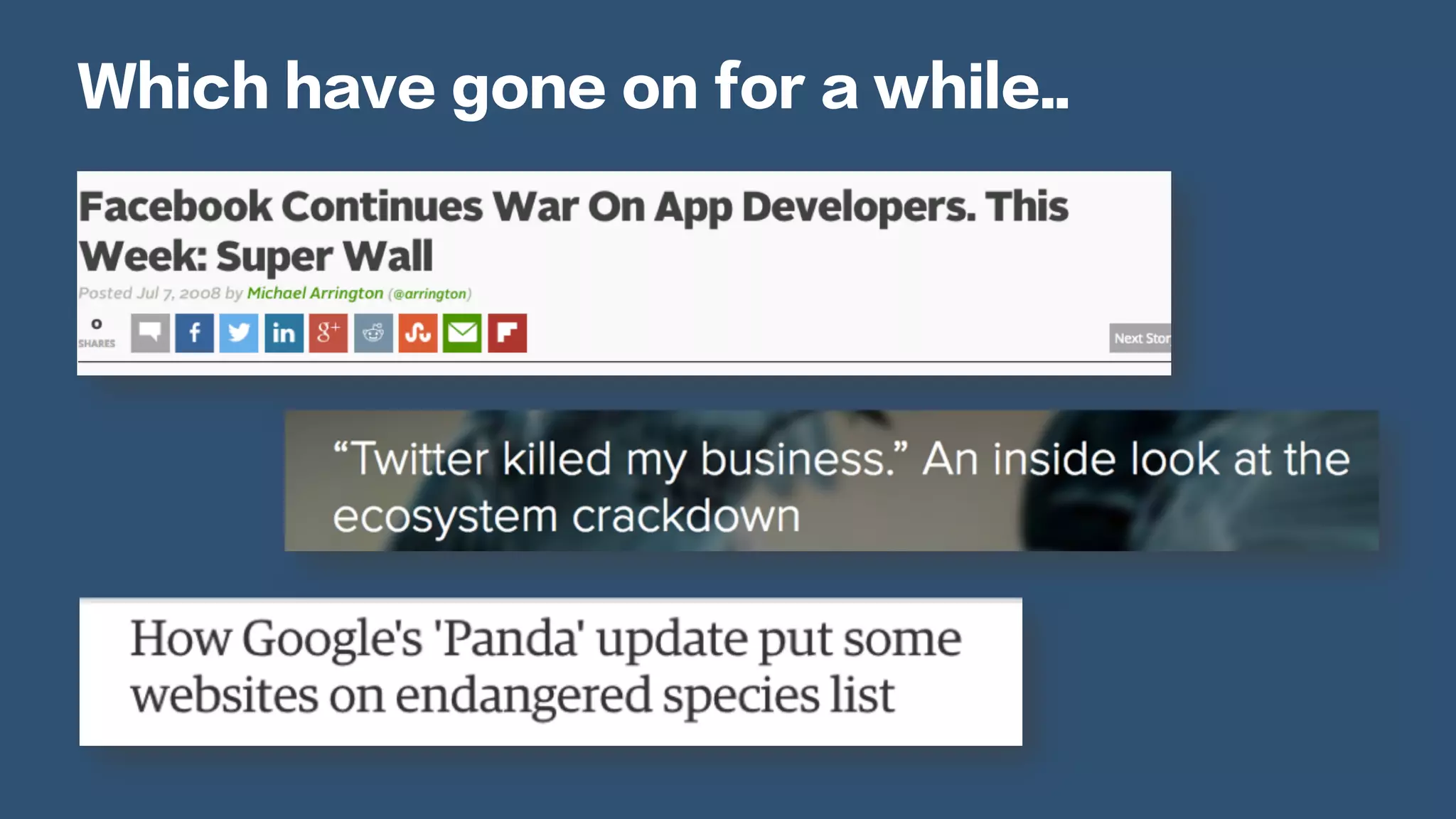
Which have gone on for a while..
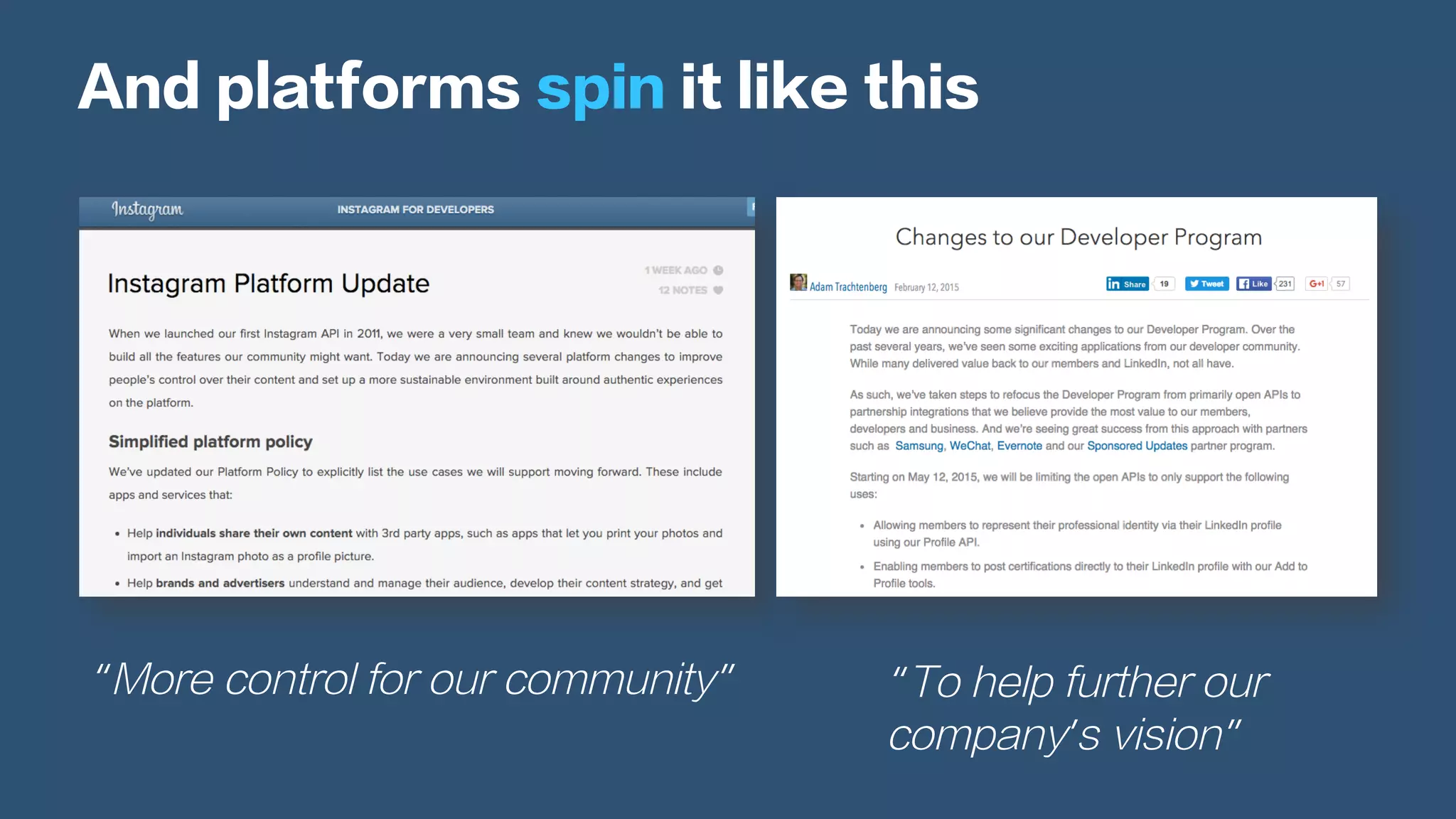
And platforms spin it like this
“More control for our community” “To help further our
company’s vision”
Is it worth the risk to build on
a platform?
The Short Answer:
Yes.
(It’s the only way to get big.)
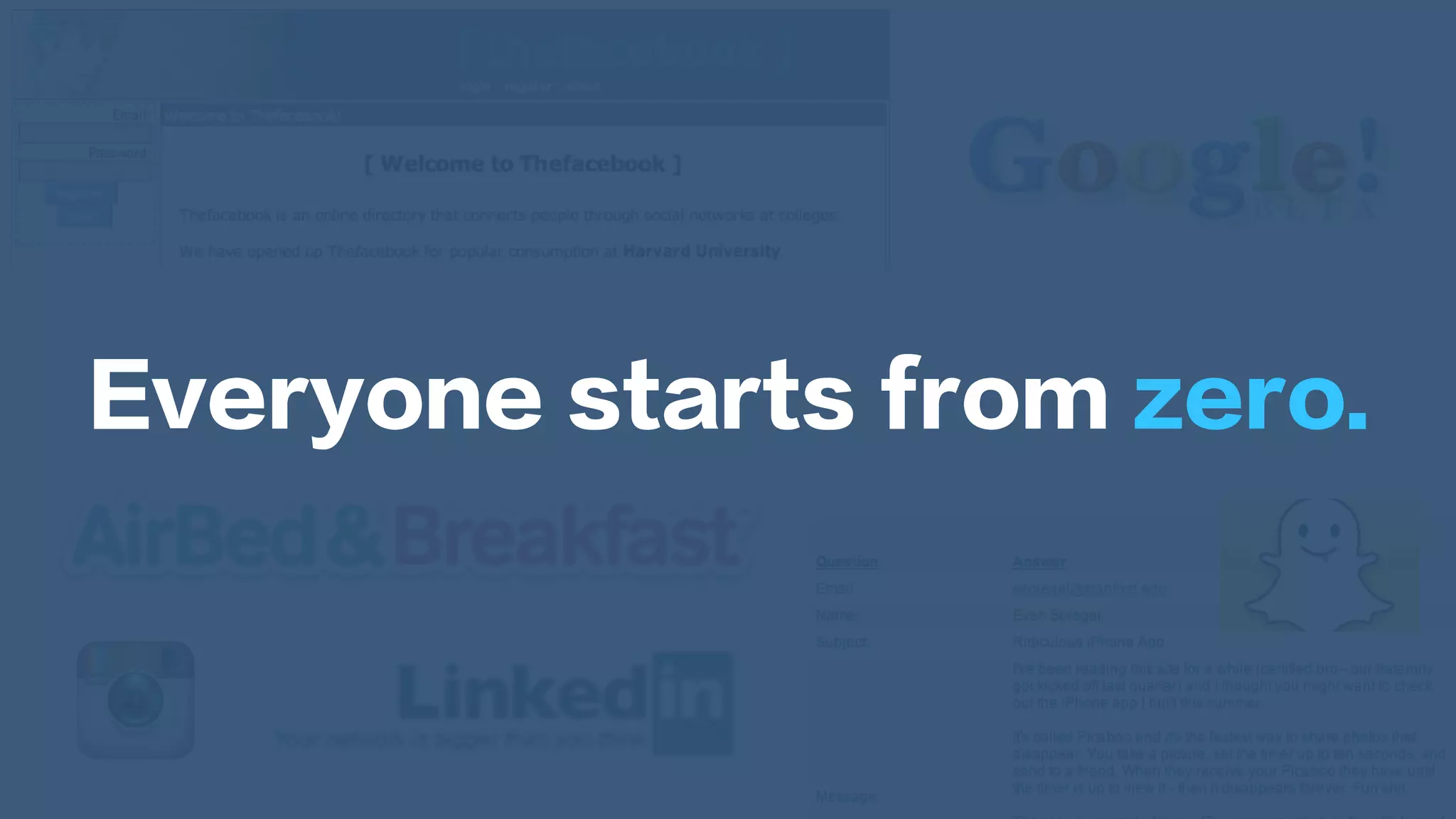
Everyone starts from zero.
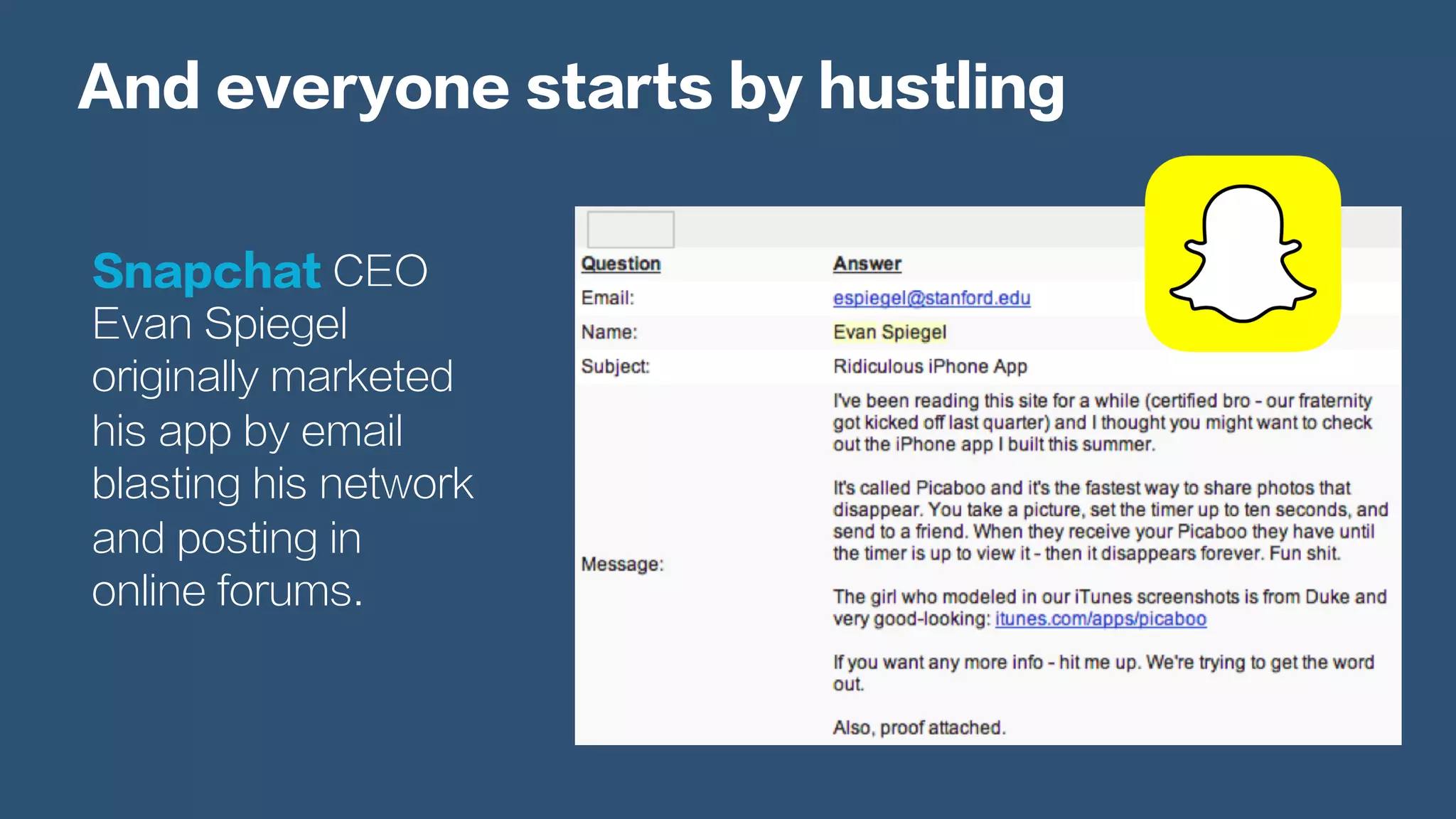
And everyone starts by hustling
Snapchat CEO
Evan Spiegel
originally marketed
his app by email
blasting his network
and posting in
online forums.
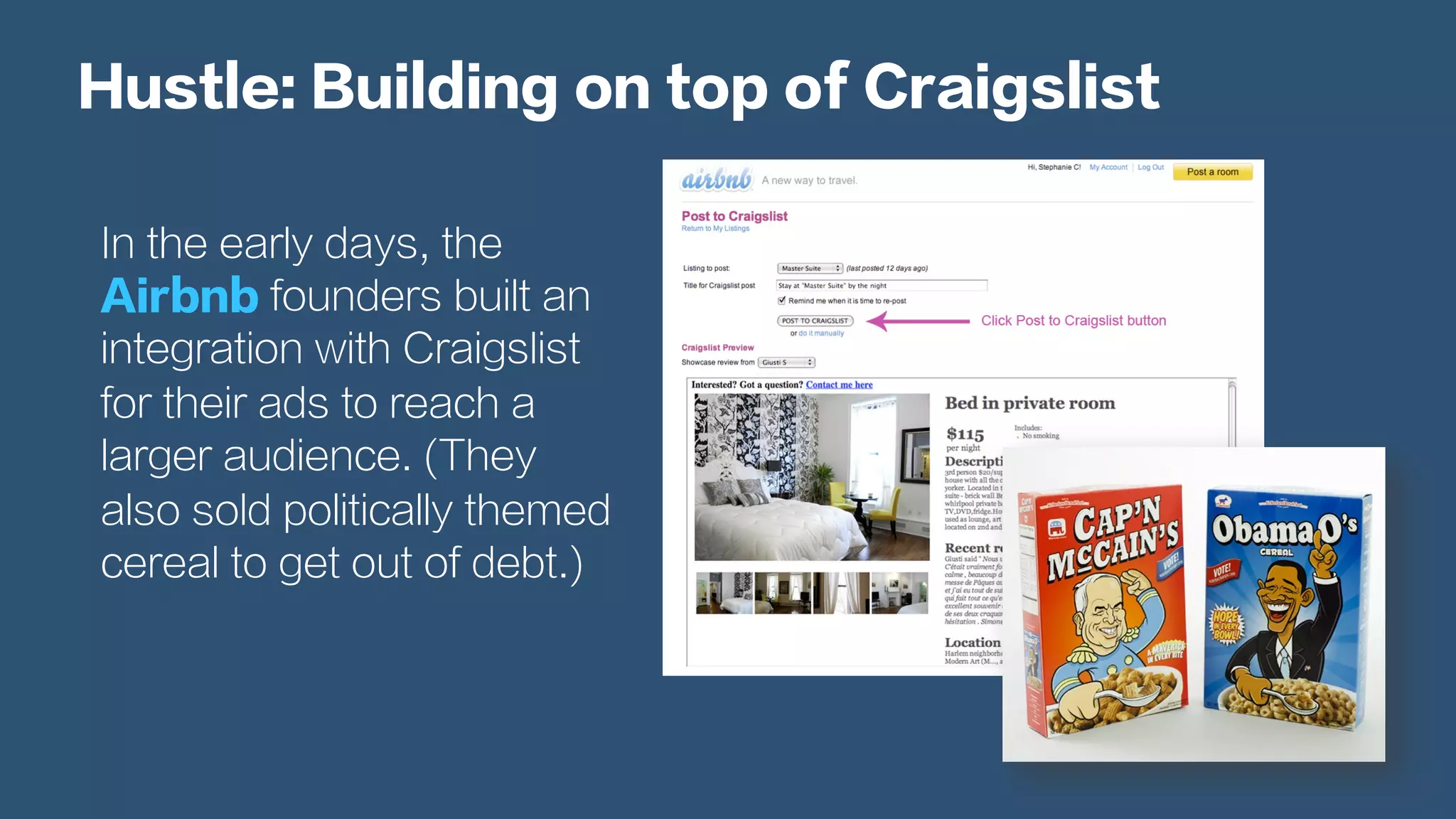
Hustle: Building on top of Craigslist
In the early days, the
Airbnb founders built an
integration with Craigslist
for their ads to reach a
larger audience. (They
also sold politically themed
cereal to get out of debt.)
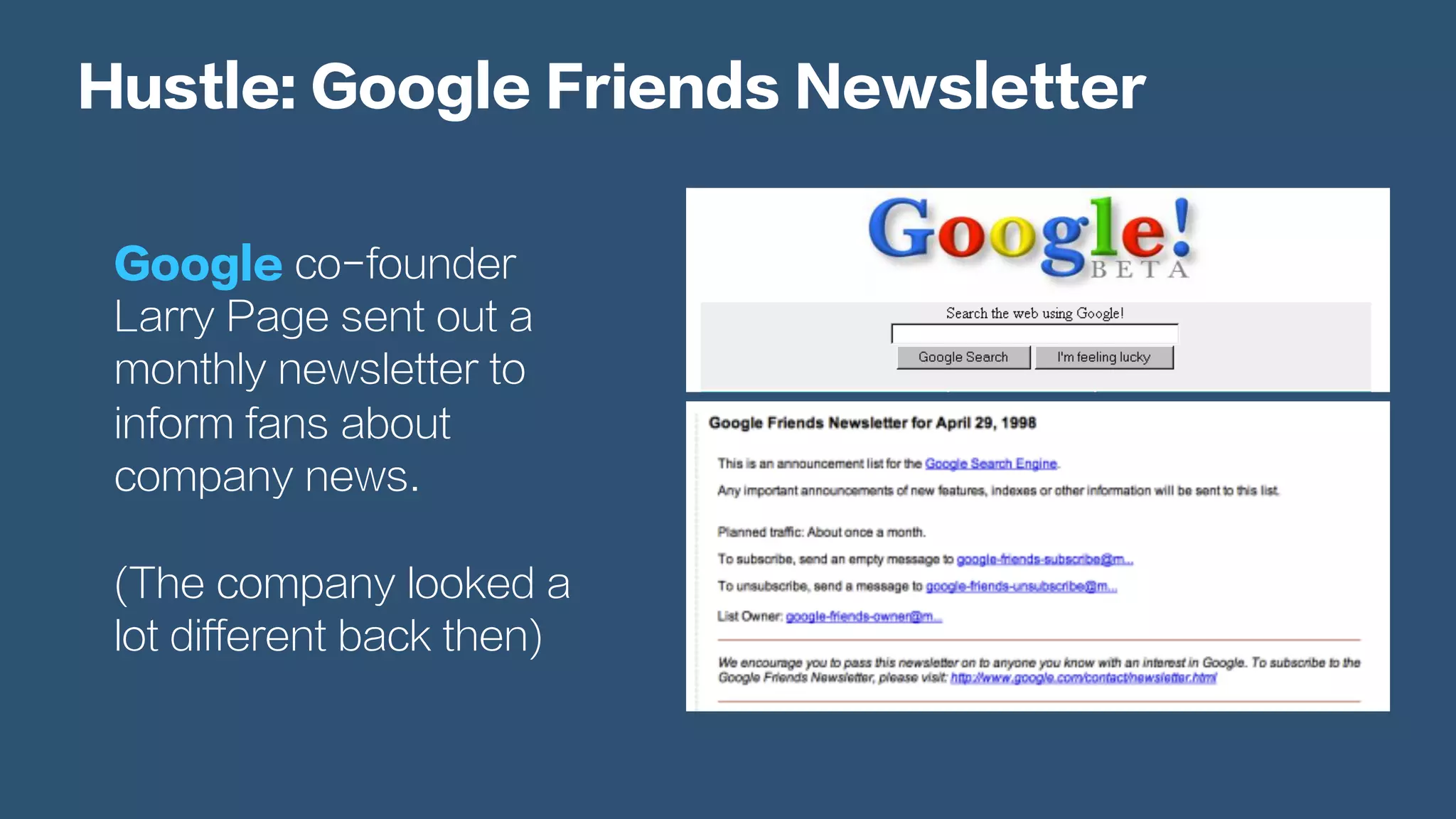
Hustle: Google Friends Newsletter
Google co-founder
Larry Page sent out a
monthly newsletter to
inform fans about
company news.
(The company looked a
lot different back then)
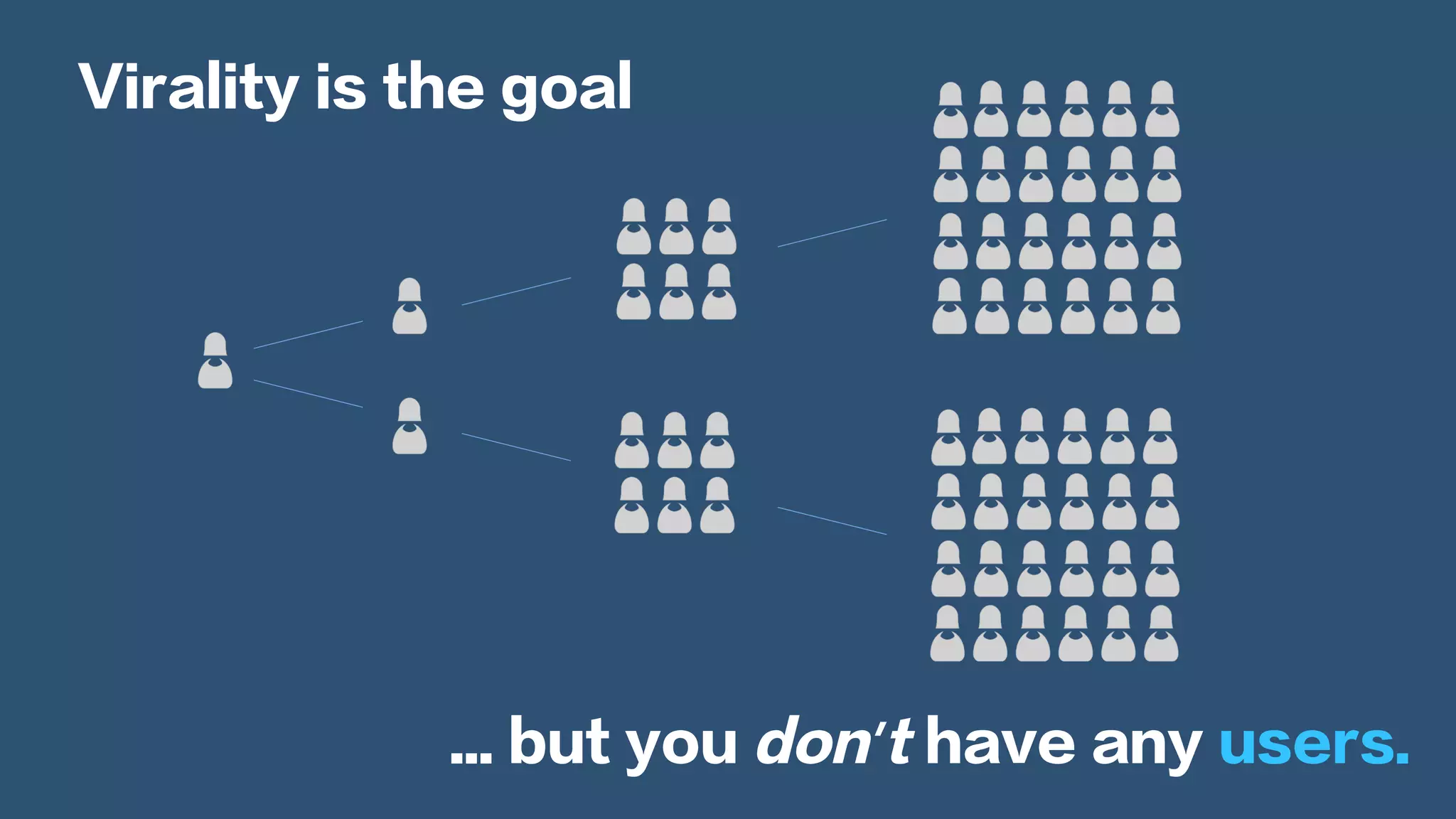
Virality is the goal
... but you don’t have any users.
You need
help.
The Longer Answer:
You need to get in front of users to grow.
All companies start with zero users.
You need to go where the users already are.
Big platforms have lots of users.
&
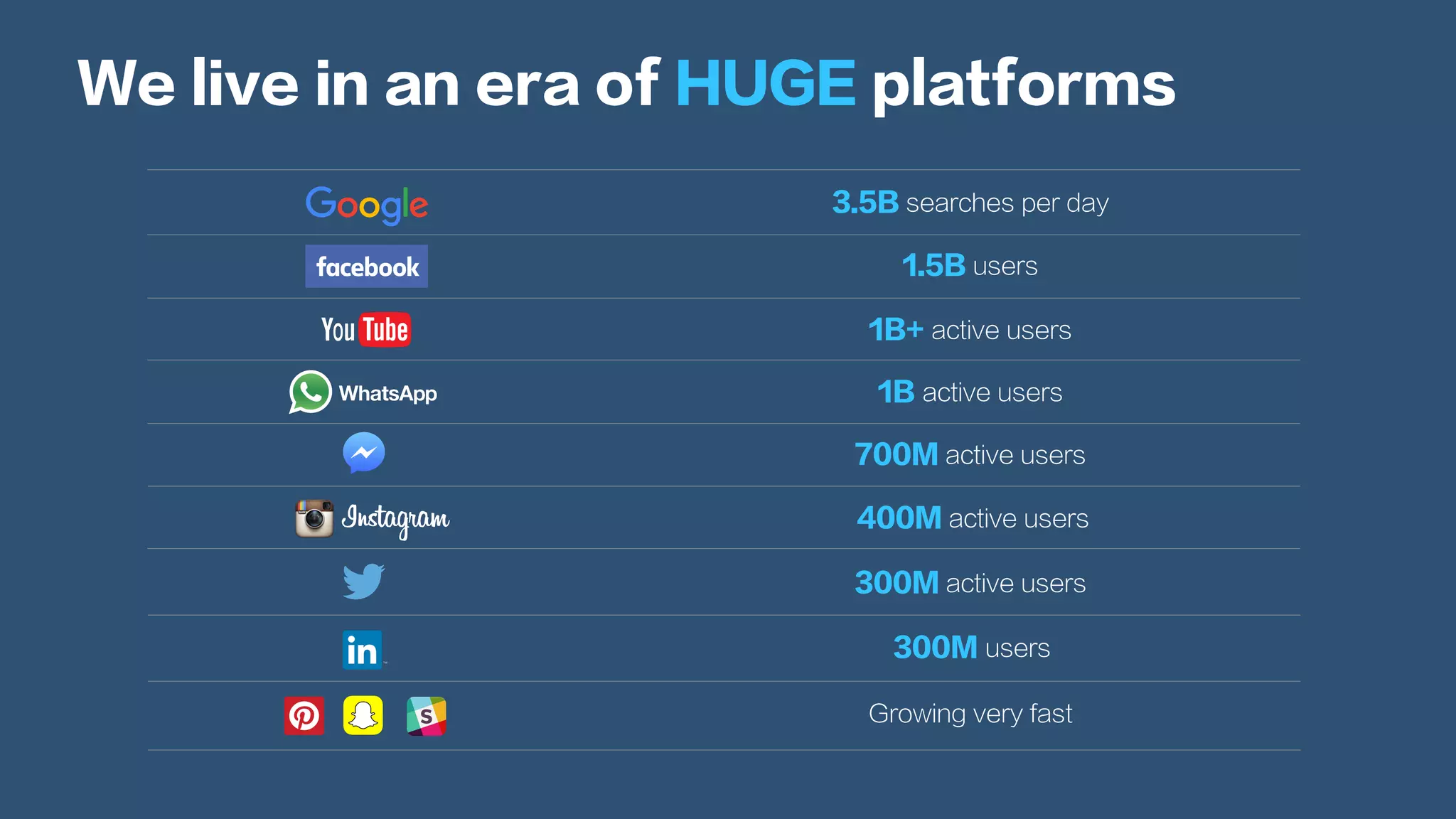
We live in an era of HUGE platforms
3.5B searches per day
1.5B users
1B+ active users
1B active users
700M active users
400M active users
300M active users
300M users
Growing very fast
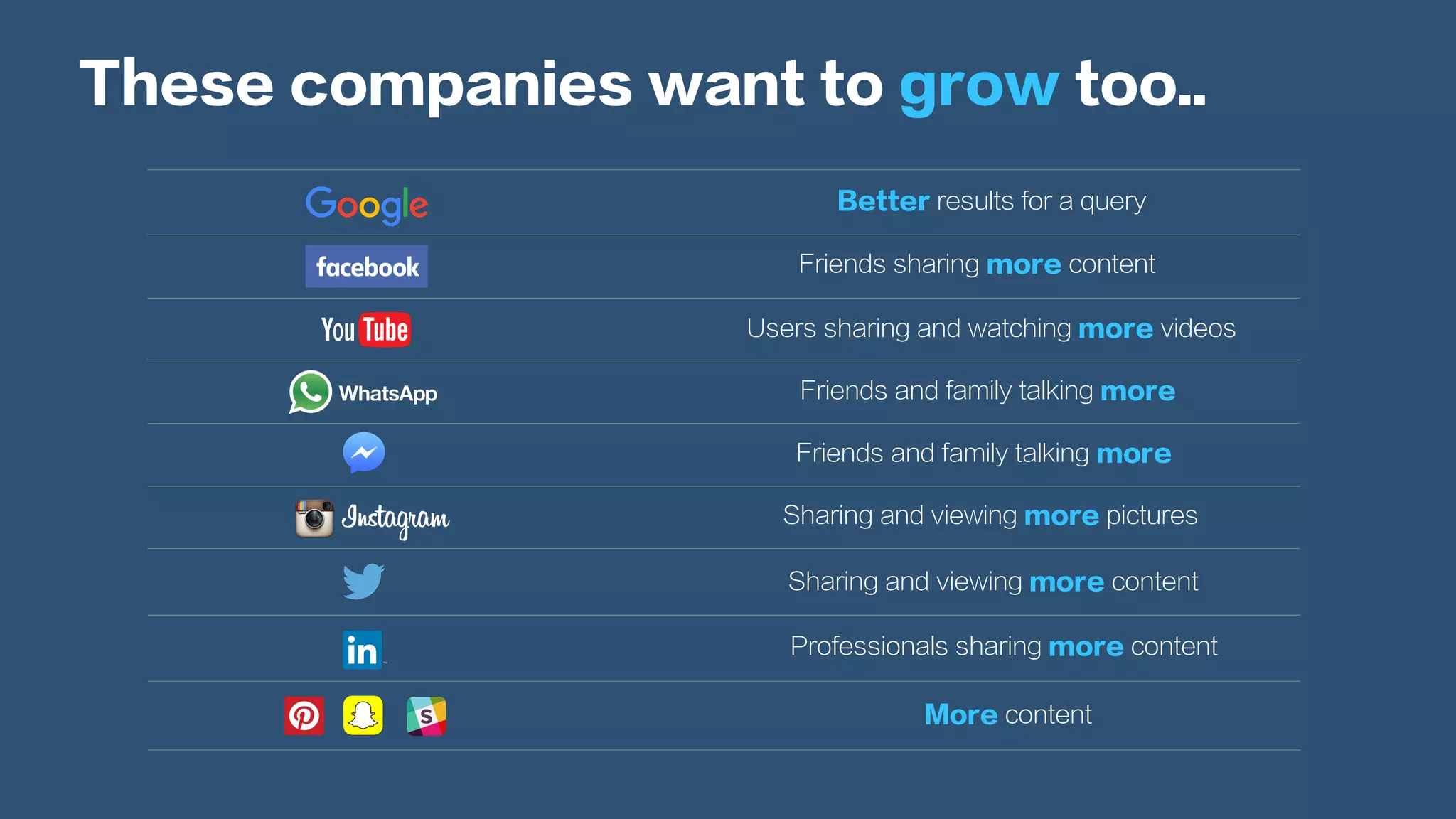
These companies want to grow too..
Better results for a query
Friends sharing more content
Users sharing and watching more videos
Friends and family talking more
Sharing and viewing more pictures
Sharing and viewing more content
Professionals sharing more content
More content
Friends and family talking more
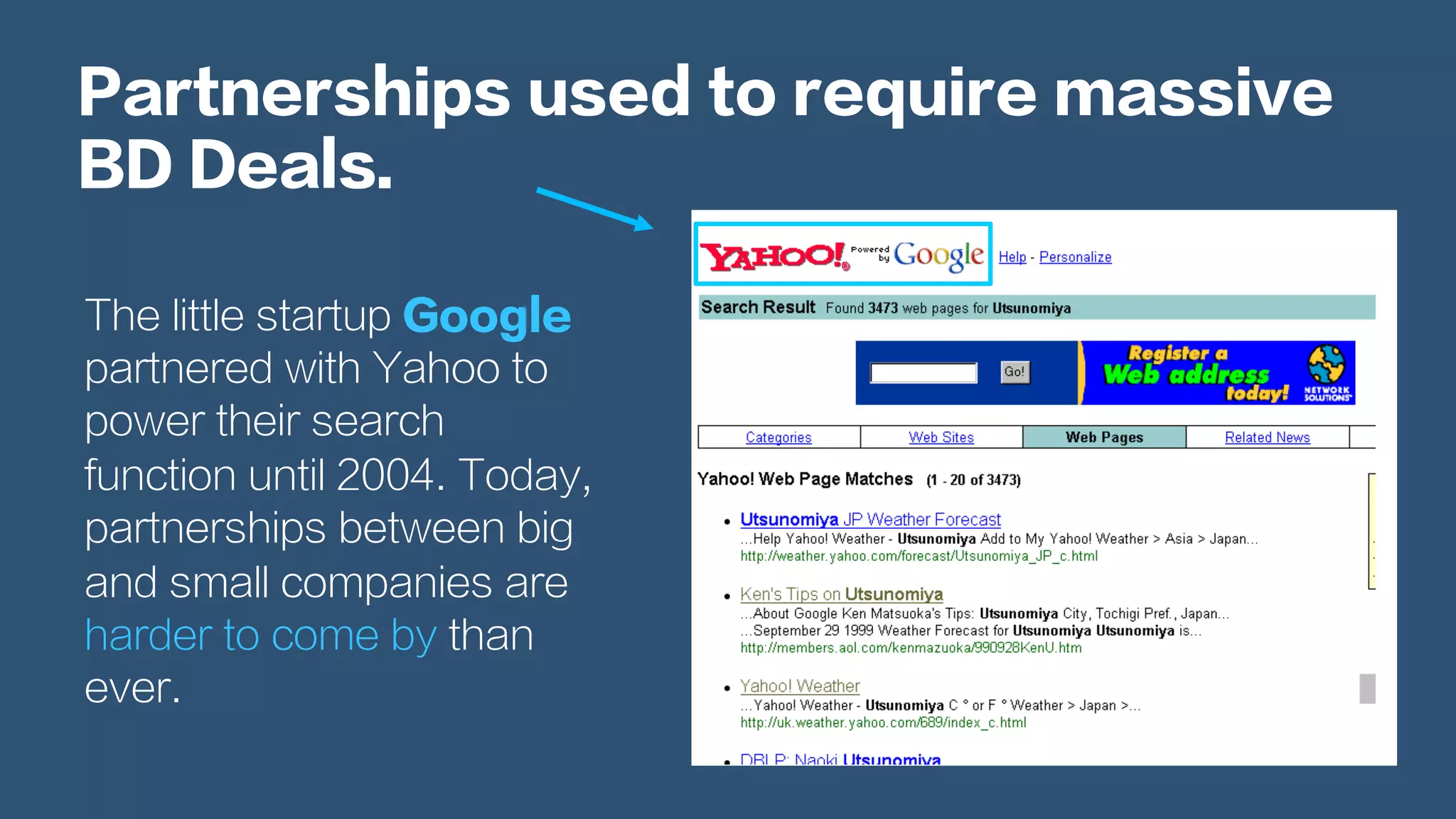
Partnerships used to require massive
BD Deals.
The little startup Google
partnered with Yahoo to
power their search
function until 2004. Today,
partnerships between big
and small companies are
harder to come by than
ever.
Platforms are partnerships.
Stop asking and start building.
The New Partnership:
Let’s try and understand why
companies open a platform.
But first..
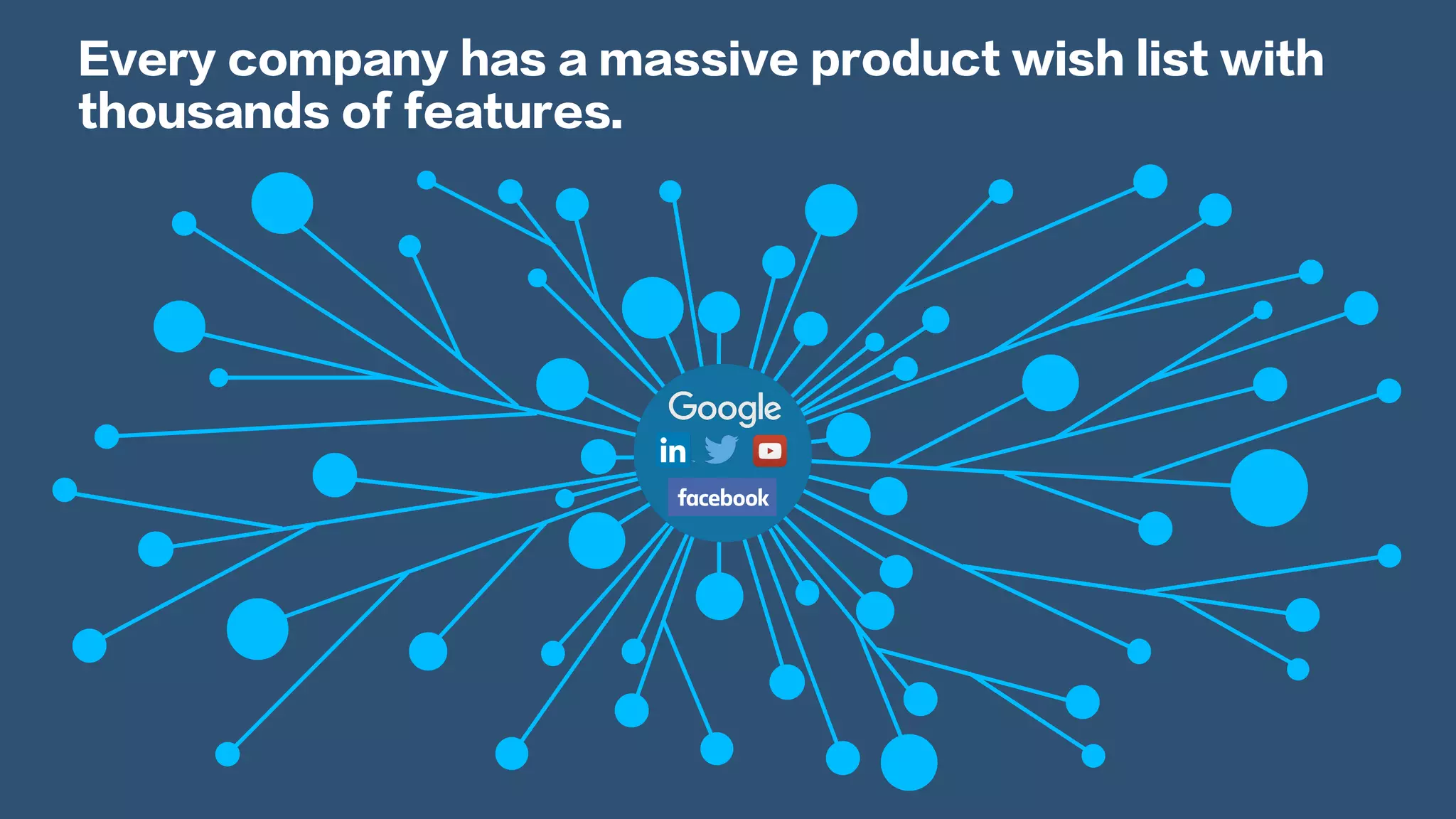
Every company has a massive product wish list with
thousands of features.
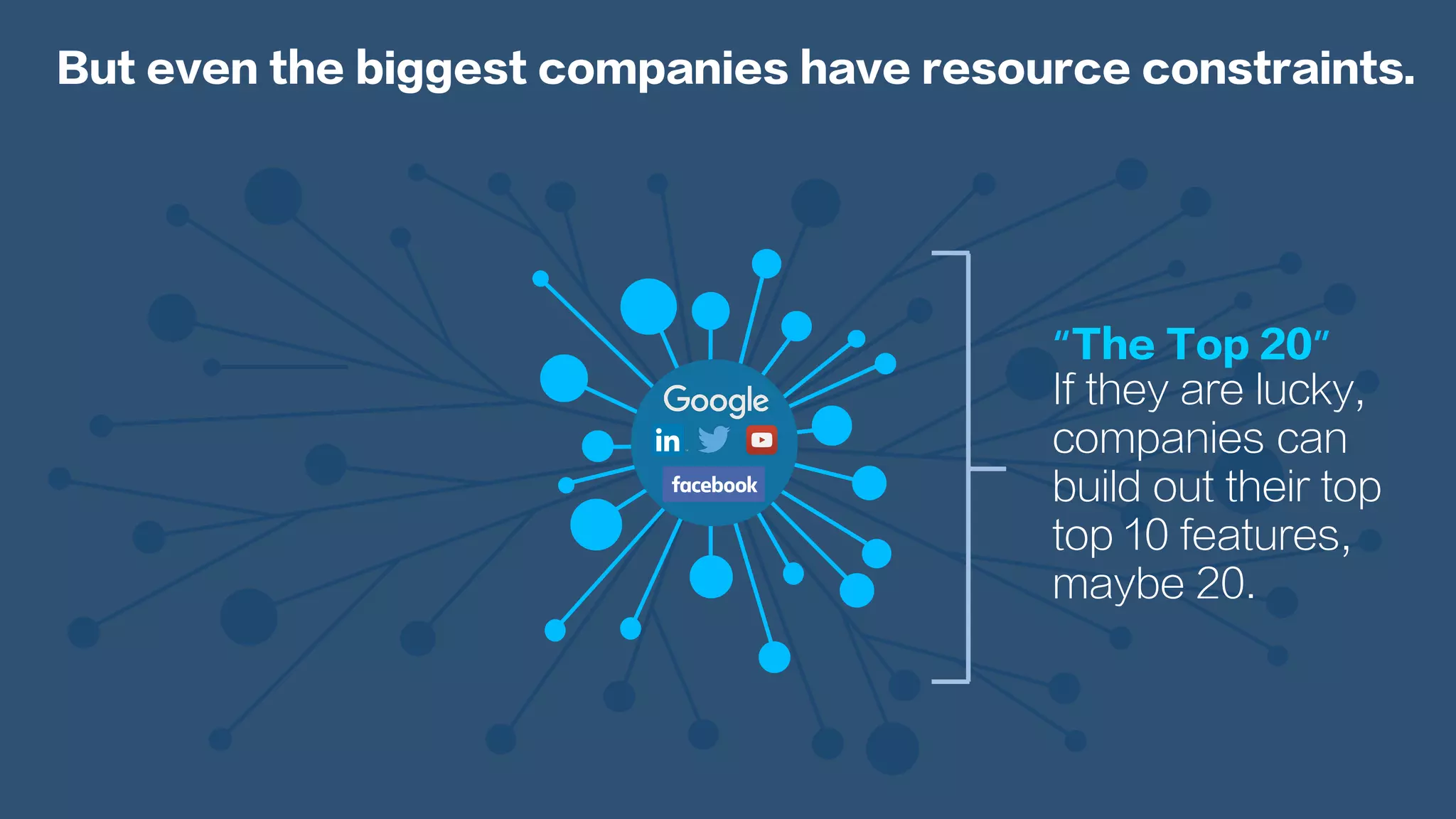
But even the biggest companies have resource constraints.
“The Top 20”
If they are lucky,
companies can
build out their top
top 10 features,
maybe 20.
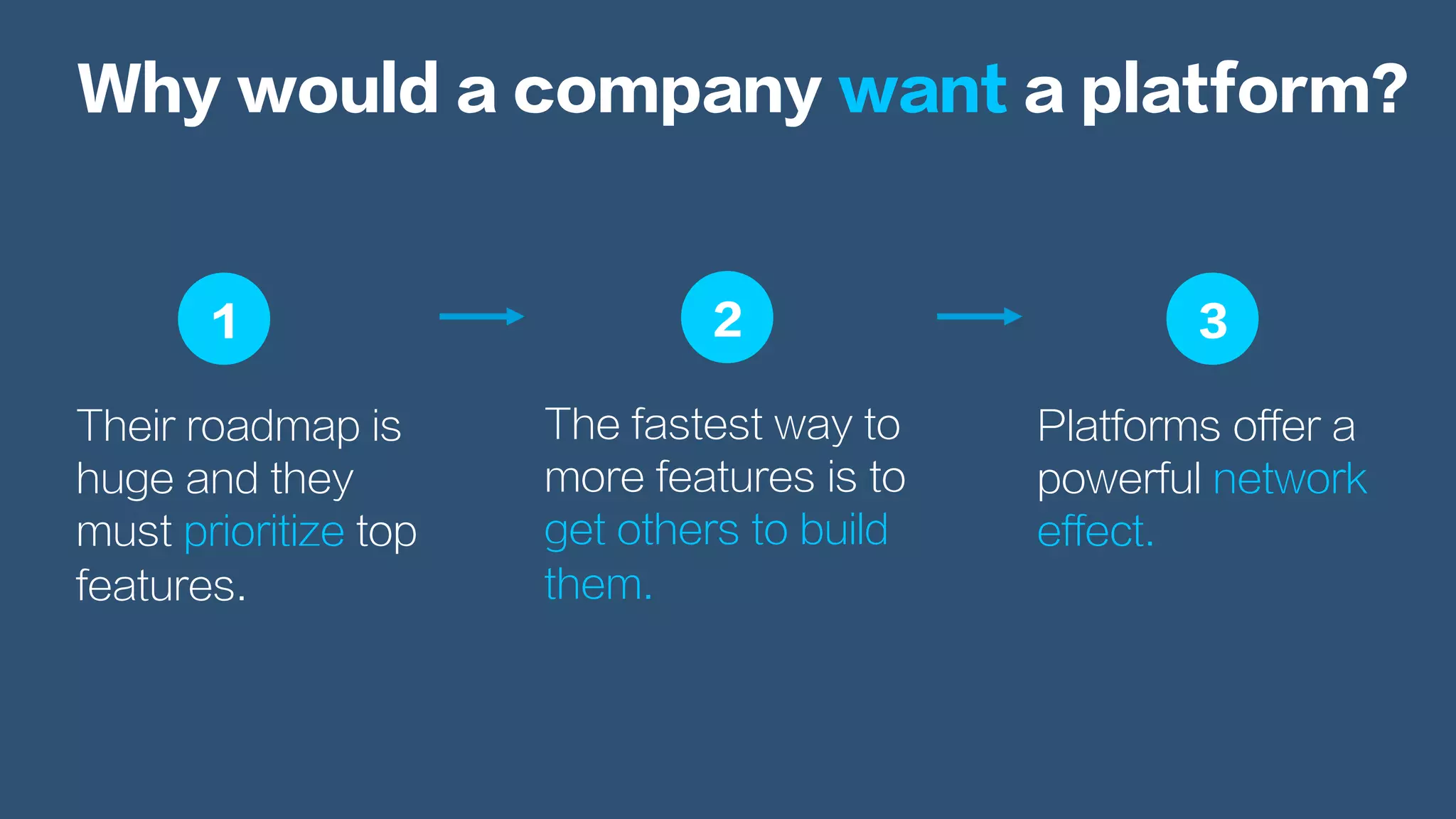
Their roadmap is
huge and they
must prioritize top
features.
Why would a company want a platform?
Platforms offer a
powerful network
effect.
The fastest way to
more features is to
get others to build
them.
1 2 3
If we build it (a platform), they
(developers) will come.
True or False?
False.
Developers will only come when there are
clear incentives and opportunities to build a big
business on top of a platform.
True or False?
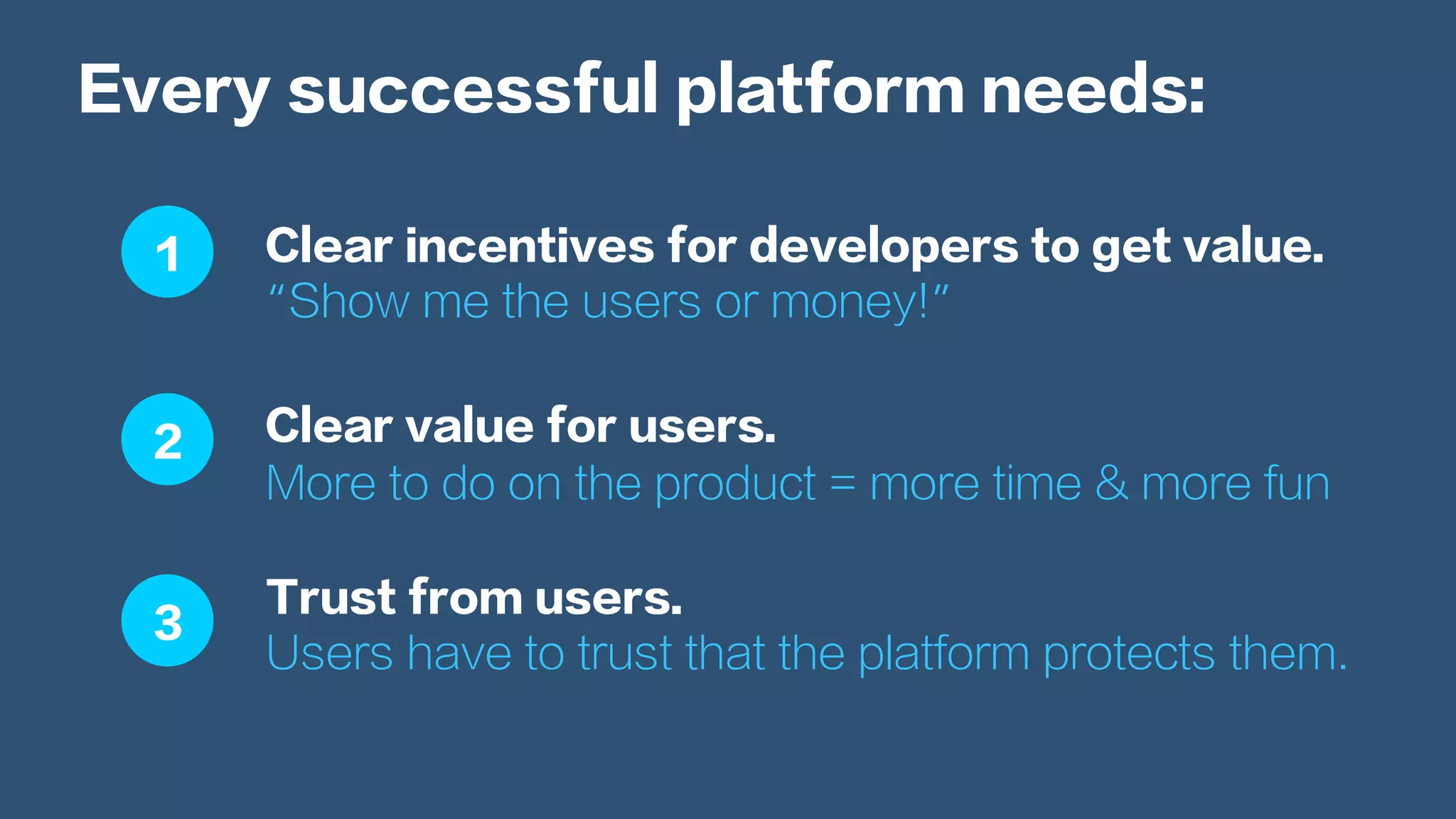
Every successful platform needs:
Clear incentives for developers to get value.
“Show me the users or money!”
Clear value for users.
More to do on the product = more time & more fun
Trust from users.
Users have to trust that the platform protects them.
1
2
3
1
2
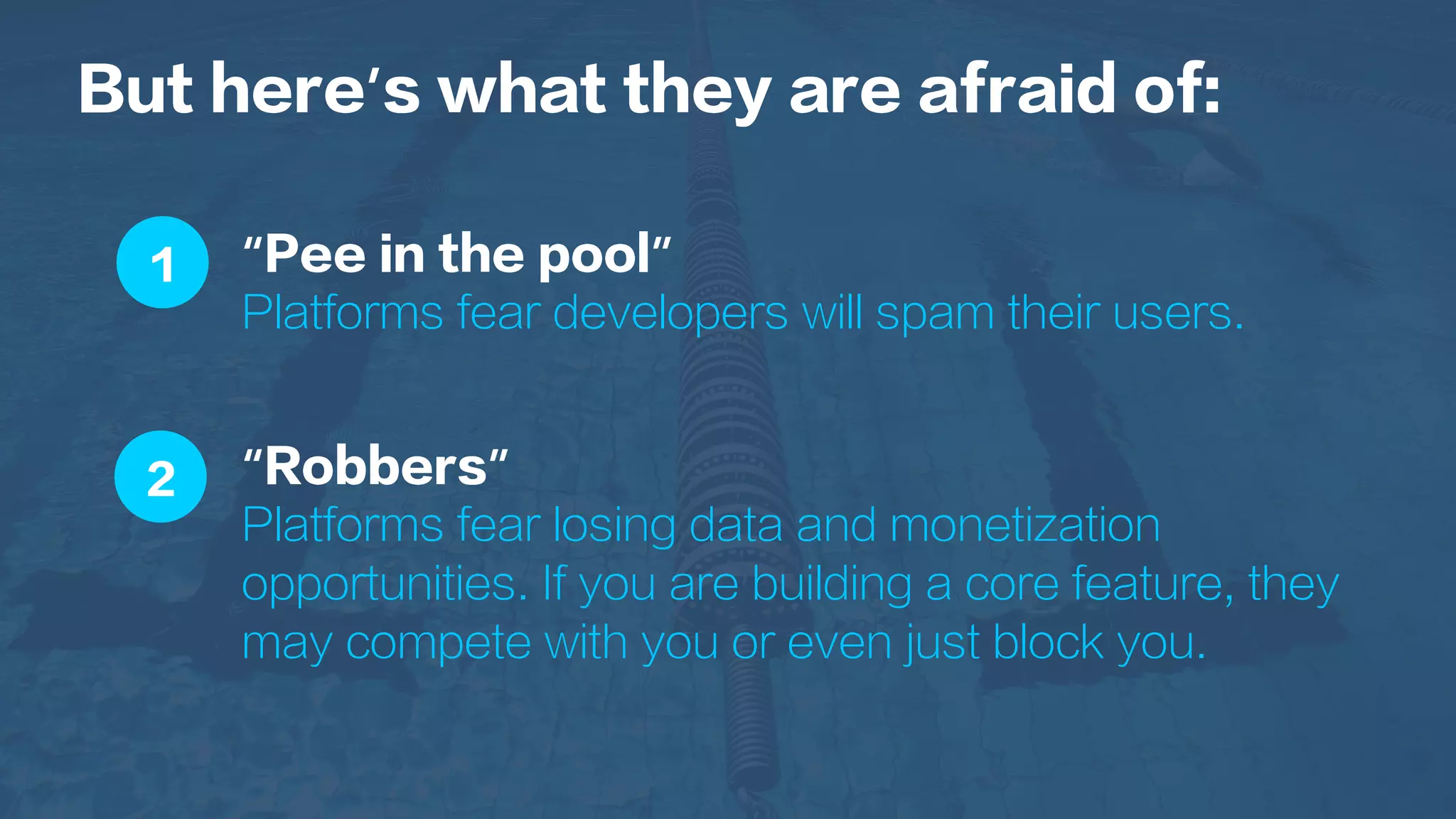
But here’s what they are afraid of:
“Pee in the pool”
Platforms fear developers will spam their users.
“Robbers”
Platforms fear losing data and monetization
opportunities. If you are building a core feature, they
may compete with you or even just block you.
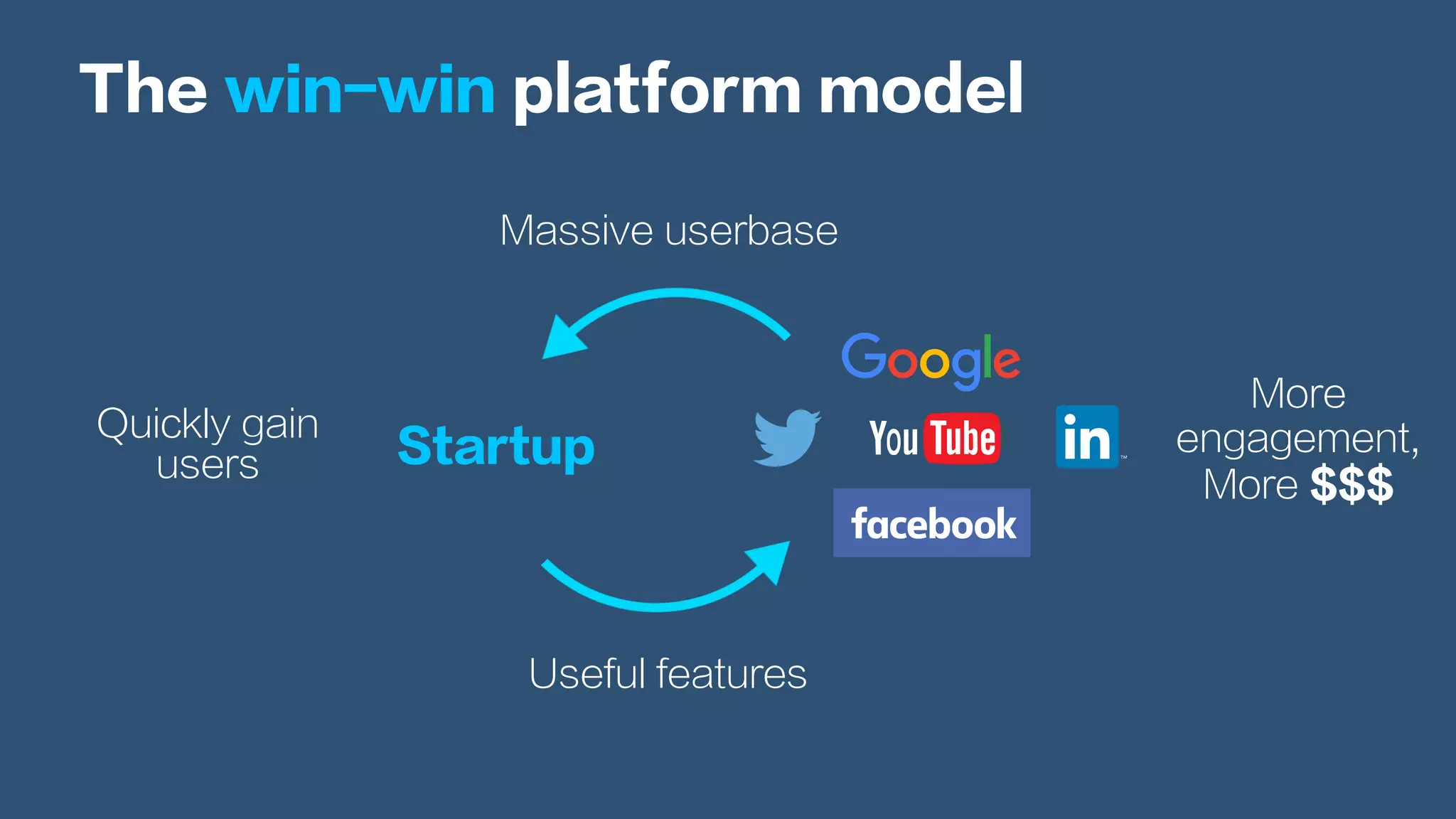
The win-win platform model
Startup
Massive userbase
Useful features
More
engagement,
More $$$
Quickly gain
users
Platforms are not there to help you
build your company. Their goal is to
grow their own business.
But, remember:
In short..
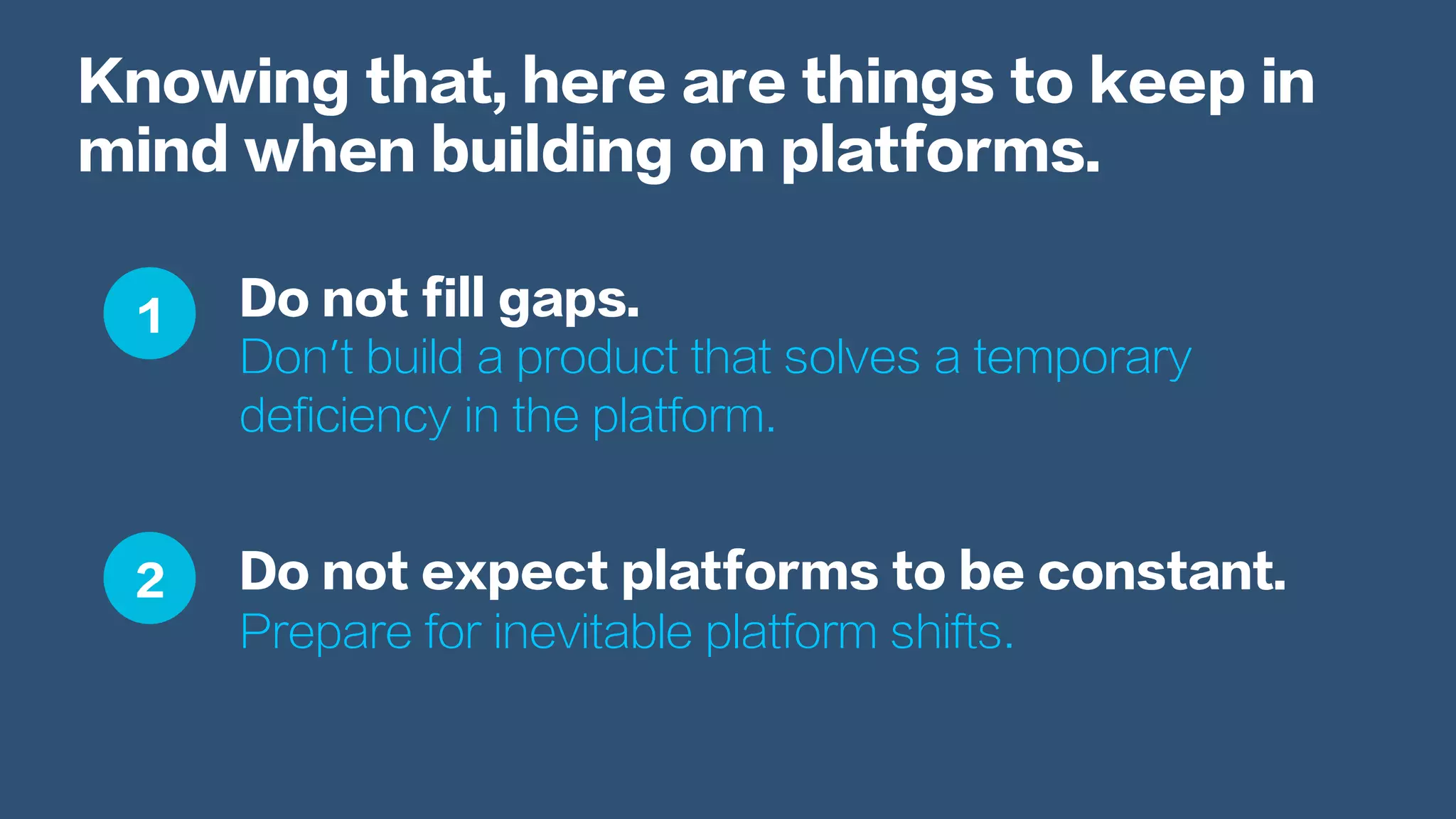
Knowing that, here are things to keep in
mind when building on platforms.
Do not fill gaps.
Don’t build a product that solves a temporary
deficiency in the platform.
Do not expect platforms to be constant.
Prepare for inevitable platform shifts.
1
2
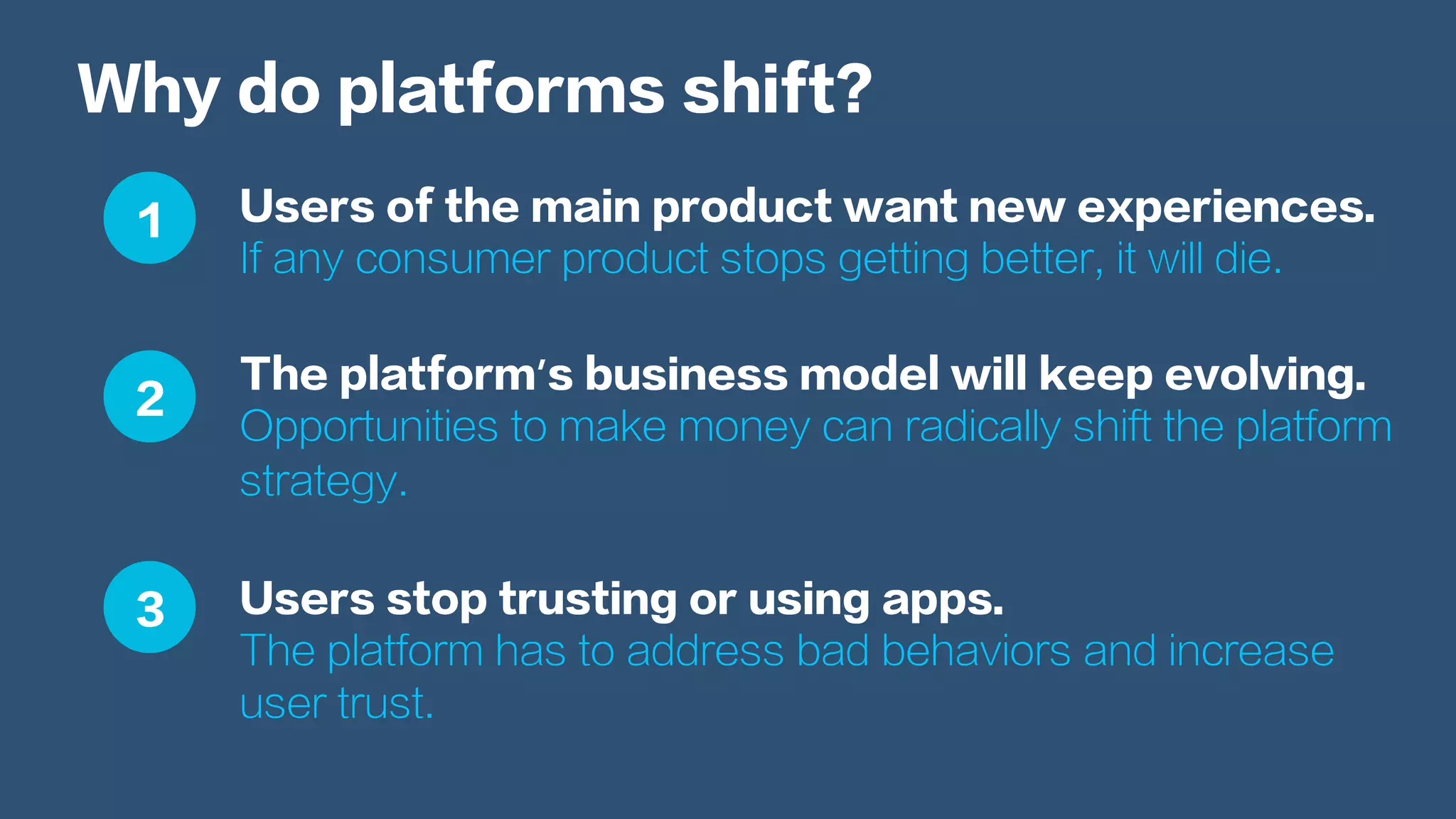
Why do platforms shift?
Users of the main product want new experiences.
If any consumer product stops getting better, it will die.
The platform’s business model will keep evolving.
Opportunities to make money can radically shift the platform
strategy.
Users stop trusting or using apps.
The platform has to address bad behaviors and increase
user trust.
1
2
3
Build your product to be
independent.
Only use the platform for
acceleration.
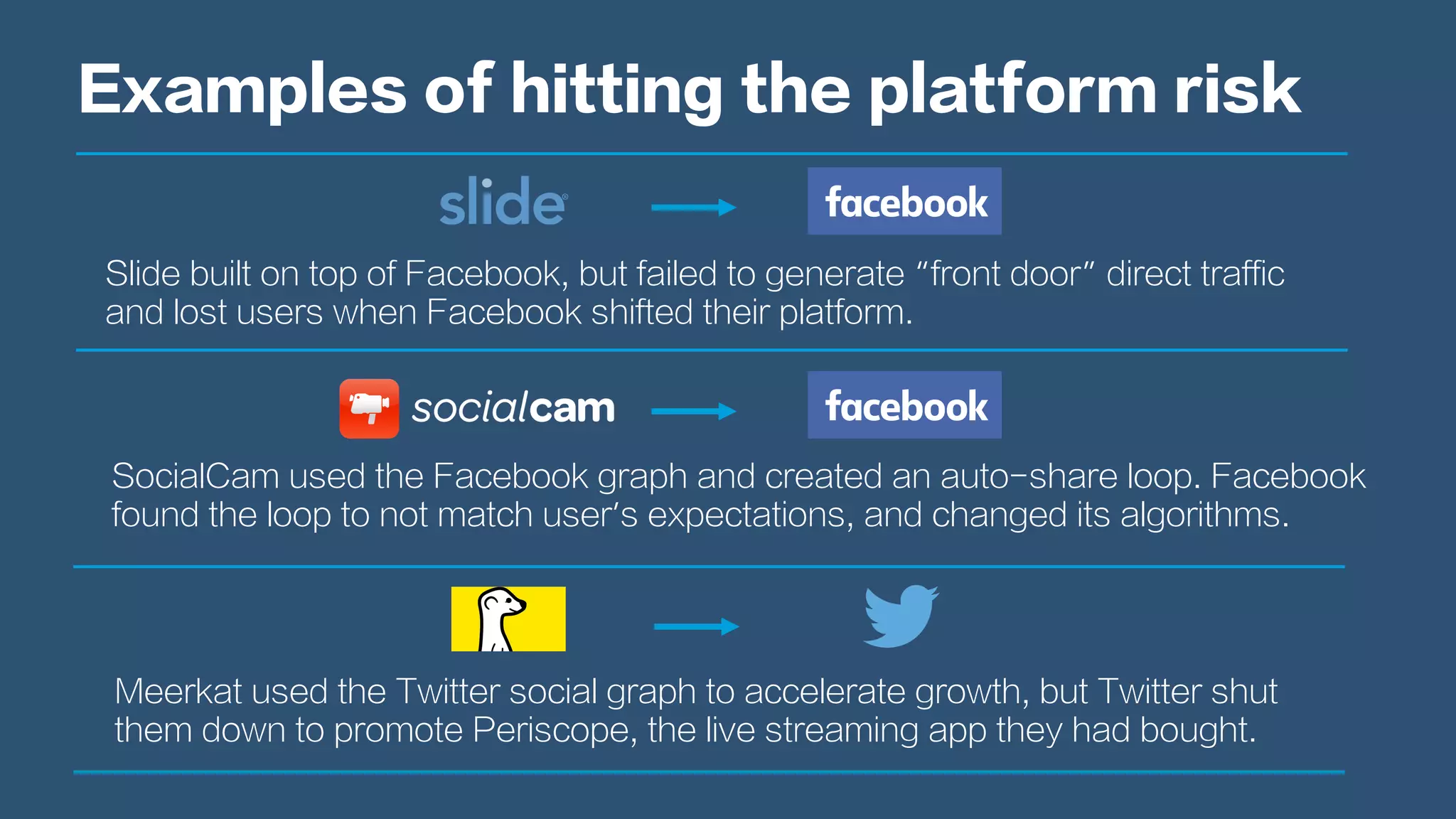
Examples of hitting the platform risk
Slide built on top of Facebook, but failed to generate “front door” direct traffic
and lost users when Facebook shifted their platform.
SocialCam used the Facebook graph and created an auto-share loop. Facebook
found the loop to not match user’s expectations, and changed its algorithms.
Meerkat used the Twitter social graph to accelerate growth, but Twitter shut
them down to promote Periscope, the live streaming app they had bought.
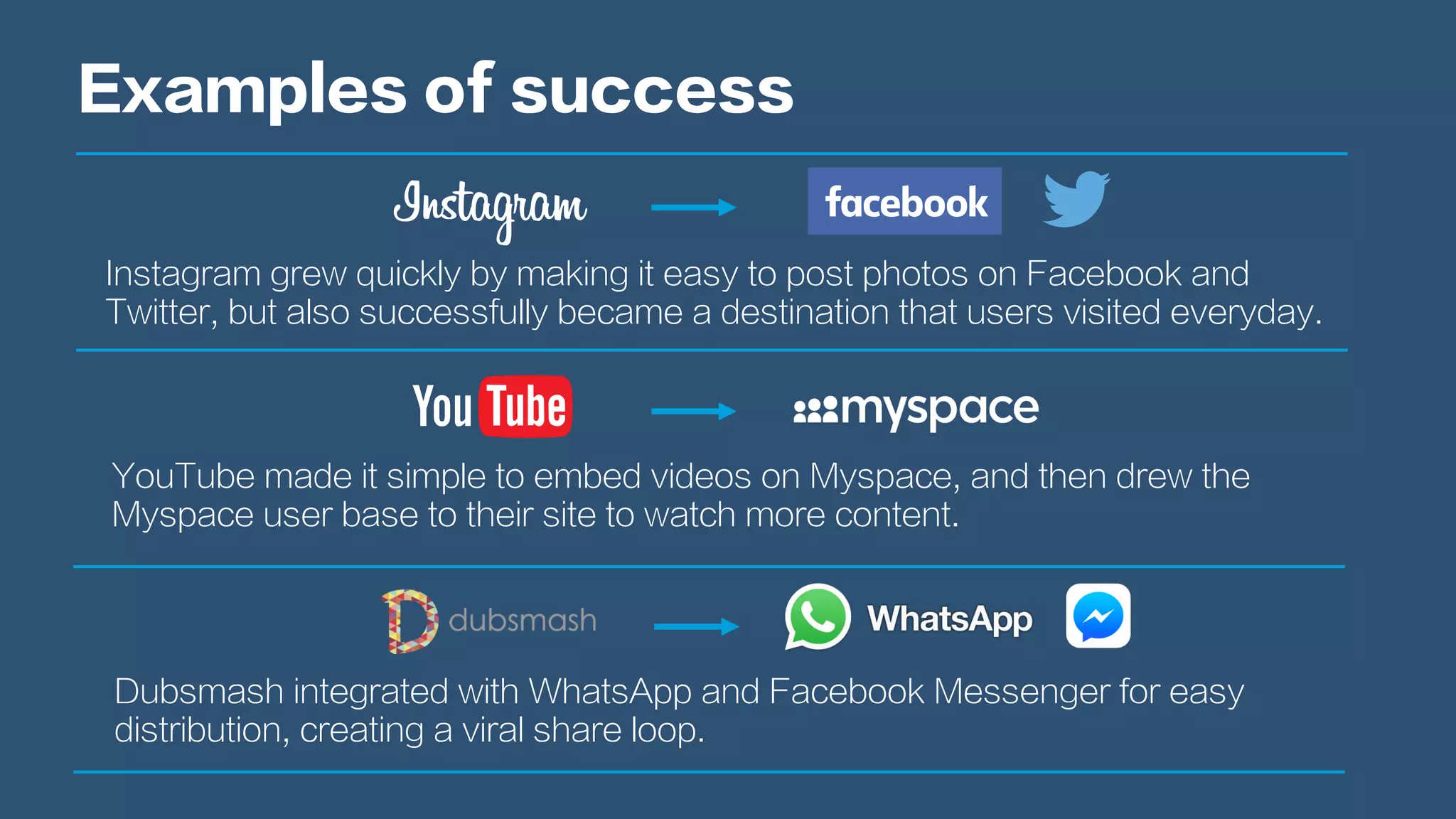
Examples of success
Instagram grew quickly by making it easy to post photos on Facebook and
Twitter, but also successfully became a destination that users visited everyday.
YouTube made it simple to embed videos on Myspace, and then drew the
Myspace user base to their site to watch more content.
Dubsmash integrated with WhatsApp and Facebook Messenger for easy
distribution, creating a viral share loop.
Platforms can work for you.
Remember the value exchange.
In exchange for giving the platform users better content or
features, the platform provides users and usage.
They are an accelerant. Never get comfortable.
Platforms can change. Take advantage of the moment at hand.
Only core users who come through your front door matter.
Don’t ever get confused with big numbers of visitors who pass
through.
1
2
3
Again..
Build your product to be
independent.
Only use the platform for
acceleration.
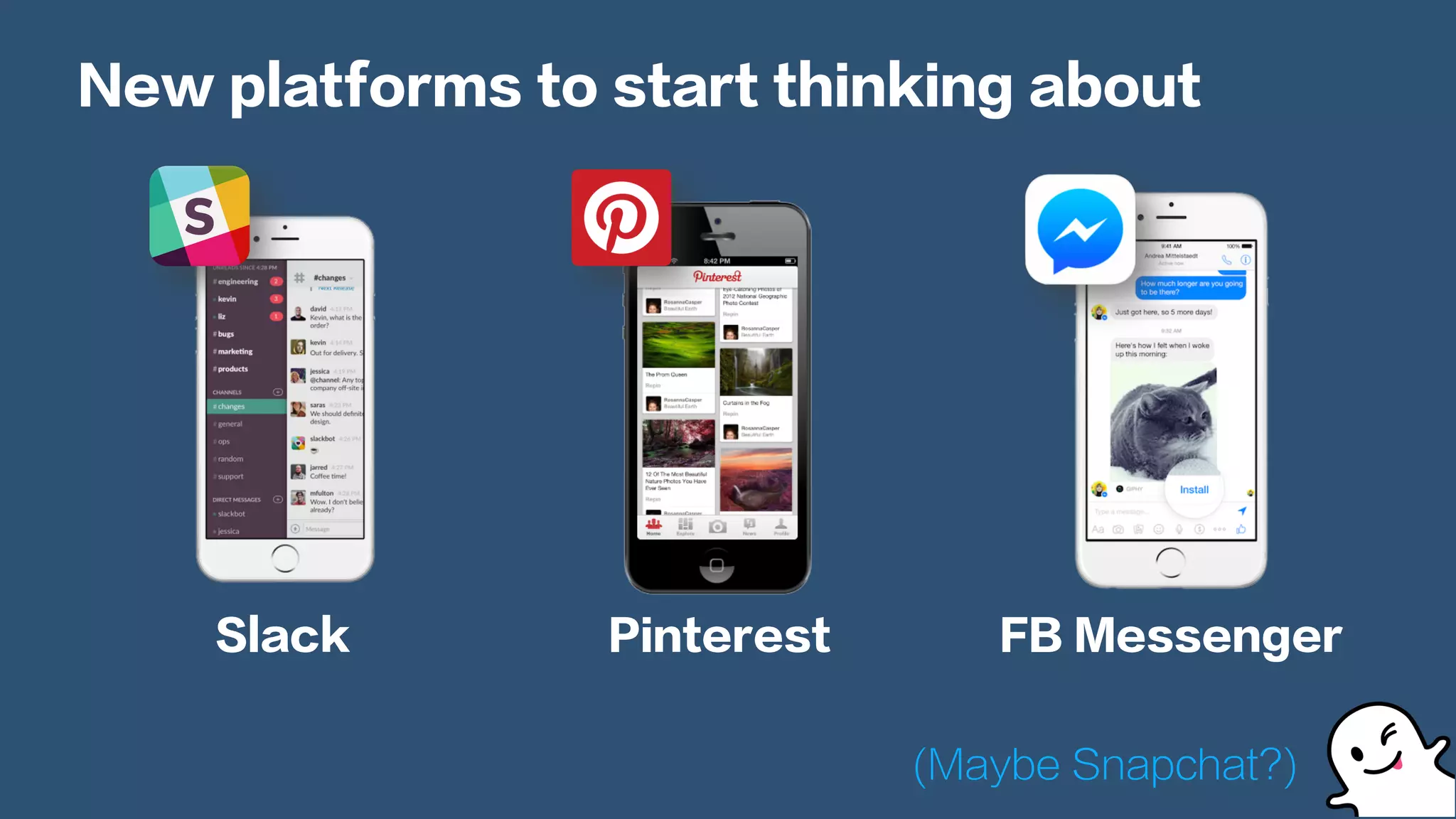
New platforms to start thinking about
Slack Pinterest FB Messenger
(Maybe Snapchat?)
Thank you.
Launching a Rocketship Off Someone Else's Back

Launching a Rocketship Off Someone Else's Back

  • 1.
    Launching a RocketshipOff Someone Else’s Back How to Build on Other Platforms Josh Elman
  • 2.
    Everybody warns younot to build on top of other company’s platforms.
  • 3.
  • 4.
    Which have goneon for a while..
  • 5.
    And platforms spinit like this “More control for our community” “To help further our company’s vision”
  • 6.
    Is it worththe risk to build on a platform?
  • 7.
    The Short Answer: Yes. (It’sthe only way to get big.)
  • 8.
  • 9.
    And everyone startsby hustling Snapchat CEO Evan Spiegel originally marketed his app by email blasting his network and posting in online forums.
  • 10.
    Hustle: Building ontop of Craigslist In the early days, the Airbnb founders built an integration with Craigslist for their ads to reach a larger audience. (They also sold politically themed cereal to get out of debt.)
  • 11.
    Hustle: Google FriendsNewsletter Google co-founder Larry Page sent out a monthly newsletter to inform fans about company news. (The company looked a lot different back then)
  • 12.
    Virality is thegoal ... but you don’t have any users.
  • 13.
  • 14.
    The Longer Answer: Youneed to get in front of users to grow. All companies start with zero users. You need to go where the users already are. Big platforms have lots of users. &
  • 15.
    We live inan era of HUGE platforms 3.5B searches per day 1.5B users 1B+ active users 1B active users 700M active users 400M active users 300M active users 300M users Growing very fast
  • 16.
    These companies wantto grow too.. Better results for a query Friends sharing more content Users sharing and watching more videos Friends and family talking more Sharing and viewing more pictures Sharing and viewing more content Professionals sharing more content More content Friends and family talking more
  • 17.
    Partnerships used torequire massive BD Deals. The little startup Google partnered with Yahoo to power their search function until 2004. Today, partnerships between big and small companies are harder to come by than ever.
  • 18.
    Platforms are partnerships. Stopasking and start building. The New Partnership:
  • 19.
    Let’s try andunderstand why companies open a platform. But first..
  • 20.
    Every company hasa massive product wish list with thousands of features.
  • 21.
    But even thebiggest companies have resource constraints. “The Top 20” If they are lucky, companies can build out their top top 10 features, maybe 20.
  • 22.
    Their roadmap is hugeand they must prioritize top features. Why would a company want a platform? Platforms offer a powerful network effect. The fastest way to more features is to get others to build them. 1 2 3
  • 23.
    If we buildit (a platform), they (developers) will come. True or False?
  • 24.
    False. Developers will onlycome when there are clear incentives and opportunities to build a big business on top of a platform. True or False?
  • 25.
    Every successful platformneeds: Clear incentives for developers to get value. “Show me the users or money!” Clear value for users. More to do on the product = more time & more fun Trust from users. Users have to trust that the platform protects them. 1 2 3
  • 26.
    1 2 But here’s whatthey are afraid of: “Pee in the pool” Platforms fear developers will spam their users. “Robbers” Platforms fear losing data and monetization opportunities. If you are building a core feature, they may compete with you or even just block you.
  • 27.
    The win-win platformmodel Startup Massive userbase Useful features More engagement, More $$$ Quickly gain users
  • 28.
    Platforms are notthere to help you build your company. Their goal is to grow their own business. But, remember:
  • 29.
  • 30.
    Knowing that, hereare things to keep in mind when building on platforms. Do not fill gaps. Don’t build a product that solves a temporary deficiency in the platform. Do not expect platforms to be constant. Prepare for inevitable platform shifts. 1 2
  • 31.
    Why do platformsshift? Users of the main product want new experiences. If any consumer product stops getting better, it will die. The platform’s business model will keep evolving. Opportunities to make money can radically shift the platform strategy. Users stop trusting or using apps. The platform has to address bad behaviors and increase user trust. 1 2 3
  • 32.
    Build your productto be independent. Only use the platform for acceleration.
  • 33.
    Examples of hittingthe platform risk Slide built on top of Facebook, but failed to generate “front door” direct traffic and lost users when Facebook shifted their platform. SocialCam used the Facebook graph and created an auto-share loop. Facebook found the loop to not match user’s expectations, and changed its algorithms. Meerkat used the Twitter social graph to accelerate growth, but Twitter shut them down to promote Periscope, the live streaming app they had bought.
  • 34.
    Examples of success Instagramgrew quickly by making it easy to post photos on Facebook and Twitter, but also successfully became a destination that users visited everyday. YouTube made it simple to embed videos on Myspace, and then drew the Myspace user base to their site to watch more content. Dubsmash integrated with WhatsApp and Facebook Messenger for easy distribution, creating a viral share loop.
  • 35.
    Platforms can workfor you. Remember the value exchange. In exchange for giving the platform users better content or features, the platform provides users and usage. They are an accelerant. Never get comfortable. Platforms can change. Take advantage of the moment at hand. Only core users who come through your front door matter. Don’t ever get confused with big numbers of visitors who pass through. 1 2 3
  • 36.
    Again.. Build your productto be independent. Only use the platform for acceleration.
  • 37.
    New platforms tostart thinking about Slack Pinterest FB Messenger (Maybe Snapchat?)
  • 38.