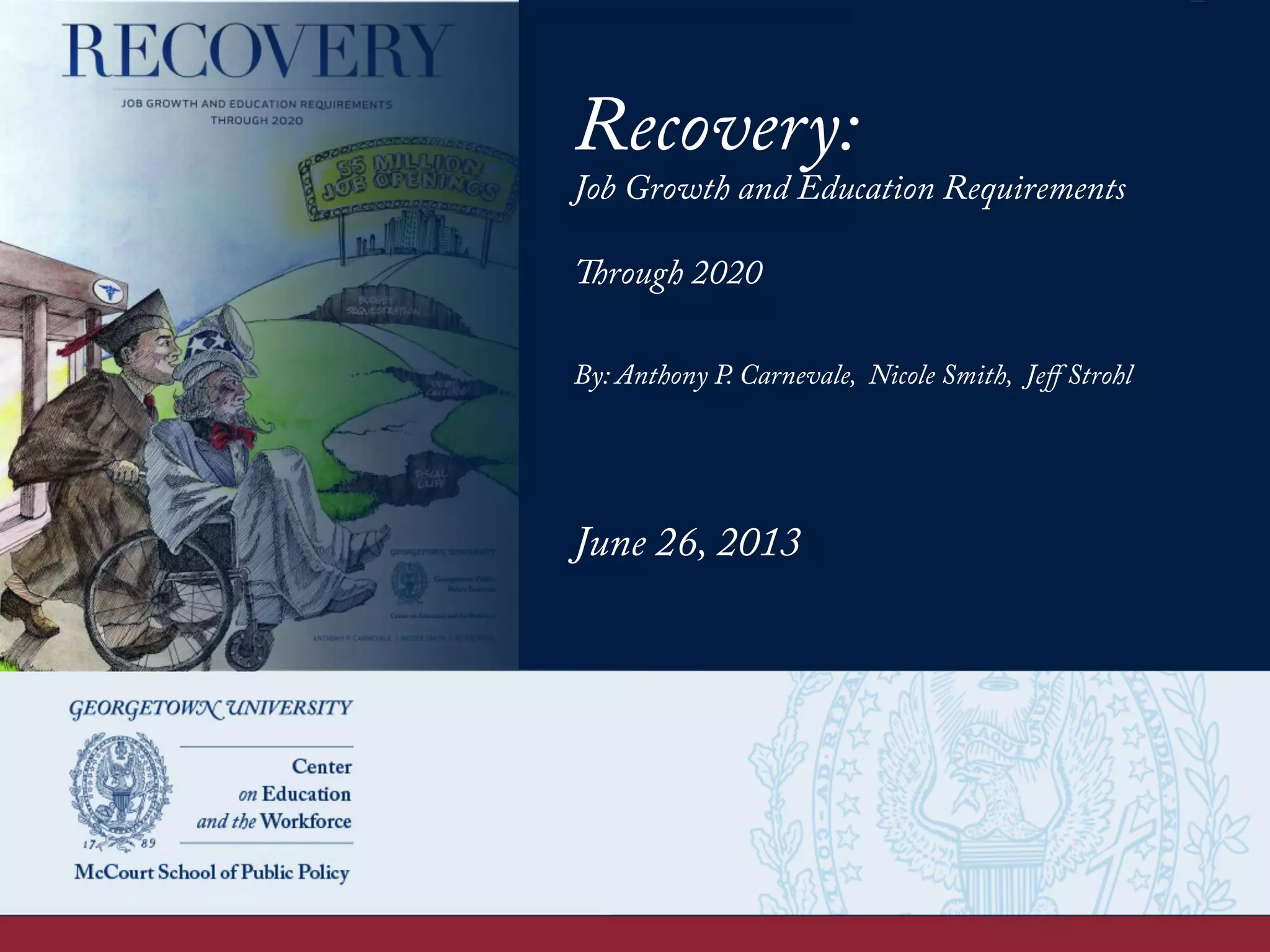
Recovery:
Job Growth and Education Requirements
Through 2020
By: Anthony P. Carnevale, Nicole Smith, Jeff Strohl
June 26, 2013
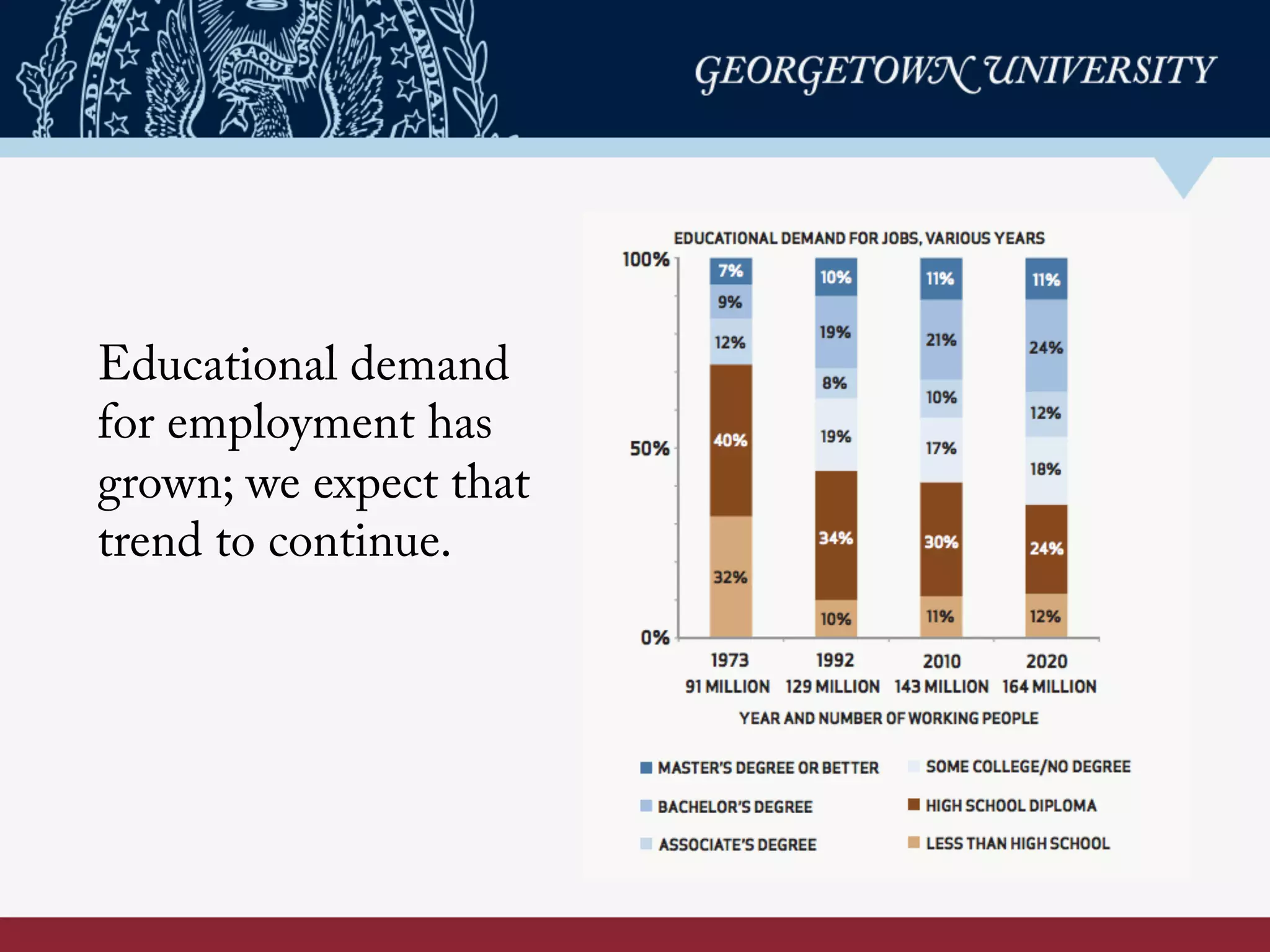
Educational demand
for employment has
grown; we expect that
trend to continue.
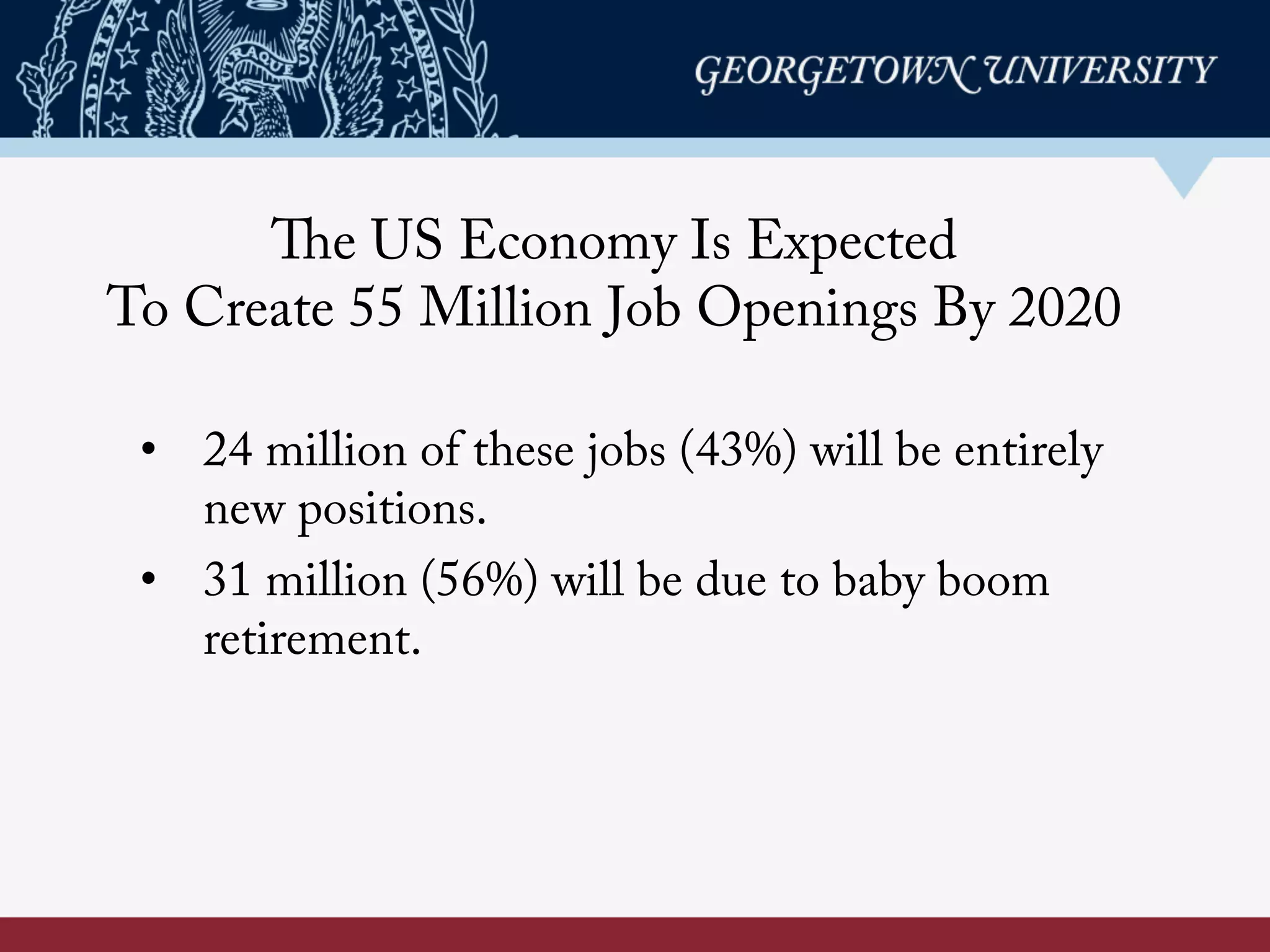
•  24 million of these jobs (43%) will be entirely
new positions.
•  31 million (56%) will be due to baby boom
retirement.
	
  
The US Economy Is Expected
To Create 55 Million Job Openings By 2020
Who Will Be Hiring?
•  STEM (Science,Technology, Engineering and Math)
•  Healthcare Professions
•  Healthcare Support
•  Community Services
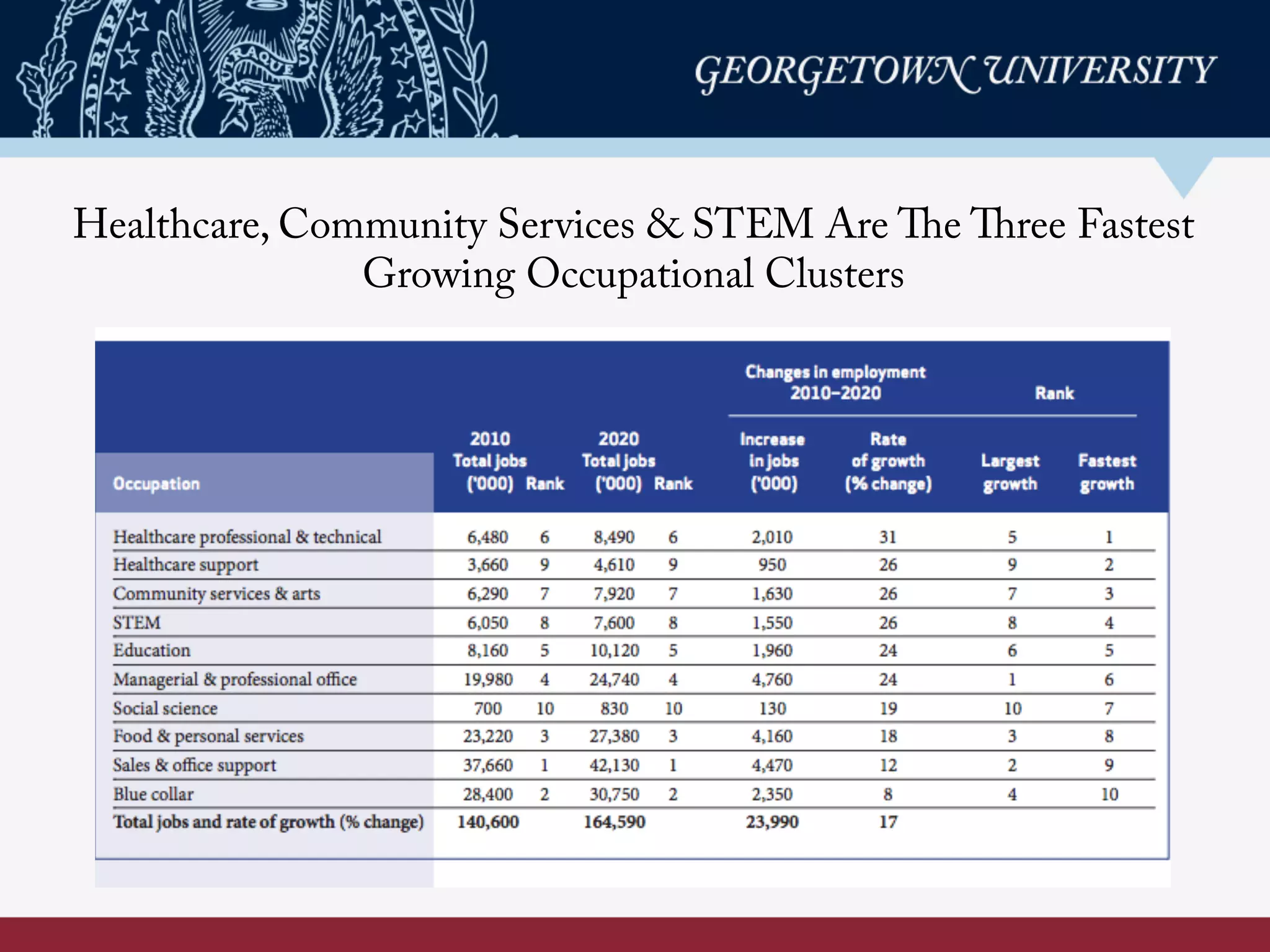
Healthcare, Community Services & STEM Are The Three Fastest
Growing Occupational Clusters
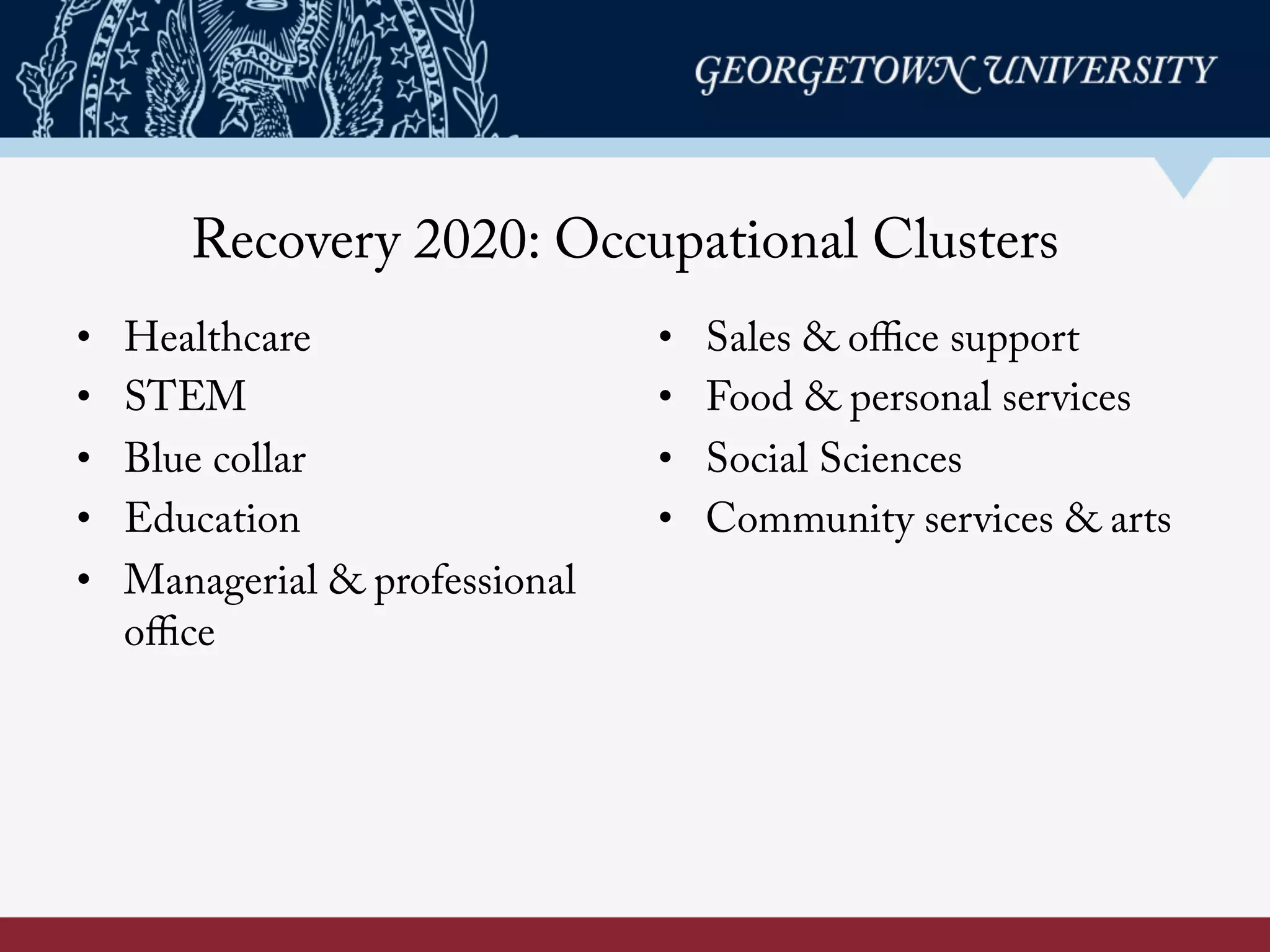
•  Healthcare
•  STEM
•  Blue collar
•  Education
•  Managerial & professional
office
•  Sales & office support
•  Food & personal services
•  Social Sciences
•  Community services & arts
Recovery 2020: Occupational Clusters
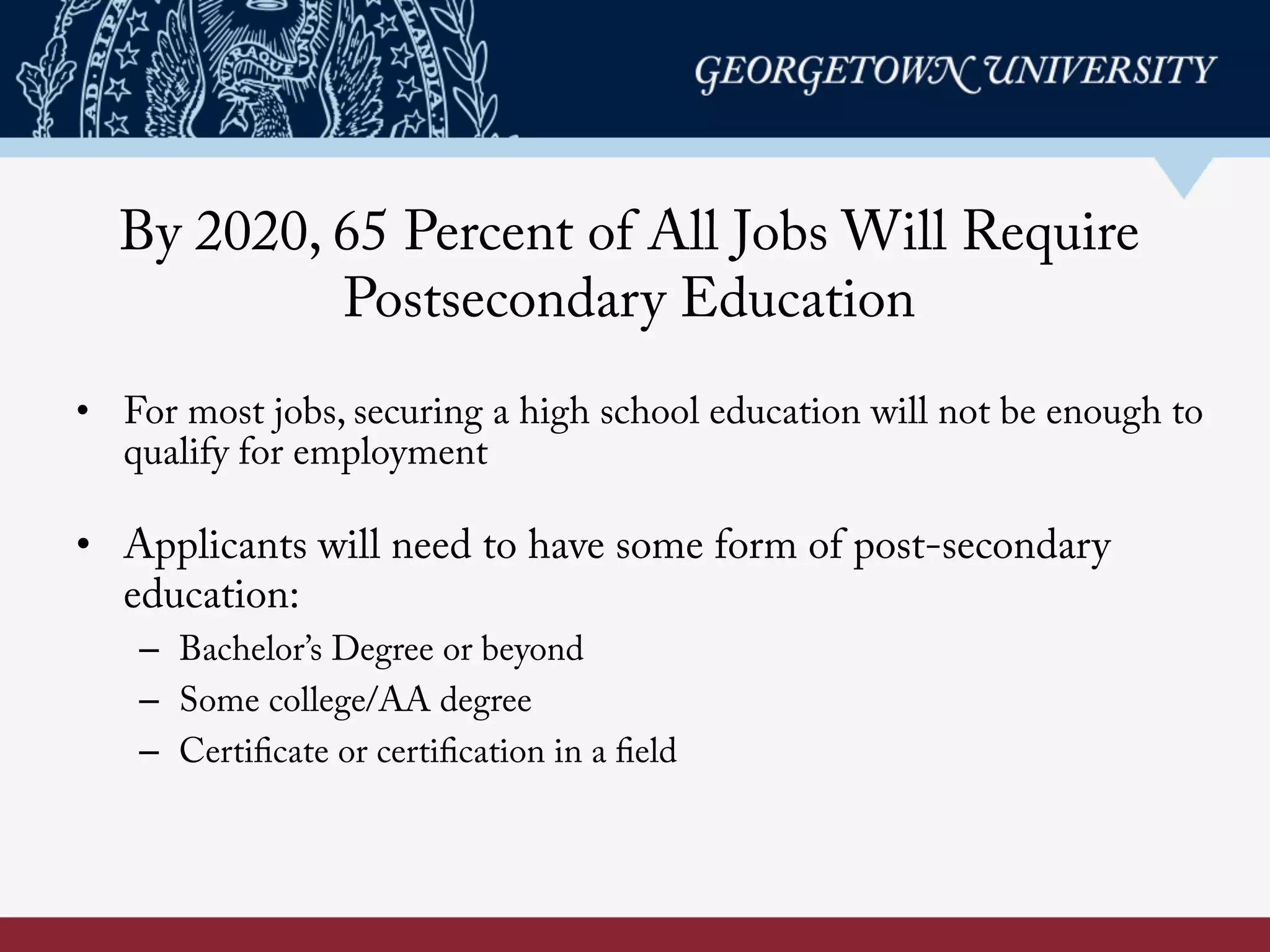
By 2020, 65 Percent of All Jobs Will Require
Postsecondary Education
•  Applicants will need to have some form of post-secondary
education:
–  Bachelor’s Degree or beyond
–  Some college/AA degree
–  Certificate or certification in a field
•  For most jobs, securing a high school education will not be enough to
qualify for employment
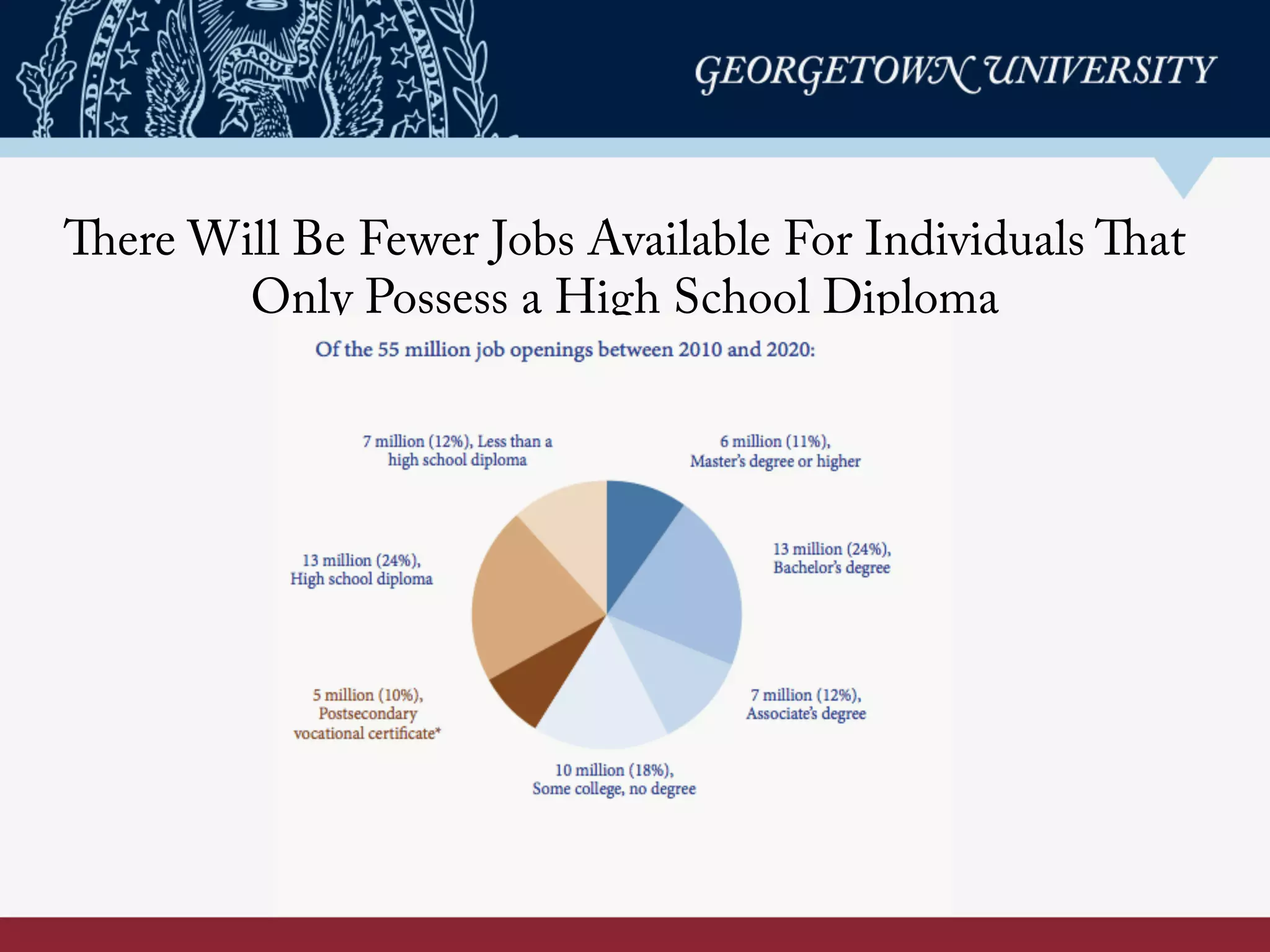
There Will Be Fewer Jobs Available For Individuals That
Only Possess a High School Diploma
Even The Fastest Growing Fields Will Require
High Postsecondary Education
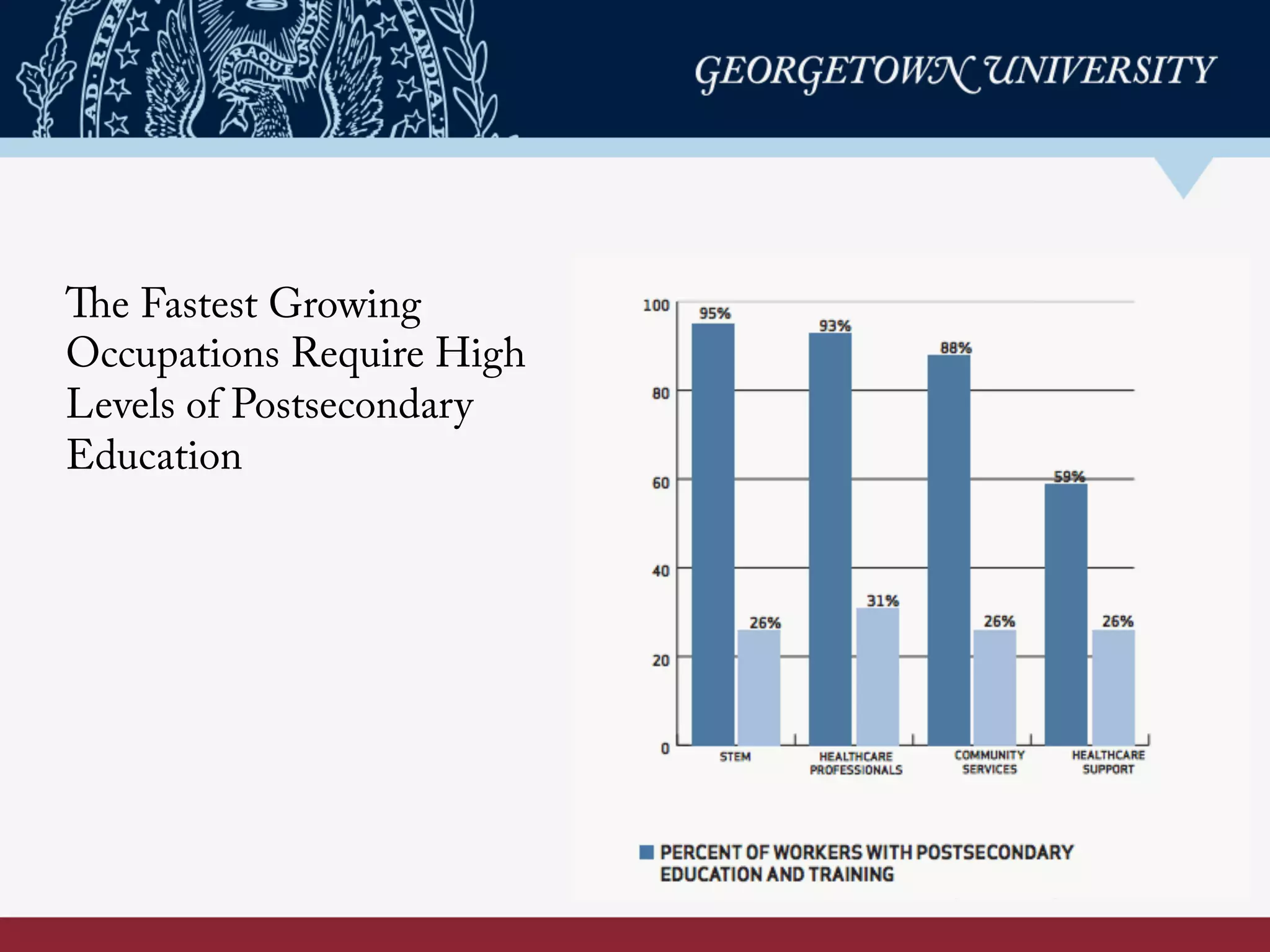
•  STEM, healthcare professions, healthcare support, and
community services will all require high levels of education in
order to compete for a position.
•  Healthcare support will not have the same high demand for
postsecondary education.
–  Healthcare support careers, however, will have lower wage growth.
The Fastest Growing
Occupations Require High
Levels of Postsecondary
Education
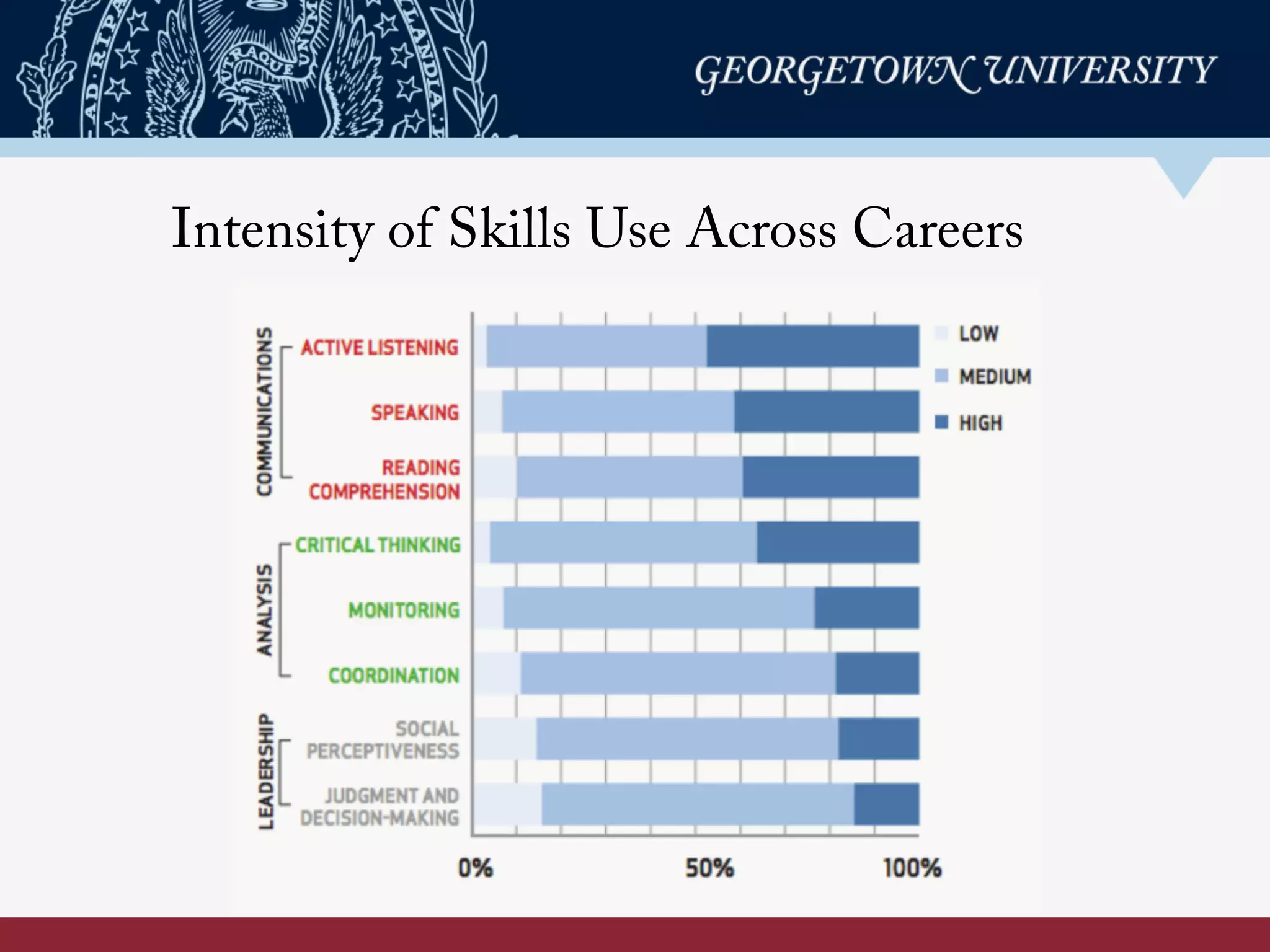
•  Recovery 2020 confirms cognitive skills are highly sought
after by employers.
•  Physically intensive skills are less important.
•  Forty-eight percent of jobs require high levels of active
listening.
•  Other skills most coveted by employers:
–  Leadership
–  Communication
–  Analytics
–  Administration
What Skills Will Get You Hired?
Intensity of Skills Use Across Careers
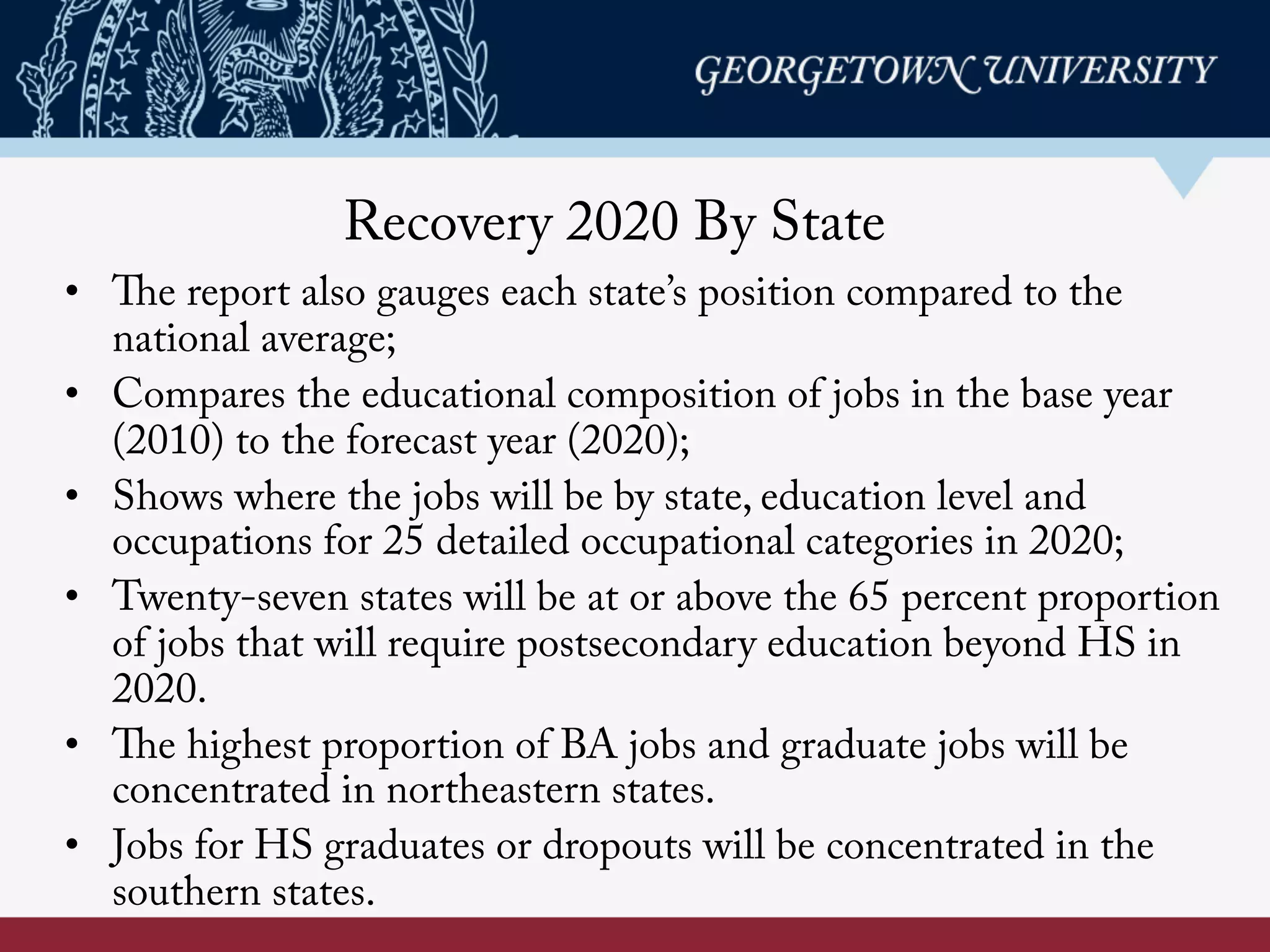
Recovery 2020 By State
•  The report also gauges each state’s position compared to the
national average;
•  Compares the educational composition of jobs in the base year
(2010) to the forecast year (2020);
•  Shows where the jobs will be by state, education level and
occupations for 25 detailed occupational categories in 2020;
•  Twenty-seven states will be at or above the 65 percent proportion
of jobs that will require postsecondary education beyond HS in
2020.
•  The highest proportion of BA jobs and graduate jobs will be
concentrated in northeastern states.
•  Jobs for HS graduates or dropouts will be concentrated in the
southern states.
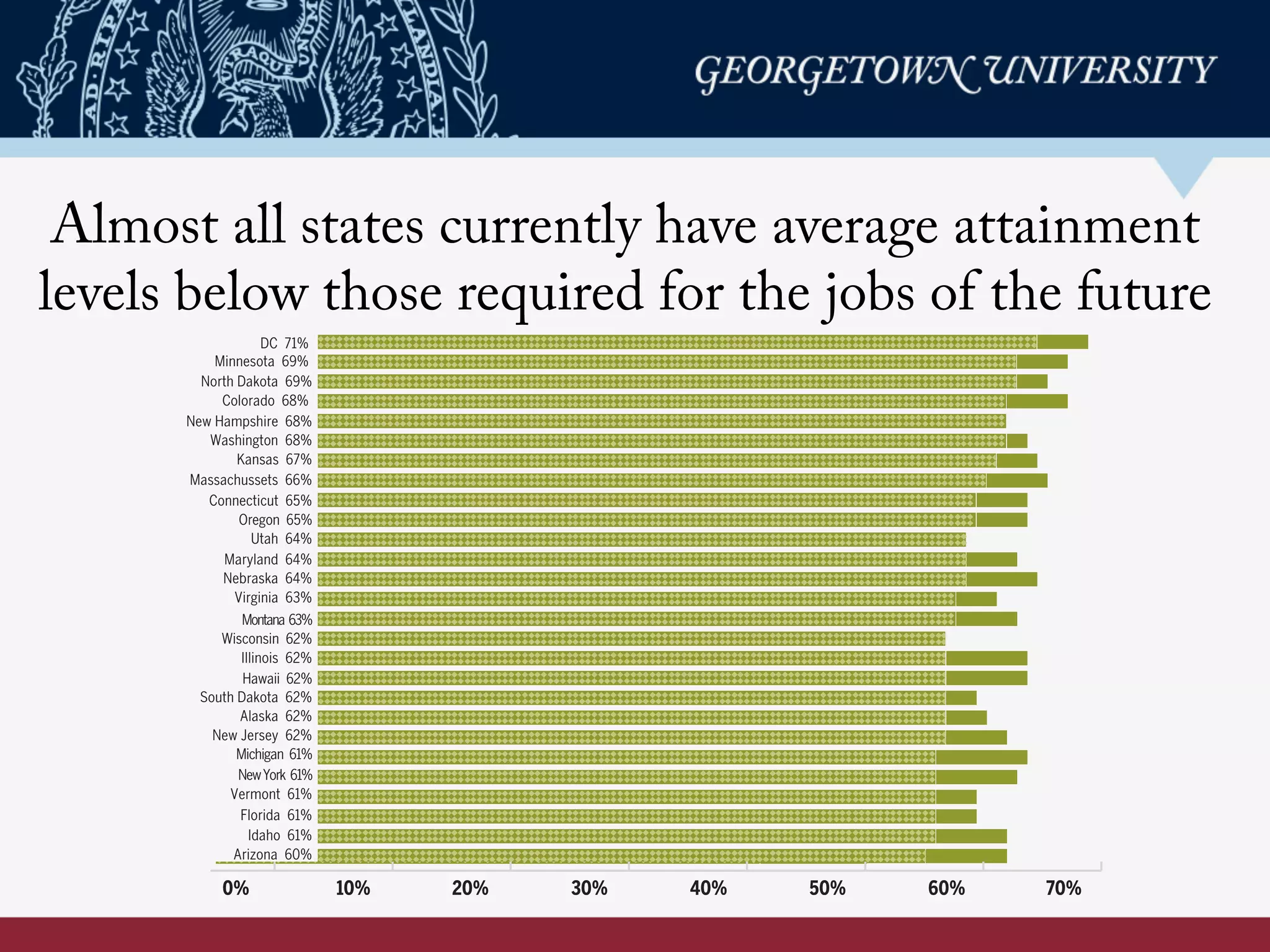
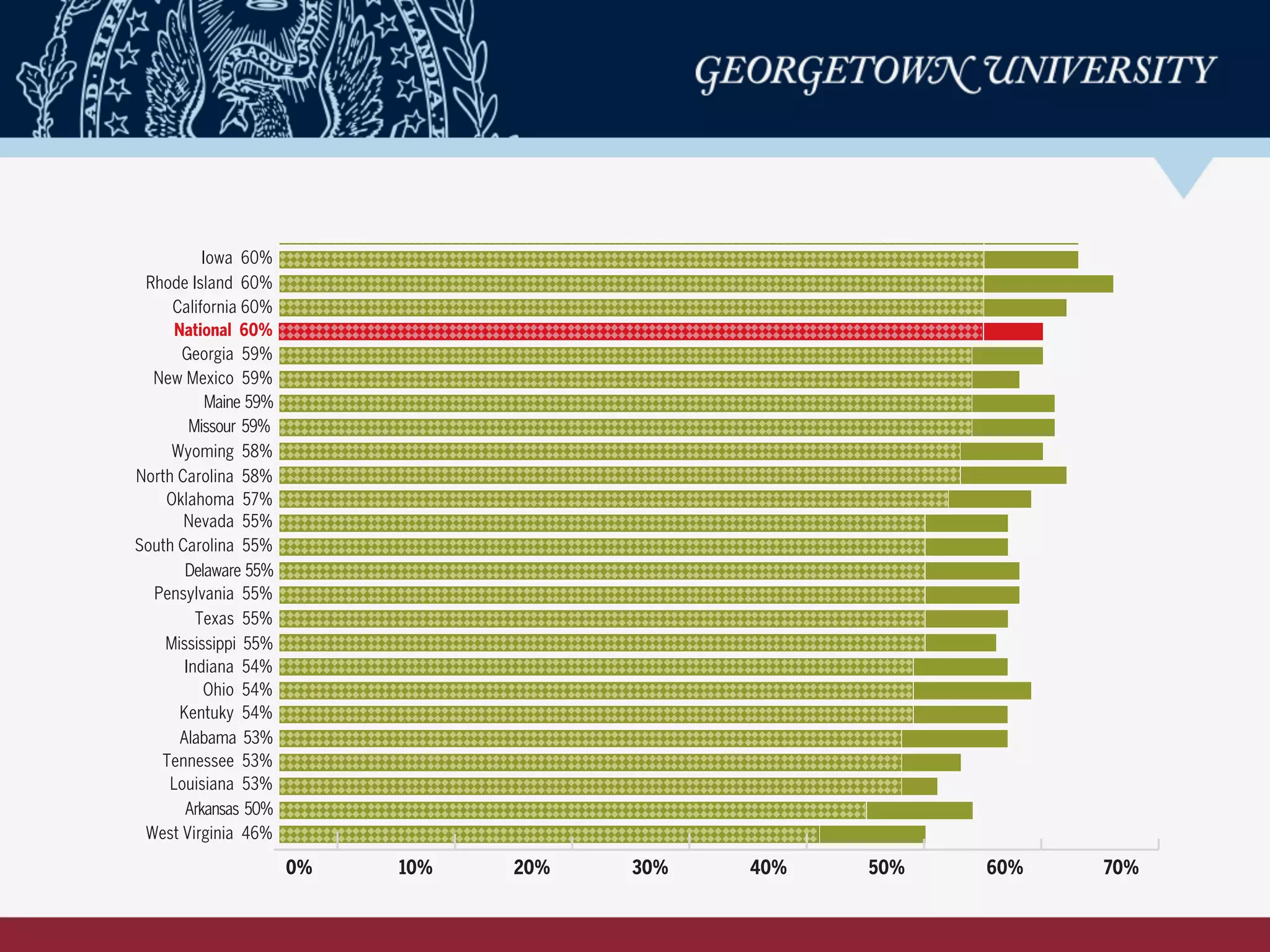
Almost all states currently have average attainment
levels below those required for the jobs of the futureFigure 6:Almost all states have current average attainment levels below those required for the
jobs of the future.
DC 71%
Minnesota 69%
North Dakota 69%
Colorado 68%
New Hampshire 68%
Washington 68%
Kansas 67%
Massachussets 66%
Connecticut 65%
Oregon 65%
Utah 64%
Maryland 64%
Nebraska 64%
Virginia 63%
Montana 63%
Wisconsin 62%
Illinois 62%
Hawaii 62%
South Dakota 62%
Alaska 62%
New Jersey 62%
Michigan 61%
NewYork 61%
Vermont 61%
Florida 61%
Idaho 61%
Arizona 60%
Iowa 60%
Rhode Island 60%
California 60%
National 60% Shortage(2020)*
Wisconsin 62%
Illinois 62%
Hawaii 62%
South Dakota 62%
Alaska 62%
New Jersey 62%
Michigan 61%
NewYork 61%
Vermont 61%
Florida 61%
Idaho 61%
Arizona 60%
Iowa 60%
Rhode Island 60%
California 60%
National 60%
Georgia 59%
New Mexico 59%
Maine 59%
Missour 59%
Wyoming 58%
North Carolina 58%
Oklahoma 57%
Nevada 55%
South Carolina 55%
Delaware 55%
Pensylvania 55%
Texas 55%
Mississippi 55%
Indiana 54%
Ohio 54%
Kentuky 54%
Alabama 53%
Tennessee 53%
Louisiana 53%
West Virginia 46%
Arkansas 50%
0% 10% 20% 30% 40% 50% 60% 70%
Shortage(2020)*
Current Attainment (2020)
Illinois 62%
Hawaii 62%
South Dakota 62%
Alaska 62%
New Jersey 62%
Michigan 61%
NewYork 61%
Vermont 61%
Florida 61%
Idaho 61%
Arizona 60%
Iowa 60%
Rhode Island 60%
California 60%
National 60%
Georgia 59%
New Mexico 59%
Maine 59%
Missour 59%
Wyoming 58%
North Carolina 58%
Oklahoma 57%
Nevada 55%
South Carolina 55%
Delaware 55%
Pensylvania 55%
Texas 55%
Mississippi 55%
Indiana 54%
Ohio 54%
Kentuky 54%
Alabama 53%
Tennessee 53%
Louisiana 53%
West Virginia 46%
Arkansas 50%
0% 10% 20% 30% 40% 50% 60% 70%
RECOVERY 2020 in Summary
•  Most jobs will require applicants to have postsecondary
education and training beyond high school.
•  More jobs will be available as baby boomers begin to retire.
•  The fastest growing fields will be in STEM, healthcare
professions, healthcare support, and community services.
•  Employers will be looking for cognitive skills such as active
listening, ability to communicate well, and critical thinking.
•  Despite the existing variation between states’ educational
attainment, nearly all states will need to boost their rates of
postsecondary education
For more information:
Email Us | cewgeorgetown@georgetown.edu
Follow Us on Twitter | @GeorgetownCEW
Find Us on Facebook | Facebook.com/GeorgetownCEW
Follow Us on LinkedIn | linkedin.com/company/georgetowncew
See the full report at: cew.georgetown.edu/recovery2020/


Recovery: Job Growth and Education Requirements Through 2020

  • 1.
    Recovery: Job Growth andEducation Requirements Through 2020 By: Anthony P. Carnevale, Nicole Smith, Jeff Strohl June 26, 2013
  • 2.
    Educational demand for employmenthas grown; we expect that trend to continue.
  • 3.
    •  24 millionof these jobs (43%) will be entirely new positions. •  31 million (56%) will be due to baby boom retirement.   The US Economy Is Expected To Create 55 Million Job Openings By 2020
  • 4.
    Who Will BeHiring? •  STEM (Science,Technology, Engineering and Math) •  Healthcare Professions •  Healthcare Support •  Community Services
  • 5.
    Healthcare, Community Services& STEM Are The Three Fastest Growing Occupational Clusters
  • 6.
    •  Healthcare •  STEM • Blue collar •  Education •  Managerial & professional office •  Sales & office support •  Food & personal services •  Social Sciences •  Community services & arts Recovery 2020: Occupational Clusters
  • 7.
    By 2020, 65Percent of All Jobs Will Require Postsecondary Education •  Applicants will need to have some form of post-secondary education: –  Bachelor’s Degree or beyond –  Some college/AA degree –  Certificate or certification in a field •  For most jobs, securing a high school education will not be enough to qualify for employment
  • 8.
    There Will BeFewer Jobs Available For Individuals That Only Possess a High School Diploma
  • 9.
    Even The FastestGrowing Fields Will Require High Postsecondary Education •  STEM, healthcare professions, healthcare support, and community services will all require high levels of education in order to compete for a position. •  Healthcare support will not have the same high demand for postsecondary education. –  Healthcare support careers, however, will have lower wage growth.
  • 10.
    The Fastest Growing OccupationsRequire High Levels of Postsecondary Education
  • 11.
    •  Recovery 2020confirms cognitive skills are highly sought after by employers. •  Physically intensive skills are less important. •  Forty-eight percent of jobs require high levels of active listening. •  Other skills most coveted by employers: –  Leadership –  Communication –  Analytics –  Administration What Skills Will Get You Hired?
  • 12.
    Intensity of SkillsUse Across Careers
  • 13.
    Recovery 2020 ByState •  The report also gauges each state’s position compared to the national average; •  Compares the educational composition of jobs in the base year (2010) to the forecast year (2020); •  Shows where the jobs will be by state, education level and occupations for 25 detailed occupational categories in 2020; •  Twenty-seven states will be at or above the 65 percent proportion of jobs that will require postsecondary education beyond HS in 2020. •  The highest proportion of BA jobs and graduate jobs will be concentrated in northeastern states. •  Jobs for HS graduates or dropouts will be concentrated in the southern states.
  • 14.
    Almost all statescurrently have average attainment levels below those required for the jobs of the futureFigure 6:Almost all states have current average attainment levels below those required for the jobs of the future. DC 71% Minnesota 69% North Dakota 69% Colorado 68% New Hampshire 68% Washington 68% Kansas 67% Massachussets 66% Connecticut 65% Oregon 65% Utah 64% Maryland 64% Nebraska 64% Virginia 63% Montana 63% Wisconsin 62% Illinois 62% Hawaii 62% South Dakota 62% Alaska 62% New Jersey 62% Michigan 61% NewYork 61% Vermont 61% Florida 61% Idaho 61% Arizona 60% Iowa 60% Rhode Island 60% California 60% National 60% Shortage(2020)* Wisconsin 62% Illinois 62% Hawaii 62% South Dakota 62% Alaska 62% New Jersey 62% Michigan 61% NewYork 61% Vermont 61% Florida 61% Idaho 61% Arizona 60% Iowa 60% Rhode Island 60% California 60% National 60% Georgia 59% New Mexico 59% Maine 59% Missour 59% Wyoming 58% North Carolina 58% Oklahoma 57% Nevada 55% South Carolina 55% Delaware 55% Pensylvania 55% Texas 55% Mississippi 55% Indiana 54% Ohio 54% Kentuky 54% Alabama 53% Tennessee 53% Louisiana 53% West Virginia 46% Arkansas 50% 0% 10% 20% 30% 40% 50% 60% 70%
  • 15.
    Shortage(2020)* Current Attainment (2020) Illinois62% Hawaii 62% South Dakota 62% Alaska 62% New Jersey 62% Michigan 61% NewYork 61% Vermont 61% Florida 61% Idaho 61% Arizona 60% Iowa 60% Rhode Island 60% California 60% National 60% Georgia 59% New Mexico 59% Maine 59% Missour 59% Wyoming 58% North Carolina 58% Oklahoma 57% Nevada 55% South Carolina 55% Delaware 55% Pensylvania 55% Texas 55% Mississippi 55% Indiana 54% Ohio 54% Kentuky 54% Alabama 53% Tennessee 53% Louisiana 53% West Virginia 46% Arkansas 50% 0% 10% 20% 30% 40% 50% 60% 70%
  • 16.
    RECOVERY 2020 inSummary •  Most jobs will require applicants to have postsecondary education and training beyond high school. •  More jobs will be available as baby boomers begin to retire. •  The fastest growing fields will be in STEM, healthcare professions, healthcare support, and community services. •  Employers will be looking for cognitive skills such as active listening, ability to communicate well, and critical thinking. •  Despite the existing variation between states’ educational attainment, nearly all states will need to boost their rates of postsecondary education
  • 17.
    For more information: EmailUs | cewgeorgetown@georgetown.edu Follow Us on Twitter | @GeorgetownCEW Find Us on Facebook | Facebook.com/GeorgetownCEW Follow Us on LinkedIn | linkedin.com/company/georgetowncew See the full report at: cew.georgetown.edu/recovery2020/