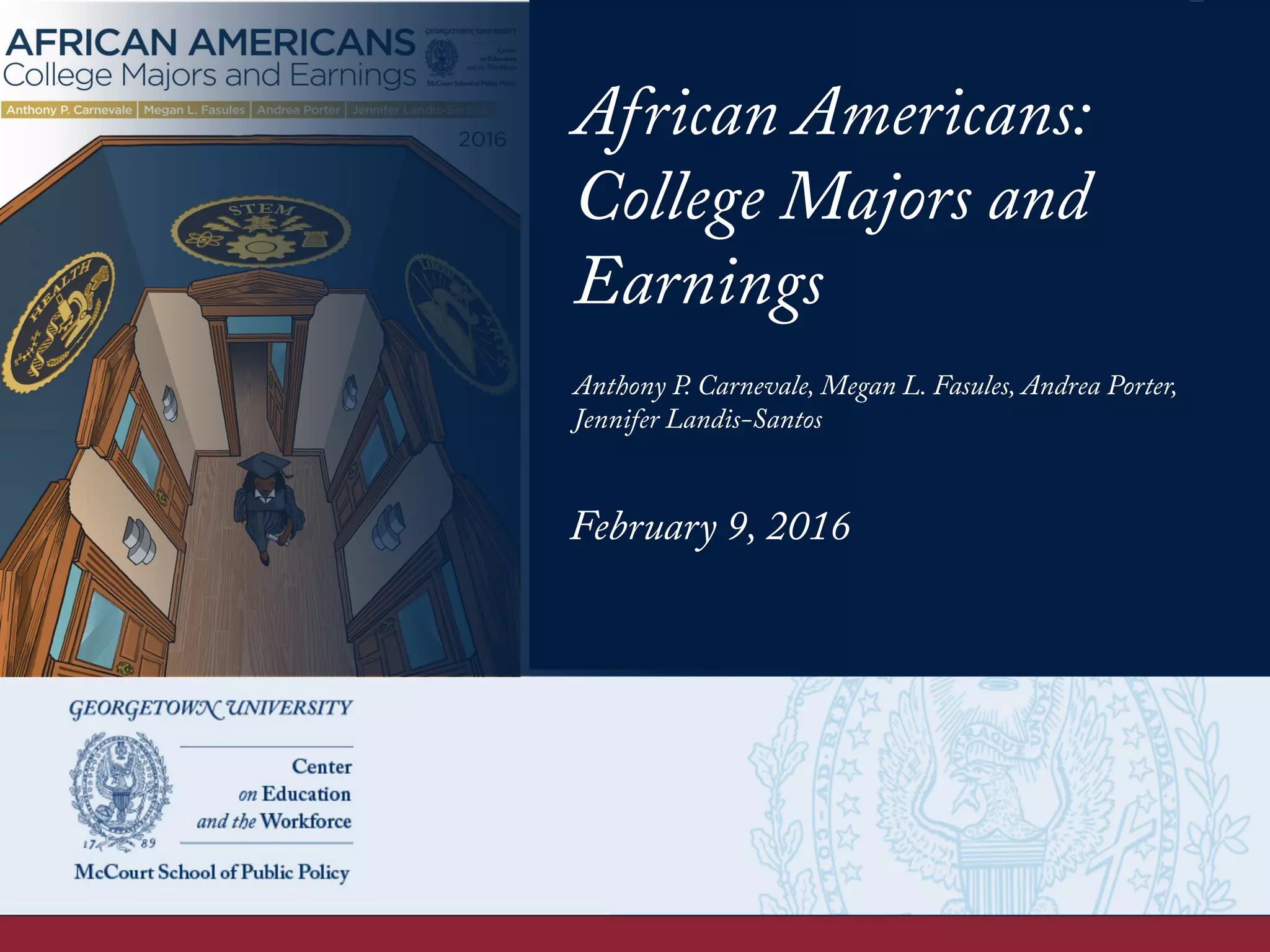
African Americans:
College Majors and
Earnings
Anthony P. Carnevale, Megan L. Fasules, Andrea Porter,
Jennifer Landis-Santos
February 9, 2016
Overview
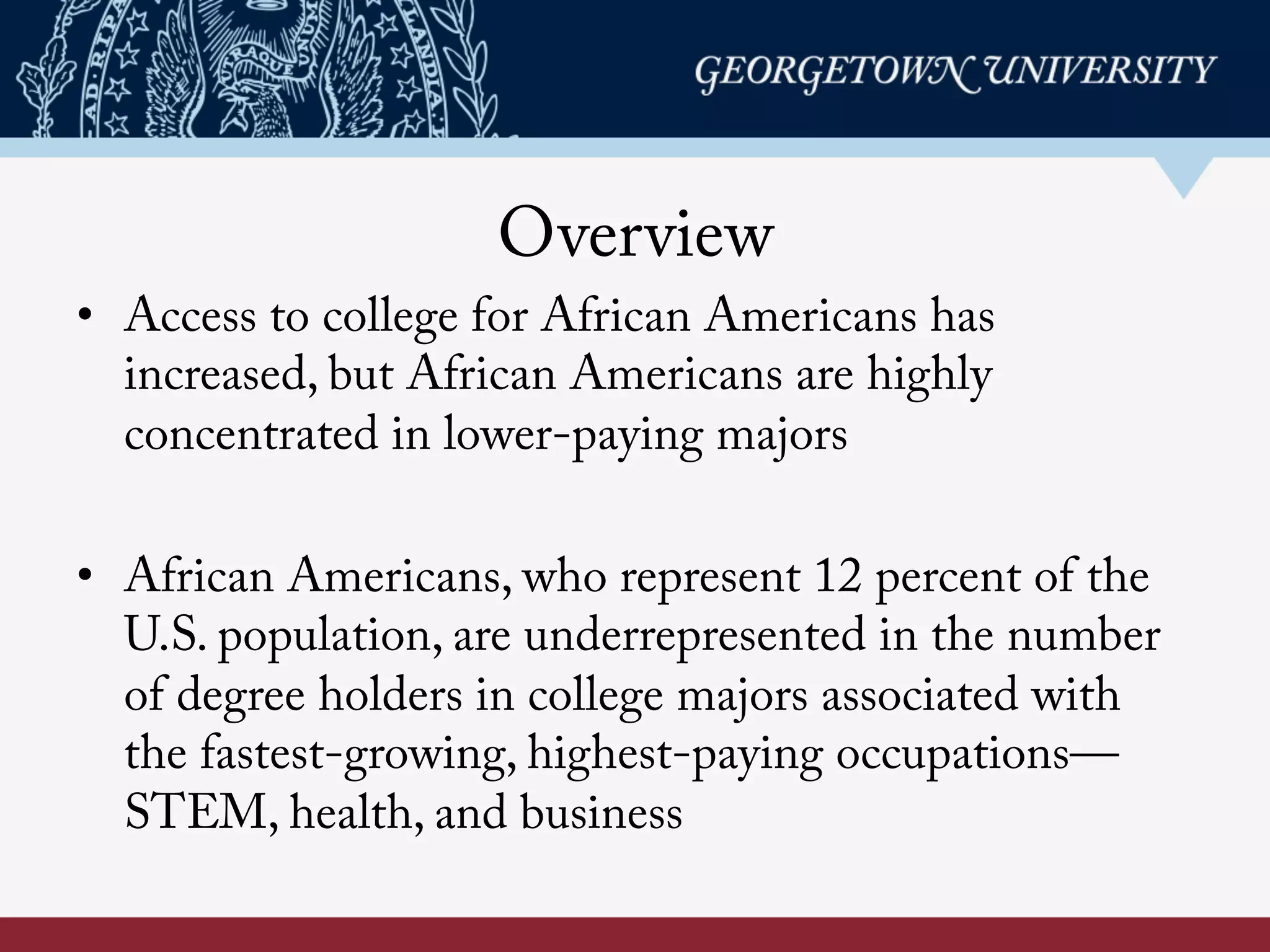
•  Access to college for African Americans has
increased, but African Americans are highly
concentrated in lower-paying majors
•  African Americans, who represent 12 percent of the
U.S. population, are underrepresented in the number
of degree holders in college majors associated with
the fastest-growing, highest-paying occupations—
STEM, health, and business
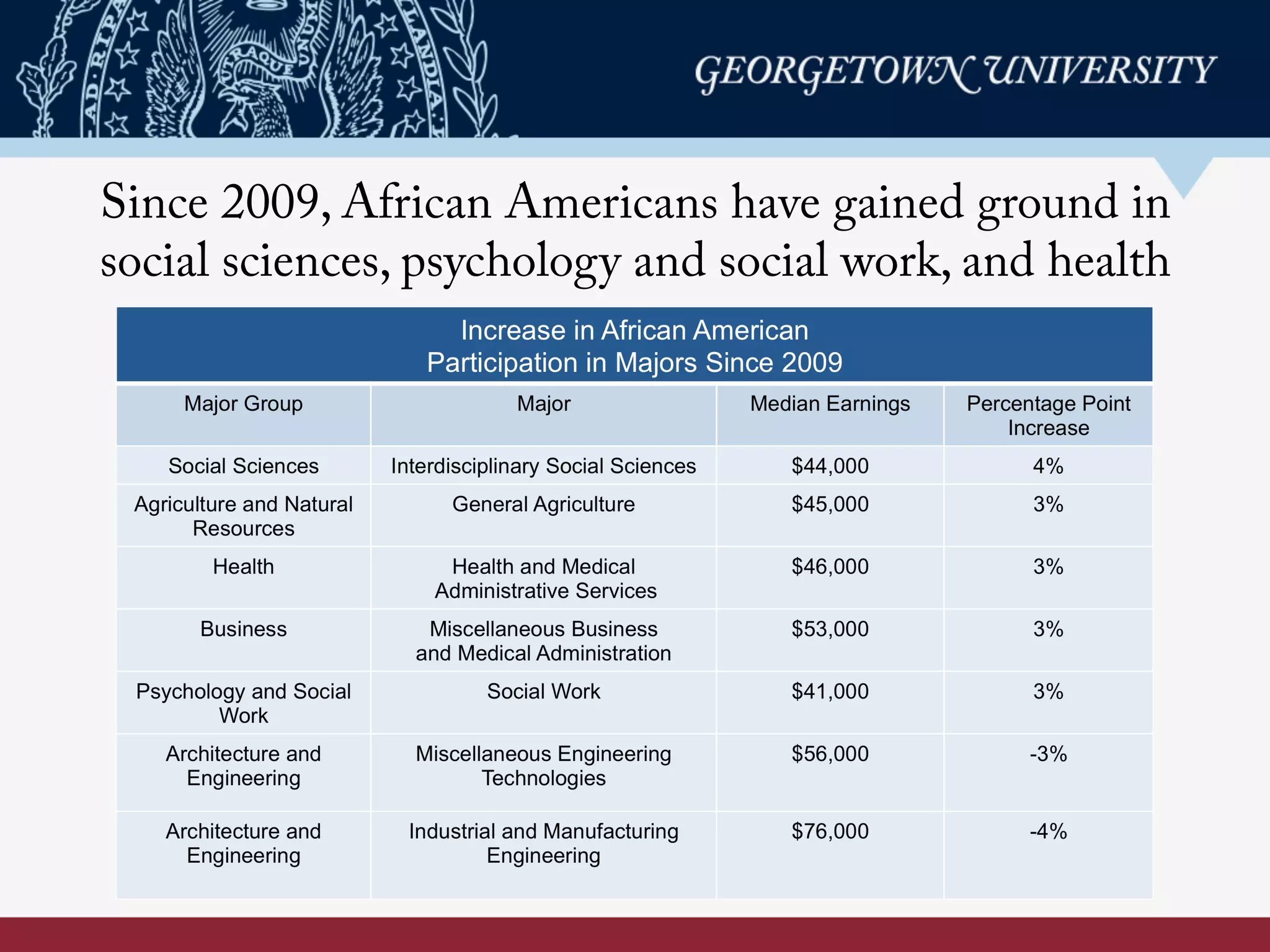
Since 2009, African Americans have gained ground in
social sciences, psychology and social work, and health
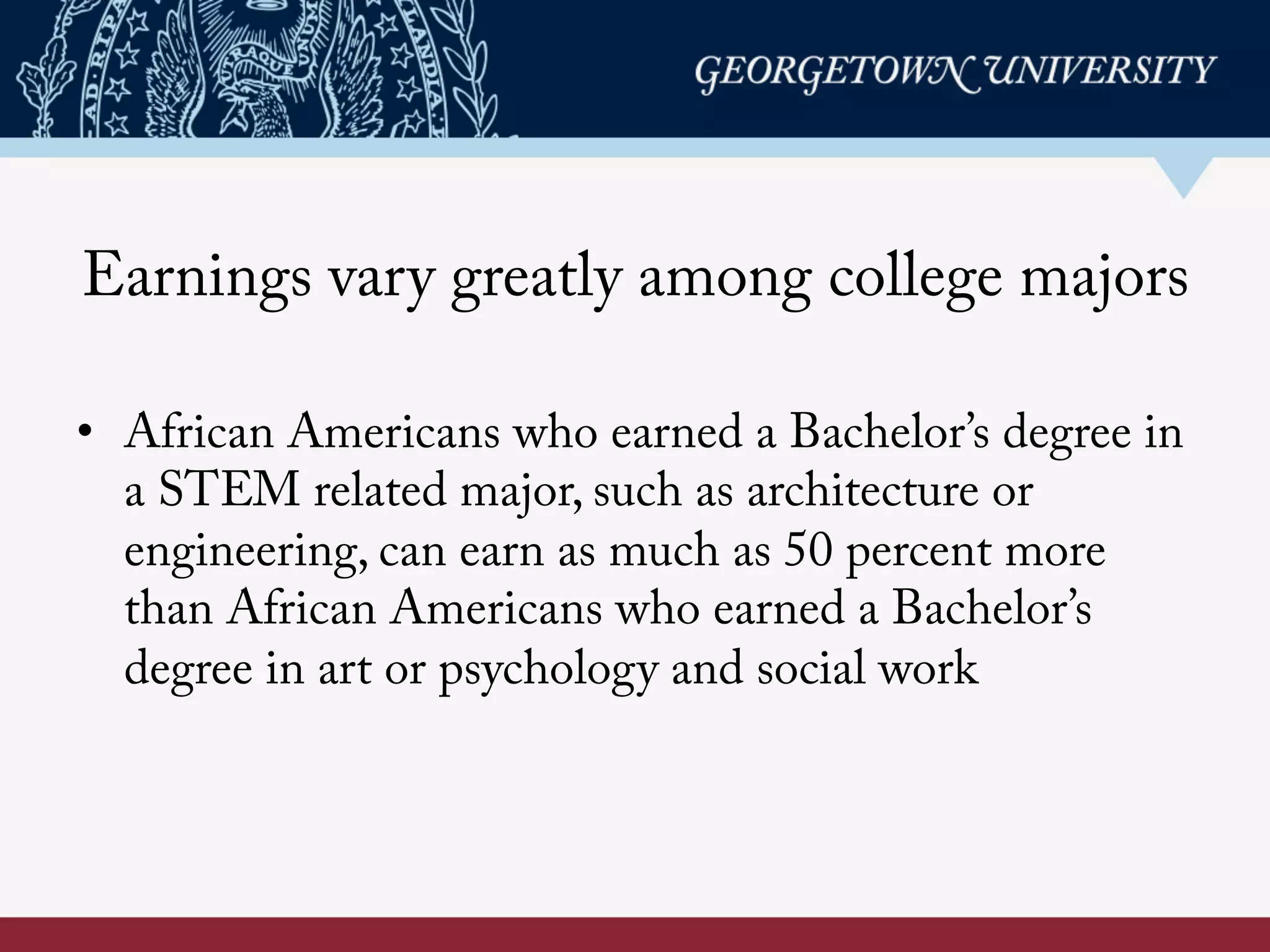
Earnings vary greatly among college majors
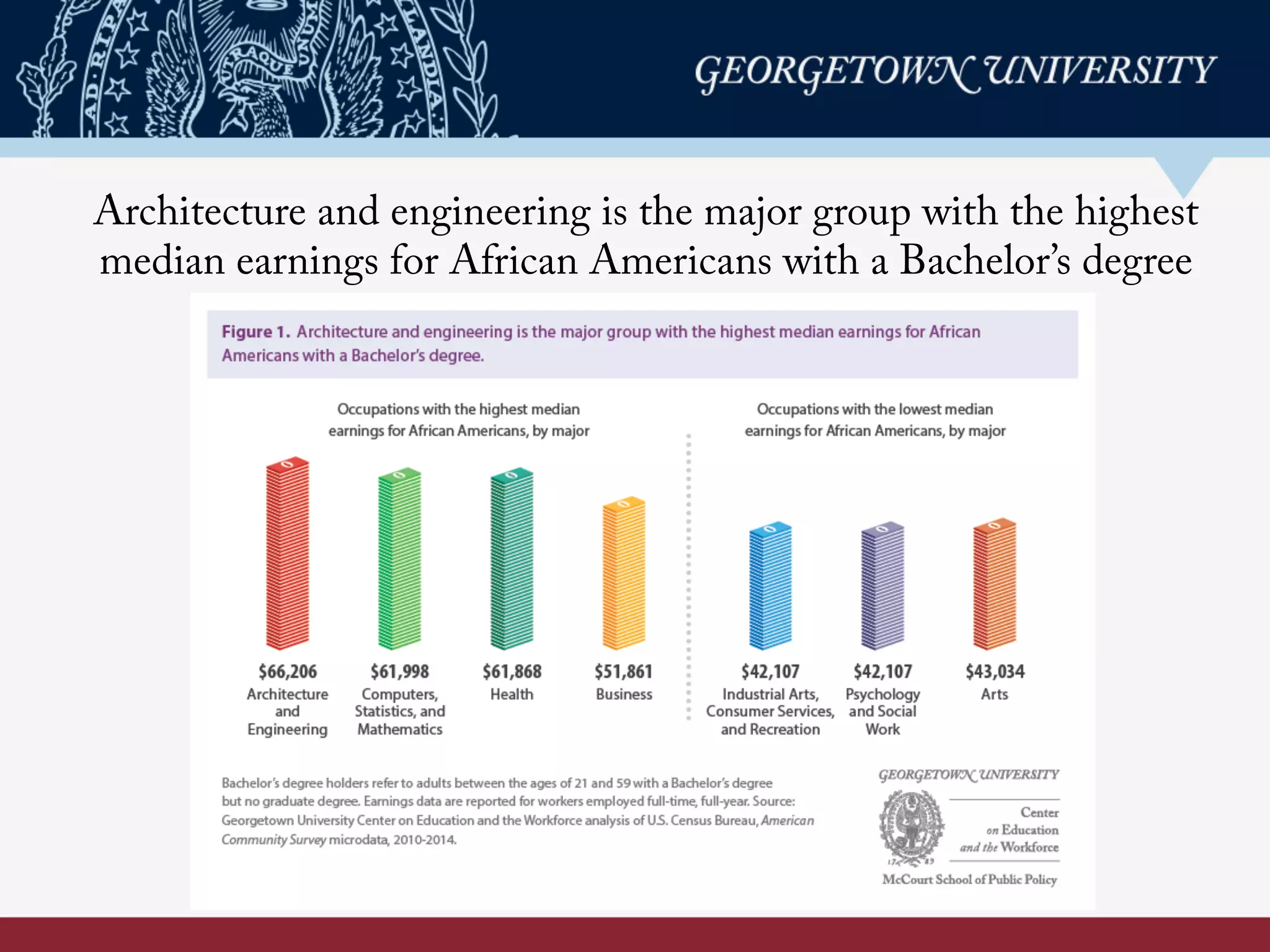
•  African Americans who earned a Bachelor’s degree in
a STEM related major, such as architecture or
engineering, can earn as much as 50 percent more
than African Americans who earned a Bachelor’s
degree in art or psychology and social work
Architecture and engineering is the major group with the highest
median earnings for African Americans with a Bachelor’s degree
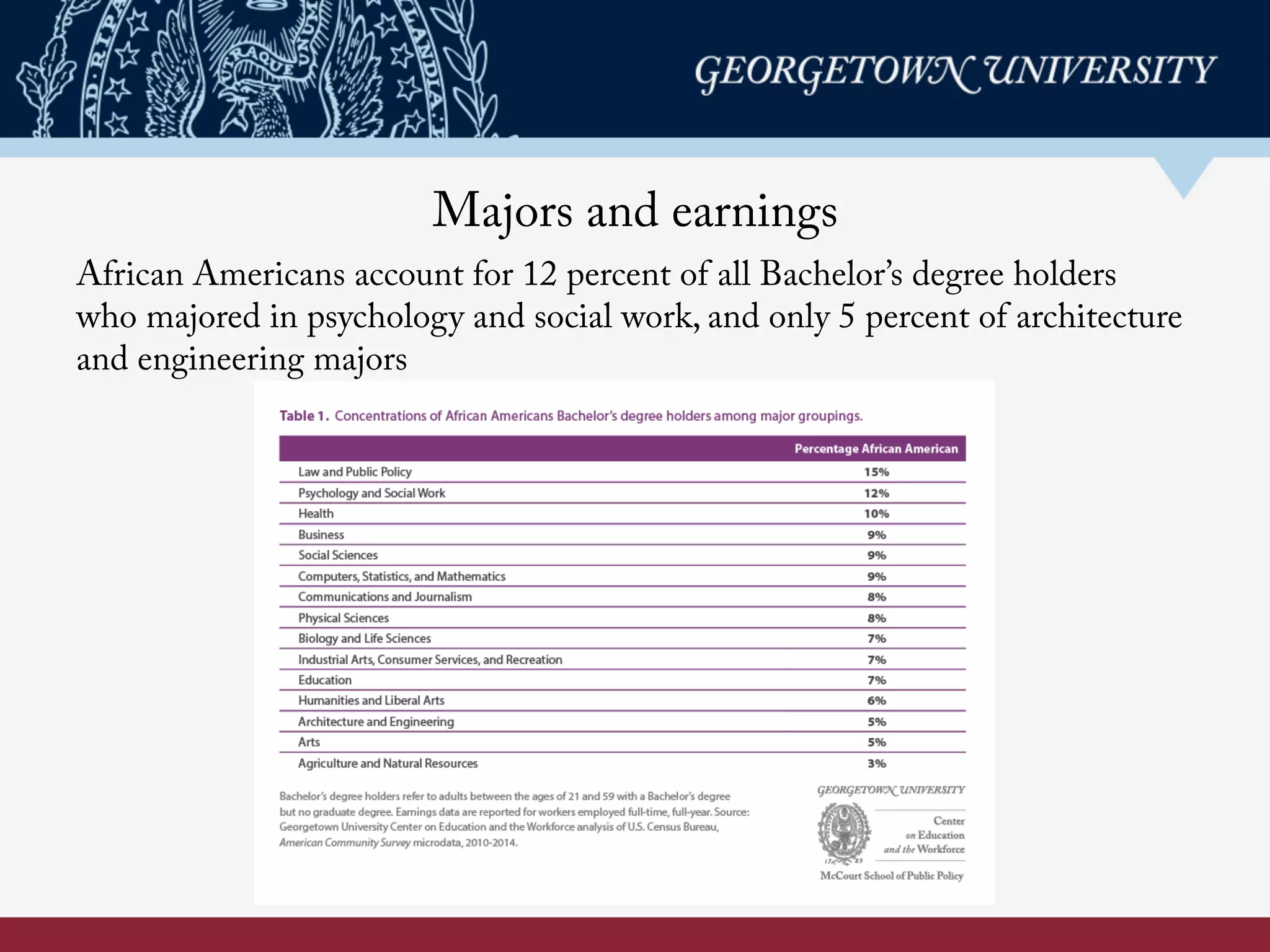
Majors and earnings
African Americans account for 12 percent of all Bachelor’s degree holders
who majored in psychology and social work, and only 5 percent of architecture
and engineering majors
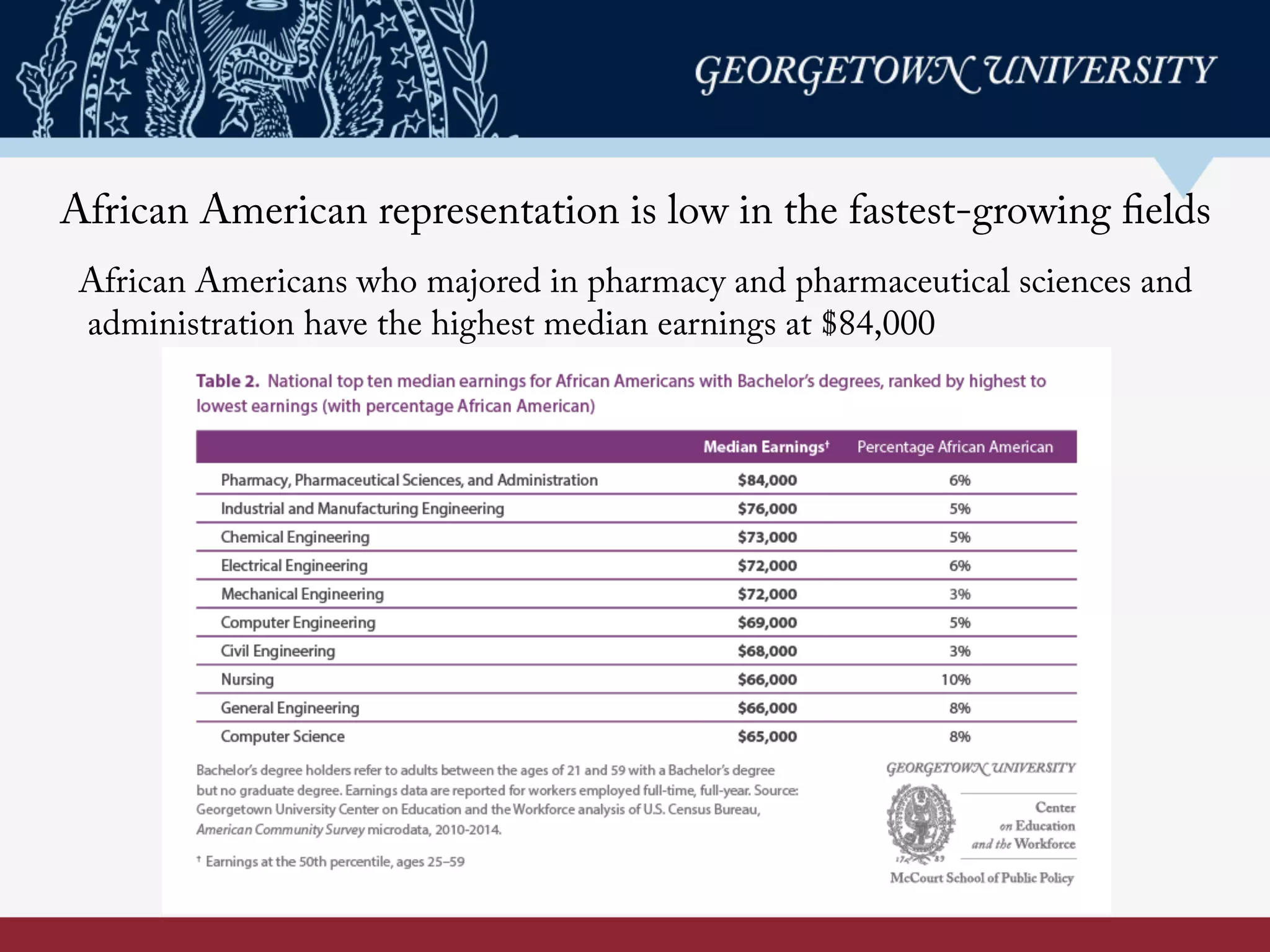
African American representation is low in the fastest-growing fields
African Americans who majored in pharmacy and pharmaceutical sciences and
administration have the highest median earnings at $84,000
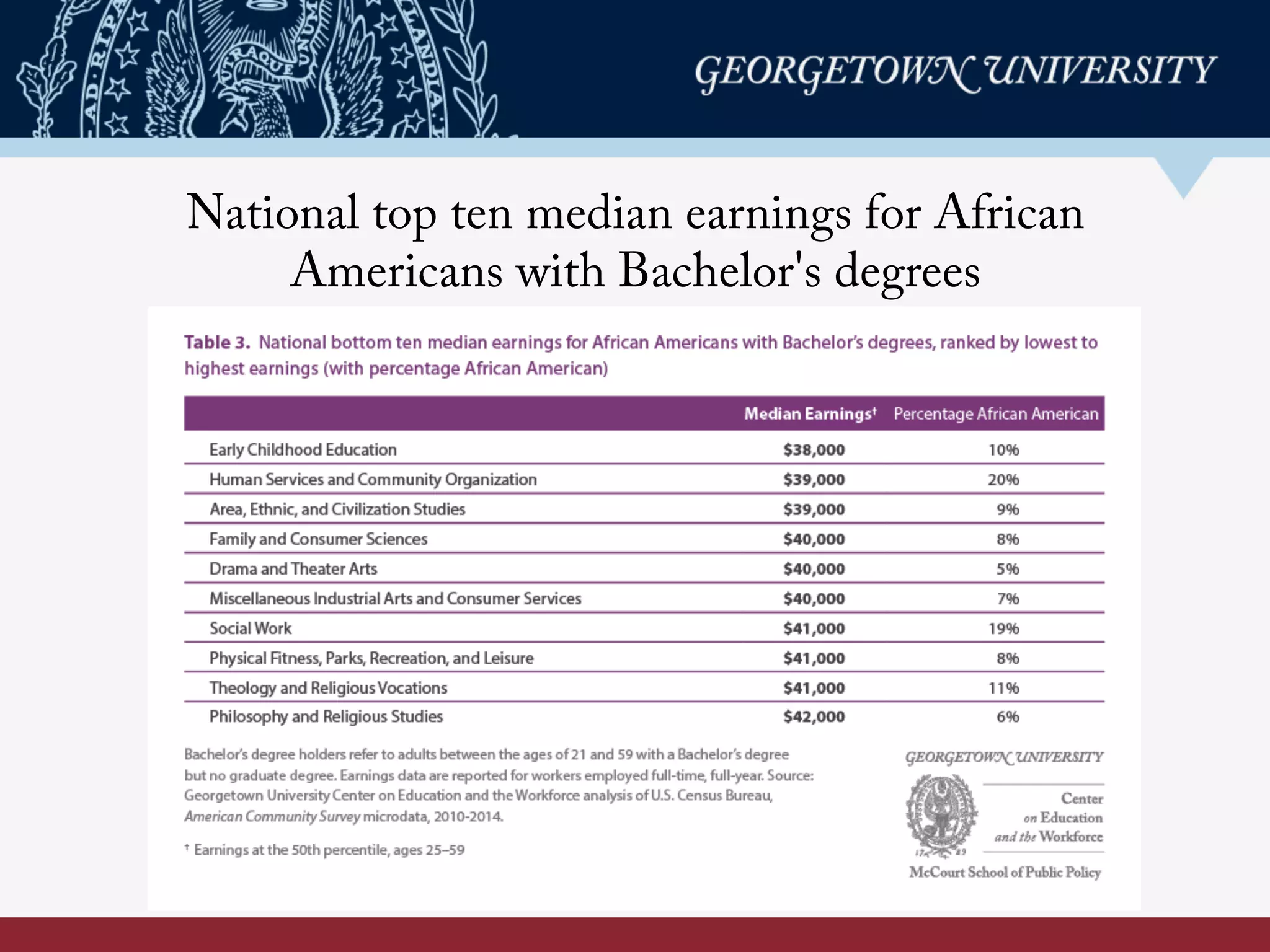
National top ten median earnings for African
Americans with Bachelor's degrees
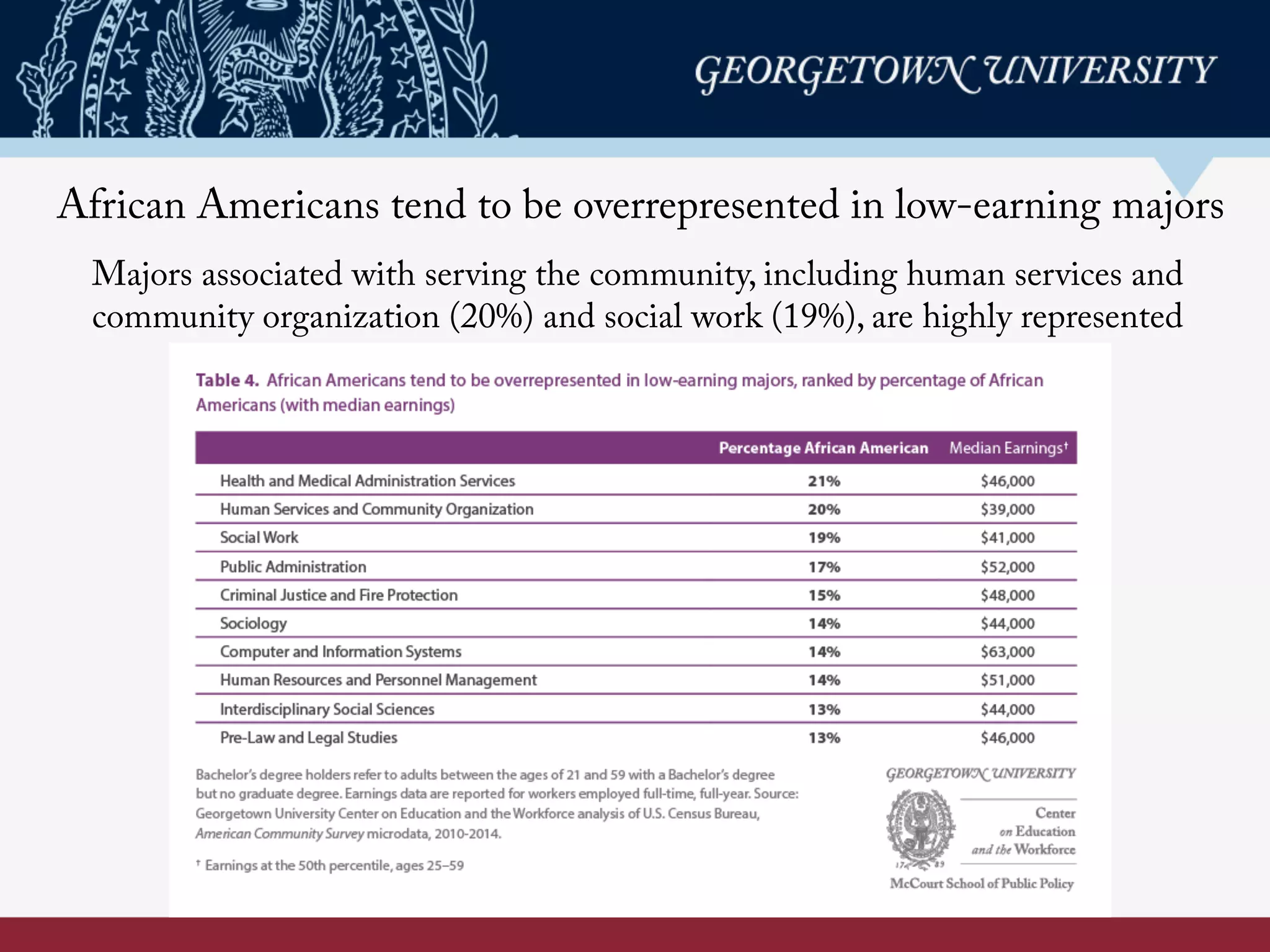
African Americans tend to be overrepresented in low-earning majors
Majors associated with serving the community, including human services and
community organization (20%) and social work (19%), are highly represented
Conclusion
•  Careful career planning is especially crucial for all African
American students to help them avoid debt and
underemployment later in life
•  African Americans who choose majors in well-paying, growing
fields are likely to be better positioned to get higher paying
jobs, acquire less student debt and nurture future generations
For more information:
Email Us | cewgeorgetown@georgetown.edu
Follow Us on Twitter | @GeorgetownCEW
Find us on Facebook | Facebook.com/GeorgetownCEW
Follow us on LinkedIn | linkedin.com/company/georgetowncew
See the full report at: cew.georgetown.edu/africanamericanmajors


African Americans: College Majors and Earnings

  • 1.
    African Americans: College Majorsand Earnings Anthony P. Carnevale, Megan L. Fasules, Andrea Porter, Jennifer Landis-Santos February 9, 2016
  • 2.
    Overview •  Access tocollege for African Americans has increased, but African Americans are highly concentrated in lower-paying majors •  African Americans, who represent 12 percent of the U.S. population, are underrepresented in the number of degree holders in college majors associated with the fastest-growing, highest-paying occupations— STEM, health, and business
  • 3.
    Since 2009, AfricanAmericans have gained ground in social sciences, psychology and social work, and health
  • 4.
    Earnings vary greatlyamong college majors •  African Americans who earned a Bachelor’s degree in a STEM related major, such as architecture or engineering, can earn as much as 50 percent more than African Americans who earned a Bachelor’s degree in art or psychology and social work
  • 5.
    Architecture and engineeringis the major group with the highest median earnings for African Americans with a Bachelor’s degree
  • 6.
    Majors and earnings AfricanAmericans account for 12 percent of all Bachelor’s degree holders who majored in psychology and social work, and only 5 percent of architecture and engineering majors
  • 7.
    African American representationis low in the fastest-growing fields African Americans who majored in pharmacy and pharmaceutical sciences and administration have the highest median earnings at $84,000
  • 8.
    National top tenmedian earnings for African Americans with Bachelor's degrees
  • 9.
    African Americans tendto be overrepresented in low-earning majors Majors associated with serving the community, including human services and community organization (20%) and social work (19%), are highly represented
  • 10.
    Conclusion •  Careful careerplanning is especially crucial for all African American students to help them avoid debt and underemployment later in life •  African Americans who choose majors in well-paying, growing fields are likely to be better positioned to get higher paying jobs, acquire less student debt and nurture future generations
  • 11.
    For more information: EmailUs | cewgeorgetown@georgetown.edu Follow Us on Twitter | @GeorgetownCEW Find us on Facebook | Facebook.com/GeorgetownCEW Follow us on LinkedIn | linkedin.com/company/georgetowncew See the full report at: cew.georgetown.edu/africanamericanmajors