Understand the difference between broad online brand-building (digital marketing) and result-driven, ROI-focused strategies (performance marketing) that pay only for actual outcomes.
Introduction / Context
Whatis Marketing in the digital age?
Why comparing Performance Marketing
vs Digital Marketing matters
Company / project context
3.
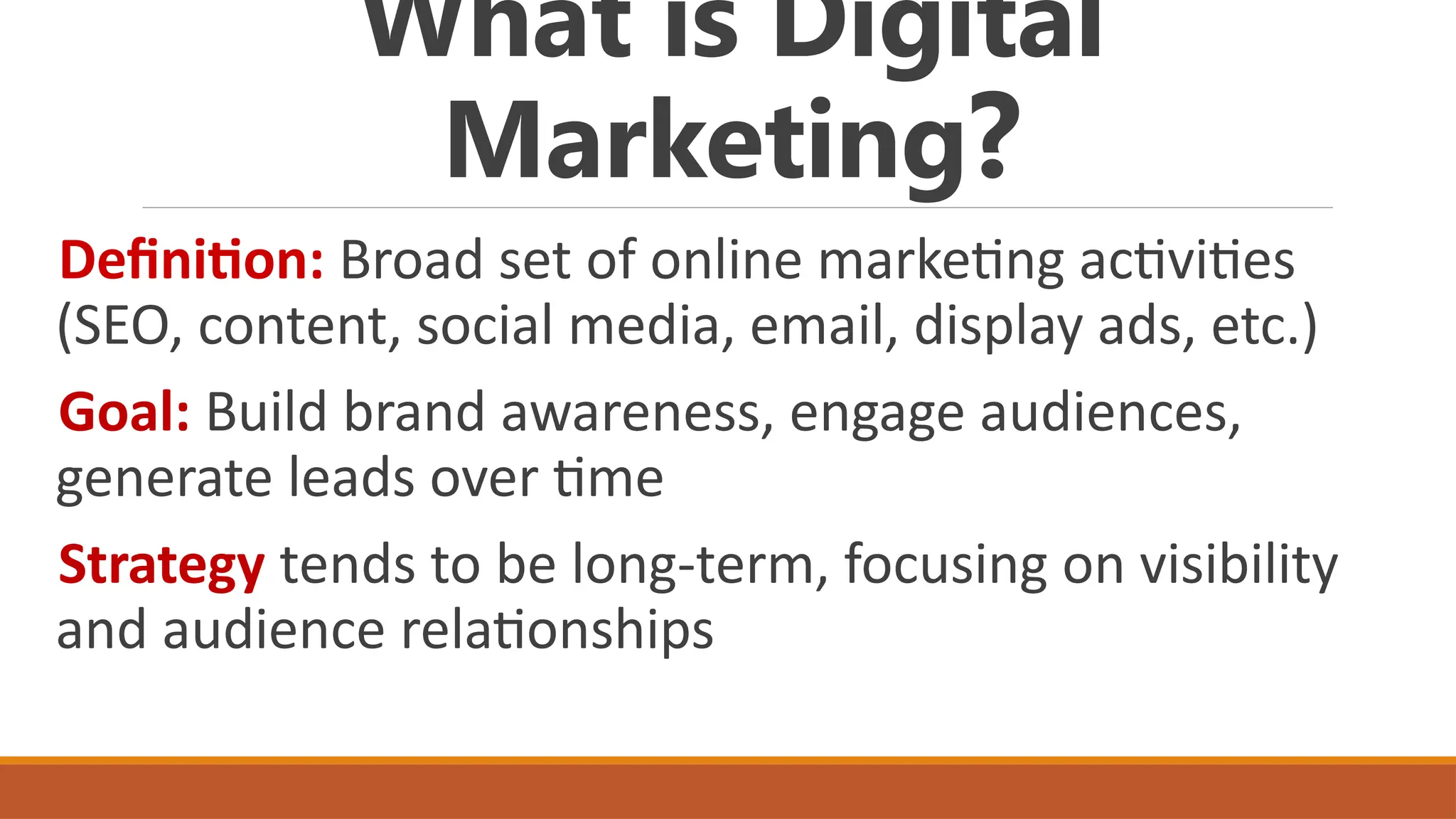
What is Digital
Marketing?
Definition:Broad set of online marketing activities
(SEO, content, social media, email, display ads, etc.)
Goal: Build brand awareness, engage audiences,
generate leads over time
Strategy tends to be long-term, focusing on visibility
and audience relationships
4.
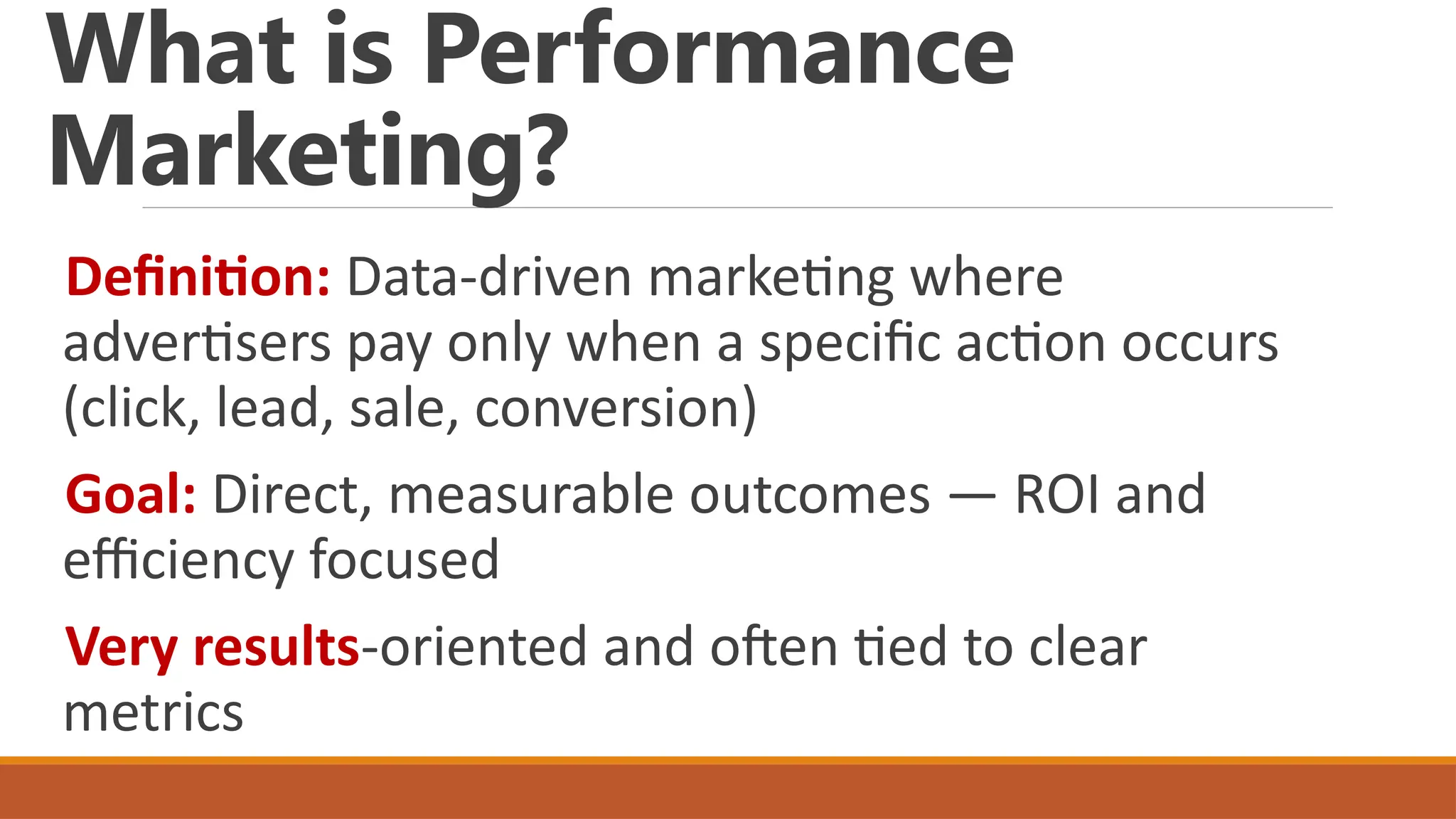
What is Performance
Marketing?
Definition:Data-driven marketing where
advertisers pay only when a specific action occurs
(click, lead, sale, conversion)
Goal: Direct, measurable outcomes — ROI and
efficiency focused
Very results-oriented and often tied to clear
metrics
5.
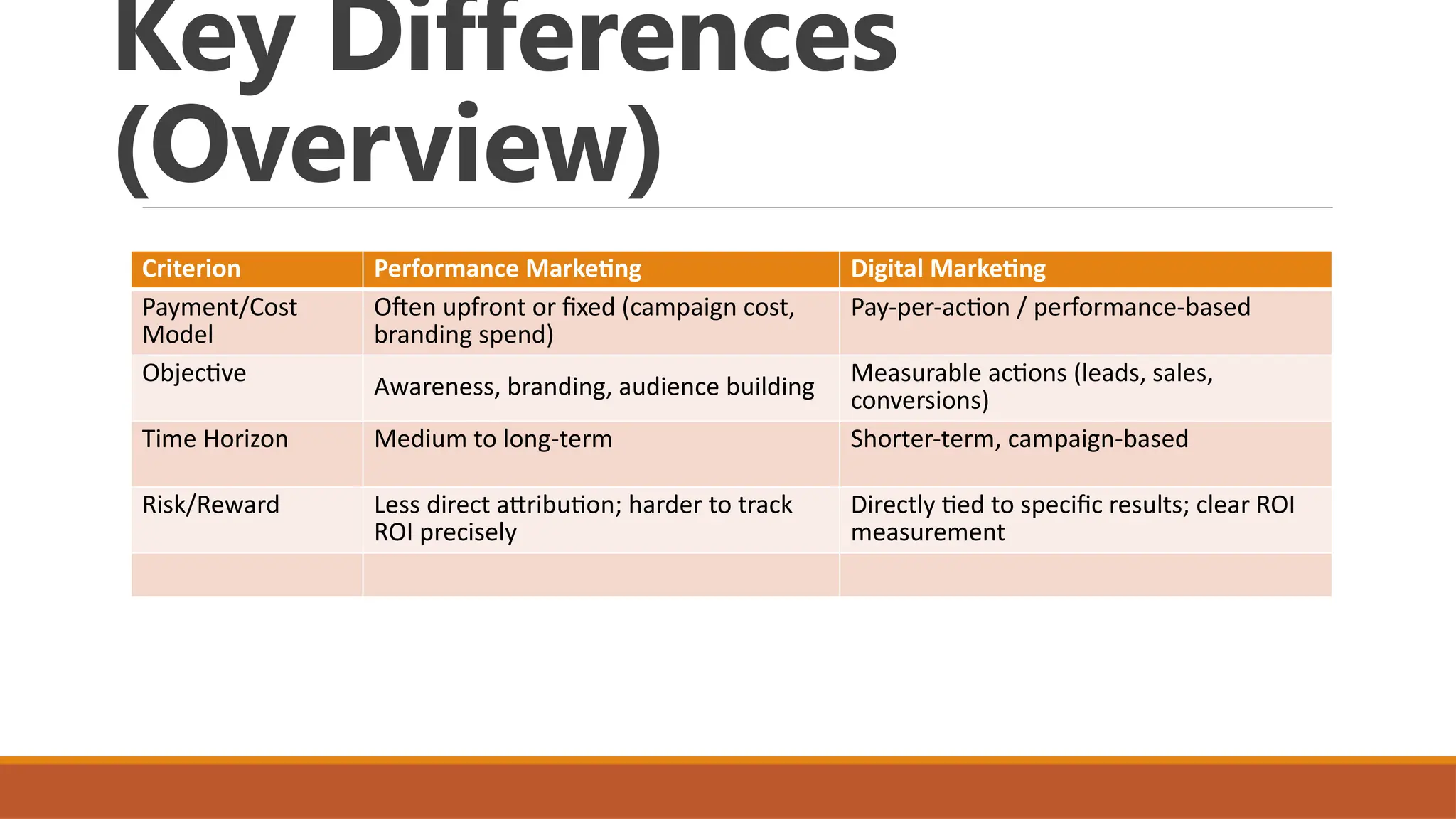
Key Differences
(Overview)
Criterion PerformanceMarketing Digital Marketing
Payment/Cost
Model
Often upfront or fixed (campaign cost,
branding spend)
Pay-per-action / performance-based
Objective
Awareness, branding, audience building
Measurable actions (leads, sales,
conversions)
Time Horizon Medium to long-term Shorter-term, campaign-based
Risk/Reward Less direct attribution; harder to track
ROI precisely
Directly tied to specific results; clear ROI
measurement
6.
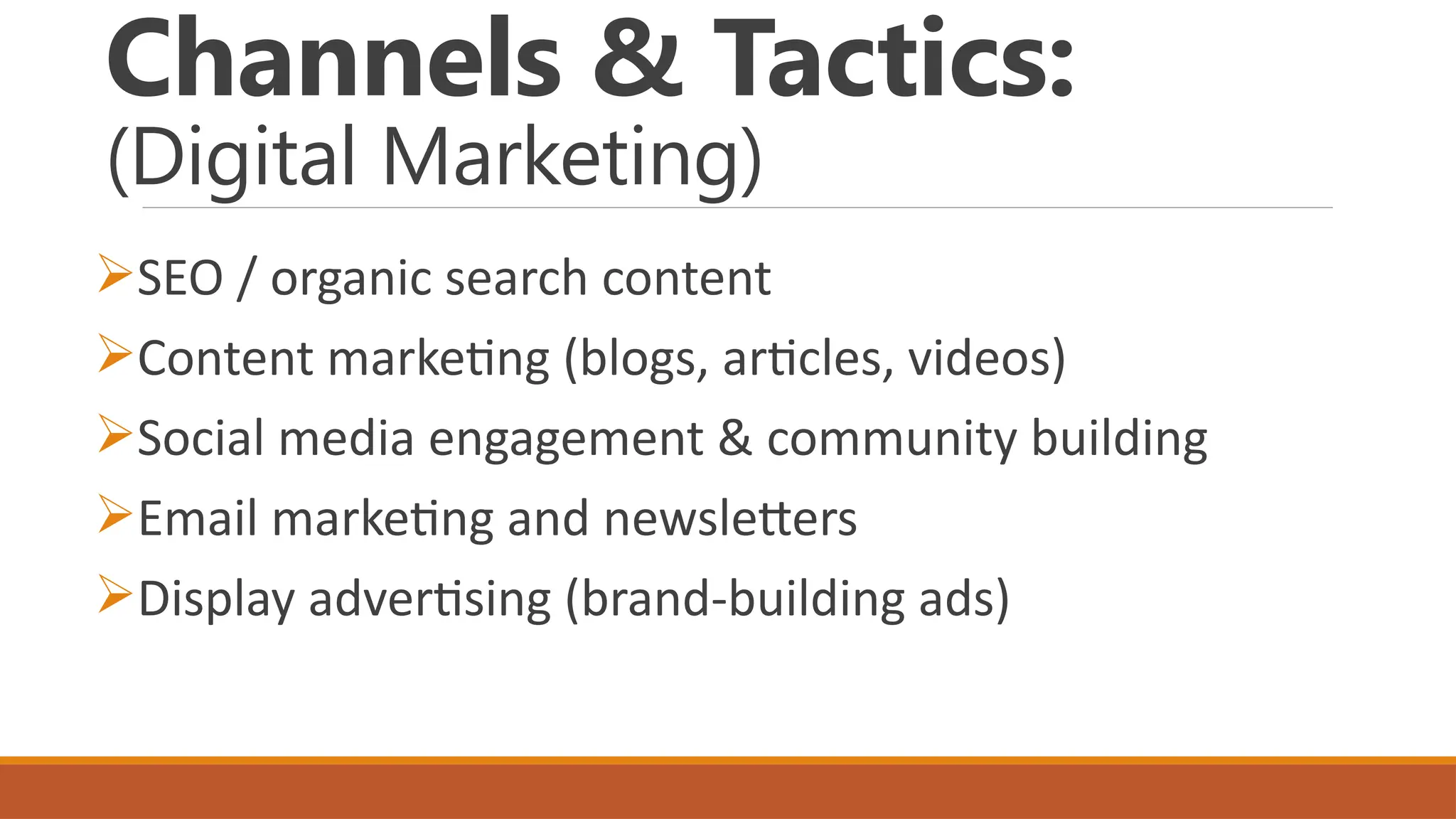
Channels & Tactics:
(DigitalMarketing)
SEO / organic search content
Content marketing (blogs, articles, videos)
Social media engagement & community building
Email marketing and newsletters
Display advertising (brand-building ads)
7.
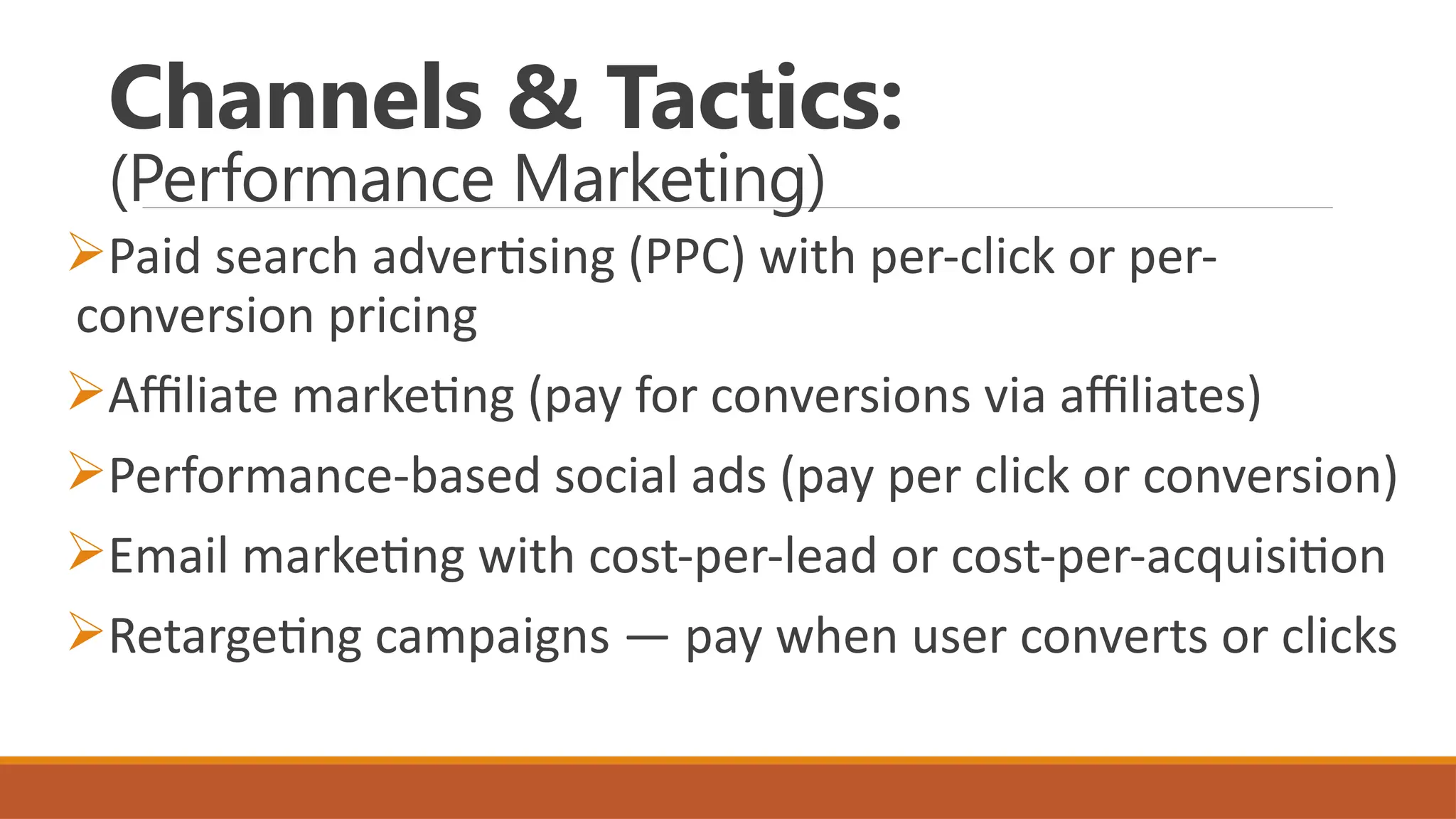
Channels & Tactics:
(PerformanceMarketing)
Paid search advertising (PPC) with per-click or per-
conversion pricing
Affiliate marketing (pay for conversions via affiliates)
Performance-based social ads (pay per click or conversion)
Email marketing with cost-per-lead or cost-per-acquisition
Retargeting campaigns — pay when user converts or clicks
8.
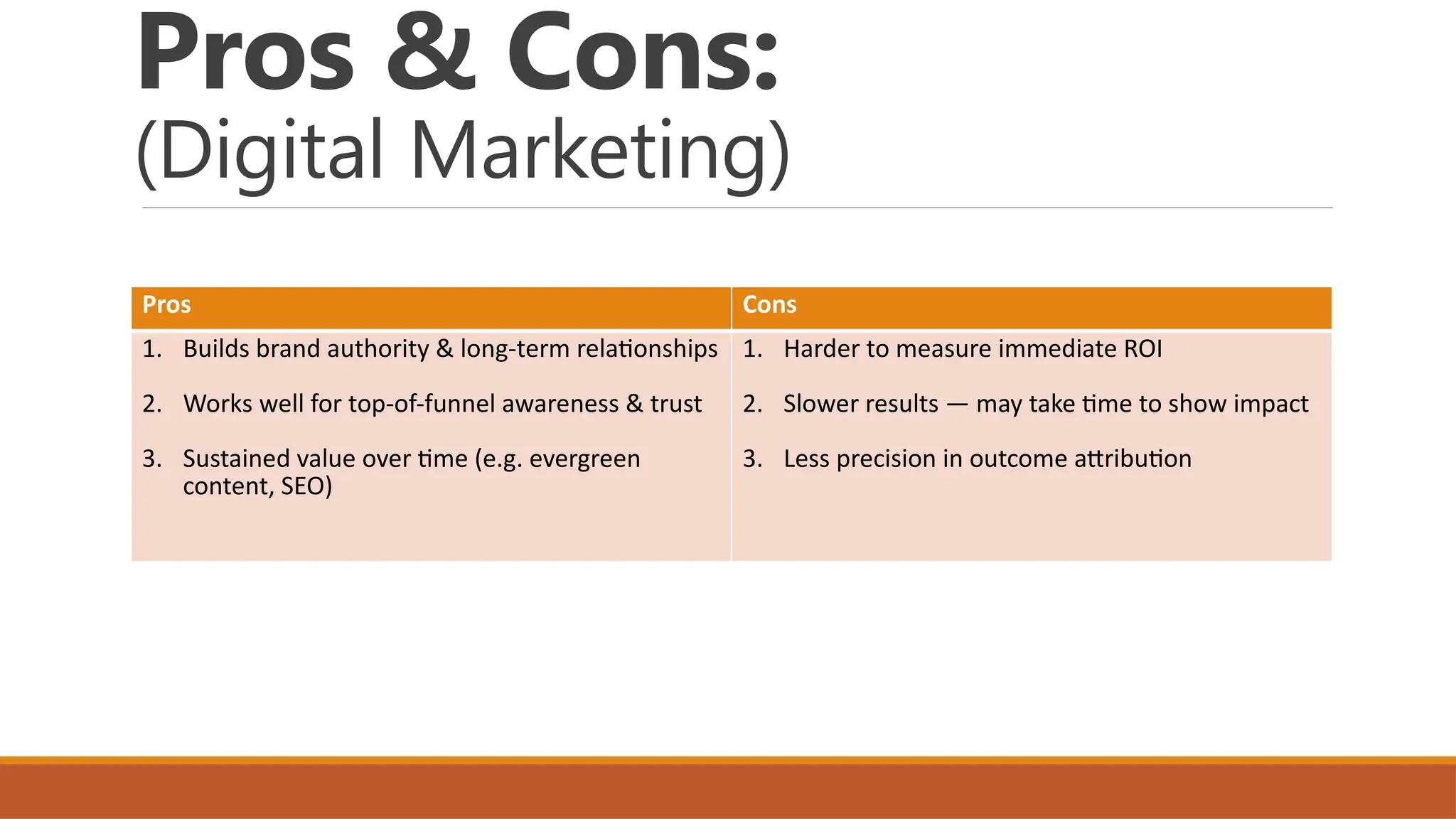
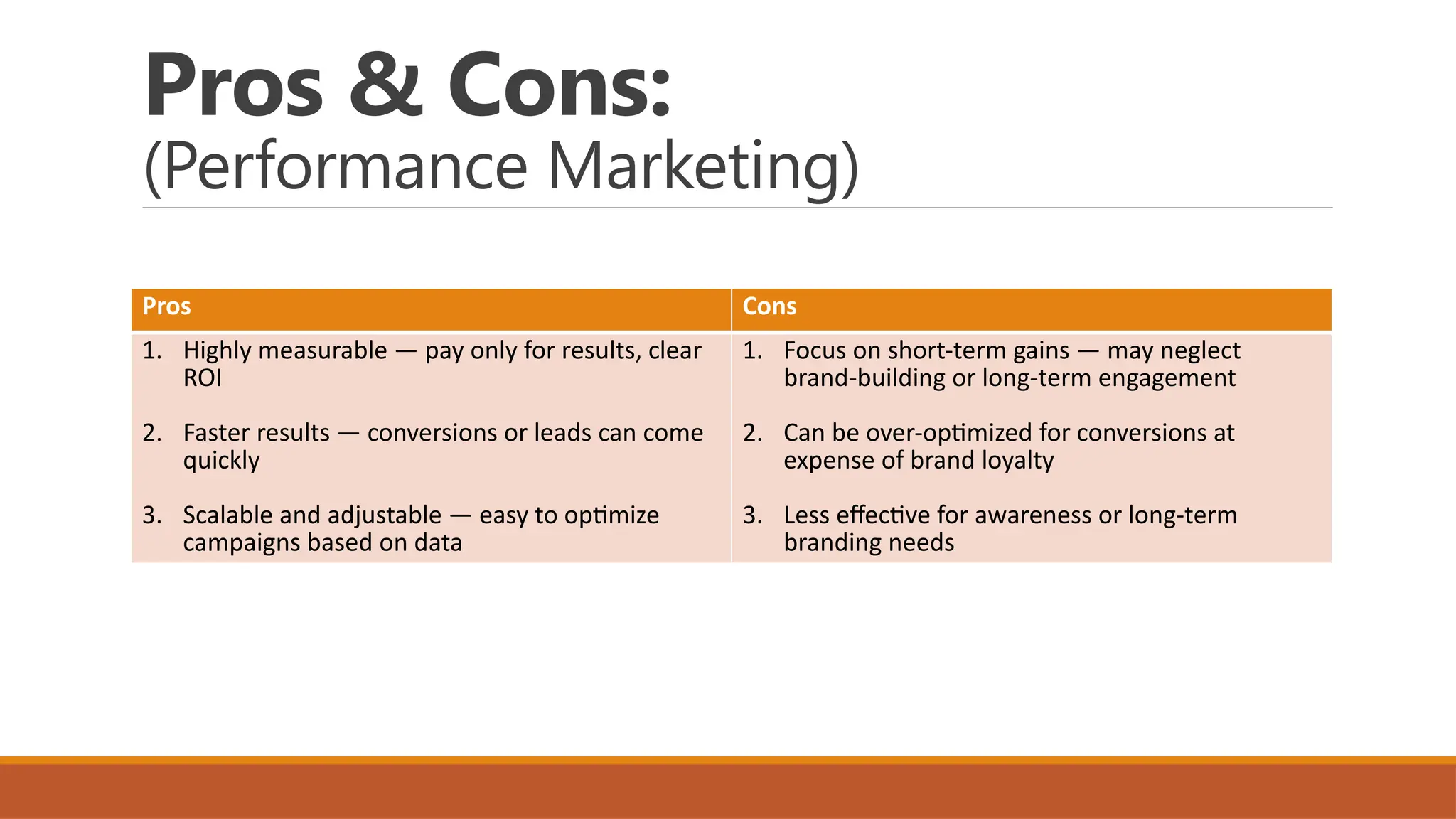
Pros & Cons:
(DigitalMarketing)
Pros Cons
1. Builds brand authority & long-term relationships
2. Works well for top-of-funnel awareness & trust
3. Sustained value over time (e.g. evergreen
content, SEO)
1. Harder to measure immediate ROI
2. Slower results — may take time to show impact
3. Less precision in outcome attribution
9.
Pros & Cons:
(PerformanceMarketing)
Pros Cons
1. Highly measurable — pay only for results, clear
ROI
2. Faster results — conversions or leads can come
quickly
3. Scalable and adjustable — easy to optimize
campaigns based on data
1. Focus on short-term gains — may neglect
brand-building or long-term engagement
2. Can be over-optimized for conversions at
expense of brand loyalty
3. Less effective for awareness or long-term
branding needs
10.
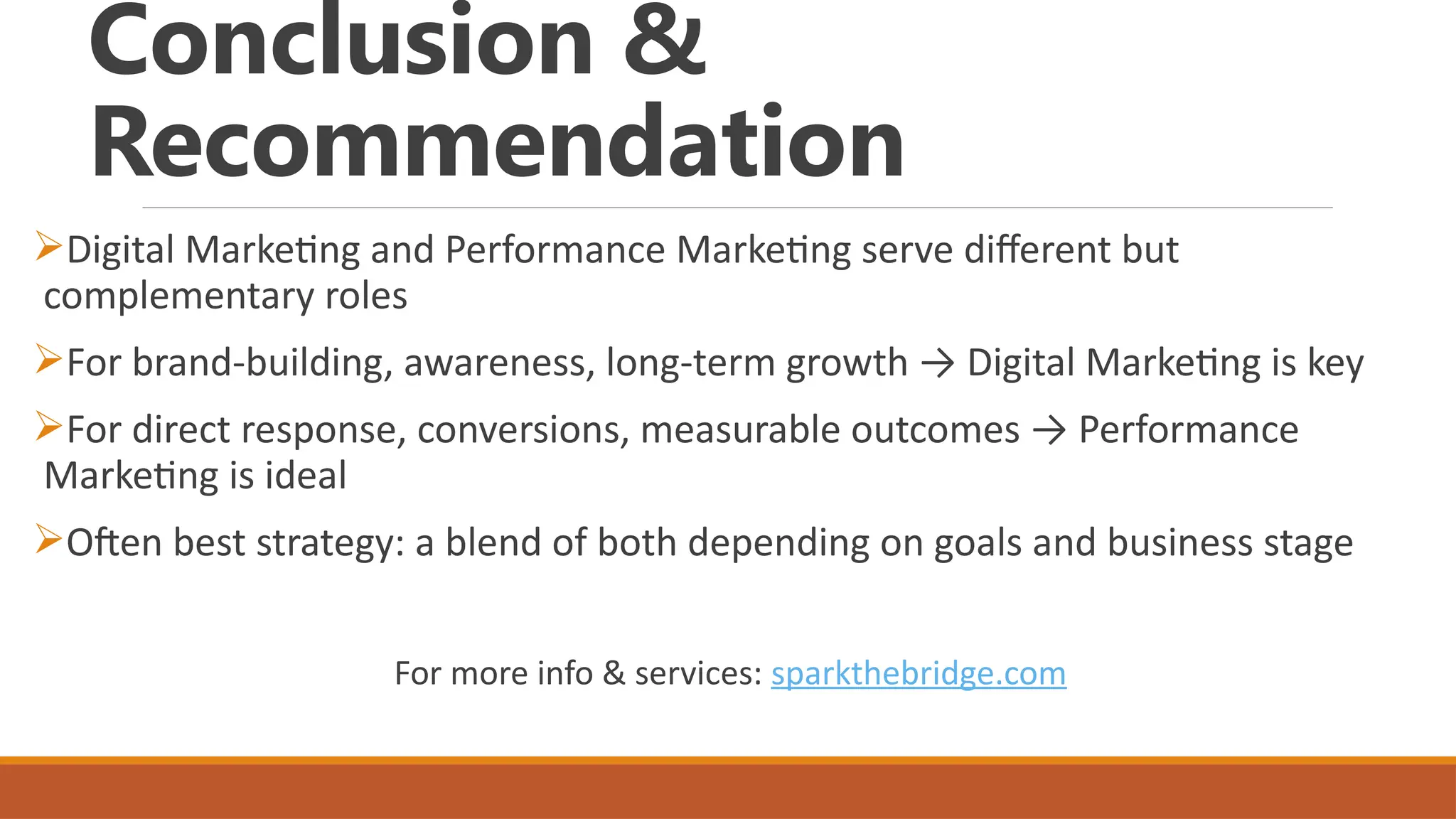
Conclusion &
Recommendation
Digital Marketingand Performance Marketing serve different but
complementary roles
For brand-building, awareness, long-term growth → Digital Marketing is key
For direct response, conversions, measurable outcomes → Performance
Marketing is ideal
Often best strategy: a blend of both depending on goals and business stage
For more info & services: sparkthebridge.com