Blood Group ABO, Rh & Other
System!
WELCOME TO MY CLASS
MD. ABU SAYED
RN. BSN (RMU)
Cardiothoracic Nursing
Nursing Instructor
Pabna Ideal Nursing College
Introduction
Blood grouping is a method of classifying blood based
on the presence or absence of specific antigens on the
surface of RBCs.
Understanding blood groups is essential for safe
transfusion, pregnancy care, and clinical practice.
Blood Groups
a. Antigens (Agglutinogens)
 Proteins or carbohydrates located on RBC membranes.
 Determine an individual’s blood group.
b. Antibodies (Agglutinins)
 Present in plasma.
 React with specific antigens causing agglutination
Important Notes
 O group = Universal Donor (no antigens)
 AB group = Universal Recipient (no antibodies)
.
2. Basic Concepts
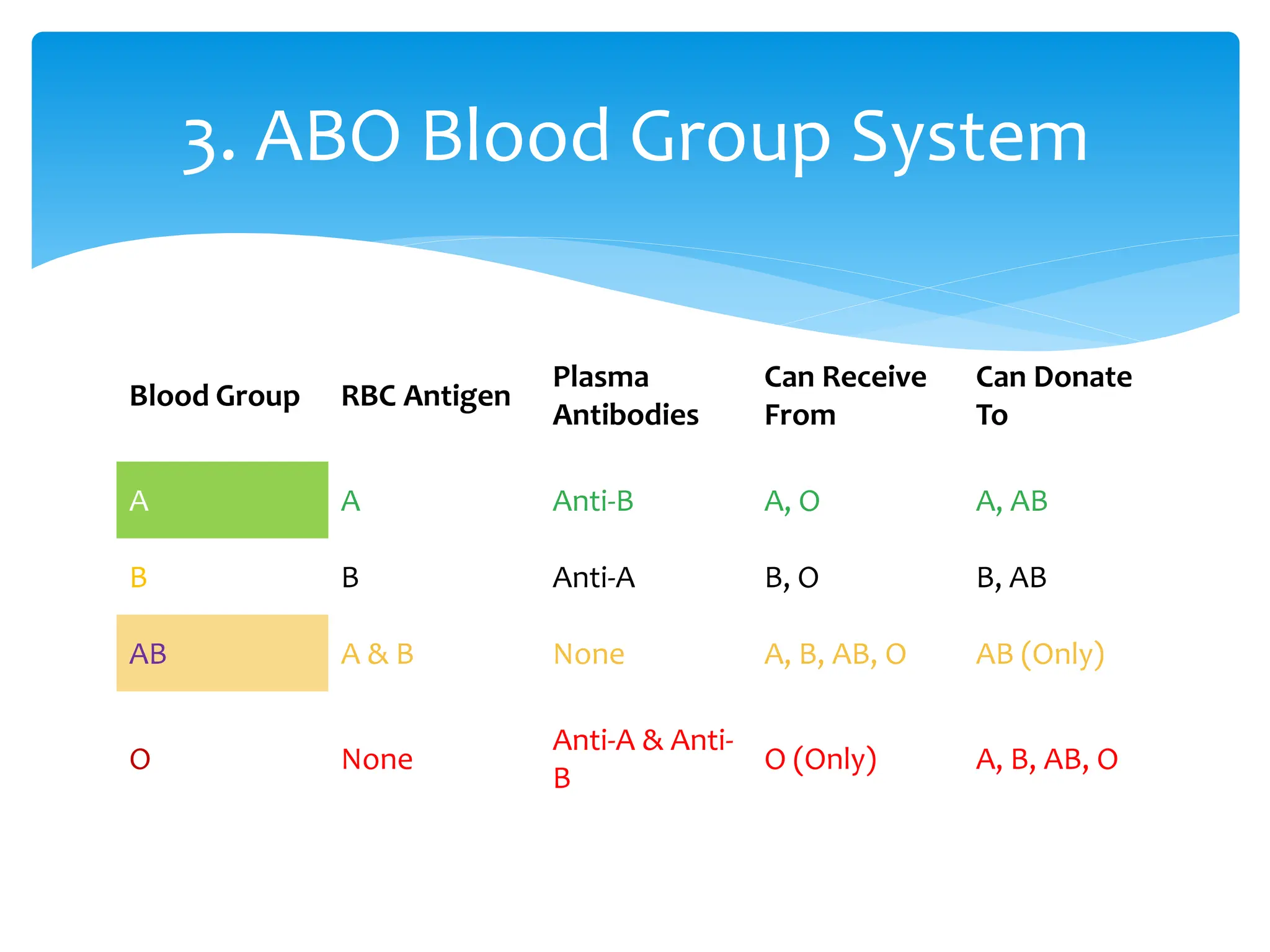
3. ABO Blood Group System
Blood Group RBC Antigen
Plasma
Antibodies
Can Receive
From
Can Donate
To
A A Anti-B A, O A, AB
B B Anti-A B, O B, AB
AB A & B None A, B, AB, O AB (Only)
O None
Anti-A & Anti-
B
O (Only) A, B, AB, O
Second most important system.
 Rh Antigen
 Major determinant: D antigen
 If D antigen present → Rh Positive (+)
 If D antigen absent → Rh Negative (−)
 Why Rh is important?
 Transfusion Reactions
Rh– person receiving Rh+ blood → antibodies develop →
hemolysis.
4. Rh Blood Group System
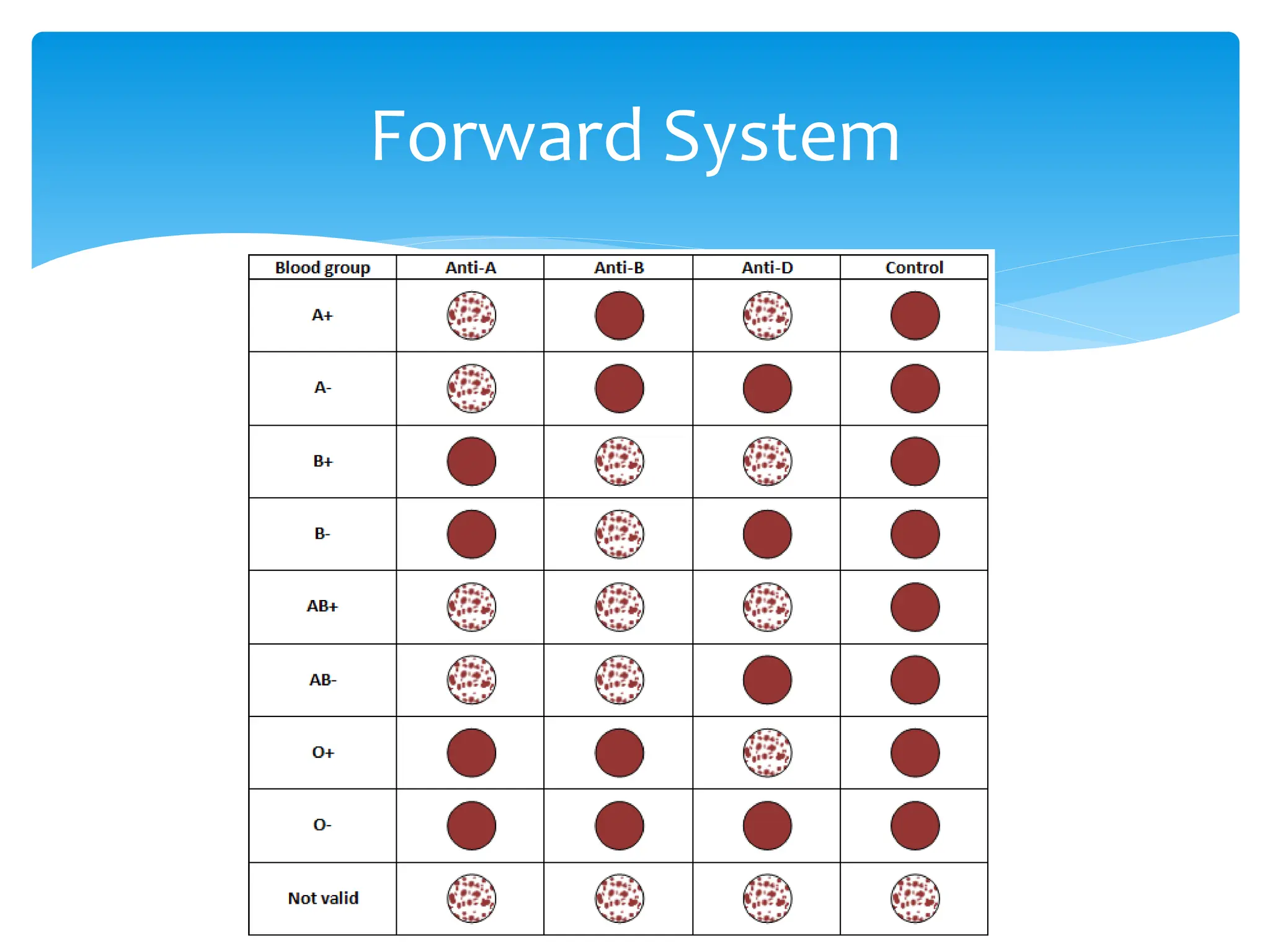
Forward System
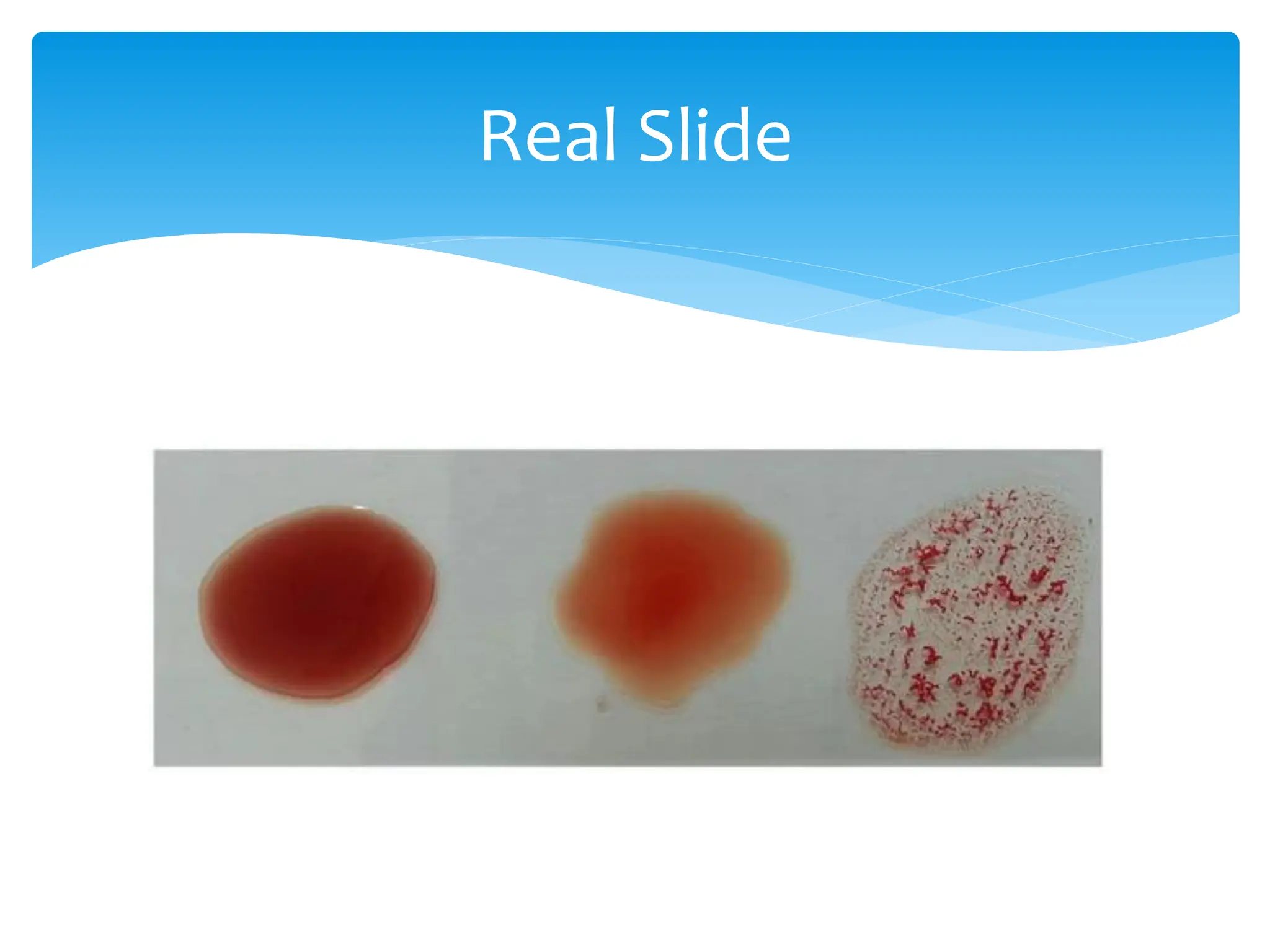
Real Slide
 Occurs when Rh– mother carries Rh+ fetus
 Mother produces anti-D antibodies
 In subsequent pregnancy, these antibodies destroy fetal RBCs
 Prevention: Anti-D Immunoglobulin (Rh IG) at 28 weeks +
after delivery
Pregnancy (Erythroblastosis Fetalis /
Hemolytic Disease of Newborn)
Blood Typing Methods
1. Forward (Cell) Typing
 Detects antigens on RBCs
 RBCs mixed with anti-A and anti-B sera → observe
agglutination
2. Reverse (Serum) Typing
 Detects antibodies in plasma
 Plasma mixed with known A and B cells
3. Rh Typing
 RBCs mixed with anti-D antibodies
a. Acute Hemolytic Reaction
 Occurs due to ABO incompatibility
 Symptoms: Fever, chills, back pain, hypotension,
hemoglobinuria
 Medical emergency
b. Delayed Hemolytic Reaction
 Due to Rh or minor group antibodies
c. Allergic Reactions
 Due to plasma proteins
6. Blood Transfusion Reactions
 Safe transfusion practices
 Crossmatching & compatibility testing
 Care of newborns at risk for Rh disease
 Patient education (e.g., Rh status in pregnancy)
 Recognizing transfusion reactions early
Clinical Importance for Nurses
 ABO & Rh: most clinically important systems
 Antigens determine blood group; antibodies
determine compatibility
 O = universal donor (RBCs), AB = universal recipient
 Rh disease preventable with Anti-D
 Blood typing & crossmatch essential before
transfusion
Summary
Have You Any Question?
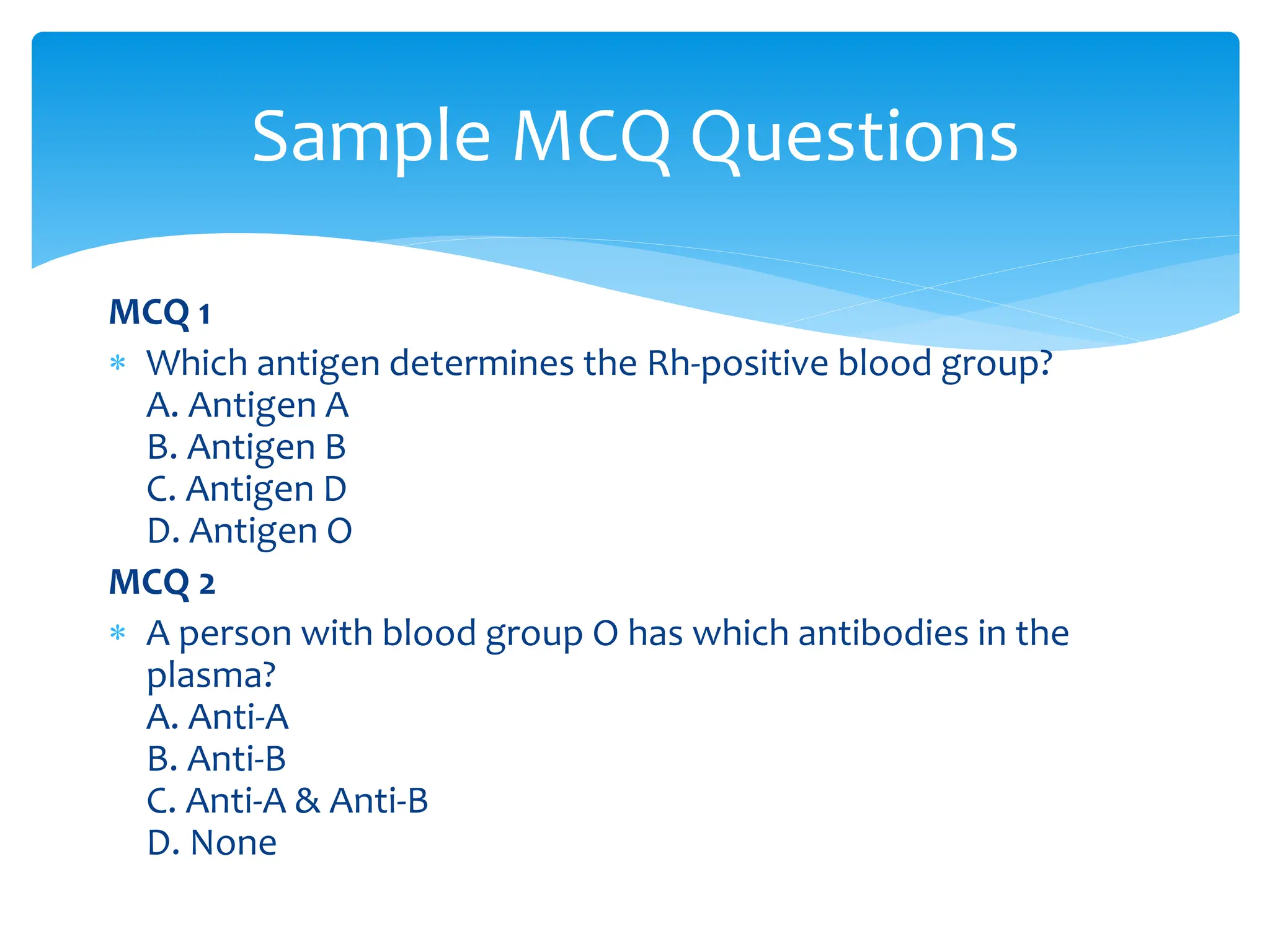
MCQ 1
 Which antigen determines the Rh-positive blood group?
A. Antigen A
B. Antigen B
C. Antigen D
D. Antigen O
MCQ 2
 A person with blood group O has which antibodies in the
plasma?
A. Anti-A
B. Anti-B
C. Anti-A & Anti-B
D. None
Sample MCQ Questions
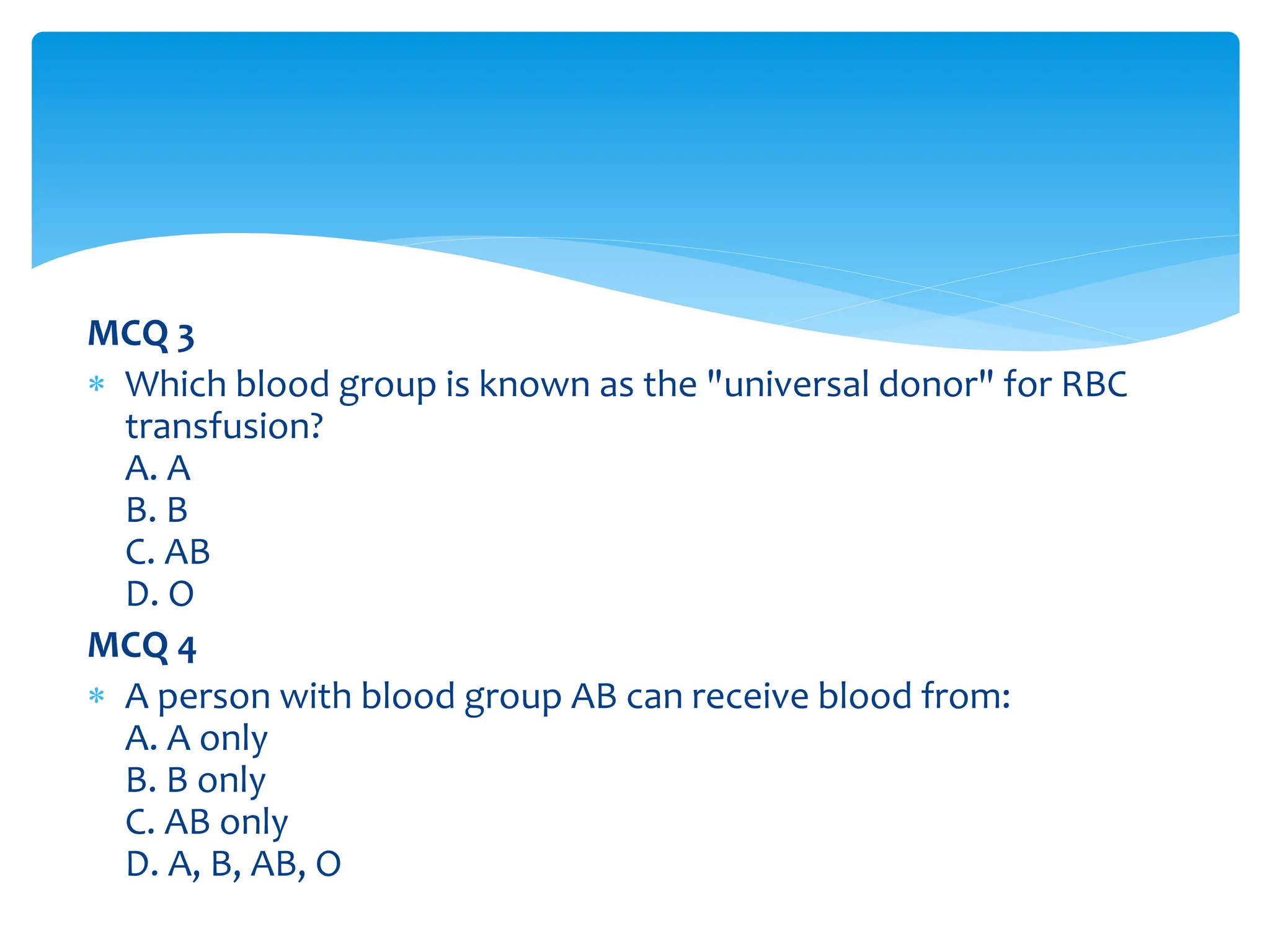
MCQ 3
 Which blood group is known as the "universal donor" for RBC
transfusion?
A. A
B. B
C. AB
D. O
MCQ 4
 A person with blood group AB can receive blood from:
A. A only
B. B only
C. AB only
D. A, B, AB, O
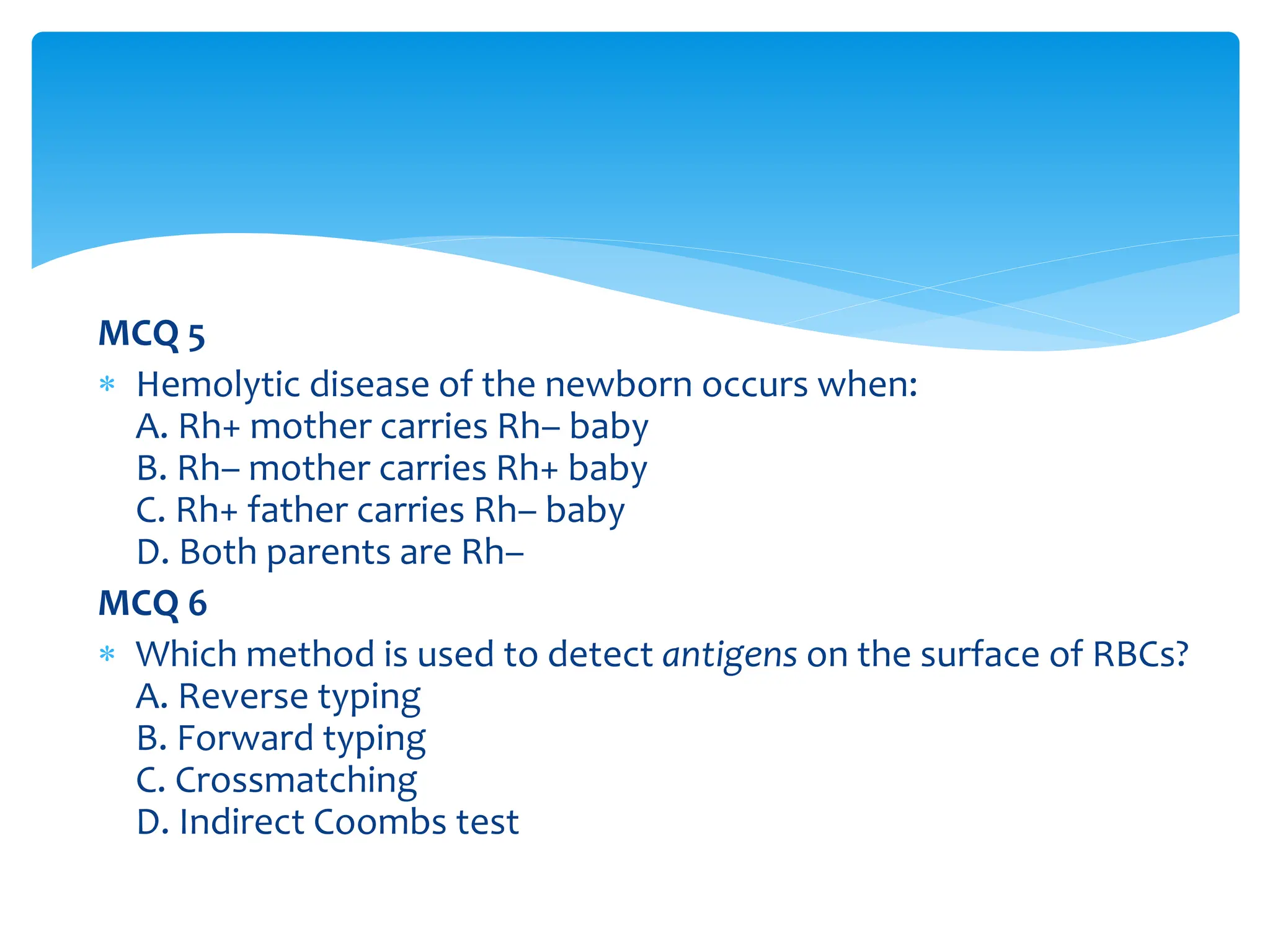
MCQ 5
 Hemolytic disease of the newborn occurs when:
A. Rh+ mother carries Rh– baby
B. Rh– mother carries Rh+ baby
C. Rh+ father carries Rh– baby
D. Both parents are Rh–
MCQ 6
 Which method is used to detect antigens on the surface of RBCs?
A. Reverse typing
B. Forward typing
C. Crossmatching
D. Indirect Coombs test
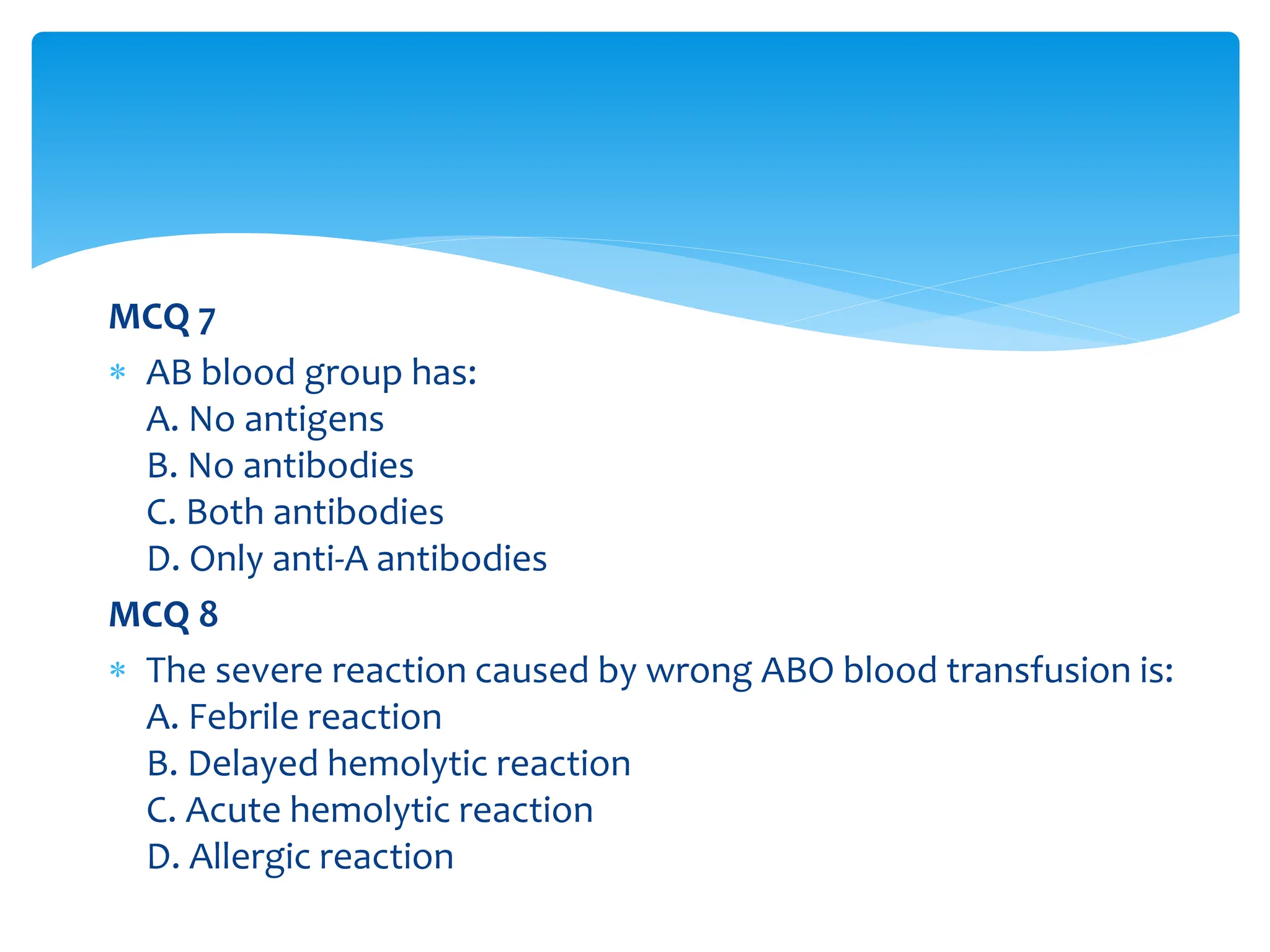
MCQ 7
 AB blood group has:
A. No antigens
B. No antibodies
C. Both antibodies
D. Only anti-A antibodies
MCQ 8
 The severe reaction caused by wrong ABO blood transfusion is:
A. Febrile reaction
B. Delayed hemolytic reaction
C. Acute hemolytic reaction
D. Allergic reaction
MCQ 9
 Anti-D immunoglobulin (RhIG) is given to:
A. Rh+ mother
B. Rh– mother
C. Rh+ newborn
D. AB blood group individuals
MCQ 10
 Which of the following blood groups does not contain any
antigen on RBCs?
A. A
B. B
C. AB
D. O
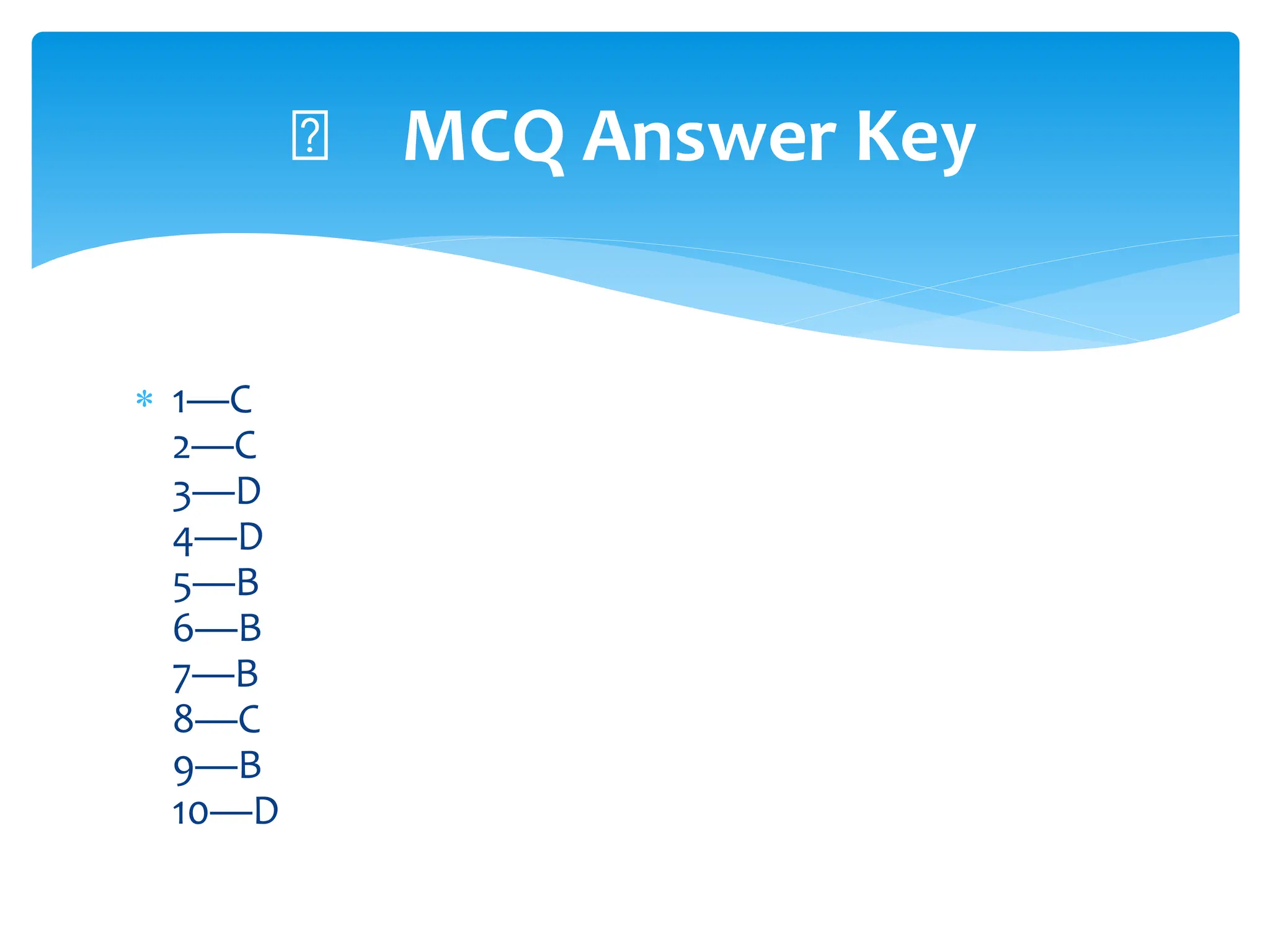
 1—C
2—C
3—D
4—D
5—B
6—B
7—B
8—C
9—B
10—D
✅ MCQ Answer Key
SAQ 1:
 Define blood group and explain the basis of blood group classification.
SAQ 2:
 Write the differences between Forward typing and Reverse typing.
SAQ 3:
 Describe the ABO blood group system with antigens and antibodies.
SAQ 4:
 Explain the importance of the Rh factor in blood transfusion and
pregnancy.
SAQ 5:
 What is hemolytic disease of the newborn (HDN / Erythroblastosis
fetalis)? Mention its prevention.
Sample Questions
SAQ 6:
 Write the causes and clinical features of Acute Hemolytic Transfusion
Reaction.
SAQ 7:
 Why is O group considered the universal donor? Explain physiologically.
SAQ 8:
 Describe the process of crossmatching before blood transfusion.
SAQ 9:
 Mention the clinical importance of blood grouping in nursing practice.
SAQ 10:
 List the components of blood used in transfusion and explain which
groups can receive them.
Thank You All !

Blood Group ABO, Rh and others System best and easy lecture for Nursing, Medical students..pdf

  • 1.
    Blood Group ABO,Rh & Other System!
  • 2.
    WELCOME TO MYCLASS MD. ABU SAYED RN. BSN (RMU) Cardiothoracic Nursing Nursing Instructor Pabna Ideal Nursing College
  • 3.
    Introduction Blood grouping isa method of classifying blood based on the presence or absence of specific antigens on the surface of RBCs. Understanding blood groups is essential for safe transfusion, pregnancy care, and clinical practice. Blood Groups
  • 4.
    a. Antigens (Agglutinogens) Proteins or carbohydrates located on RBC membranes.  Determine an individual’s blood group. b. Antibodies (Agglutinins)  Present in plasma.  React with specific antigens causing agglutination Important Notes  O group = Universal Donor (no antigens)  AB group = Universal Recipient (no antibodies) . 2. Basic Concepts
  • 5.
    3. ABO BloodGroup System Blood Group RBC Antigen Plasma Antibodies Can Receive From Can Donate To A A Anti-B A, O A, AB B B Anti-A B, O B, AB AB A & B None A, B, AB, O AB (Only) O None Anti-A & Anti- B O (Only) A, B, AB, O
  • 6.
    Second most importantsystem.  Rh Antigen  Major determinant: D antigen  If D antigen present → Rh Positive (+)  If D antigen absent → Rh Negative (−)  Why Rh is important?  Transfusion Reactions Rh– person receiving Rh+ blood → antibodies develop → hemolysis. 4. Rh Blood Group System
  • 7.
  • 8.
  • 9.
     Occurs whenRh– mother carries Rh+ fetus  Mother produces anti-D antibodies  In subsequent pregnancy, these antibodies destroy fetal RBCs  Prevention: Anti-D Immunoglobulin (Rh IG) at 28 weeks + after delivery Pregnancy (Erythroblastosis Fetalis / Hemolytic Disease of Newborn)
  • 10.
    Blood Typing Methods 1.Forward (Cell) Typing  Detects antigens on RBCs  RBCs mixed with anti-A and anti-B sera → observe agglutination 2. Reverse (Serum) Typing  Detects antibodies in plasma  Plasma mixed with known A and B cells 3. Rh Typing  RBCs mixed with anti-D antibodies
  • 11.
    a. Acute HemolyticReaction  Occurs due to ABO incompatibility  Symptoms: Fever, chills, back pain, hypotension, hemoglobinuria  Medical emergency b. Delayed Hemolytic Reaction  Due to Rh or minor group antibodies c. Allergic Reactions  Due to plasma proteins 6. Blood Transfusion Reactions
  • 12.
     Safe transfusionpractices  Crossmatching & compatibility testing  Care of newborns at risk for Rh disease  Patient education (e.g., Rh status in pregnancy)  Recognizing transfusion reactions early Clinical Importance for Nurses
  • 13.
     ABO &Rh: most clinically important systems  Antigens determine blood group; antibodies determine compatibility  O = universal donor (RBCs), AB = universal recipient  Rh disease preventable with Anti-D  Blood typing & crossmatch essential before transfusion Summary
  • 14.
    Have You AnyQuestion?
  • 15.
    MCQ 1  Whichantigen determines the Rh-positive blood group? A. Antigen A B. Antigen B C. Antigen D D. Antigen O MCQ 2  A person with blood group O has which antibodies in the plasma? A. Anti-A B. Anti-B C. Anti-A & Anti-B D. None Sample MCQ Questions
  • 16.
    MCQ 3  Whichblood group is known as the "universal donor" for RBC transfusion? A. A B. B C. AB D. O MCQ 4  A person with blood group AB can receive blood from: A. A only B. B only C. AB only D. A, B, AB, O
  • 17.
    MCQ 5  Hemolyticdisease of the newborn occurs when: A. Rh+ mother carries Rh– baby B. Rh– mother carries Rh+ baby C. Rh+ father carries Rh– baby D. Both parents are Rh– MCQ 6  Which method is used to detect antigens on the surface of RBCs? A. Reverse typing B. Forward typing C. Crossmatching D. Indirect Coombs test
  • 18.
    MCQ 7  ABblood group has: A. No antigens B. No antibodies C. Both antibodies D. Only anti-A antibodies MCQ 8  The severe reaction caused by wrong ABO blood transfusion is: A. Febrile reaction B. Delayed hemolytic reaction C. Acute hemolytic reaction D. Allergic reaction
  • 19.
    MCQ 9  Anti-Dimmunoglobulin (RhIG) is given to: A. Rh+ mother B. Rh– mother C. Rh+ newborn D. AB blood group individuals MCQ 10  Which of the following blood groups does not contain any antigen on RBCs? A. A B. B C. AB D. O
  • 20.
  • 21.
    SAQ 1:  Defineblood group and explain the basis of blood group classification. SAQ 2:  Write the differences between Forward typing and Reverse typing. SAQ 3:  Describe the ABO blood group system with antigens and antibodies. SAQ 4:  Explain the importance of the Rh factor in blood transfusion and pregnancy. SAQ 5:  What is hemolytic disease of the newborn (HDN / Erythroblastosis fetalis)? Mention its prevention. Sample Questions
  • 22.
    SAQ 6:  Writethe causes and clinical features of Acute Hemolytic Transfusion Reaction. SAQ 7:  Why is O group considered the universal donor? Explain physiologically. SAQ 8:  Describe the process of crossmatching before blood transfusion. SAQ 9:  Mention the clinical importance of blood grouping in nursing practice. SAQ 10:  List the components of blood used in transfusion and explain which groups can receive them.
  • 23.