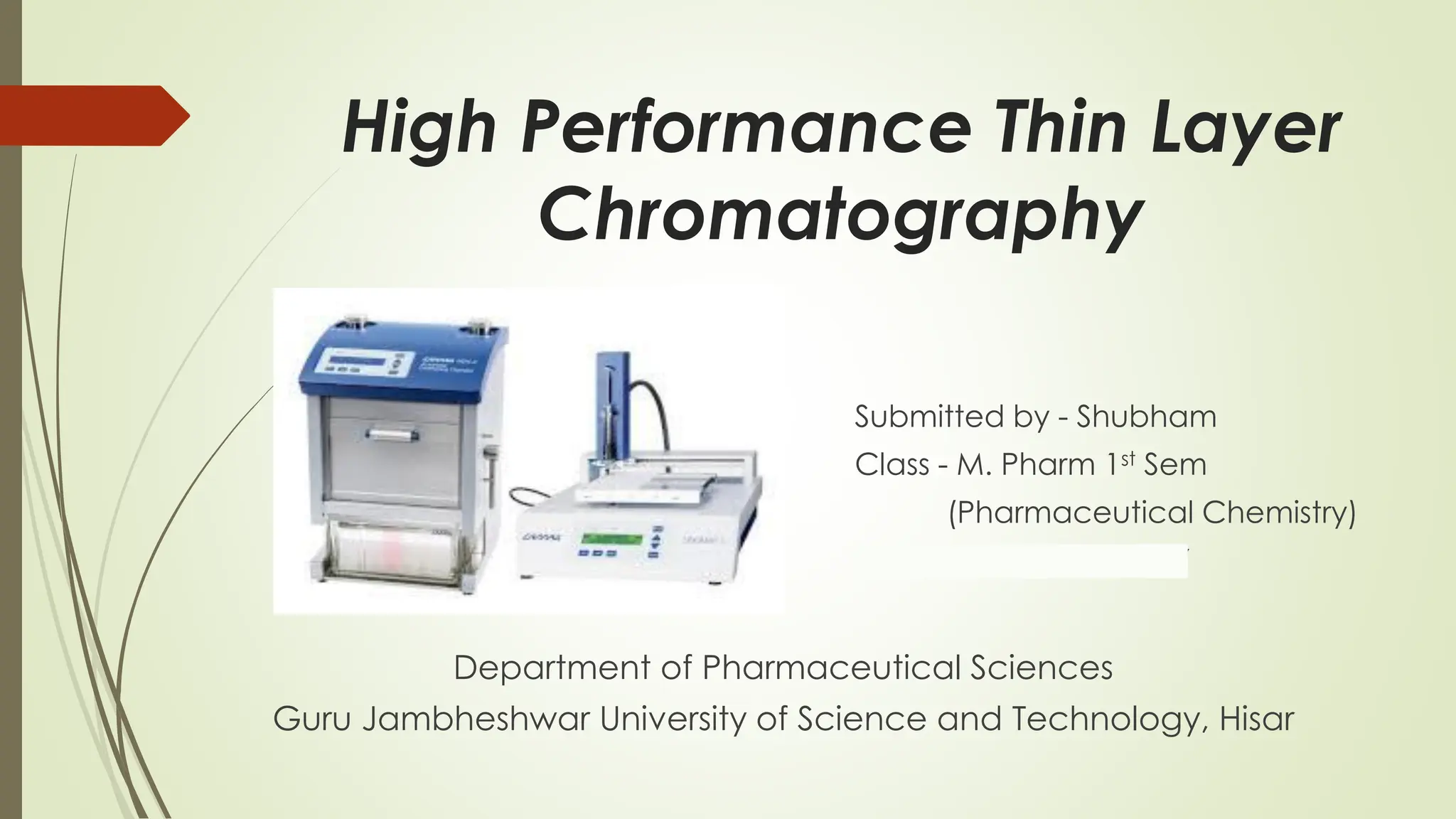
High Performance Thin Layer
Chromatography
Submitted by - Shubham
Class - M. Pharm 1st Sem
(Pharmaceutical Chemistry)
Roll no. - 250121210007
Department of Pharmaceutical Sciences
Guru Jambheshwar University of Science and Technology, Hisar
Content
 Introduction
 Principle
 Comparison between TLC and HPTLC
 Steps Involved
 Factors affecting resolution
 Applications
 Advantages
 Disadvantages
 References
Introduction
 HPTLC (High performance thin layer chromatography) is the
automated, sophisticated form and improved method of TLC.
 It is a powerful analytical method equally suitable for qualitative
and quantitative analytical tasks.
 It is also known as planer or flat bed chromatography.
 HPTLC is very popular for many reasons such as-
a) Visual chromatogram,
b)Multiple sample handling,
c)Enables the most complicated separation.
 It is the most simple separation technique available today.
Principle
 Same theoretical principle of TLC i.e. the principle of separation is
adsorption.
 Mobile phase flow by capillary action effect.
 Component move according to their affinities towards the
adsorbent.
 The component with higher affinity toward adsorbent travels slowly.
And the component with lesser affinity towards the stationary phase
travels faster.
 Thus the components are separated on a chromatographic plate
according to their affinity and separation also based on their
solubility in mobile phase.
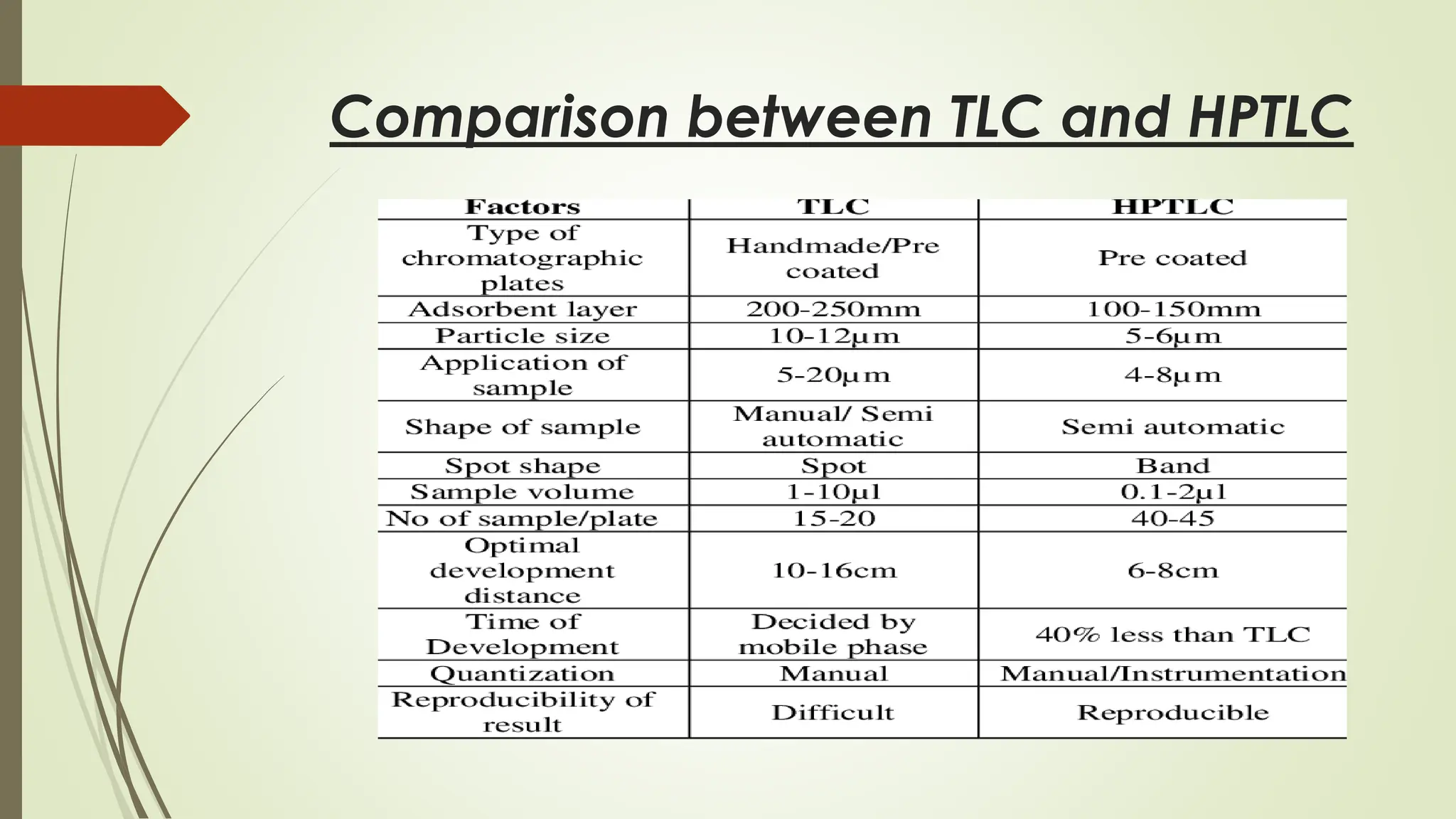
Comparison between TLC and HPTLC
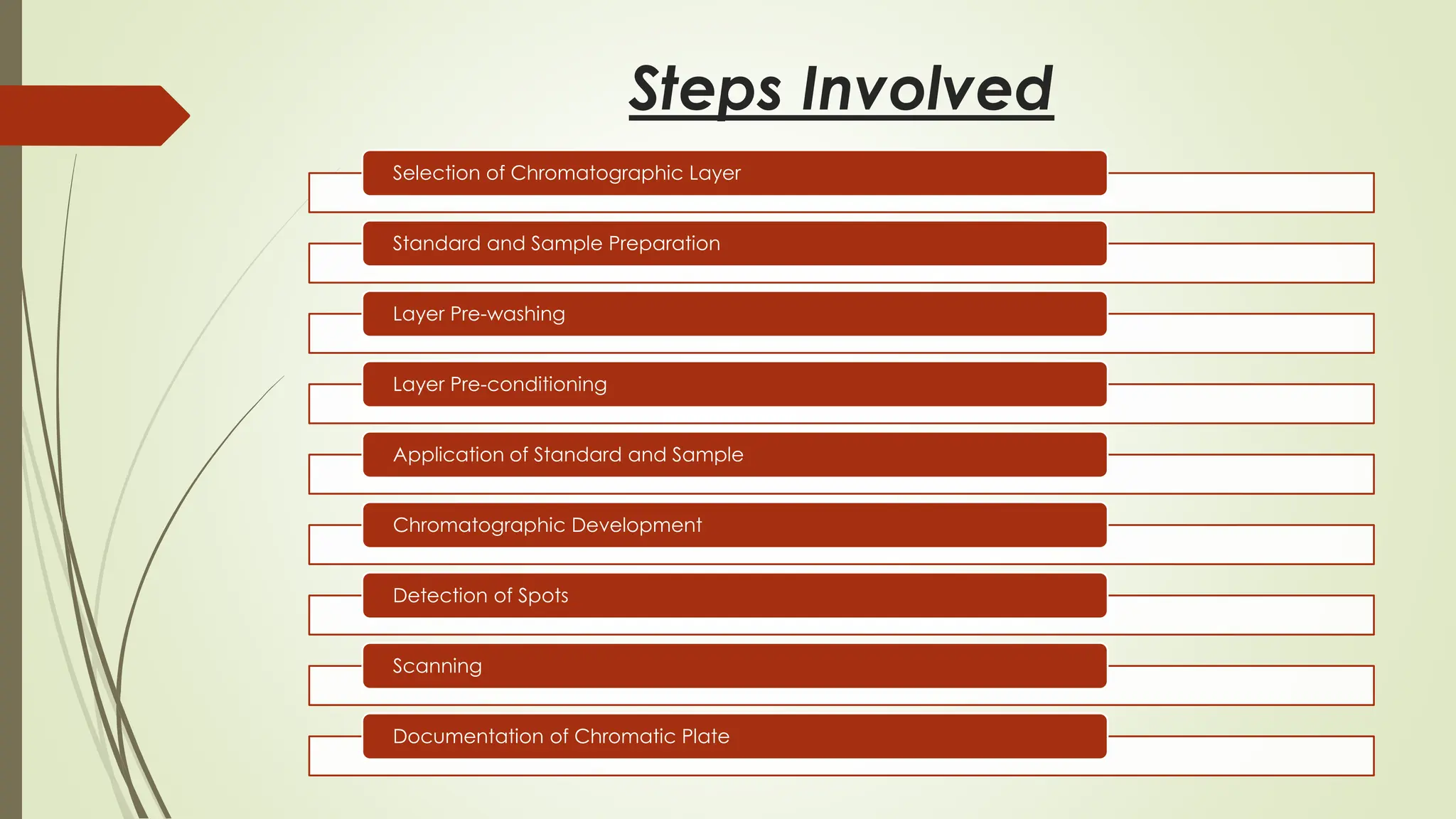
Steps Involved
Selection of Chromatographic Layer
Standard and Sample Preparation
Layer Pre-washing
Layer Pre-conditioning
Application of Standard and Sample
Chromatographic Development
Detection of Spots
Scanning
Documentation of Chromatic Plate
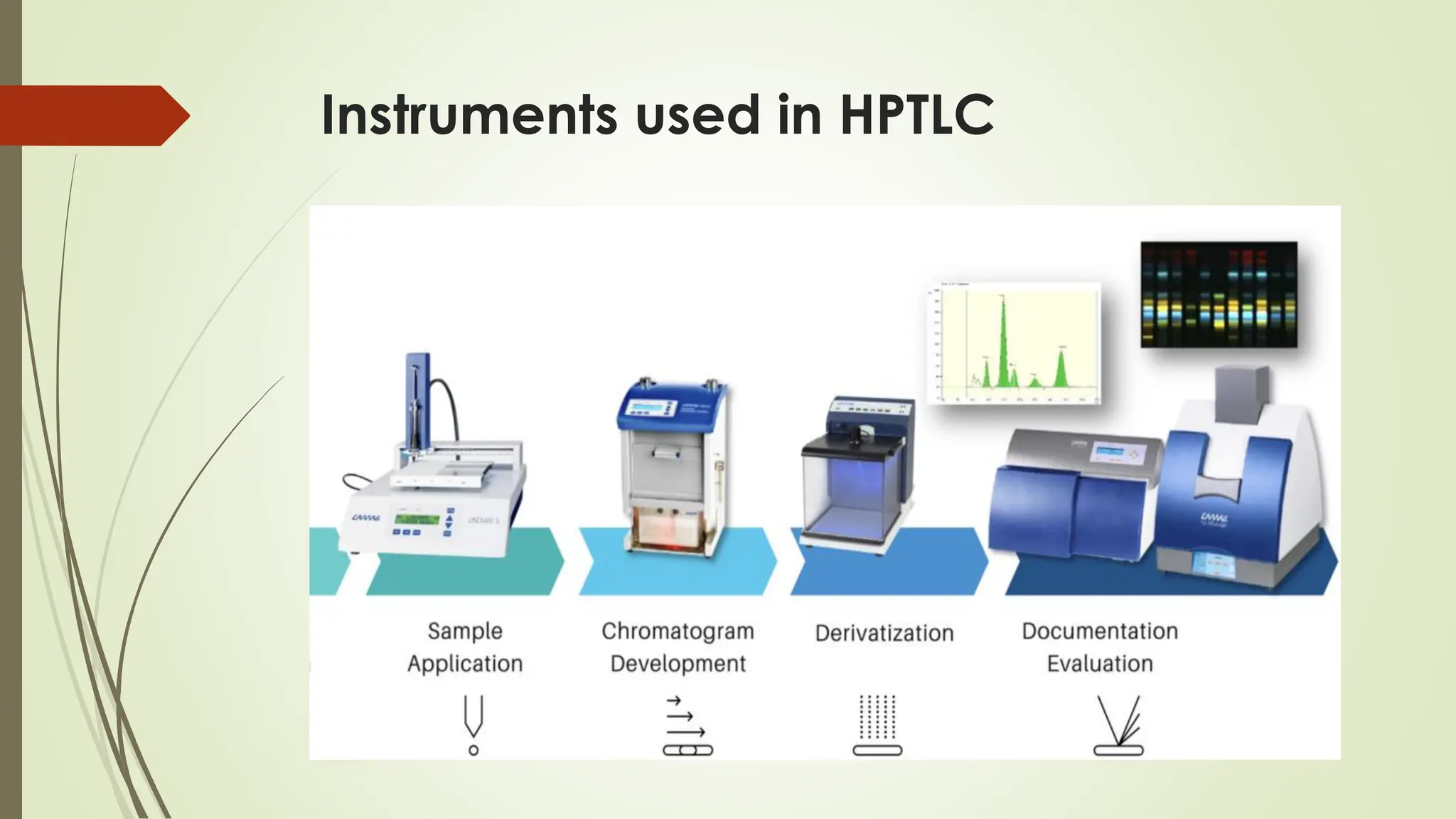
Instruments used in HPTLC
Selection of Chromatographic Plates
 Hand plates were available which are made up of cellulose and
other materials which are not used much now-a-days.
 Pre coated plates - These plates are used which have different
support materials and sorbent layers with different format and
thickness.
 Most commonly, standard plates of sizes 20 x 20cm or 5 x 7.5cm ; 5 ×
5cm ; 10 × 20 cm are used.
 Support materials used in plates - Glass ; Polyester ; Aluminium.
 Sorbents used in plates - Silica gel 60F ; Aluminium oxide ; Cellulose ;
silica gel chemically modified.
 Smaller particle size of silica helps in greater resolution and sensitivity.
Layer Pre-washing
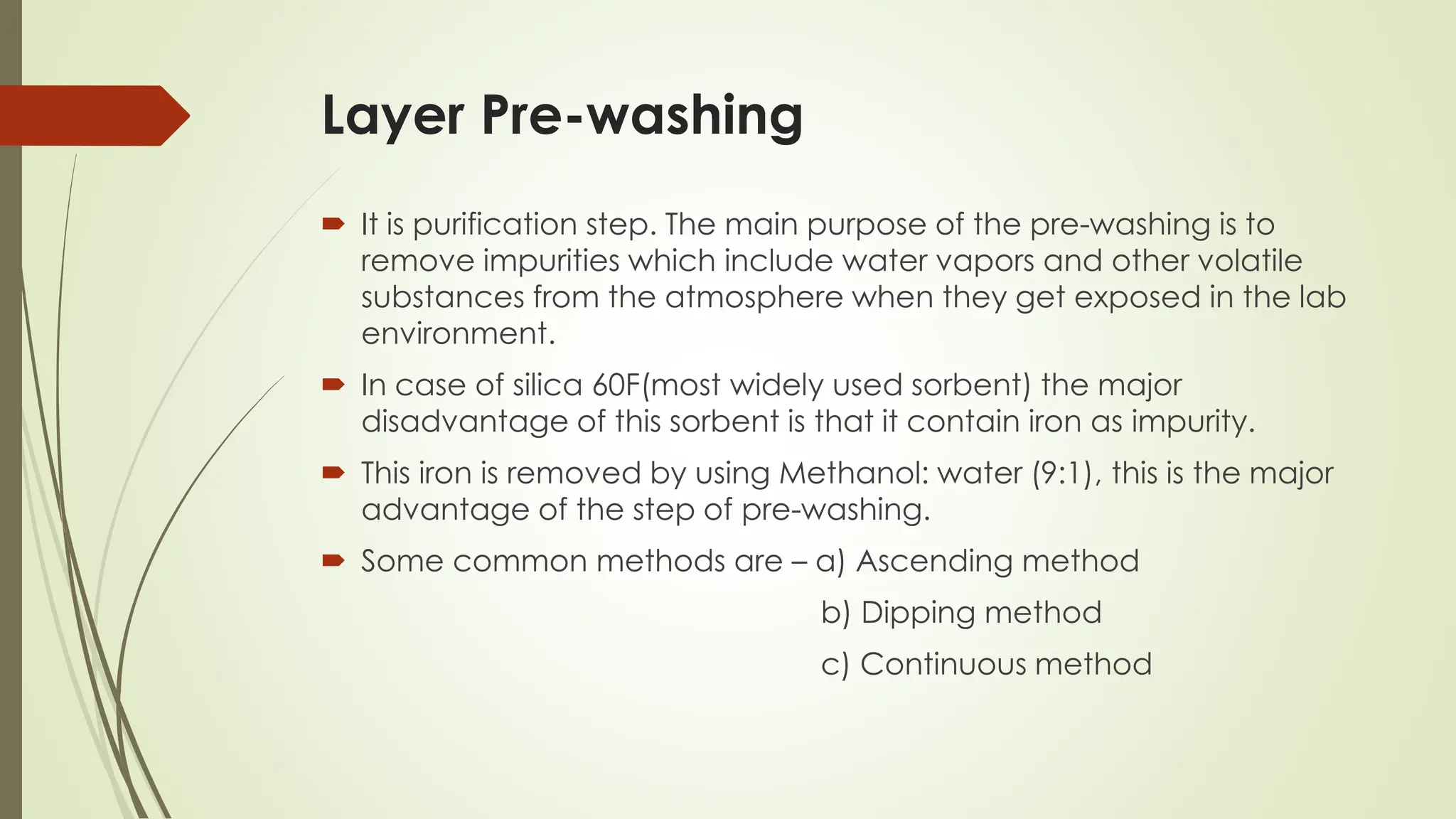
 It is purification step. The main purpose of the pre-washing is to
remove impurities which include water vapors and other volatile
substances from the atmosphere when they get exposed in the lab
environment.
 In case of silica 60F(most widely used sorbent) the major
disadvantage of this sorbent is that it contain iron as impurity.
 This iron is removed by using Methanol: water (9:1), this is the major
advantage of the step of pre-washing.
 Some common methods are – a) Ascending method
b) Dipping method
c) Continuous method
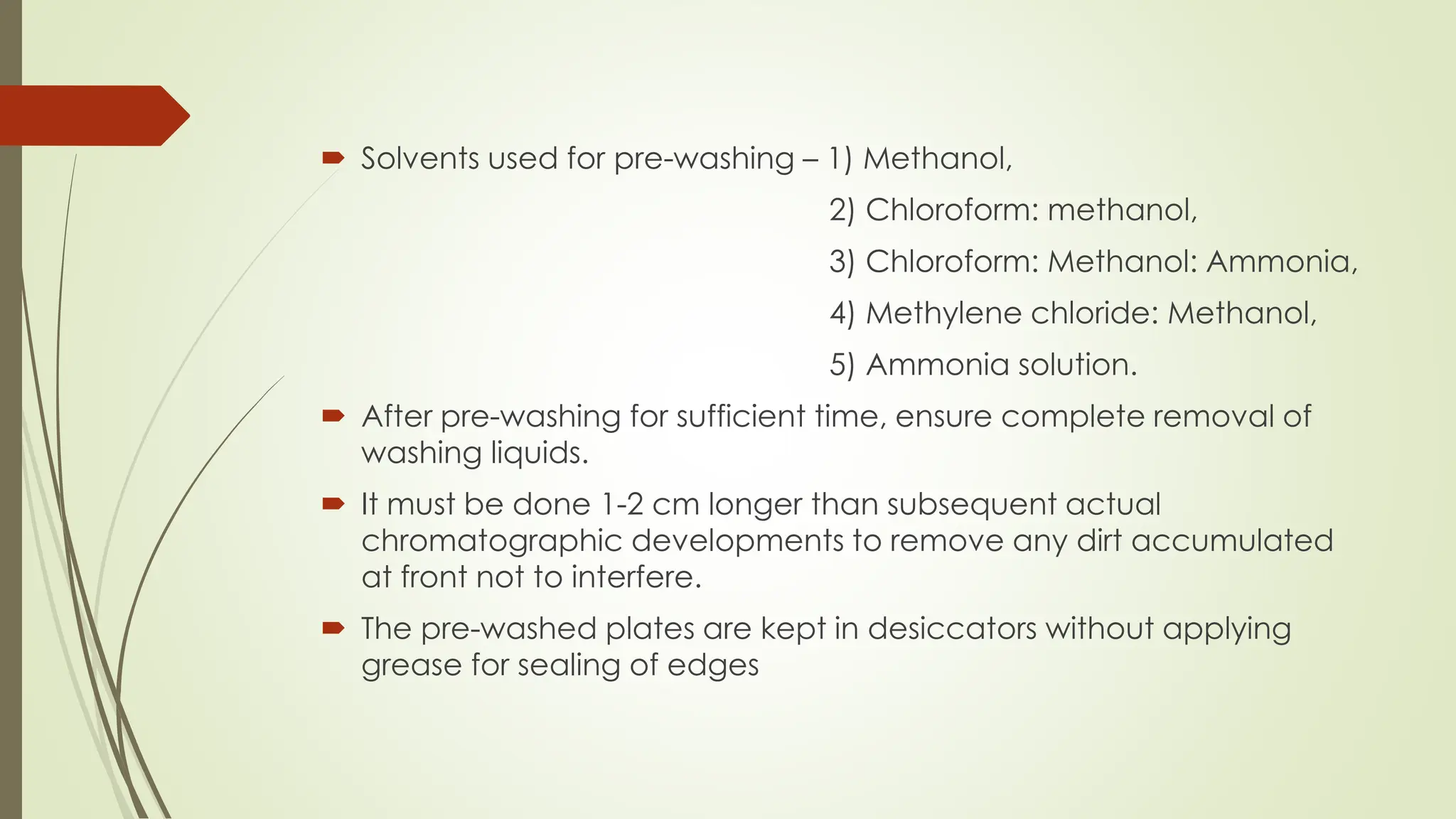
 Solvents used for pre-washing – 1) Methanol,
2) Chloroform: methanol,
3) Chloroform: Methanol: Ammonia,
4) Methylene chloride: Methanol,
5) Ammonia solution.
 After pre-washing for sufficient time, ensure complete removal of
washing liquids.
 It must be done 1-2 cm longer than subsequent actual
chromatographic developments to remove any dirt accumulated
at front not to interfere.
 The pre-washed plates are kept in desiccators without applying
grease for sealing of edges
Activation of Plates
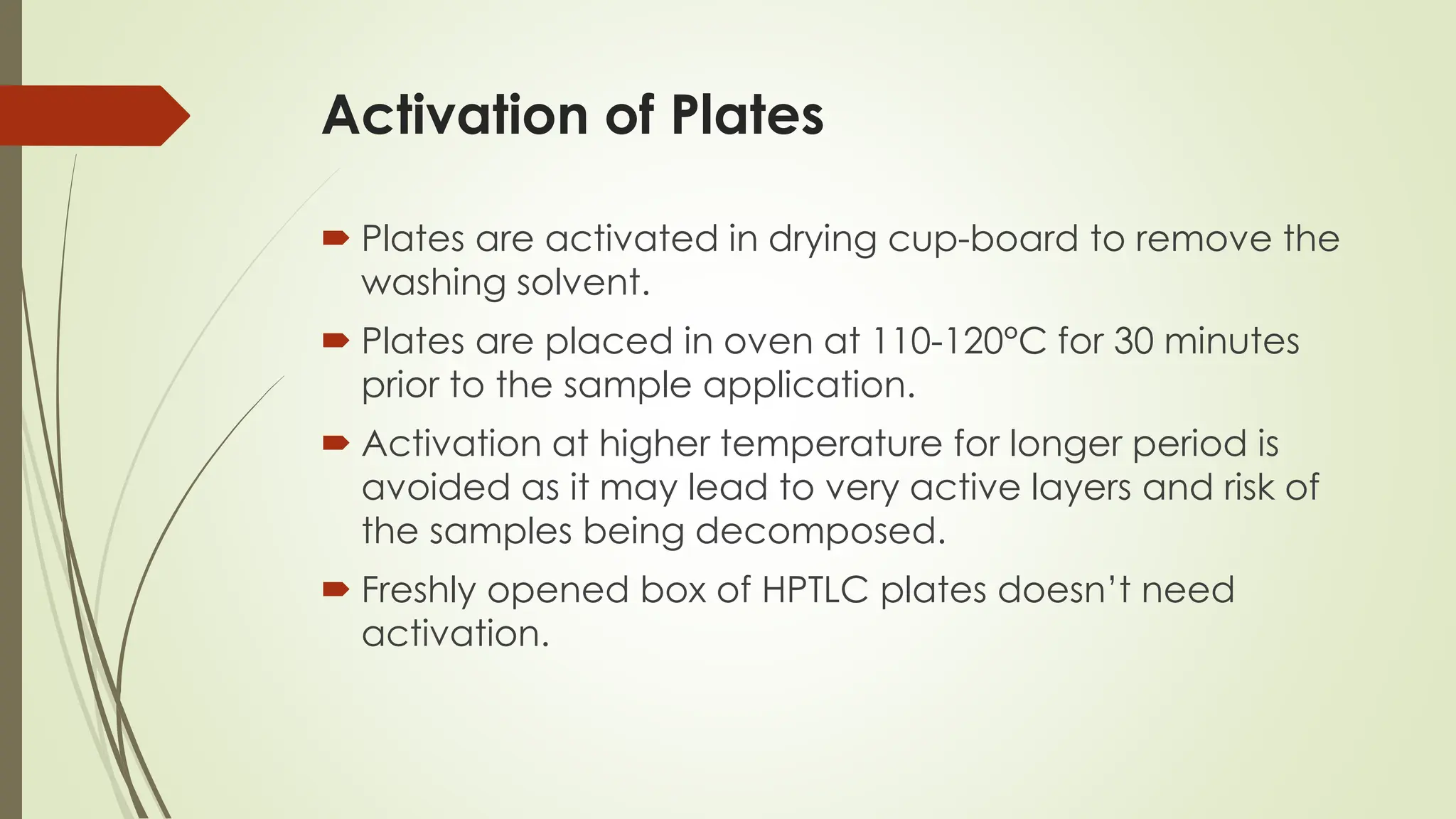
 Plates are activated in drying cup-board to remove the
washing solvent.
 Plates are placed in oven at 110-120°C for 30 minutes
prior to the sample application.
 Activation at higher temperature for longer period is
avoided as it may lead to very active layers and risk of
the samples being decomposed.
 Freshly opened box of HPTLC plates doesn’t need
activation.
Sample Preparation
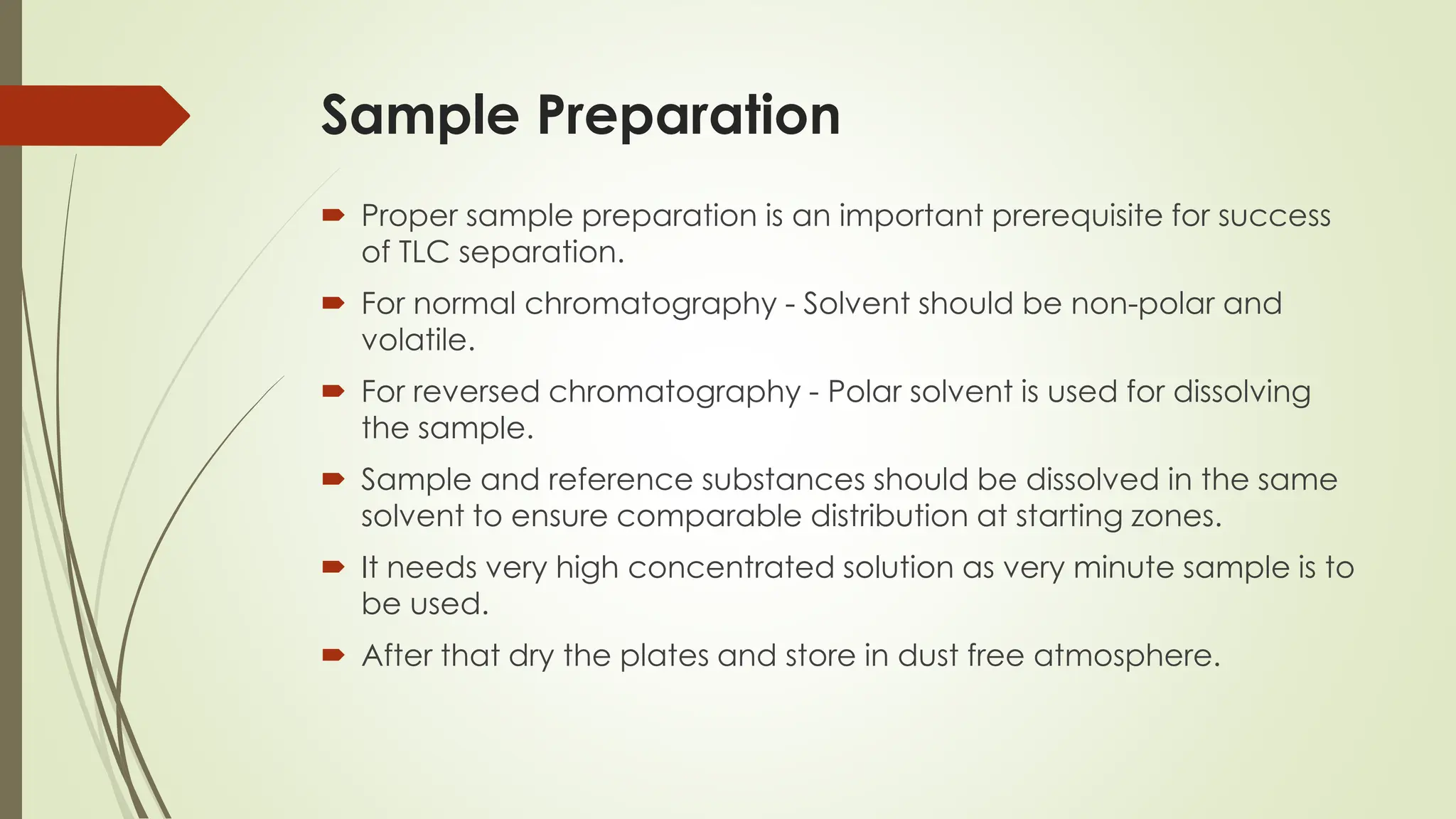
 Proper sample preparation is an important prerequisite for success
of TLC separation.
 For normal chromatography - Solvent should be non-polar and
volatile.
 For reversed chromatography - Polar solvent is used for dissolving
the sample.
 Sample and reference substances should be dissolved in the same
solvent to ensure comparable distribution at starting zones.
 It needs very high concentrated solution as very minute sample is to
be used.
 After that dry the plates and store in dust free atmosphere.
Sample Application
 It is the most critical step for obtaining good resolution for
quantification by HPTLC.
 Some applicators used for spotting are: Capillary tubes; micro bulb
pipettes; micro syringes; automatic sample applicator. The major
criteria are that they shouldn’t damage the surface.
 Problem from overloading can be overcome by applying the
sample as band.
 Usual concentration range is 0.1-1µg/µl, above this causes poor
separation and volume recommended for HPTLC-0.5-5µl.
 The size of sample spot applied must not exceed 1mm in diameter.
Selection of Mobile Phase
 Mobile phase should be of high graded.
 Chemical properties and analytes and sorbent layer factors should
be considered while selection of mobile phase.
 Use of mobile phase containing more than three or four
components should normally be avoided as it is often different to
get reproducible ratios of different components.
 Various components of mobile phase should be measured
separately and then placed in mixing vessel.
 This prevents contamination of solvents and also error arising from
volumes expansion or contraction on mixing.
Pre-Conditioning
 Also known as Chamber Saturation.
 It has a pronounced influence on the separation profile.
 Time required for the saturation depends on the mobile
phase.
 Unsaturated chamber causes high Rf values.
 Saturated chamber by lining with filter paper for 30min prior to
development-uniform distribution of solvent vapors-less
solvent for the sample to travel-lower RF values.
 For low polarity mobile phase there is no need of saturation.
However saturation is needed for highly polar mobile phase.
Development and Drying
 The different methods used for development of chambers are -
Ascending, dimensional, horizontal, descending, multiple 2overrun,
gradient, radial, anti-radial, multimodal, forced flow planar
chromatography.
 Plates are spotted with sample and air dried and placed in the
developing chambers.
 After the development plate is removed from chamber and mobile
phase is removed to avoid contamination of laboratory
atmosphere.
 The plates should be always laid horizontally because when mobile
phase evaporates the separated components will migrate evenly
to the surface where it can be easily detected.
 Drying of chromatogram should be done in vacuum desiccators
with protection from heat and light.
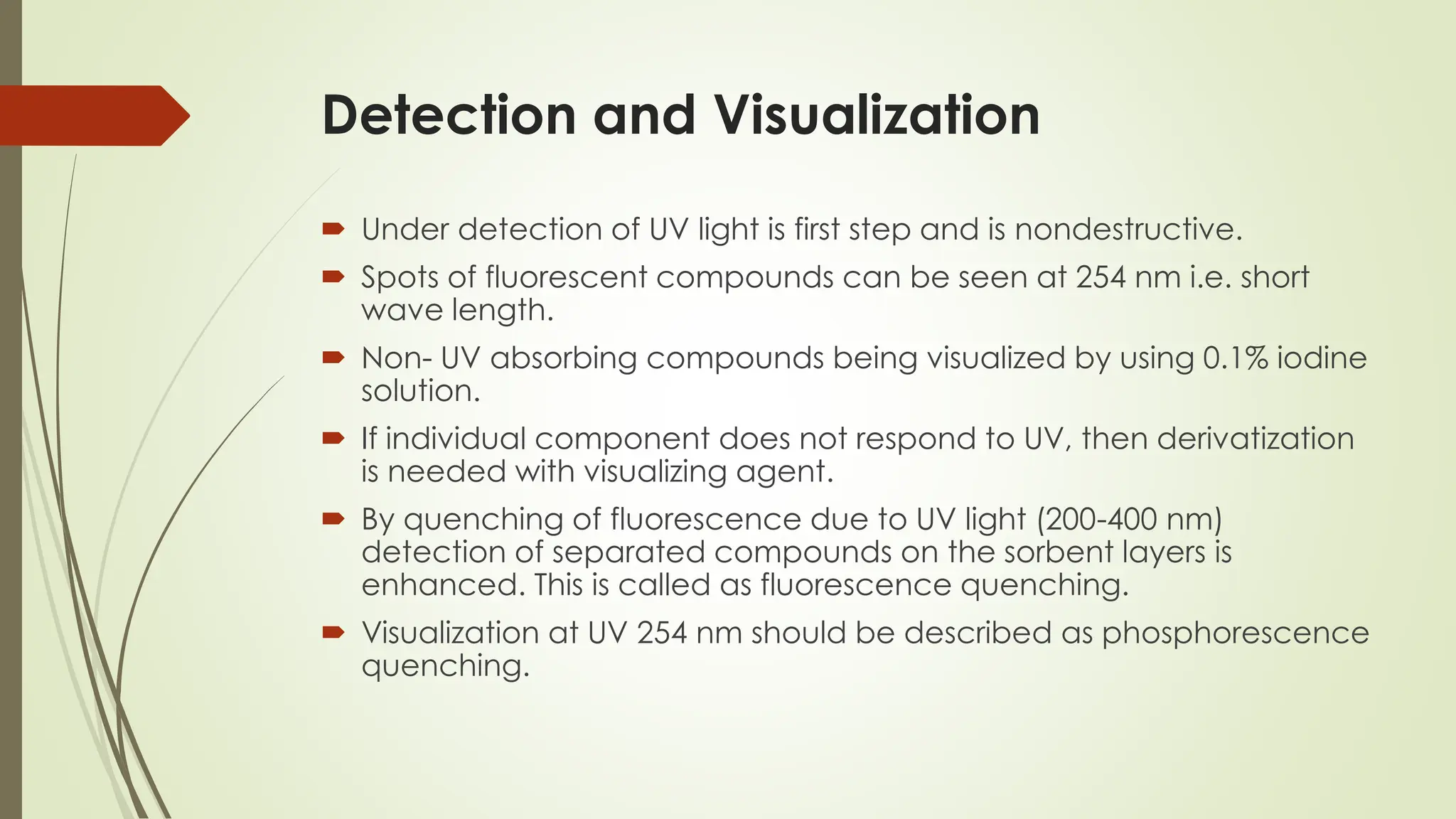
Detection and Visualization
 Under detection of UV light is first step and is nondestructive.
 Spots of fluorescent compounds can be seen at 254 nm i.e. short
wave length.
 Non- UV absorbing compounds being visualized by using 0.1% iodine
solution.
 If individual component does not respond to UV, then derivatization
is needed with visualizing agent.
 By quenching of fluorescence due to UV light (200-400 nm)
detection of separated compounds on the sorbent layers is
enhanced. This is called as fluorescence quenching.
 Visualization at UV 254 nm should be described as phosphorescence
quenching.
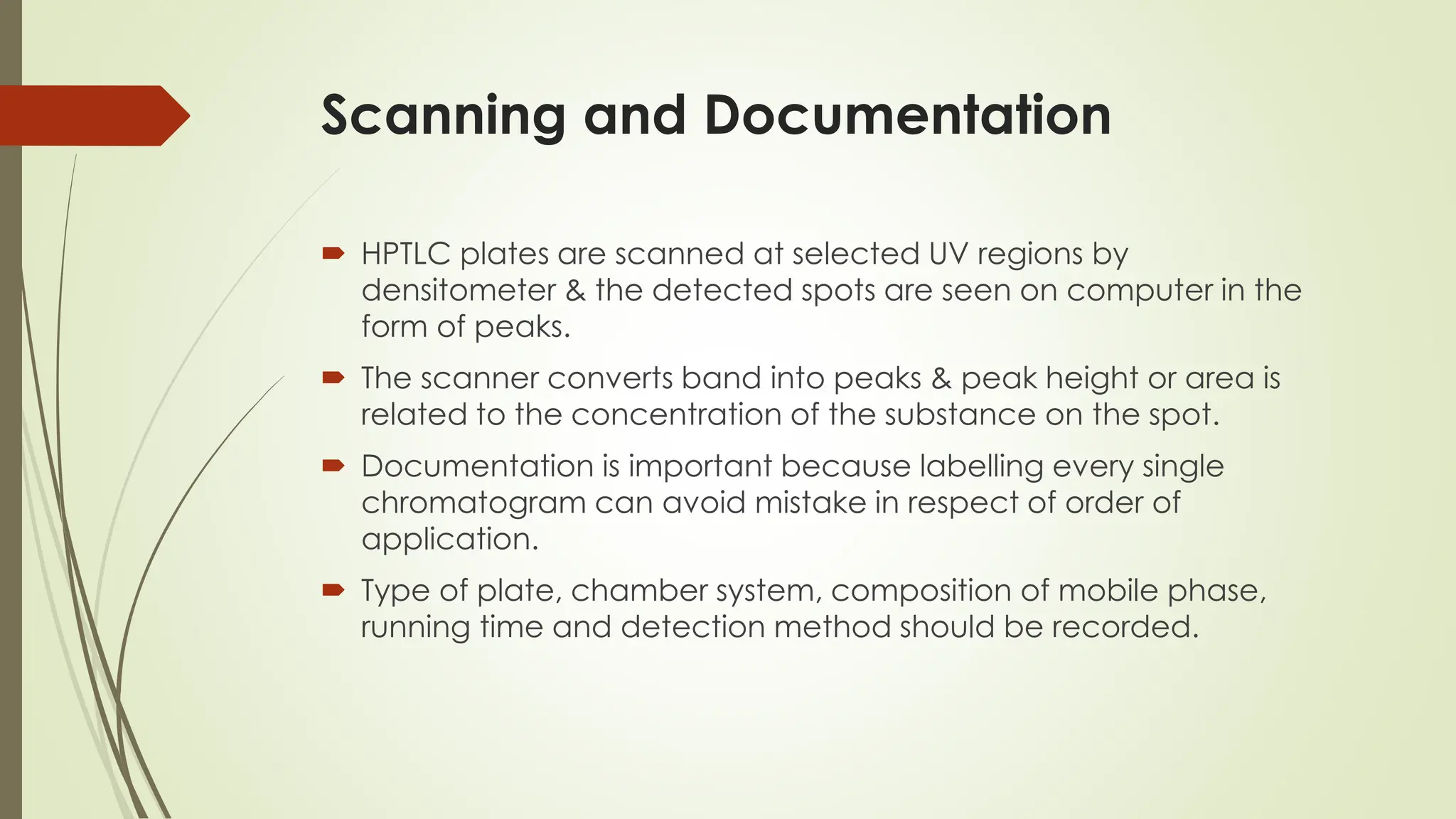
Scanning and Documentation
 HPTLC plates are scanned at selected UV regions by
densitometer & the detected spots are seen on computer in the
form of peaks.
 The scanner converts band into peaks & peak height or area is
related to the concentration of the substance on the spot.
 Documentation is important because labelling every single
chromatogram can avoid mistake in respect of order of
application.
 Type of plate, chamber system, composition of mobile phase,
running time and detection method should be recorded.
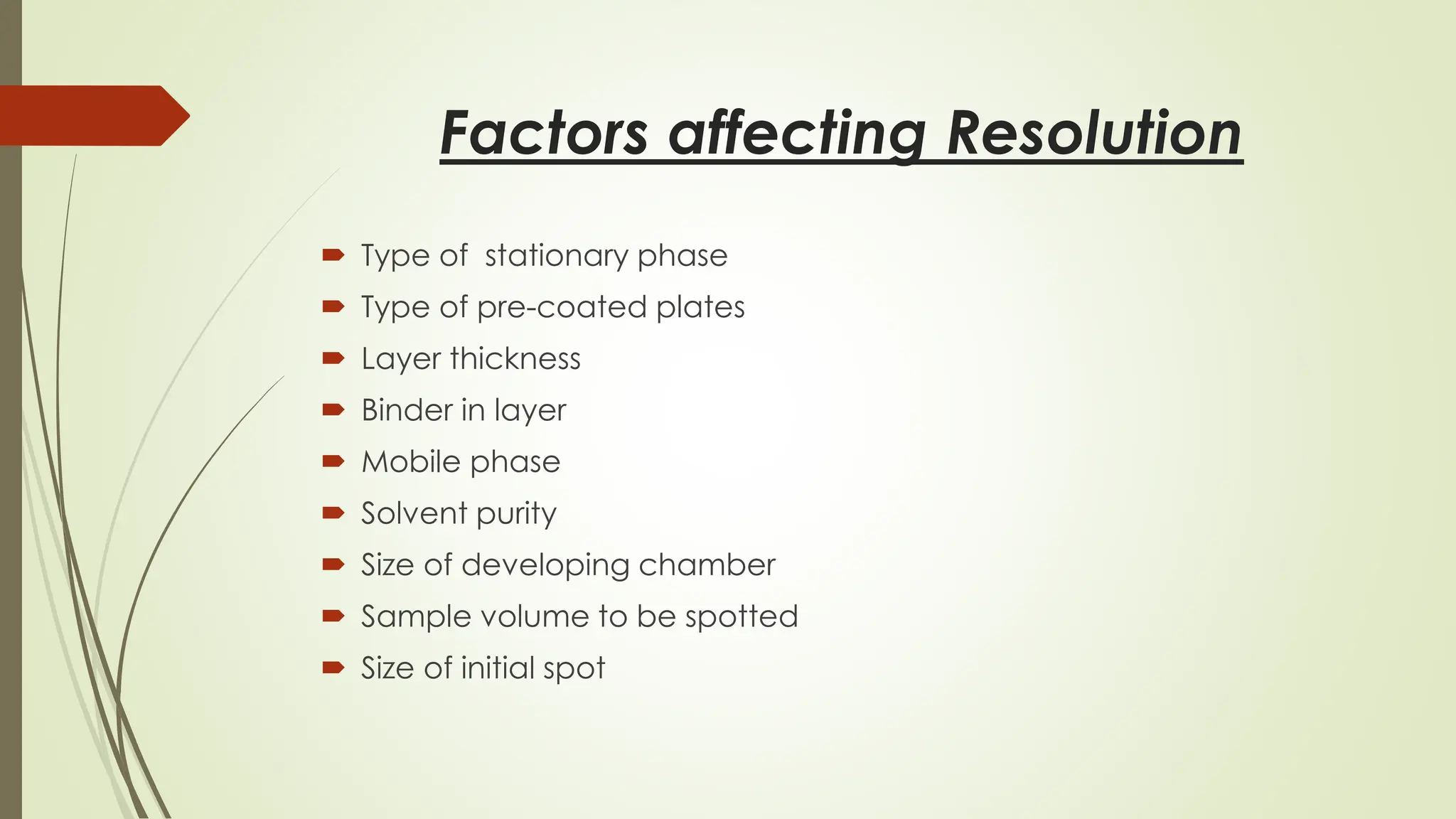
Factors affecting Resolution
 Type of stationary phase
 Type of pre-coated plates
 Layer thickness
 Binder in layer
 Mobile phase
 Solvent purity
 Size of developing chamber
 Sample volume to be spotted
 Size of initial spot
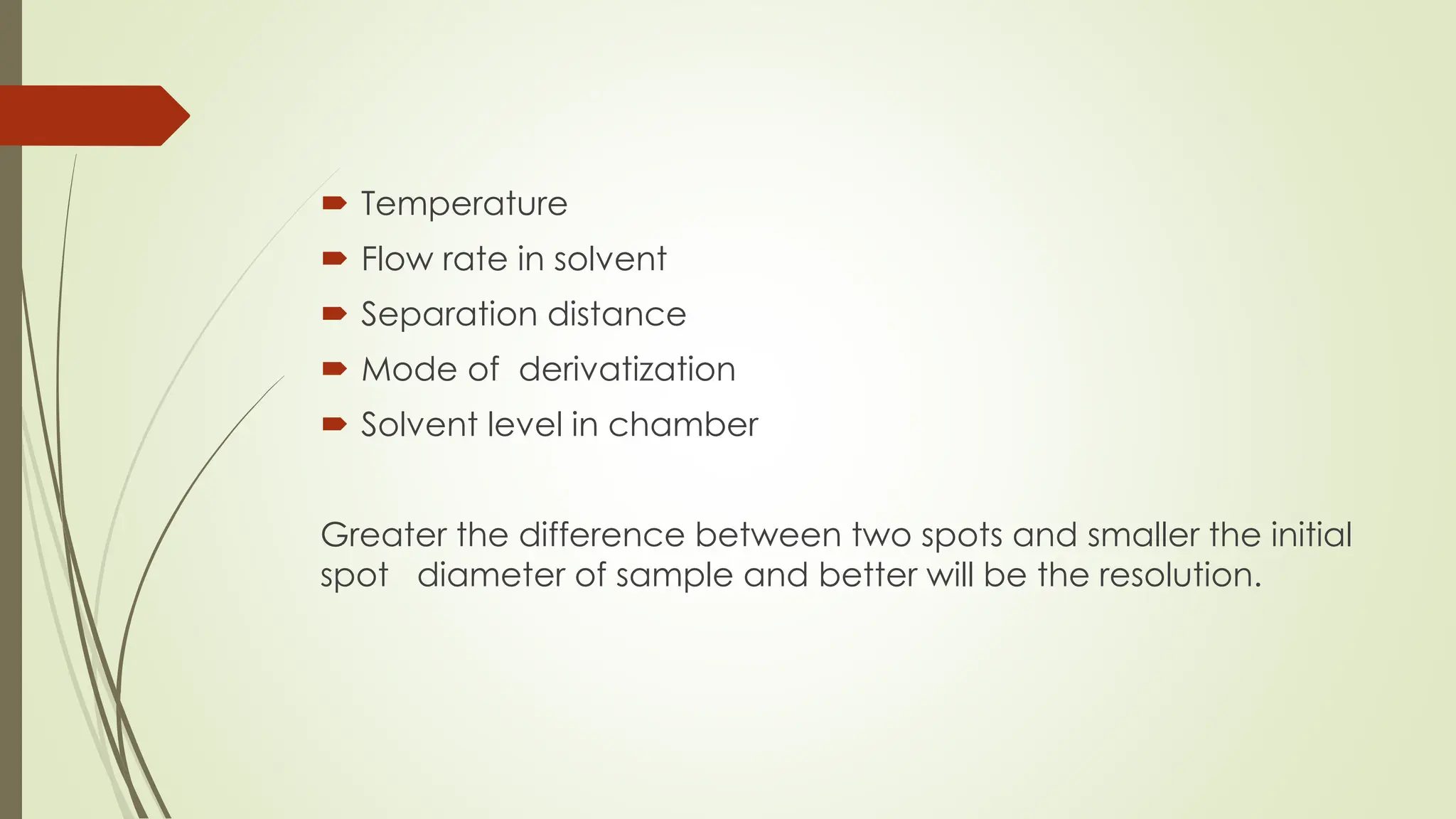
 Temperature
 Flow rate in solvent
 Separation distance
 Mode of derivatization
 Solvent level in chamber
Greater the difference between two spots and smaller the initial
spot diameter of sample and better will be the resolution.
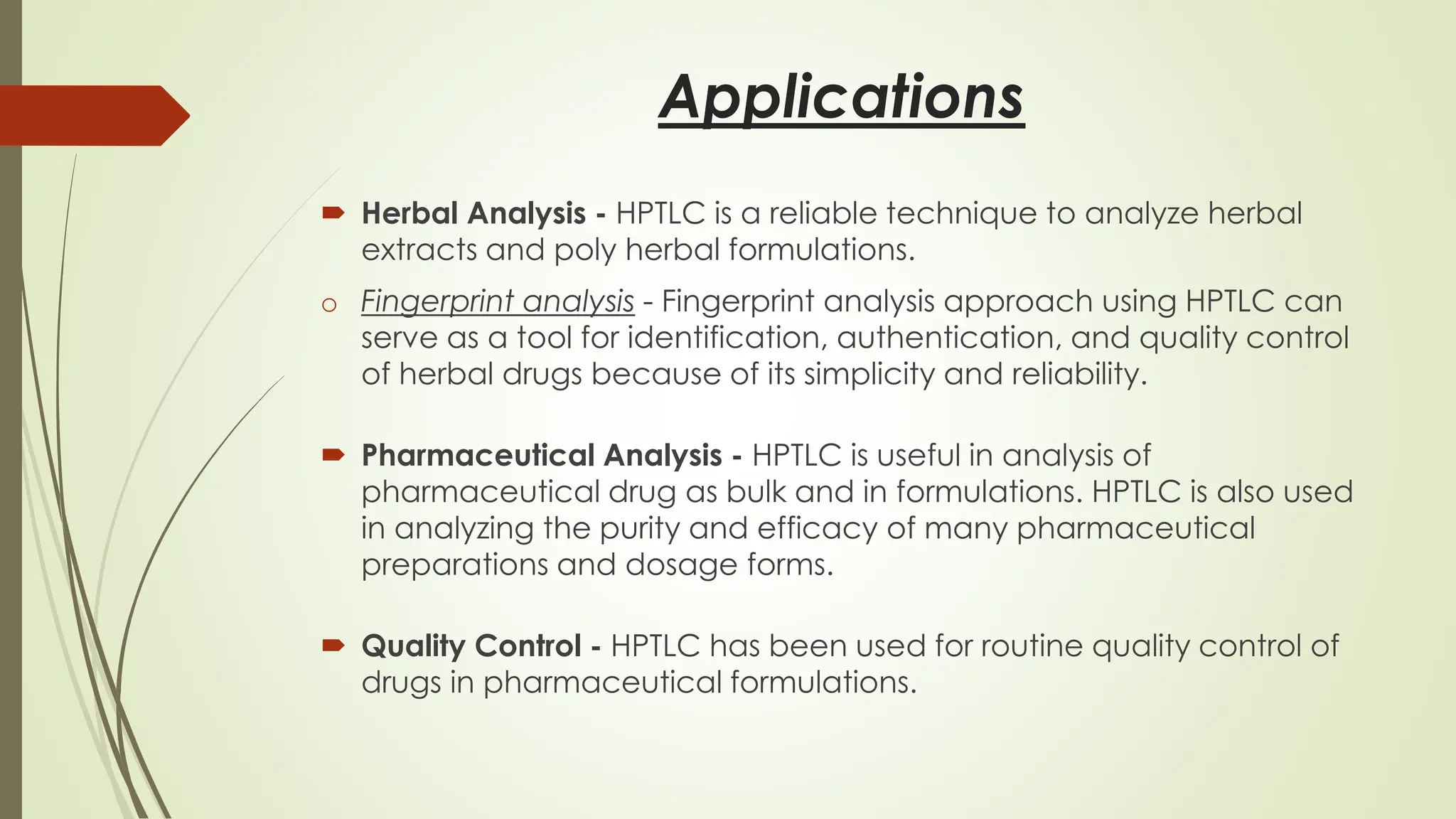
Applications
 Herbal Analysis - HPTLC is a reliable technique to analyze herbal
extracts and poly herbal formulations.
o Fingerprint analysis - Fingerprint analysis approach using HPTLC can
serve as a tool for identification, authentication, and quality control
of herbal drugs because of its simplicity and reliability.
 Pharmaceutical Analysis - HPTLC is useful in analysis of
pharmaceutical drug as bulk and in formulations. HPTLC is also used
in analyzing the purity and efficacy of many pharmaceutical
preparations and dosage forms.
 Quality Control - HPTLC has been used for routine quality control of
drugs in pharmaceutical formulations.
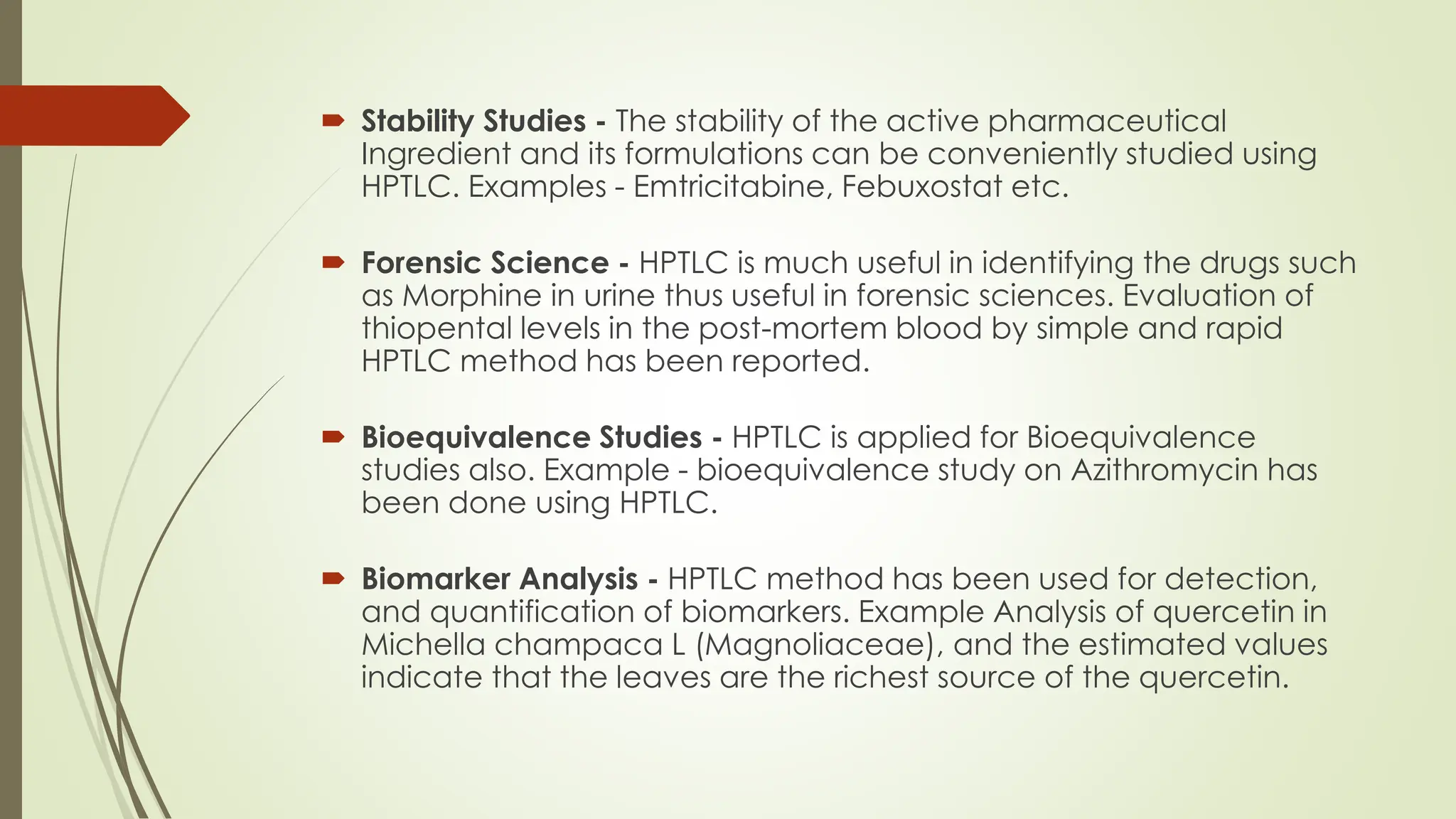
 Stability Studies - The stability of the active pharmaceutical
Ingredient and its formulations can be conveniently studied using
HPTLC. Examples - Emtricitabine, Febuxostat etc.
 Forensic Science - HPTLC is much useful in identifying the drugs such
as Morphine in urine thus useful in forensic sciences. Evaluation of
thiopental levels in the post-mortem blood by simple and rapid
HPTLC method has been reported.
 Bioequivalence Studies - HPTLC is applied for Bioequivalence
studies also. Example - bioequivalence study on Azithromycin has
been done using HPTLC.
 Biomarker Analysis - HPTLC method has been used for detection,
and quantification of biomarkers. Example Analysis of quercetin in
Michella champaca L (Magnoliaceae), and the estimated values
indicate that the leaves are the richest source of the quercetin.
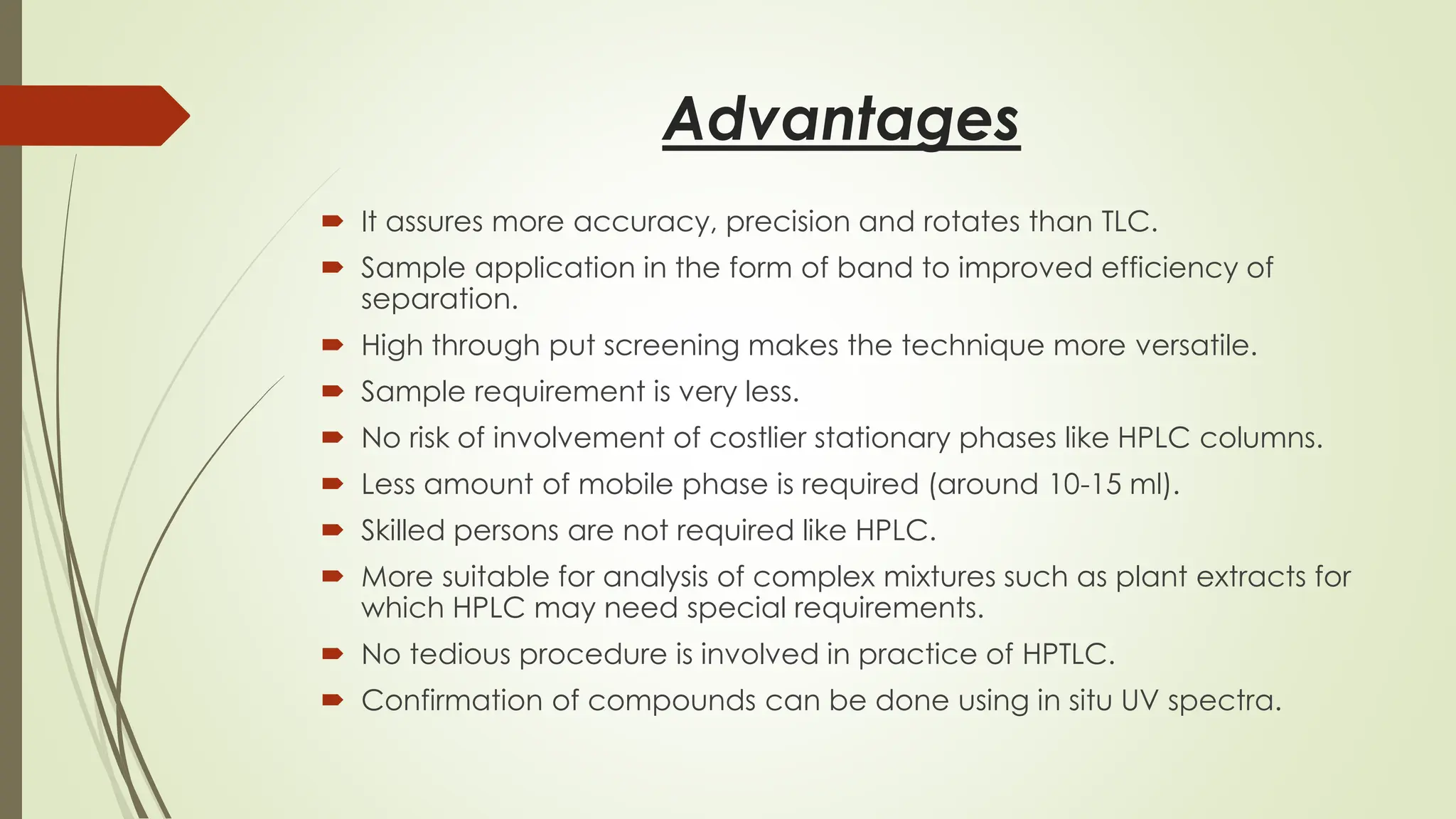
Advantages
 It assures more accuracy, precision and rotates than TLC.
 Sample application in the form of band to improved efficiency of
separation.
 High through put screening makes the technique more versatile.
 Sample requirement is very less.
 No risk of involvement of costlier stationary phases like HPLC columns.
 Less amount of mobile phase is required (around 10-15 ml).
 Skilled persons are not required like HPLC.
 More suitable for analysis of complex mixtures such as plant extracts for
which HPLC may need special requirements.
 No tedious procedure is involved in practice of HPTLC.
 Confirmation of compounds can be done using in situ UV spectra.
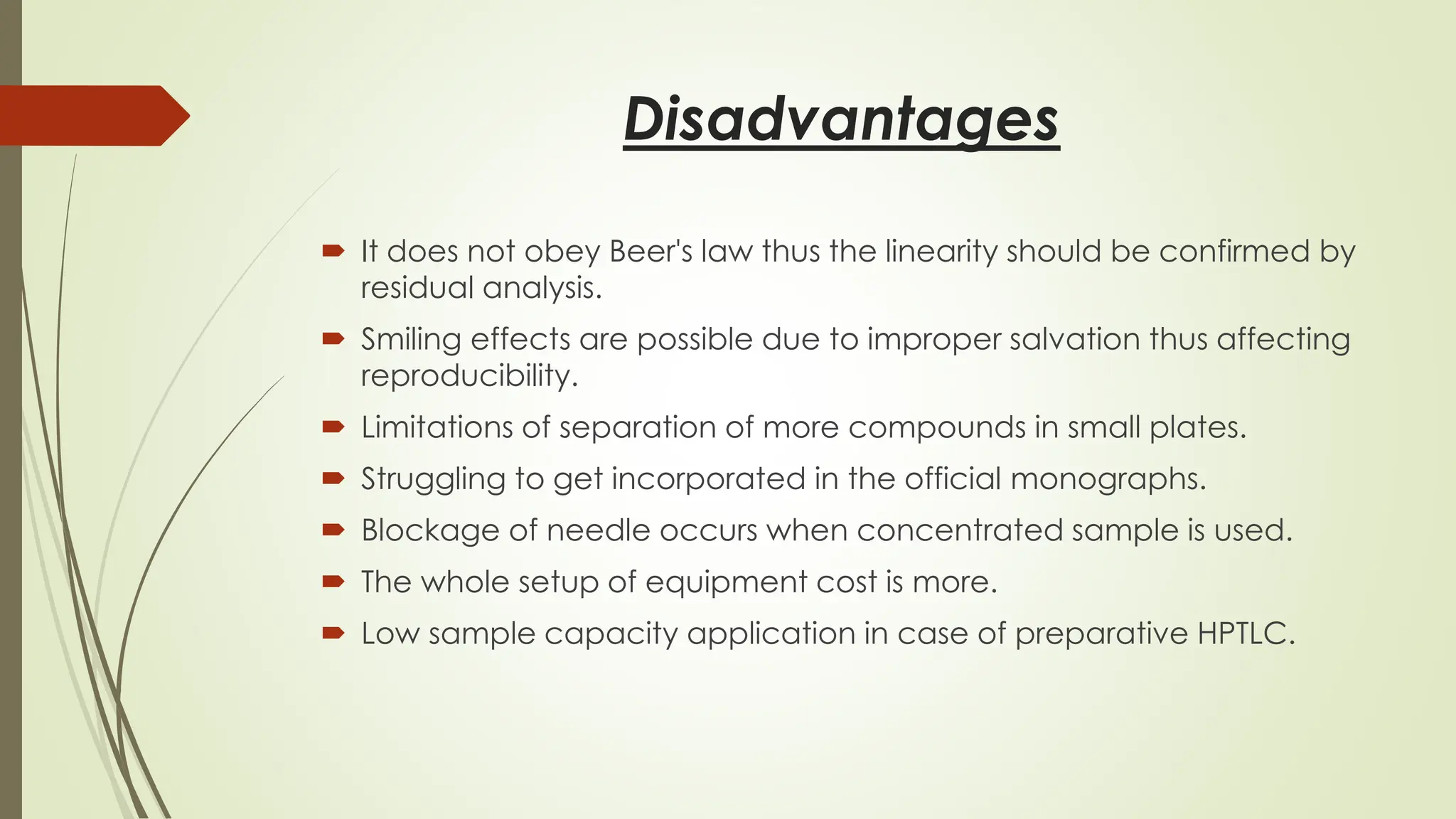
Disadvantages
 It does not obey Beer's law thus the linearity should be confirmed by
residual analysis.
 Smiling effects are possible due to improper salvation thus affecting
reproducibility.
 Limitations of separation of more compounds in small plates.
 Struggling to get incorporated in the official monographs.
 Blockage of needle occurs when concentrated sample is used.
 The whole setup of equipment cost is more.
 Low sample capacity application in case of preparative HPTLC.
References
 Dr. A. V. Kasture, Dr. K. R. Mahadik, ‘Pharmaceutical Analysis’ Nirali
Publishers. Pg. no 28 - 30.
 S. Ravishankar, ‘Textbook of pharmaceutical analysis’, 3rd edition,
Pg. no 14.10 - 14.12.
 Dr. K. R. Mahadik, Dr. L. Sathiyanarayan, ‘instrumental method of
Analysis’, Nirali Prakashan, pg. no 11.13 – 11.29.
 https://jpbs.in/archive/volume/9/issue/1/article/2047
 https://pmc.ncbi.nlm.nih.gov/articles/PMC3658041/
 Sankar Ravi. (2020). HPTLC: A versatile method for rapid analysis of
pharmaceutical formulations and comparison with other
chromatographic techniques and its applications.
High Performance Thin Layer Chromatography

High Performance Thin Layer Chromatography

  • 1.
    High Performance ThinLayer Chromatography Submitted by - Shubham Class - M. Pharm 1st Sem (Pharmaceutical Chemistry) Roll no. - 250121210007 Department of Pharmaceutical Sciences Guru Jambheshwar University of Science and Technology, Hisar
  • 2.
    Content  Introduction  Principle Comparison between TLC and HPTLC  Steps Involved  Factors affecting resolution  Applications  Advantages  Disadvantages  References
  • 3.
    Introduction  HPTLC (Highperformance thin layer chromatography) is the automated, sophisticated form and improved method of TLC.  It is a powerful analytical method equally suitable for qualitative and quantitative analytical tasks.  It is also known as planer or flat bed chromatography.  HPTLC is very popular for many reasons such as- a) Visual chromatogram, b)Multiple sample handling, c)Enables the most complicated separation.  It is the most simple separation technique available today.
  • 4.
    Principle  Same theoreticalprinciple of TLC i.e. the principle of separation is adsorption.  Mobile phase flow by capillary action effect.  Component move according to their affinities towards the adsorbent.  The component with higher affinity toward adsorbent travels slowly. And the component with lesser affinity towards the stationary phase travels faster.  Thus the components are separated on a chromatographic plate according to their affinity and separation also based on their solubility in mobile phase.
  • 5.
  • 6.
    Steps Involved Selection ofChromatographic Layer Standard and Sample Preparation Layer Pre-washing Layer Pre-conditioning Application of Standard and Sample Chromatographic Development Detection of Spots Scanning Documentation of Chromatic Plate
  • 7.
  • 8.
    Selection of ChromatographicPlates  Hand plates were available which are made up of cellulose and other materials which are not used much now-a-days.  Pre coated plates - These plates are used which have different support materials and sorbent layers with different format and thickness.  Most commonly, standard plates of sizes 20 x 20cm or 5 x 7.5cm ; 5 × 5cm ; 10 × 20 cm are used.  Support materials used in plates - Glass ; Polyester ; Aluminium.  Sorbents used in plates - Silica gel 60F ; Aluminium oxide ; Cellulose ; silica gel chemically modified.  Smaller particle size of silica helps in greater resolution and sensitivity.
  • 9.
    Layer Pre-washing  Itis purification step. The main purpose of the pre-washing is to remove impurities which include water vapors and other volatile substances from the atmosphere when they get exposed in the lab environment.  In case of silica 60F(most widely used sorbent) the major disadvantage of this sorbent is that it contain iron as impurity.  This iron is removed by using Methanol: water (9:1), this is the major advantage of the step of pre-washing.  Some common methods are – a) Ascending method b) Dipping method c) Continuous method
  • 10.
     Solvents usedfor pre-washing – 1) Methanol, 2) Chloroform: methanol, 3) Chloroform: Methanol: Ammonia, 4) Methylene chloride: Methanol, 5) Ammonia solution.  After pre-washing for sufficient time, ensure complete removal of washing liquids.  It must be done 1-2 cm longer than subsequent actual chromatographic developments to remove any dirt accumulated at front not to interfere.  The pre-washed plates are kept in desiccators without applying grease for sealing of edges
  • 11.
    Activation of Plates Plates are activated in drying cup-board to remove the washing solvent.  Plates are placed in oven at 110-120°C for 30 minutes prior to the sample application.  Activation at higher temperature for longer period is avoided as it may lead to very active layers and risk of the samples being decomposed.  Freshly opened box of HPTLC plates doesn’t need activation.
  • 12.
    Sample Preparation  Propersample preparation is an important prerequisite for success of TLC separation.  For normal chromatography - Solvent should be non-polar and volatile.  For reversed chromatography - Polar solvent is used for dissolving the sample.  Sample and reference substances should be dissolved in the same solvent to ensure comparable distribution at starting zones.  It needs very high concentrated solution as very minute sample is to be used.  After that dry the plates and store in dust free atmosphere.
  • 13.
    Sample Application  Itis the most critical step for obtaining good resolution for quantification by HPTLC.  Some applicators used for spotting are: Capillary tubes; micro bulb pipettes; micro syringes; automatic sample applicator. The major criteria are that they shouldn’t damage the surface.  Problem from overloading can be overcome by applying the sample as band.  Usual concentration range is 0.1-1µg/µl, above this causes poor separation and volume recommended for HPTLC-0.5-5µl.  The size of sample spot applied must not exceed 1mm in diameter.
  • 14.
    Selection of MobilePhase  Mobile phase should be of high graded.  Chemical properties and analytes and sorbent layer factors should be considered while selection of mobile phase.  Use of mobile phase containing more than three or four components should normally be avoided as it is often different to get reproducible ratios of different components.  Various components of mobile phase should be measured separately and then placed in mixing vessel.  This prevents contamination of solvents and also error arising from volumes expansion or contraction on mixing.
  • 15.
    Pre-Conditioning  Also knownas Chamber Saturation.  It has a pronounced influence on the separation profile.  Time required for the saturation depends on the mobile phase.  Unsaturated chamber causes high Rf values.  Saturated chamber by lining with filter paper for 30min prior to development-uniform distribution of solvent vapors-less solvent for the sample to travel-lower RF values.  For low polarity mobile phase there is no need of saturation. However saturation is needed for highly polar mobile phase.
  • 16.
    Development and Drying The different methods used for development of chambers are - Ascending, dimensional, horizontal, descending, multiple 2overrun, gradient, radial, anti-radial, multimodal, forced flow planar chromatography.  Plates are spotted with sample and air dried and placed in the developing chambers.  After the development plate is removed from chamber and mobile phase is removed to avoid contamination of laboratory atmosphere.  The plates should be always laid horizontally because when mobile phase evaporates the separated components will migrate evenly to the surface where it can be easily detected.  Drying of chromatogram should be done in vacuum desiccators with protection from heat and light.
  • 17.
    Detection and Visualization Under detection of UV light is first step and is nondestructive.  Spots of fluorescent compounds can be seen at 254 nm i.e. short wave length.  Non- UV absorbing compounds being visualized by using 0.1% iodine solution.  If individual component does not respond to UV, then derivatization is needed with visualizing agent.  By quenching of fluorescence due to UV light (200-400 nm) detection of separated compounds on the sorbent layers is enhanced. This is called as fluorescence quenching.  Visualization at UV 254 nm should be described as phosphorescence quenching.
  • 18.
    Scanning and Documentation HPTLC plates are scanned at selected UV regions by densitometer & the detected spots are seen on computer in the form of peaks.  The scanner converts band into peaks & peak height or area is related to the concentration of the substance on the spot.  Documentation is important because labelling every single chromatogram can avoid mistake in respect of order of application.  Type of plate, chamber system, composition of mobile phase, running time and detection method should be recorded.
  • 19.
    Factors affecting Resolution Type of stationary phase  Type of pre-coated plates  Layer thickness  Binder in layer  Mobile phase  Solvent purity  Size of developing chamber  Sample volume to be spotted  Size of initial spot
  • 20.
     Temperature  Flowrate in solvent  Separation distance  Mode of derivatization  Solvent level in chamber Greater the difference between two spots and smaller the initial spot diameter of sample and better will be the resolution.
  • 21.
    Applications  Herbal Analysis- HPTLC is a reliable technique to analyze herbal extracts and poly herbal formulations. o Fingerprint analysis - Fingerprint analysis approach using HPTLC can serve as a tool for identification, authentication, and quality control of herbal drugs because of its simplicity and reliability.  Pharmaceutical Analysis - HPTLC is useful in analysis of pharmaceutical drug as bulk and in formulations. HPTLC is also used in analyzing the purity and efficacy of many pharmaceutical preparations and dosage forms.  Quality Control - HPTLC has been used for routine quality control of drugs in pharmaceutical formulations.
  • 22.
     Stability Studies- The stability of the active pharmaceutical Ingredient and its formulations can be conveniently studied using HPTLC. Examples - Emtricitabine, Febuxostat etc.  Forensic Science - HPTLC is much useful in identifying the drugs such as Morphine in urine thus useful in forensic sciences. Evaluation of thiopental levels in the post-mortem blood by simple and rapid HPTLC method has been reported.  Bioequivalence Studies - HPTLC is applied for Bioequivalence studies also. Example - bioequivalence study on Azithromycin has been done using HPTLC.  Biomarker Analysis - HPTLC method has been used for detection, and quantification of biomarkers. Example Analysis of quercetin in Michella champaca L (Magnoliaceae), and the estimated values indicate that the leaves are the richest source of the quercetin.
  • 23.
    Advantages  It assuresmore accuracy, precision and rotates than TLC.  Sample application in the form of band to improved efficiency of separation.  High through put screening makes the technique more versatile.  Sample requirement is very less.  No risk of involvement of costlier stationary phases like HPLC columns.  Less amount of mobile phase is required (around 10-15 ml).  Skilled persons are not required like HPLC.  More suitable for analysis of complex mixtures such as plant extracts for which HPLC may need special requirements.  No tedious procedure is involved in practice of HPTLC.  Confirmation of compounds can be done using in situ UV spectra.
  • 24.
    Disadvantages  It doesnot obey Beer's law thus the linearity should be confirmed by residual analysis.  Smiling effects are possible due to improper salvation thus affecting reproducibility.  Limitations of separation of more compounds in small plates.  Struggling to get incorporated in the official monographs.  Blockage of needle occurs when concentrated sample is used.  The whole setup of equipment cost is more.  Low sample capacity application in case of preparative HPTLC.
  • 25.
    References  Dr. A.V. Kasture, Dr. K. R. Mahadik, ‘Pharmaceutical Analysis’ Nirali Publishers. Pg. no 28 - 30.  S. Ravishankar, ‘Textbook of pharmaceutical analysis’, 3rd edition, Pg. no 14.10 - 14.12.  Dr. K. R. Mahadik, Dr. L. Sathiyanarayan, ‘instrumental method of Analysis’, Nirali Prakashan, pg. no 11.13 – 11.29.  https://jpbs.in/archive/volume/9/issue/1/article/2047  https://pmc.ncbi.nlm.nih.gov/articles/PMC3658041/  Sankar Ravi. (2020). HPTLC: A versatile method for rapid analysis of pharmaceutical formulations and comparison with other chromatographic techniques and its applications.