Introduction to E-
WasteManagement
• The MoEF&CC issued notification vide. G.S.R.801(E) dt. 02.11.2022
notifying E-Waste Management Rules, 2022.
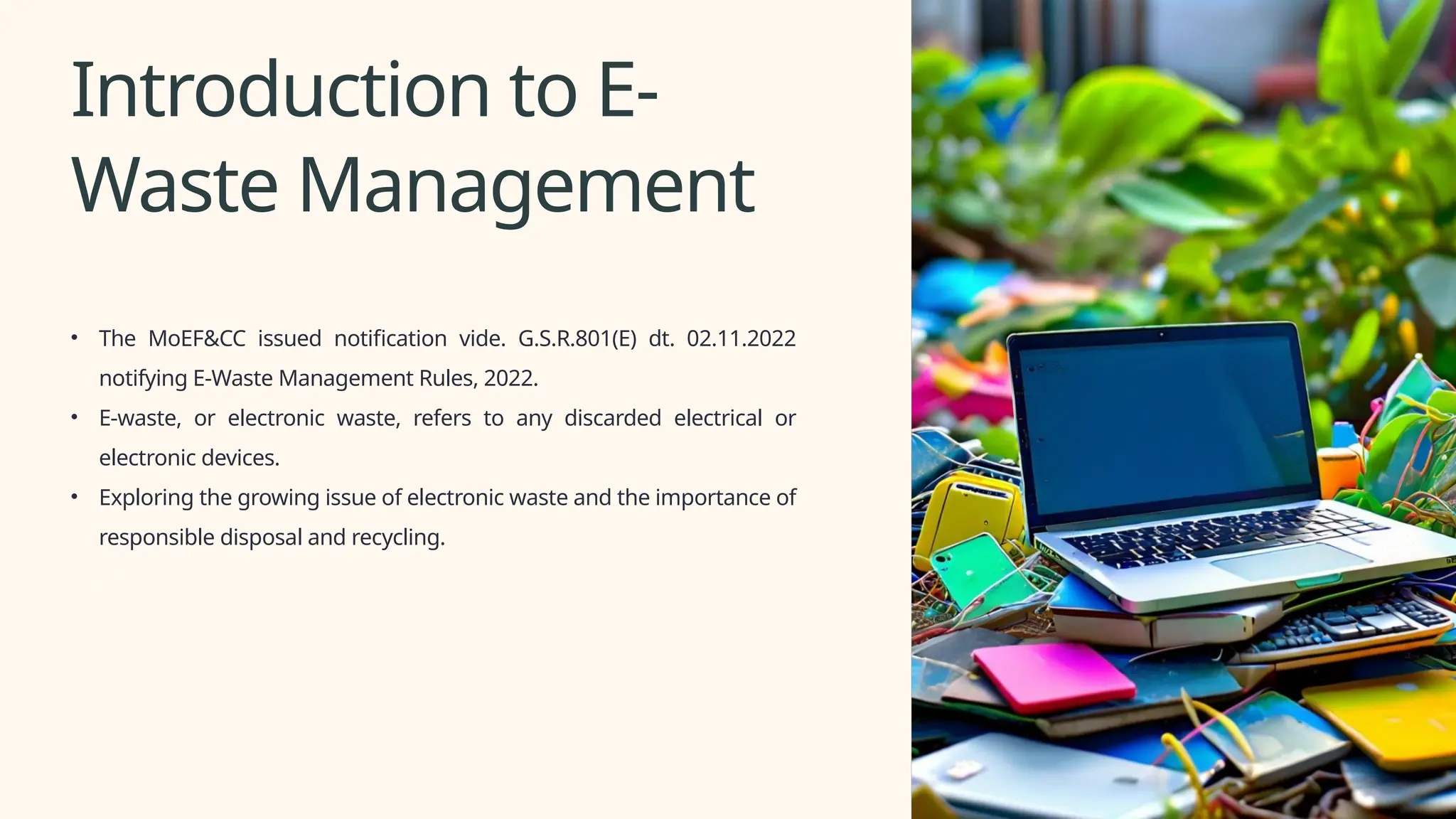
• E-waste, or electronic waste, refers to any discarded electrical or
electronic devices.
• Exploring the growing issue of electronic waste and the importance of
responsible disposal and recycling.
2.
The Growing Problemof E-
Waste
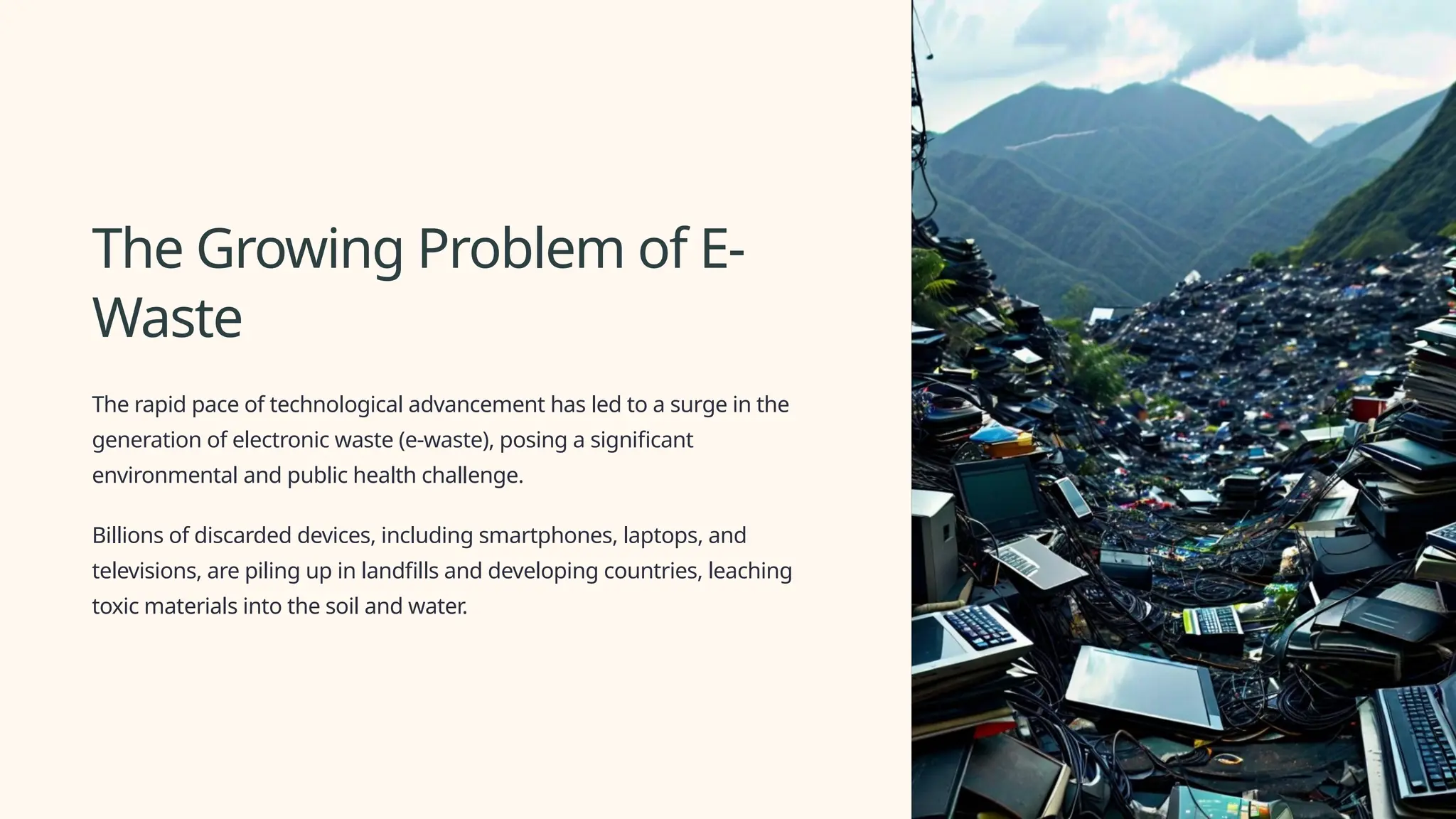
The rapid pace of technological advancement has led to a surge in the
generation of electronic waste (e-waste), posing a significant
environmental and public health challenge.
Billions of discarded devices, including smartphones, laptops, and
televisions, are piling up in landfills and developing countries, leaching
toxic materials into the soil and water.
3.
What is ExtendedProducer
Responsibility (EPR)?
1 Producer Responsibility
Manufacturers take ownership of
products at end-of-life
2 Incentivize Design
Encourage eco-friendly design and
recyclability
3 Shared Responsibility
Consumers, government, and recyclers also play a role
4.
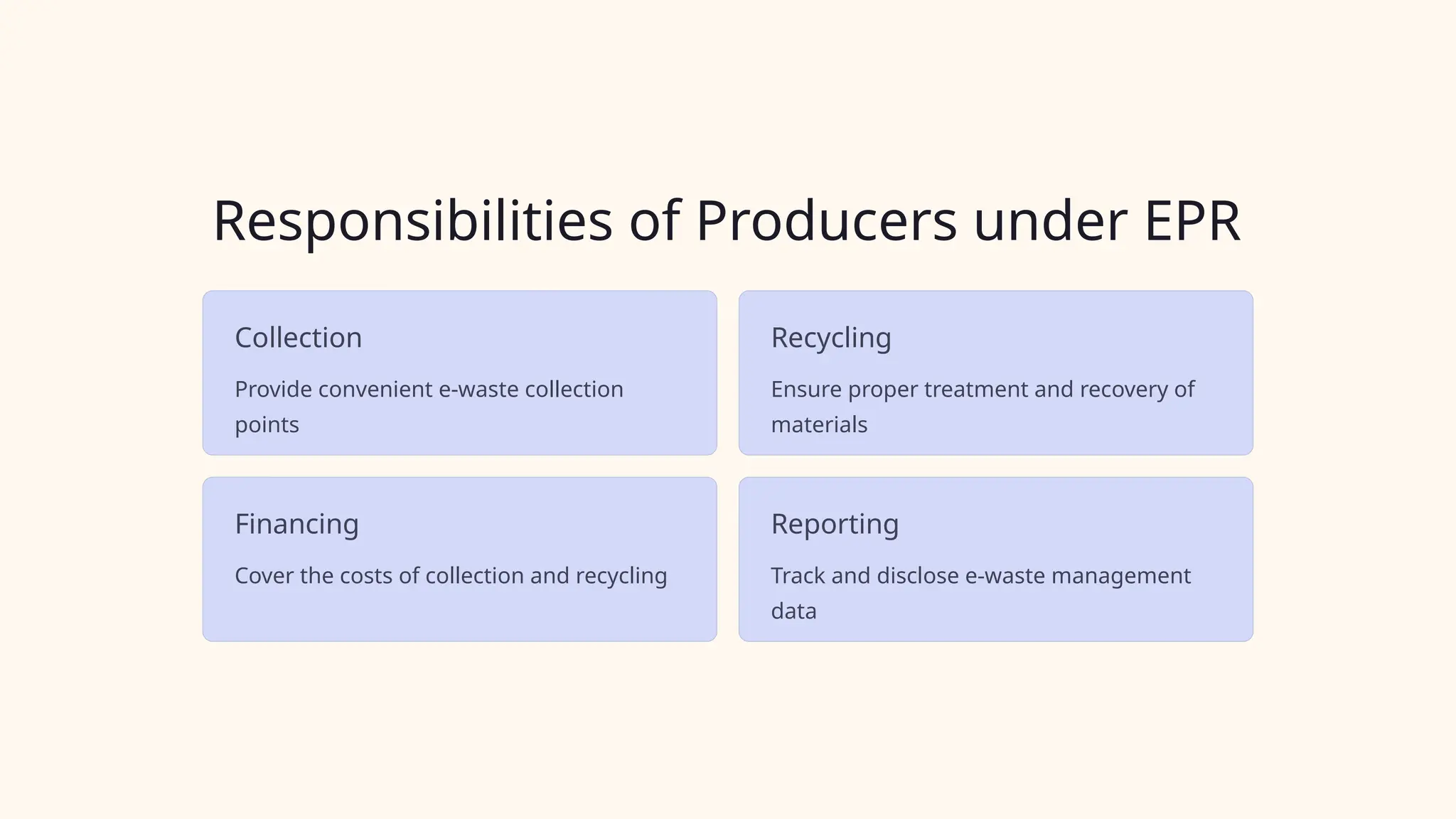
Responsibilities of Producersunder EPR
Collection
Provide convenient e-waste collection
points
Recycling
Ensure proper treatment and recovery of
materials
Financing
Cover the costs of collection and recycling
Reporting
Track and disclose e-waste management
data
5.
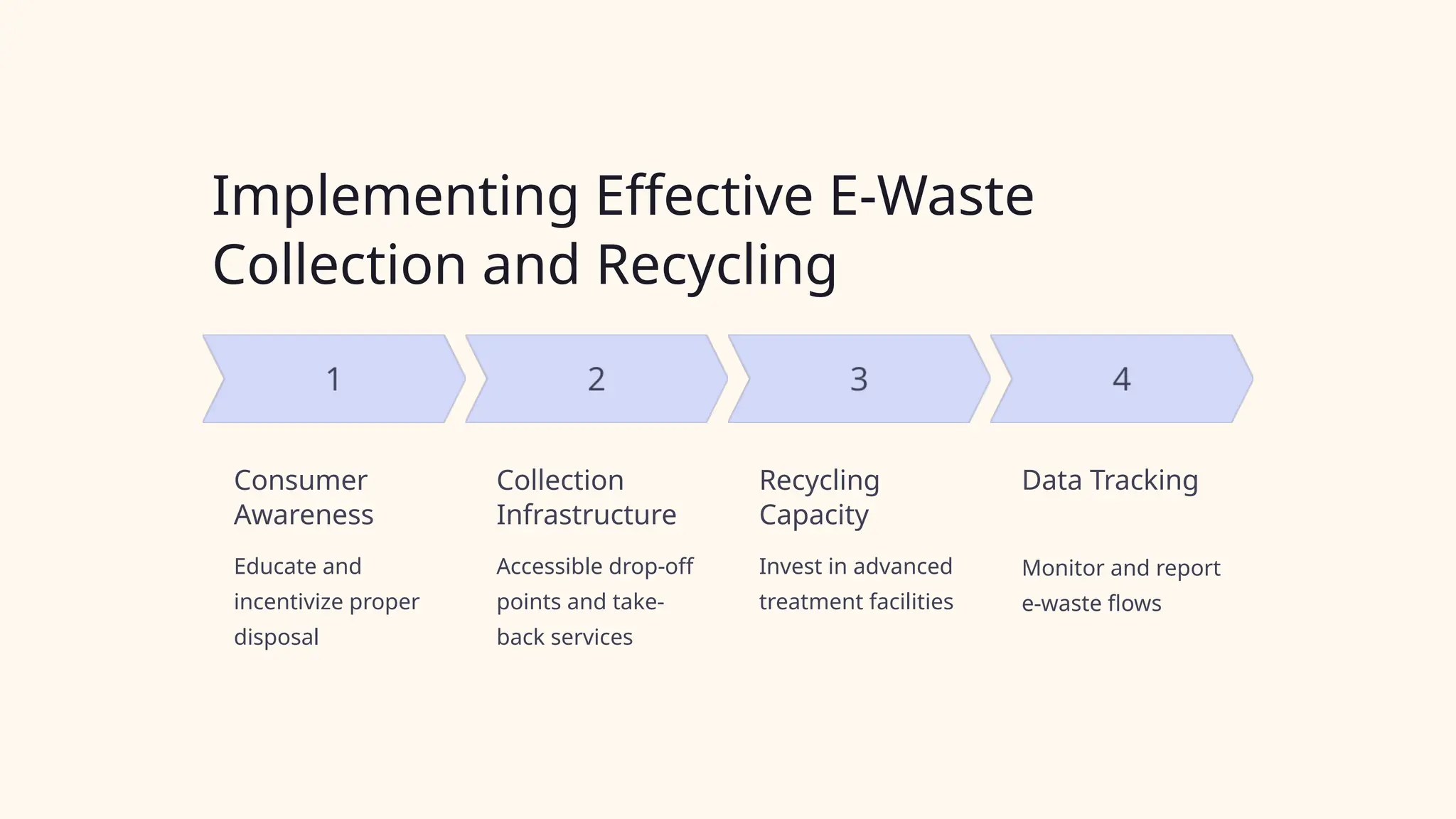
Implementing Effective E-Waste
Collectionand Recycling
Consumer
Awareness
Educate and
incentivize proper
disposal
Collection
Infrastructure
Accessible drop-off
points and take-
back services
Recycling
Capacity
Invest in advanced
treatment facilities
Data Tracking
Monitor and report
e-waste flows
6.
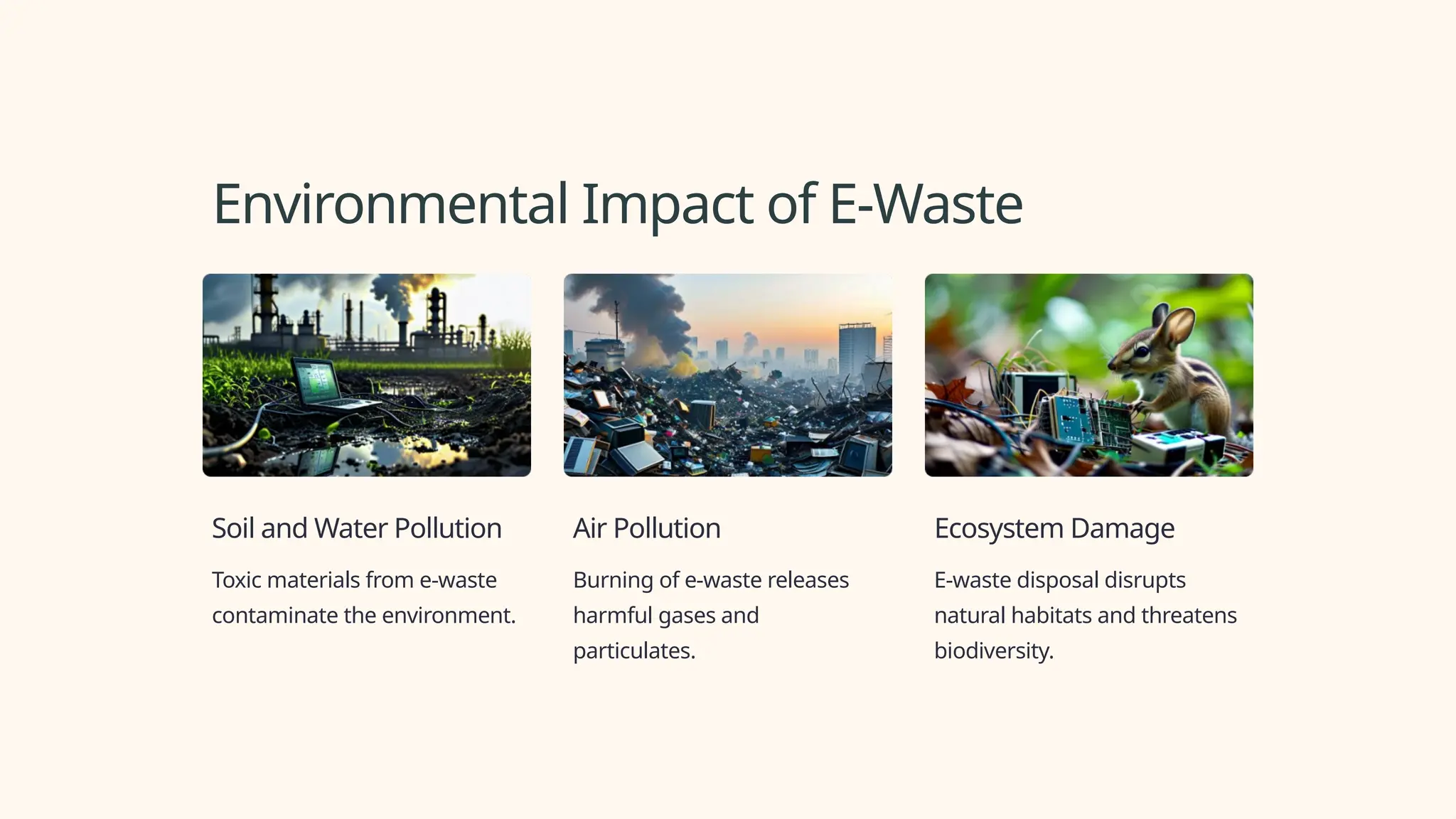
Environmental Impact ofE-Waste
Soil and Water Pollution
Toxic materials from e-waste
contaminate the environment.
Air Pollution
Burning of e-waste releases
harmful gases and
particulates.
Ecosystem Damage
E-waste disposal disrupts
natural habitats and threatens
biodiversity.
7.
Health Hazards ofImproper E-Waste
Disposal
Toxic Chemicals
E-waste contains
hazardous
substances like
lead, mercury,
cadmium that can
leach into soil and
water, harming
ecosystems and
human health.
Air Pollution
Burning e-waste
releases toxic
fumes, exposing
workers and nearby
communities to
harmful pollutants
that cause
respiratory issues.
Water
Contamination
Improper disposal
allows toxic
materials to seep
into groundwater,
contaminating
drinking water
sources and
disrupting aquatic
life.
Health Risks
Exposure to e-waste
can lead to
neurological
damage, organ
failure, cancer and
other serious health
problems, especially
in children.
8.
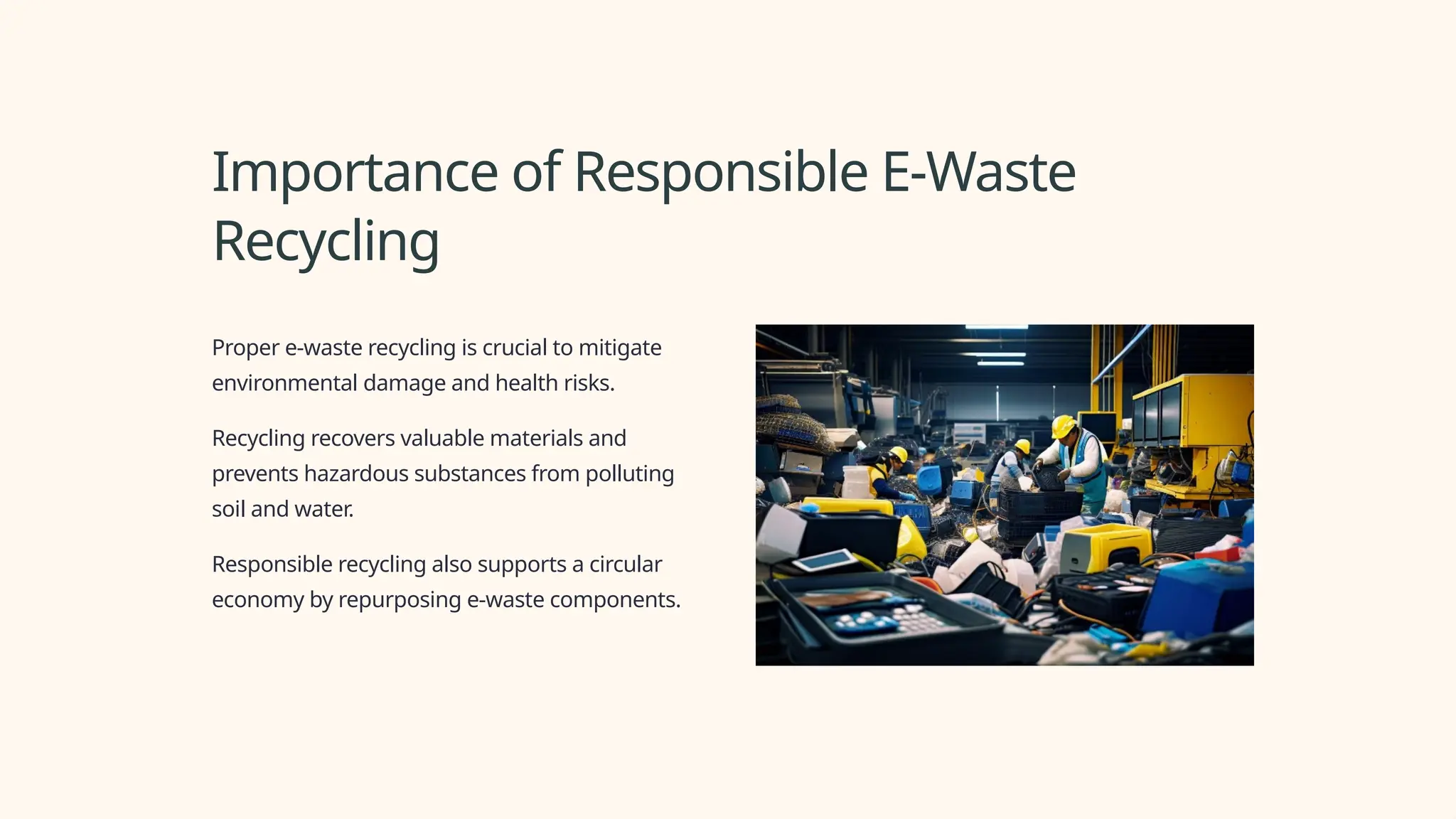
Importance of ResponsibleE-Waste
Recycling
Proper e-waste recycling is crucial to mitigate
environmental damage and health risks.
Recycling recovers valuable materials and
prevents hazardous substances from polluting
soil and water.
Responsible recycling also supports a circular
economy by repurposing e-waste components.
9.
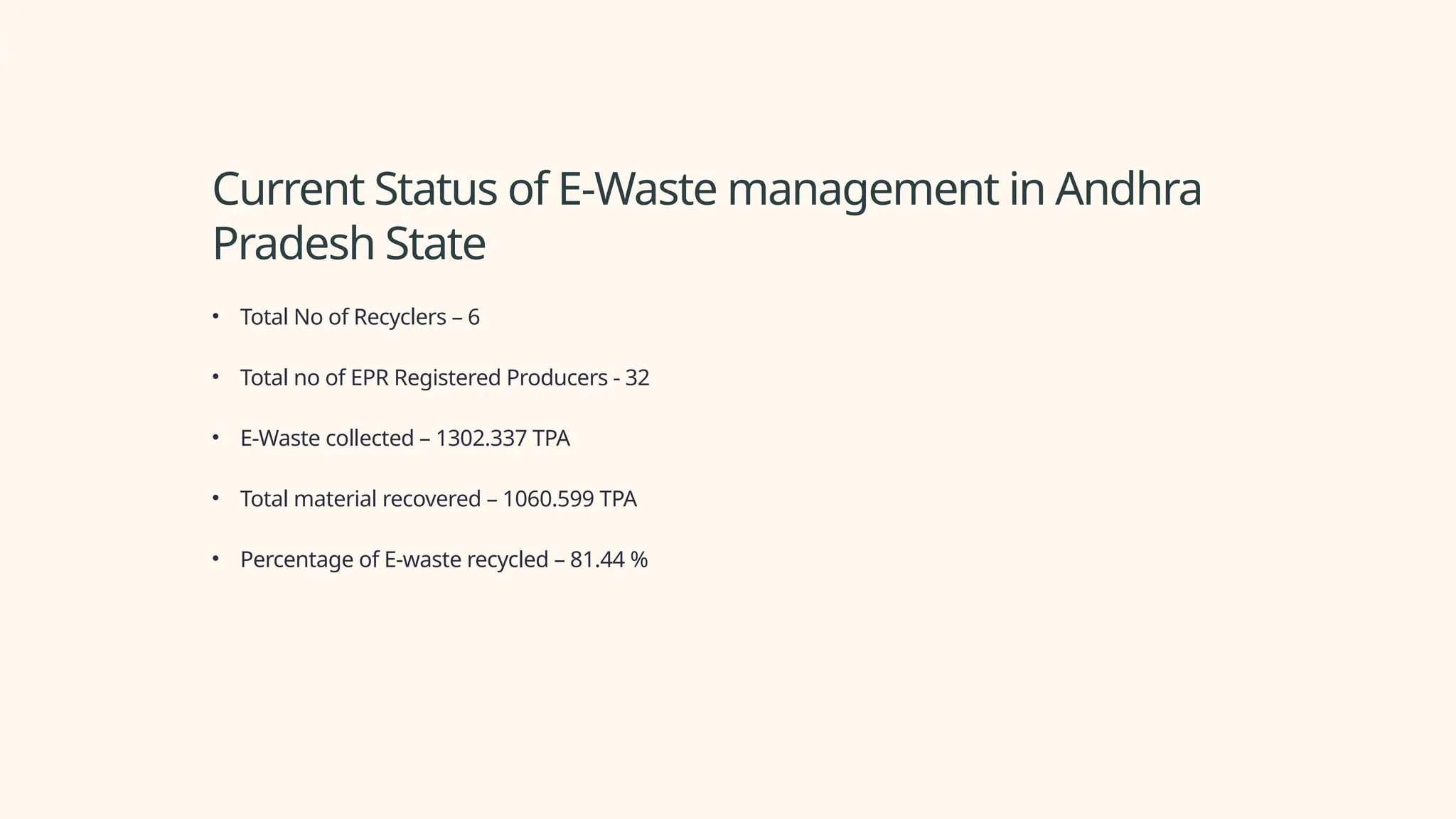
Current Status ofE-Waste management in Andhra
Pradesh State
• Total No of Recyclers – 6
• Total no of EPR Registered Producers - 32
• E-Waste collected – 1302.337 TPA
• Total material recovered – 1060.599 TPA
• Percentage of E-waste recycled – 81.44 %
10.
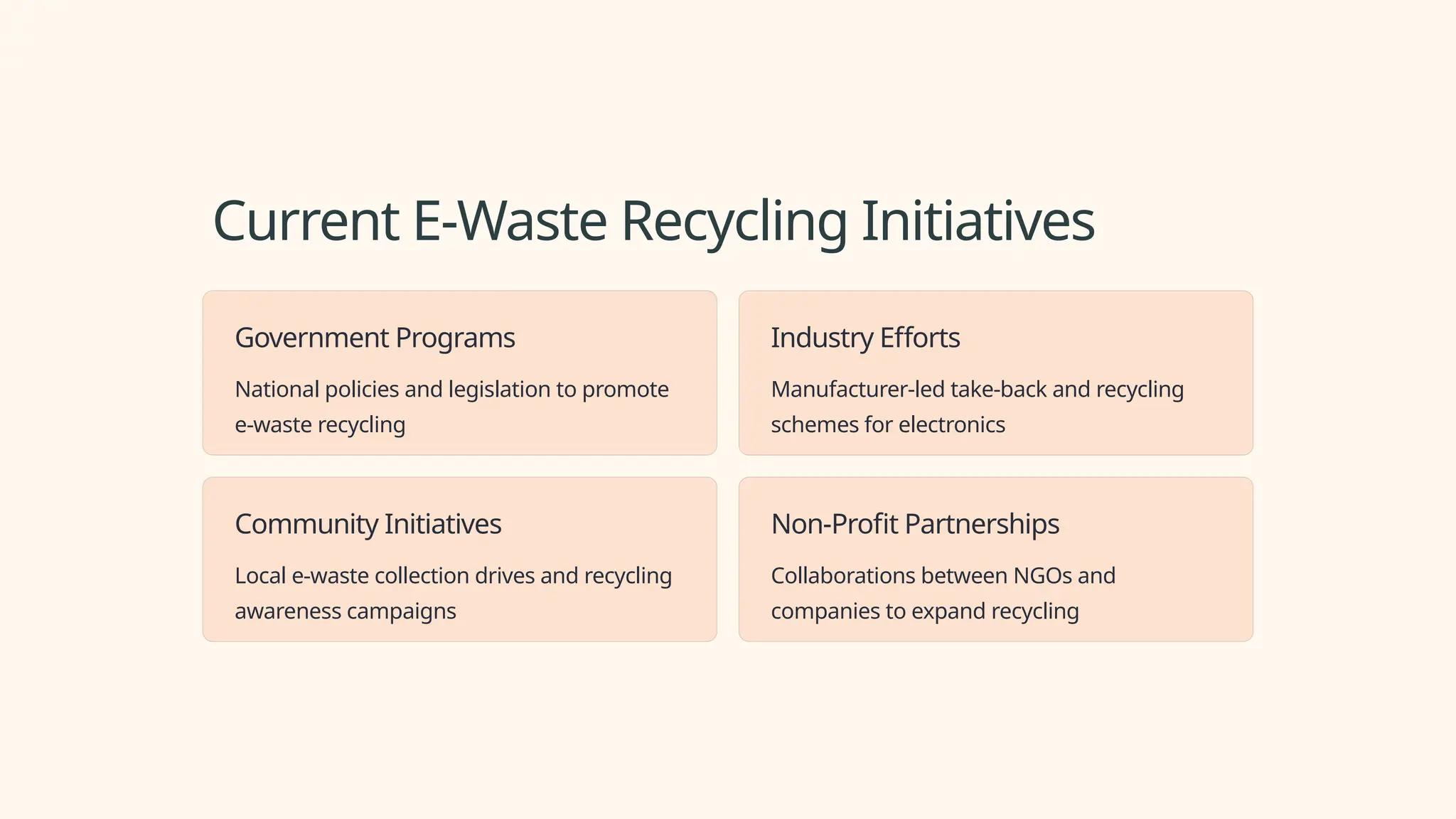
Current E-Waste RecyclingInitiatives
Government Programs
National policies and legislation to promote
e-waste recycling
Industry Efforts
Manufacturer-led take-back and recycling
schemes for electronics
Community Initiatives
Local e-waste collection drives and recycling
awareness campaigns
Non-Profit Partnerships
Collaborations between NGOs and
companies to expand recycling
11.
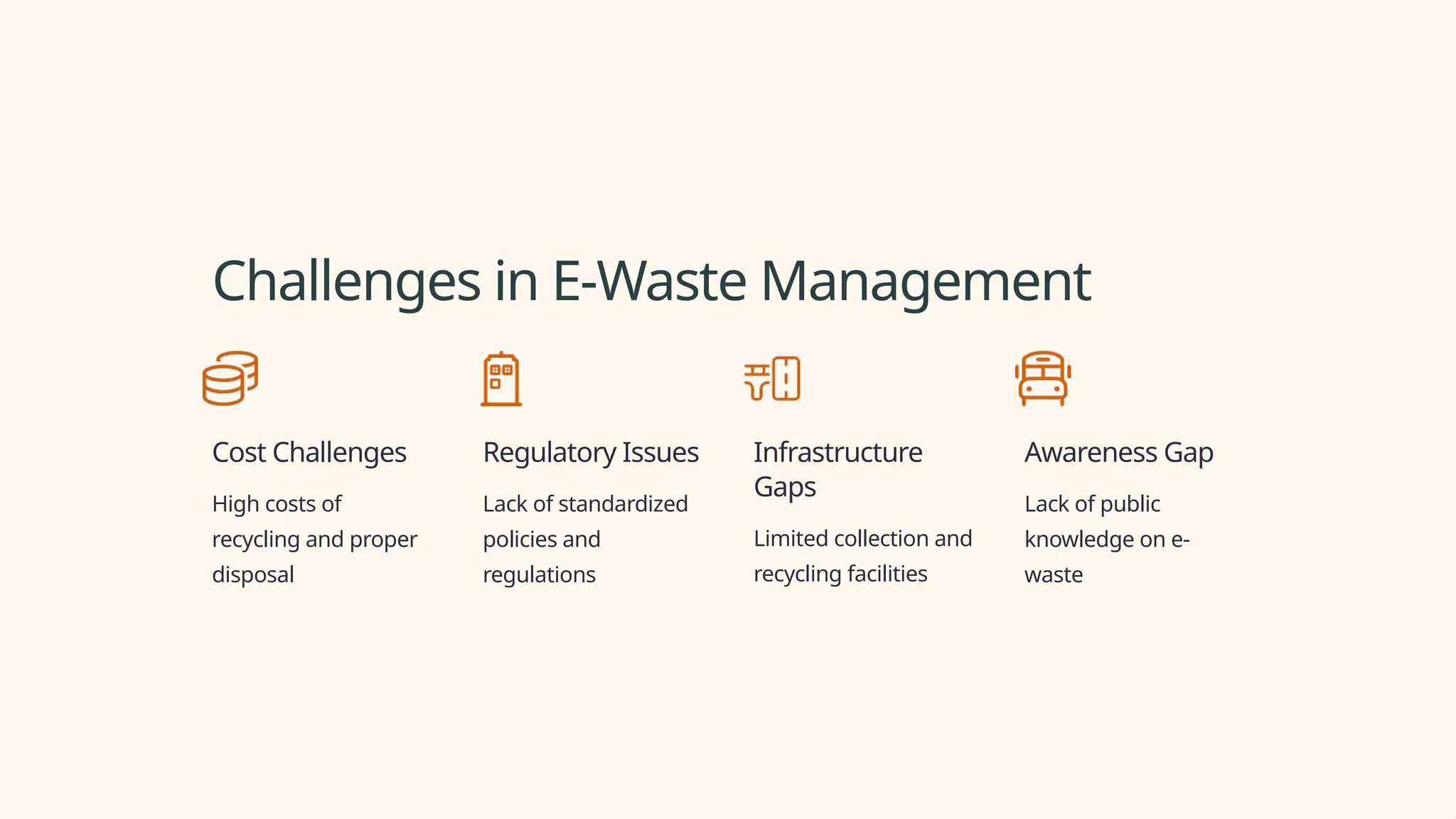
Challenges in E-WasteManagement
Cost Challenges
High costs of
recycling and proper
disposal
Regulatory Issues
Lack of standardized
policies and
regulations
Infrastructure
Gaps
Limited collection and
recycling facilities
Awareness Gap
Lack of public
knowledge on e-
waste
12.
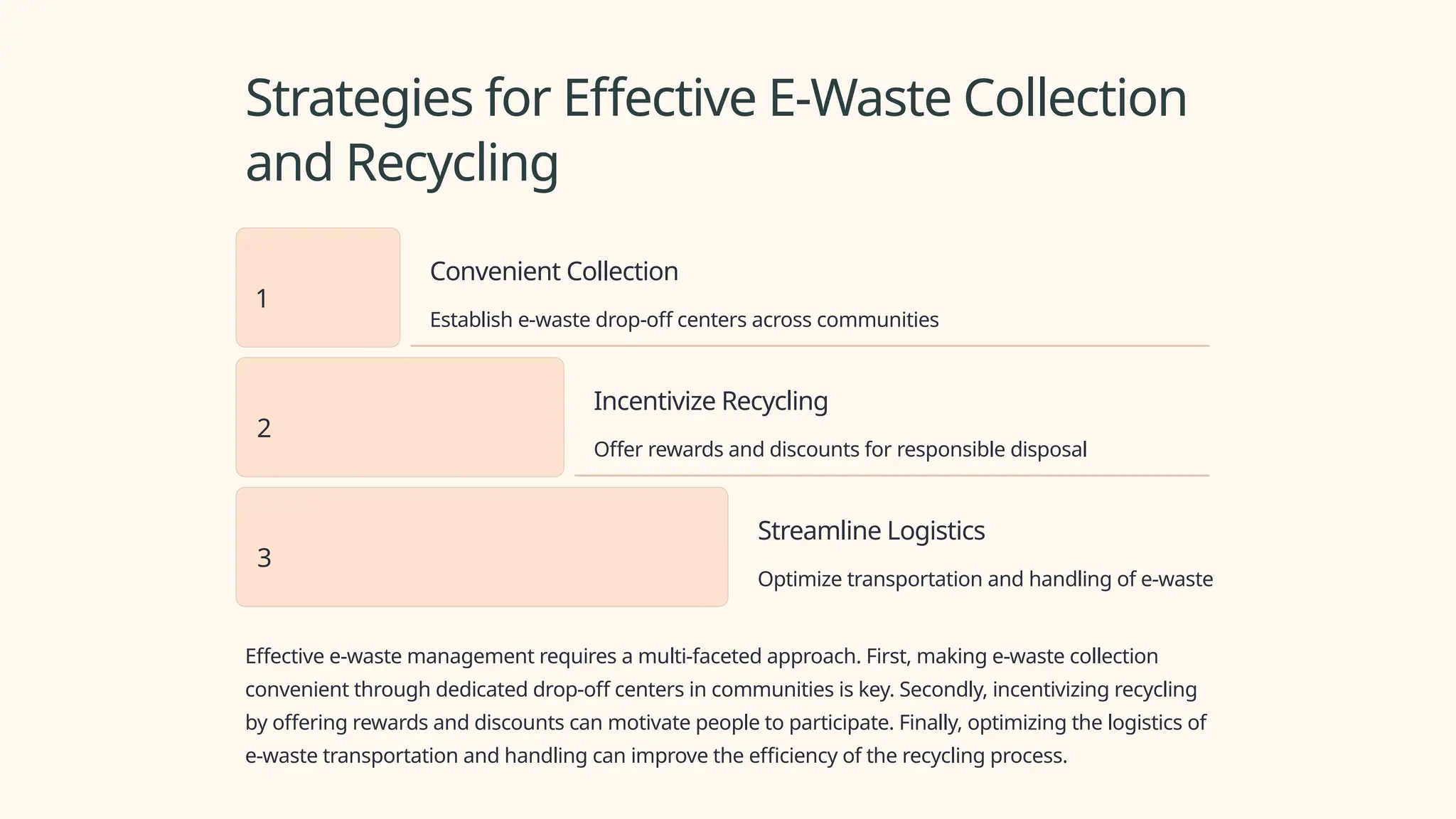
Strategies for EffectiveE-Waste Collection
and Recycling
1
Convenient Collection
Establish e-waste drop-off centers across communities
2
Incentivize Recycling
Offer rewards and discounts for responsible disposal
3
Streamline Logistics
Optimize transportation and handling of e-waste
Effective e-waste management requires a multi-faceted approach. First, making e-waste collection
convenient through dedicated drop-off centers in communities is key. Secondly, incentivizing recycling
by offering rewards and discounts can motivate people to participate. Finally, optimizing the logistics of
e-waste transportation and handling can improve the efficiency of the recycling process.
13.
Role of Individualsand Communities in E-
Waste Reduction
Lifestyle Changes
Adopt sustainable practices, reduce
consumption, repair and reuse electronics
Community Initiatives
Organize e-waste collection drives,
promote recycling, support local programs
Education and Awareness
Spread knowledge about environmental
impact and proper disposal methods
Policy Advocacy
Urge local authorities to implement
effective e-waste management policies