Tactics for
Managing
Reviews &
Reputation
We’re Living in A Review Economy
1. 93% customers say they check reviews before buying anything.
2. And among them- 96% will look for negative reviews.
3. 47% of your customers are likely to leave a positive review if they’re happy.
(Dixa)
4. But if they have a negative experience- 95% of them are willing to broadcast
their displeasure to the world.
5. While we don’t have any definitive stats for B2B buying decisions- it definitely
will reflect similar patterns.
6. So, no matter where you are operating- you need to manage reviews right if
you don’t want your reputation (or business) to be hit.
Types of Reviews That Matter
1. Product reviews.
2. Employee reviews.
3. Service reviews.
These can come in form of
stars or ratings, and be
available on the brand’s site/
app, social media and other
third party platforms.
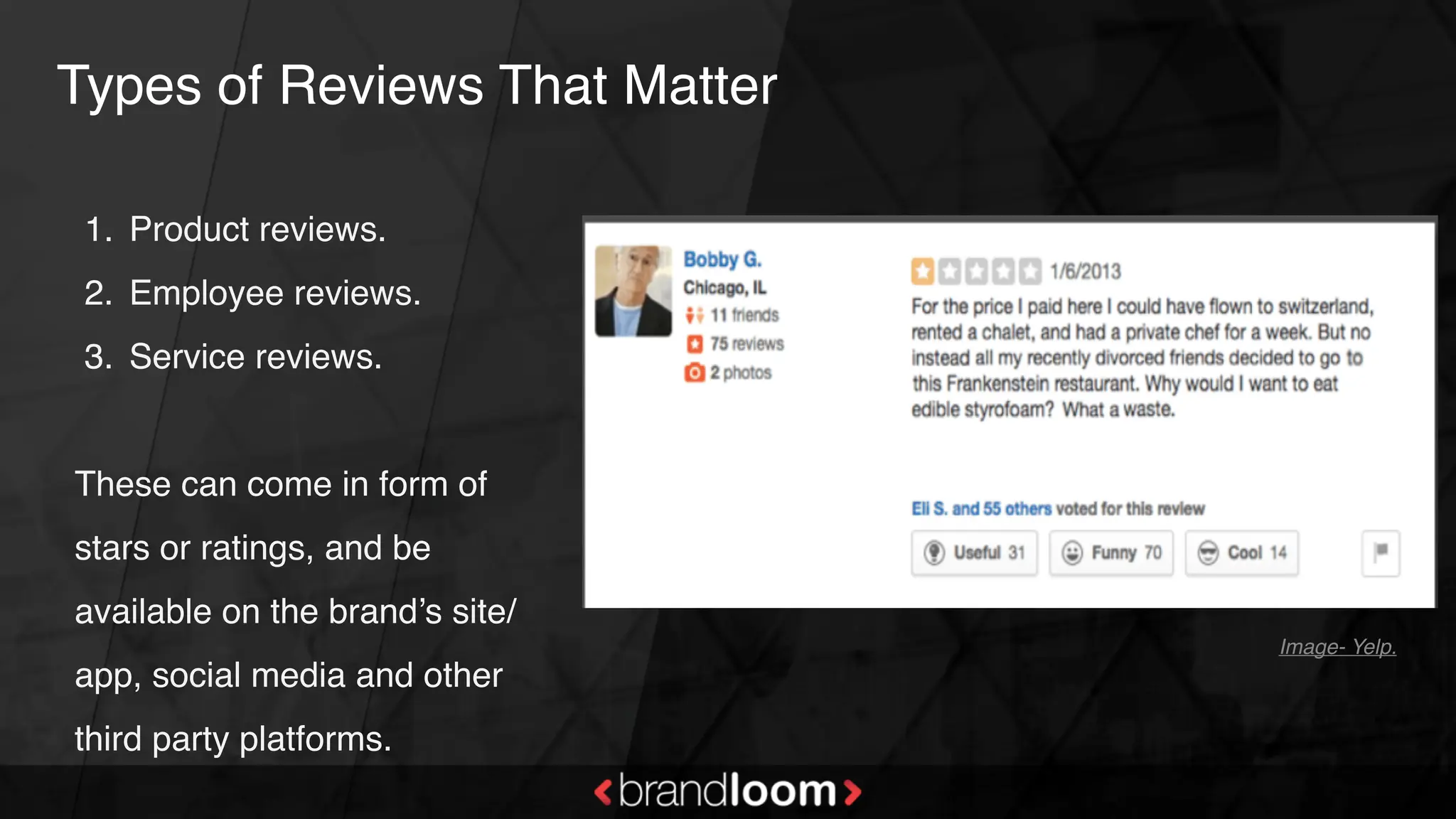
Image- Yelp.
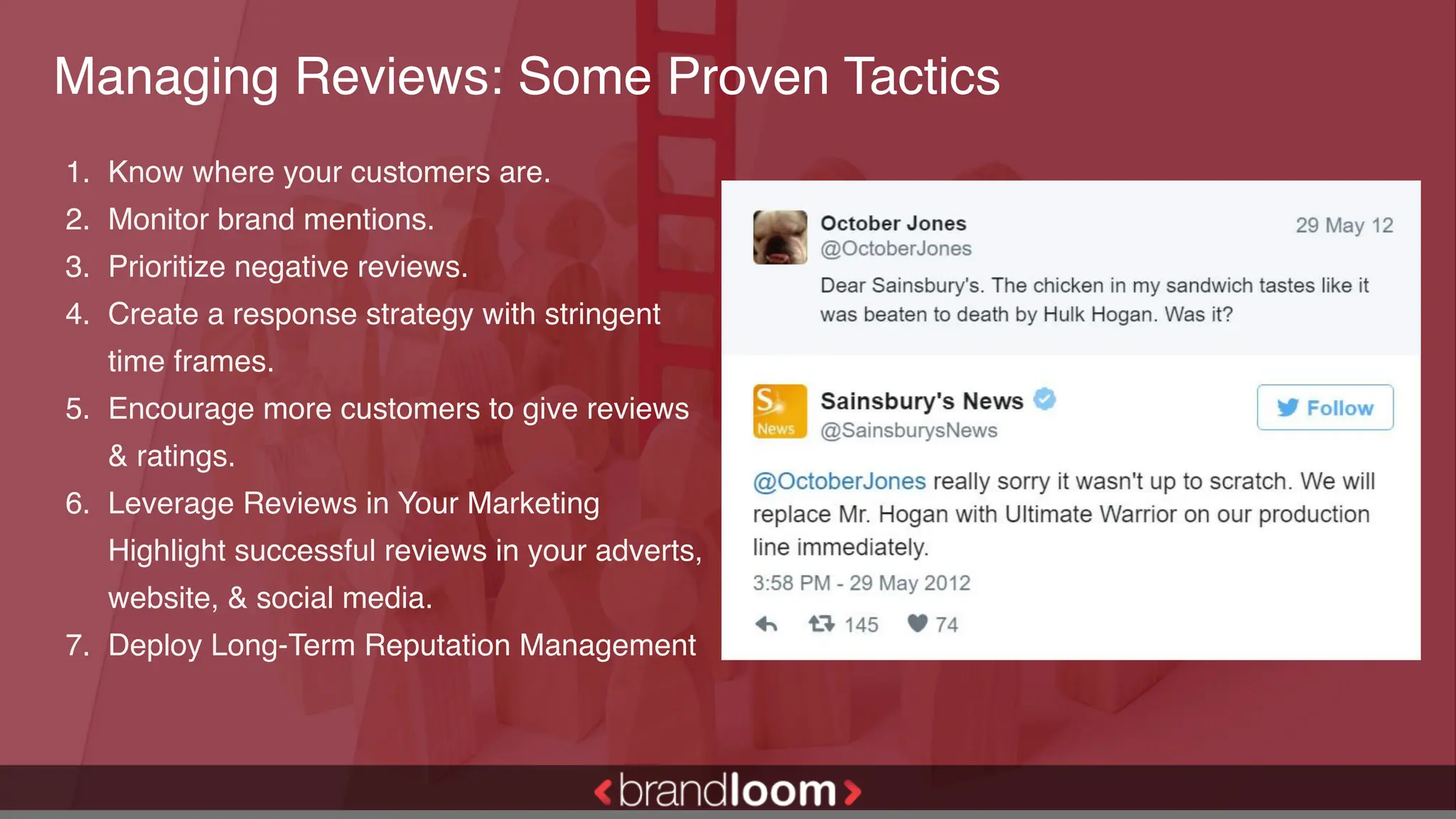
Managing Reviews: Some Proven Tactics
1. Know where your customers are.
2. Monitor brand mentions.
3. Prioritize negative reviews.
4. Create a response strategy with stringent
time frames.
5. Encourage more customers to give reviews
& ratings.
6. Leverage Reviews in Your Marketing
Highlight successful reviews in your adverts,
website, & social media.
7. Deploy Long-Term Reputation Management
1. Know Where Your Customers Are
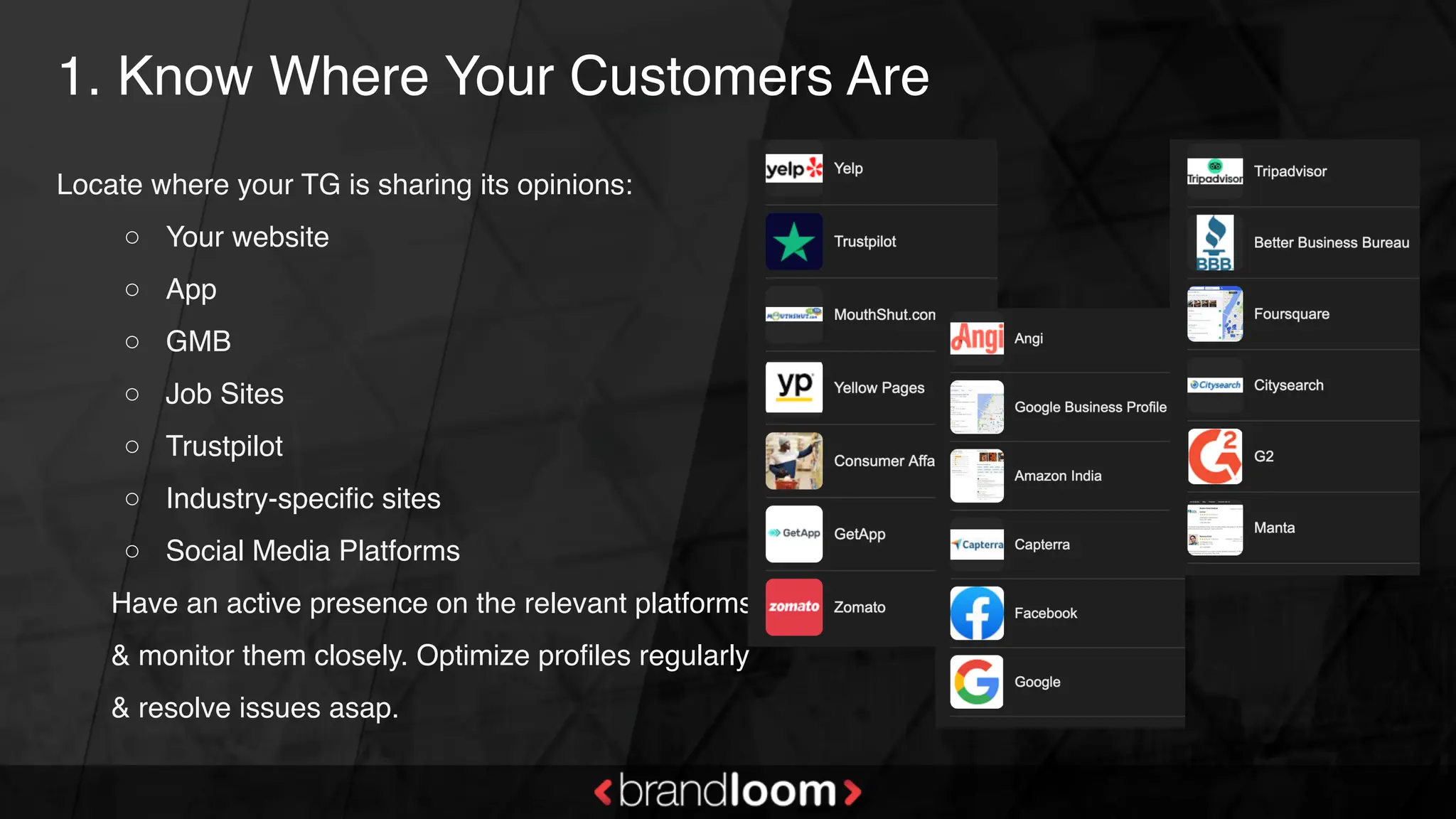
Locate where your TG is sharing its opinions:
○ Your website
○ App
○ GMB
○ Job Sites
○ Trustpilot
○ Industry-specific sites
○ Social Media Platforms
Have an active presence on the relevant platforms
& monitor them closely. Optimize profiles regularly
& resolve issues asap.
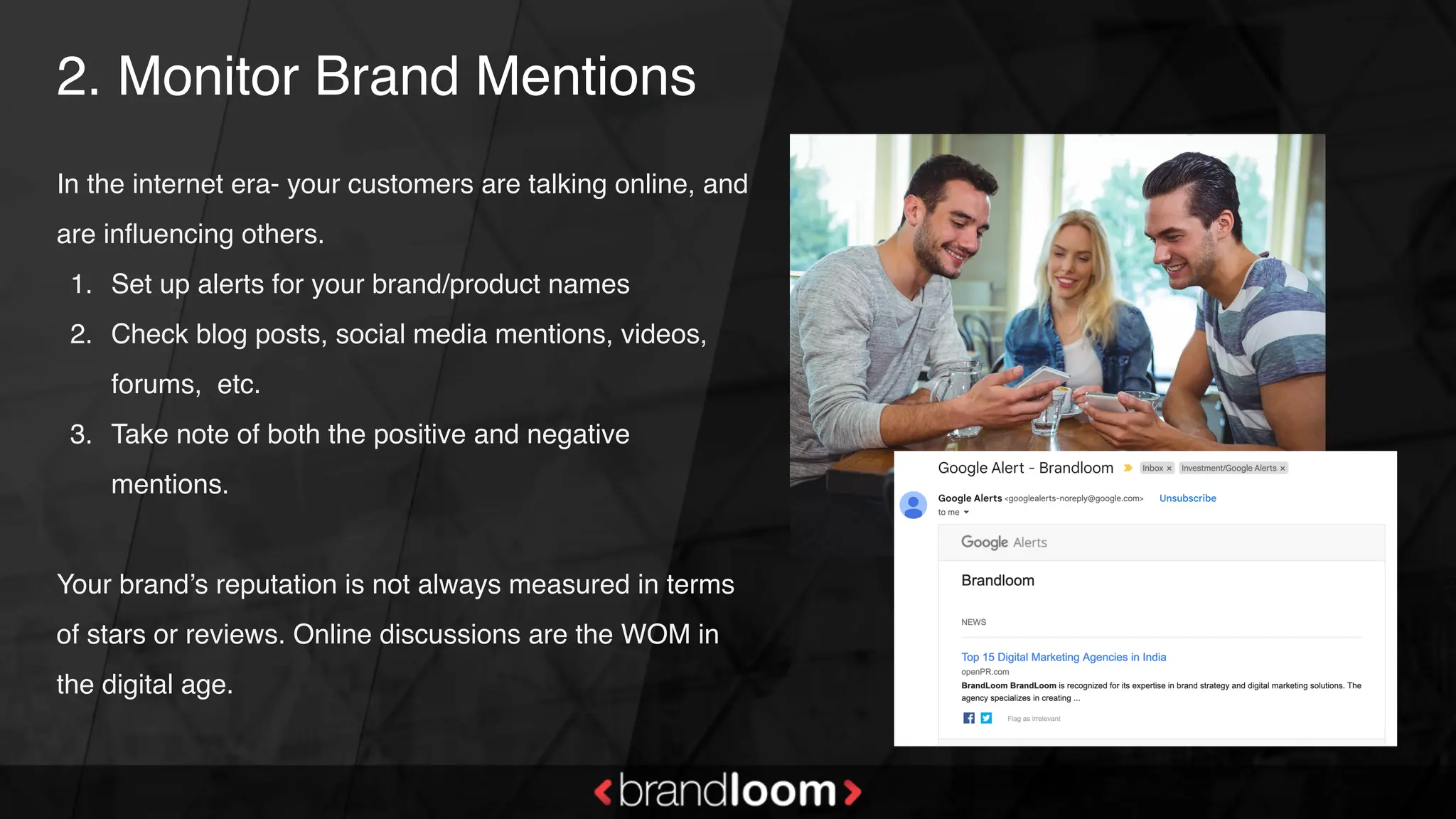
2. Monitor Brand Mentions
In the internet era- your customers are talking online, and
are influencing others.
1. Set up alerts for your brand/product names
2. Check blog posts, social media mentions, videos,
forums, etc.
3. Take note of both the positive and negative
mentions.
Your brand’s reputation is not always measured in terms
of stars or reviews. Online discussions are the WOM in
the digital age.
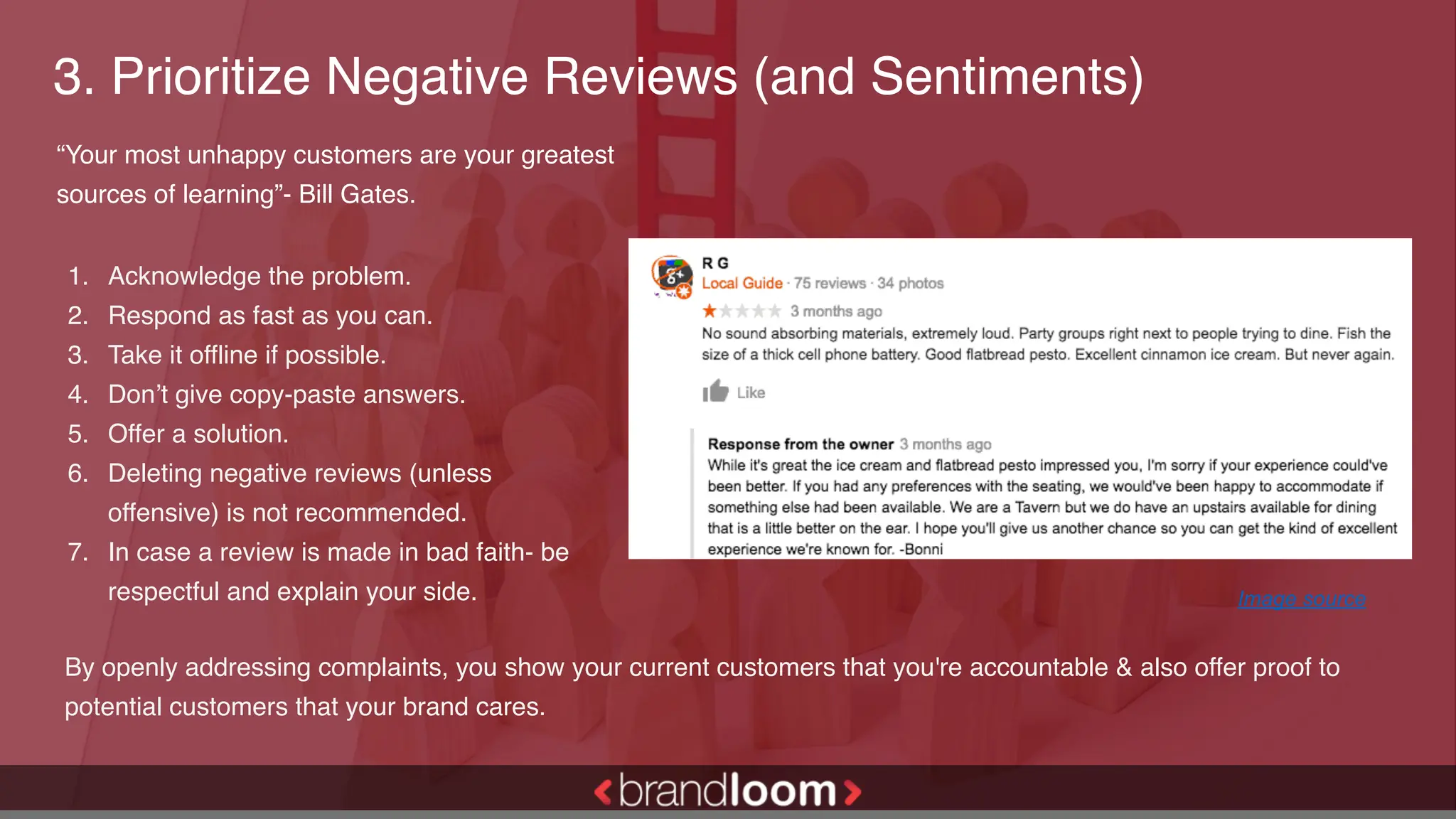
3. Prioritize Negative Reviews (and Sentiments)
1. Acknowledge the problem.
2. Respond as fast as you can.
3. Take it offline if possible.
4. Don’t give copy-paste answers.
5. Offer a solution.
6. Deleting negative reviews (unless
offensive) is not recommended.
7. In case a review is made in bad faith- be
respectful and explain your side.
“Your most unhappy customers are your greatest
sources of learning”- Bill Gates.
Image source
By openly addressing complaints, you show your current customers that you're accountable & also offer proof to
potential customers that your brand cares.
4. Have a Response Strategy in Place
Having a response strategy is crucial. Customers expect quick replies to
both positive & negative feedback.
1. Create a review response policy—This should include guidelines for
tone, speed, & content of responses.
2. Set strict response timeframes—aim to reply to all reviews within 24
hours.
3. Train your team, including customer service & social media teams,
to handle reviews appropriately.
4. Automate for small teams—set up automated responses for
common questions or compliments. Personalize your responses as
much as possible.
5. Highlight successful resolutions—once you’ve resolved an issue, let
your audience know that you addressed it effectively & quickly.
Responding quickly & politely, with a solution shows you care about the customer's feedback and are serious about
customer satisfaction.
5. Encourage Customers to Leave Reviews
Request your customers to leave a positive review:
1. Ask for written reviews & video testimonials
2. Make it Easy: Simplify the review process. Use QR codes, direct
links, or short forms.
3. Ask at the Right Time: Build it in your customer journey. Ask for
reviews after a positive interaction, like a successful purchase or
service experience.
4. Incentivise reviews: Simply put offer rewards for reviews. Provide
discounts, gift cards, or future purchase discounts to customers who
leave a review.
5. Follow Up: After a purchase, remember to follow up and encourage
them to leave a review.
6. Public Recognition: Highlight customer reviews on your website or
social media.
6. Leverage Reviews In Your Marketing
1. Incorporate testimonials into your website
2. Post user-generated content (UGC) on website and social
media to show that real people are using and benefiting from
your product or service.
3. Share reviews on social media—highlight positive reviews
regularly on your social media profiles.
4. Create case study videos—encourage satisfied customers to
create video testimonials that you can embed on your website,
and share on social media.
5. Use reviews in advertisements—incorporate positive feedback
in paid media campaigns, such as Facebook or Google Ads, to
add credibility and attract new customers.
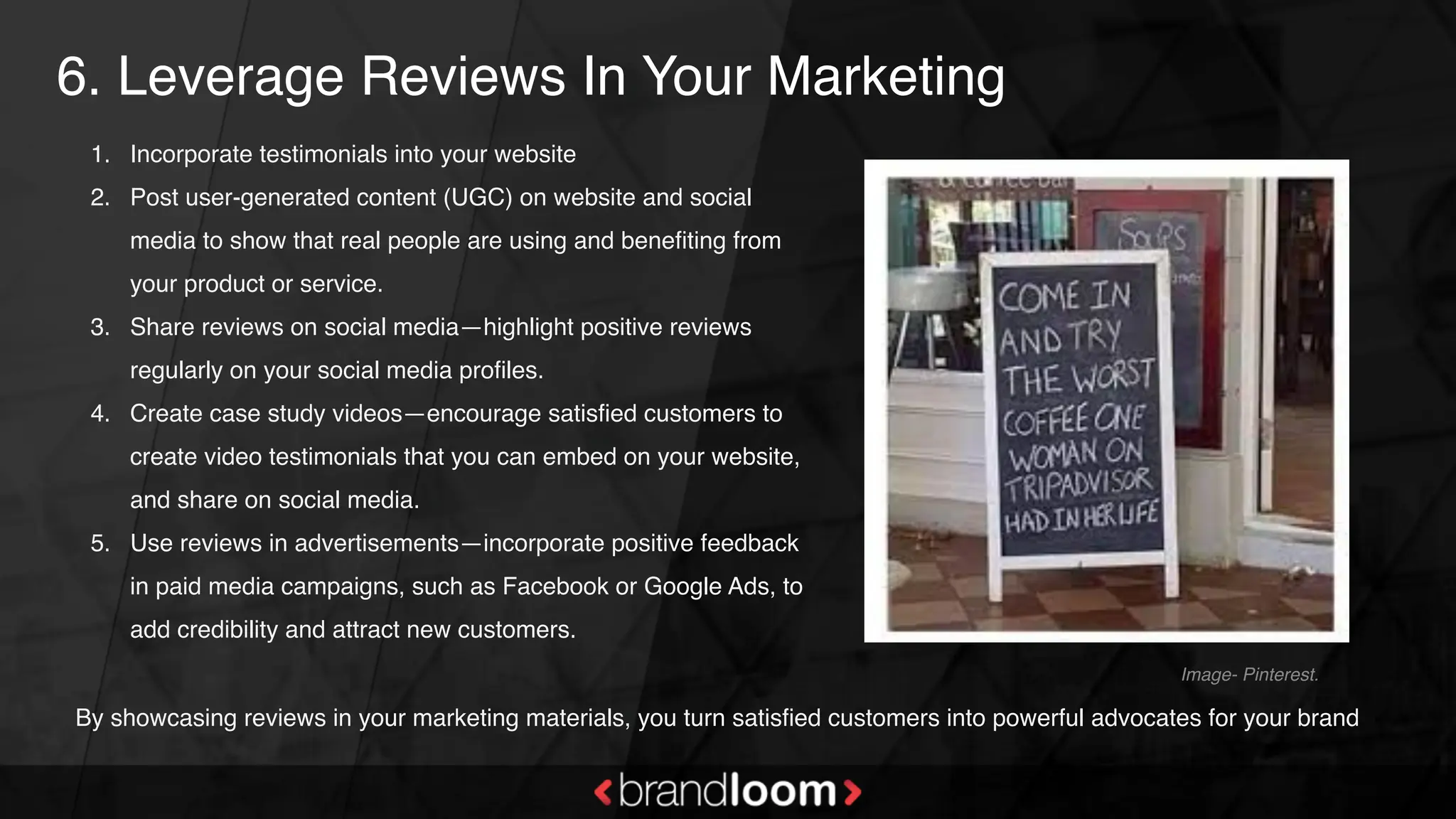
Image- Pinterest.
By showcasing reviews in your marketing materials, you turn satisfied customers into powerful advocates for your brand
7. Deploy Long-Term Reputation Management
Long-term management includes leveraging SEO, Online PR, and
maintaining regular communication with your audience.
1. Ensure your brand stays visible— with positive reviews on platforms
like Google, Trustpilot, and moutshut.com.
2. Invest in SEO— Use SEO strategies to rank customer success stories,
testimonials, and case studies in search results, reinforcing the social
proof effect.
3. Online PR—actively seek positive media mentions and secure
coverage in reputable outlets.
4. Address criticism proactively—if you see recurring negative feedback,
address the root causes and communicate these efforts to your
customers.
5. Run review campaigns—regularly encourage reviews from customers,
ensuring your brand continues to accumulate positive feedback.
Managing Reviews: Some Proven Tactics
1. Know where your customers are.
2. Monitor brand mentions.
3. Prioritize negative reviews.
4. Create a response strategy with stringent
time frames.
5. Encourage more customers to give reviews
& ratings.
6. Leverage Reviews in Your Marketing
Highlight successful reviews in your adverts,
website, & social media.
7. Deploy Long-Term Reputation Management
Online Review Management - Your Strong Brand Growth Asset.pdf

Online Review Management - Your Strong Brand Growth Asset.pdf

  • 1.
  • 2.
    We’re Living inA Review Economy 1. 93% customers say they check reviews before buying anything. 2. And among them- 96% will look for negative reviews. 3. 47% of your customers are likely to leave a positive review if they’re happy. (Dixa) 4. But if they have a negative experience- 95% of them are willing to broadcast their displeasure to the world. 5. While we don’t have any definitive stats for B2B buying decisions- it definitely will reflect similar patterns. 6. So, no matter where you are operating- you need to manage reviews right if you don’t want your reputation (or business) to be hit.
  • 3.
    Types of ReviewsThat Matter 1. Product reviews. 2. Employee reviews. 3. Service reviews. These can come in form of stars or ratings, and be available on the brand’s site/ app, social media and other third party platforms. Image- Yelp.
  • 4.
    Managing Reviews: SomeProven Tactics 1. Know where your customers are. 2. Monitor brand mentions. 3. Prioritize negative reviews. 4. Create a response strategy with stringent time frames. 5. Encourage more customers to give reviews & ratings. 6. Leverage Reviews in Your Marketing Highlight successful reviews in your adverts, website, & social media. 7. Deploy Long-Term Reputation Management
  • 5.
    1. Know WhereYour Customers Are Locate where your TG is sharing its opinions: ○ Your website ○ App ○ GMB ○ Job Sites ○ Trustpilot ○ Industry-specific sites ○ Social Media Platforms Have an active presence on the relevant platforms & monitor them closely. Optimize profiles regularly & resolve issues asap.
  • 6.
    2. Monitor BrandMentions In the internet era- your customers are talking online, and are influencing others. 1. Set up alerts for your brand/product names 2. Check blog posts, social media mentions, videos, forums, etc. 3. Take note of both the positive and negative mentions. Your brand’s reputation is not always measured in terms of stars or reviews. Online discussions are the WOM in the digital age.
  • 7.
    3. Prioritize NegativeReviews (and Sentiments) 1. Acknowledge the problem. 2. Respond as fast as you can. 3. Take it offline if possible. 4. Don’t give copy-paste answers. 5. Offer a solution. 6. Deleting negative reviews (unless offensive) is not recommended. 7. In case a review is made in bad faith- be respectful and explain your side. “Your most unhappy customers are your greatest sources of learning”- Bill Gates. Image source By openly addressing complaints, you show your current customers that you're accountable & also offer proof to potential customers that your brand cares.
  • 8.
    4. Have aResponse Strategy in Place Having a response strategy is crucial. Customers expect quick replies to both positive & negative feedback. 1. Create a review response policy—This should include guidelines for tone, speed, & content of responses. 2. Set strict response timeframes—aim to reply to all reviews within 24 hours. 3. Train your team, including customer service & social media teams, to handle reviews appropriately. 4. Automate for small teams—set up automated responses for common questions or compliments. Personalize your responses as much as possible. 5. Highlight successful resolutions—once you’ve resolved an issue, let your audience know that you addressed it effectively & quickly. Responding quickly & politely, with a solution shows you care about the customer's feedback and are serious about customer satisfaction.
  • 9.
    5. Encourage Customersto Leave Reviews Request your customers to leave a positive review: 1. Ask for written reviews & video testimonials 2. Make it Easy: Simplify the review process. Use QR codes, direct links, or short forms. 3. Ask at the Right Time: Build it in your customer journey. Ask for reviews after a positive interaction, like a successful purchase or service experience. 4. Incentivise reviews: Simply put offer rewards for reviews. Provide discounts, gift cards, or future purchase discounts to customers who leave a review. 5. Follow Up: After a purchase, remember to follow up and encourage them to leave a review. 6. Public Recognition: Highlight customer reviews on your website or social media.
  • 10.
    6. Leverage ReviewsIn Your Marketing 1. Incorporate testimonials into your website 2. Post user-generated content (UGC) on website and social media to show that real people are using and benefiting from your product or service. 3. Share reviews on social media—highlight positive reviews regularly on your social media profiles. 4. Create case study videos—encourage satisfied customers to create video testimonials that you can embed on your website, and share on social media. 5. Use reviews in advertisements—incorporate positive feedback in paid media campaigns, such as Facebook or Google Ads, to add credibility and attract new customers. Image- Pinterest. By showcasing reviews in your marketing materials, you turn satisfied customers into powerful advocates for your brand
  • 11.
    7. Deploy Long-TermReputation Management Long-term management includes leveraging SEO, Online PR, and maintaining regular communication with your audience. 1. Ensure your brand stays visible— with positive reviews on platforms like Google, Trustpilot, and moutshut.com. 2. Invest in SEO— Use SEO strategies to rank customer success stories, testimonials, and case studies in search results, reinforcing the social proof effect. 3. Online PR—actively seek positive media mentions and secure coverage in reputable outlets. 4. Address criticism proactively—if you see recurring negative feedback, address the root causes and communicate these efforts to your customers. 5. Run review campaigns—regularly encourage reviews from customers, ensuring your brand continues to accumulate positive feedback.
  • 12.
    Managing Reviews: SomeProven Tactics 1. Know where your customers are. 2. Monitor brand mentions. 3. Prioritize negative reviews. 4. Create a response strategy with stringent time frames. 5. Encourage more customers to give reviews & ratings. 6. Leverage Reviews in Your Marketing Highlight successful reviews in your adverts, website, & social media. 7. Deploy Long-Term Reputation Management