A Guide to
Gift-Giving in
Nonprofits
Introduction to Gift-Giving
Presented by Nikolas Velikopoljski
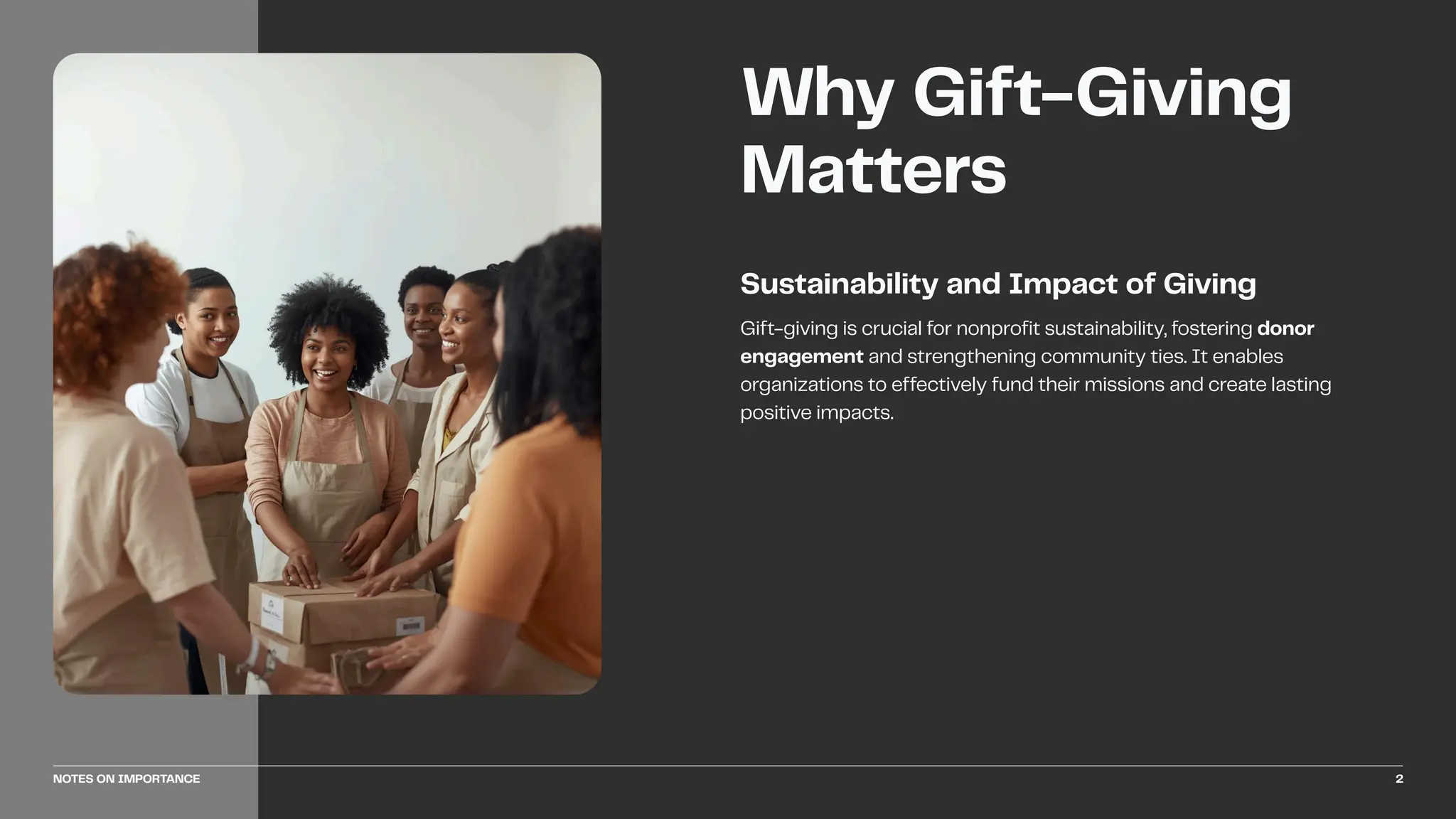
Gift-giving is crucial for nonprofit sustainability, fostering donor
engagement and strengthening community ties. It enables
organizations to effectively fund their missions and create lasting
positive impacts.
Sustainability and Impact of Giving
Why Gift-Giving
Matters
NOTES ON IMPORTANCE 2
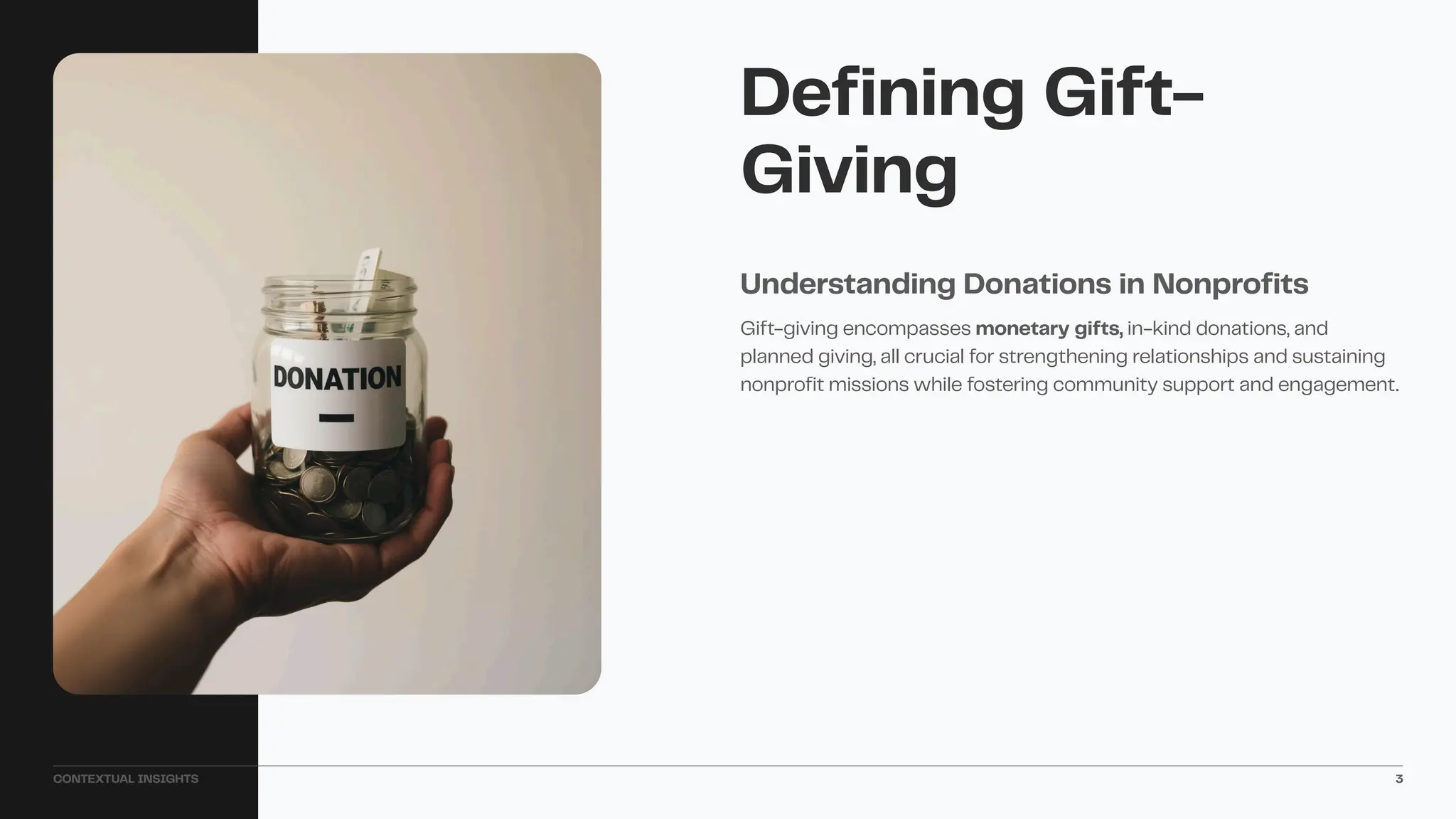
Gift-giving encompasses monetary gifts, in-kind donations, and
planned giving, all crucial for strengthening relationships and sustaining
nonprofit missions while fostering community support and engagement.
Understanding Donations in Nonprofits
Defining Gift-
Giving
CONTEXTUAL INSIGHTS 3
Explore various ways to give and support nonprofits.
Types and Channels
NOTES ON GIVING 4
Types of Gifts
Monetary
Monetary gifts include one-time donations and recurring contributions.
These funds are essential for nonprofits to sustain their operations and
expand their impact on the community they serve.
In-Kind
In-kind gifts consist of donated goods or services, such as supplies or
professional expertise. These contributions help organizations reduce
costs and enhance their mission-driven programs and activities.
Planned Giving
Planned giving allows donors to support nonprofits through bequests
or trusts. Such contributions ensure long-term financial stability and
enable organizations to plan for future projects and initiatives
effectively.
ADDITIONAL INSIGHTS 5
Channels for Giving
KEY POINTS 6
Guidelines for success in nonprofit gift-giving strategies.
Best Practices
NOTES ON ETHICS 7
Clear communication builds confidence and encourages
future contributions.
Transparency
Timely recognition fosters strong donor relationships and
trust.
Acknowledgment
Communication
Ongoing engagement keeps donors informed and involved
in efforts.
Donor
Stewardship
Principles
KEY TAKEAWAYS 8
– Eleanor Roosevelt
"Cultivating lasting donor
relationships requires
dedication to ethical
standards."
NOTES ON BEST PRACTICES 9
Thank you

A Guide to Gift-Giving in Nonprofits by Nikolas Velikopoljski

  • 1.
    A Guide to Gift-Givingin Nonprofits Introduction to Gift-Giving Presented by Nikolas Velikopoljski
  • 2.
    Gift-giving is crucialfor nonprofit sustainability, fostering donor engagement and strengthening community ties. It enables organizations to effectively fund their missions and create lasting positive impacts. Sustainability and Impact of Giving Why Gift-Giving Matters NOTES ON IMPORTANCE 2
  • 3.
    Gift-giving encompasses monetarygifts, in-kind donations, and planned giving, all crucial for strengthening relationships and sustaining nonprofit missions while fostering community support and engagement. Understanding Donations in Nonprofits Defining Gift- Giving CONTEXTUAL INSIGHTS 3
  • 4.
    Explore various waysto give and support nonprofits. Types and Channels NOTES ON GIVING 4
  • 5.
    Types of Gifts Monetary Monetarygifts include one-time donations and recurring contributions. These funds are essential for nonprofits to sustain their operations and expand their impact on the community they serve. In-Kind In-kind gifts consist of donated goods or services, such as supplies or professional expertise. These contributions help organizations reduce costs and enhance their mission-driven programs and activities. Planned Giving Planned giving allows donors to support nonprofits through bequests or trusts. Such contributions ensure long-term financial stability and enable organizations to plan for future projects and initiatives effectively. ADDITIONAL INSIGHTS 5
  • 6.
  • 7.
    Guidelines for successin nonprofit gift-giving strategies. Best Practices NOTES ON ETHICS 7
  • 8.
    Clear communication buildsconfidence and encourages future contributions. Transparency Timely recognition fosters strong donor relationships and trust. Acknowledgment Communication Ongoing engagement keeps donors informed and involved in efforts. Donor Stewardship Principles KEY TAKEAWAYS 8
  • 9.
    – Eleanor Roosevelt "Cultivatinglasting donor relationships requires dedication to ethical standards." NOTES ON BEST PRACTICES 9
  • 10.