Cardiogenic shock occurs when the heart has
been damaged so much, that it is unable to
supply enough blood to the vital organs of the
body. As a result of the failure of the heart to
pump enough nutrients to the body, blood
pressure falls and organs may begin to fail.
Cardiogenic shock is uncommon, but when it
does occur, it’s a serious medical emergency.
INTRODUCTION
Cardiogenic shock is the failure of heart to
pump blood adequately to meet the
oxygenation needs of body. ( Cardiovascular
Medicine)
Cardiogenic Shock is defined as the hearts
inability to contract and pump the blood
effectively due to inadequate supply of
oxygen and nutrients to the body.
DEFINITION
 Incidence rate of cardiogenic shock is
43.7%.
 40 to 70 % cardiogenic shock is with
Acute MI
INCIDENCE
Acute MI
Severe Hypoxia
Cardiomyopathy
Pericardial tamponade
Acidosis
Dysrhythmia
Trauma
Structural Abnormalities.
ETIOLOGY
 Classification based on .
 Coronary cardiogenic shock
 Non coronary Cardiogenic shock
CORONARY CARDIOGENIC SHOCK
Coronary cardiogenic shock occurs when the
significant amount of the left ventricular
myocardium has been damaged.
Eg Myocardial infraction.
More common
.
 NON CORONARY CARDIOGENIC
SHOCK
 Occur mainly due to stress to myocardium.
Examples severe hypoxemia
 Acidosis
 Hypoglycaemia
Tension pneumothorax
.
Older age
History of heart disease
Hypertension
Diabetes mellitus
Obesity
Atherosclerosis
RISK FACTORS
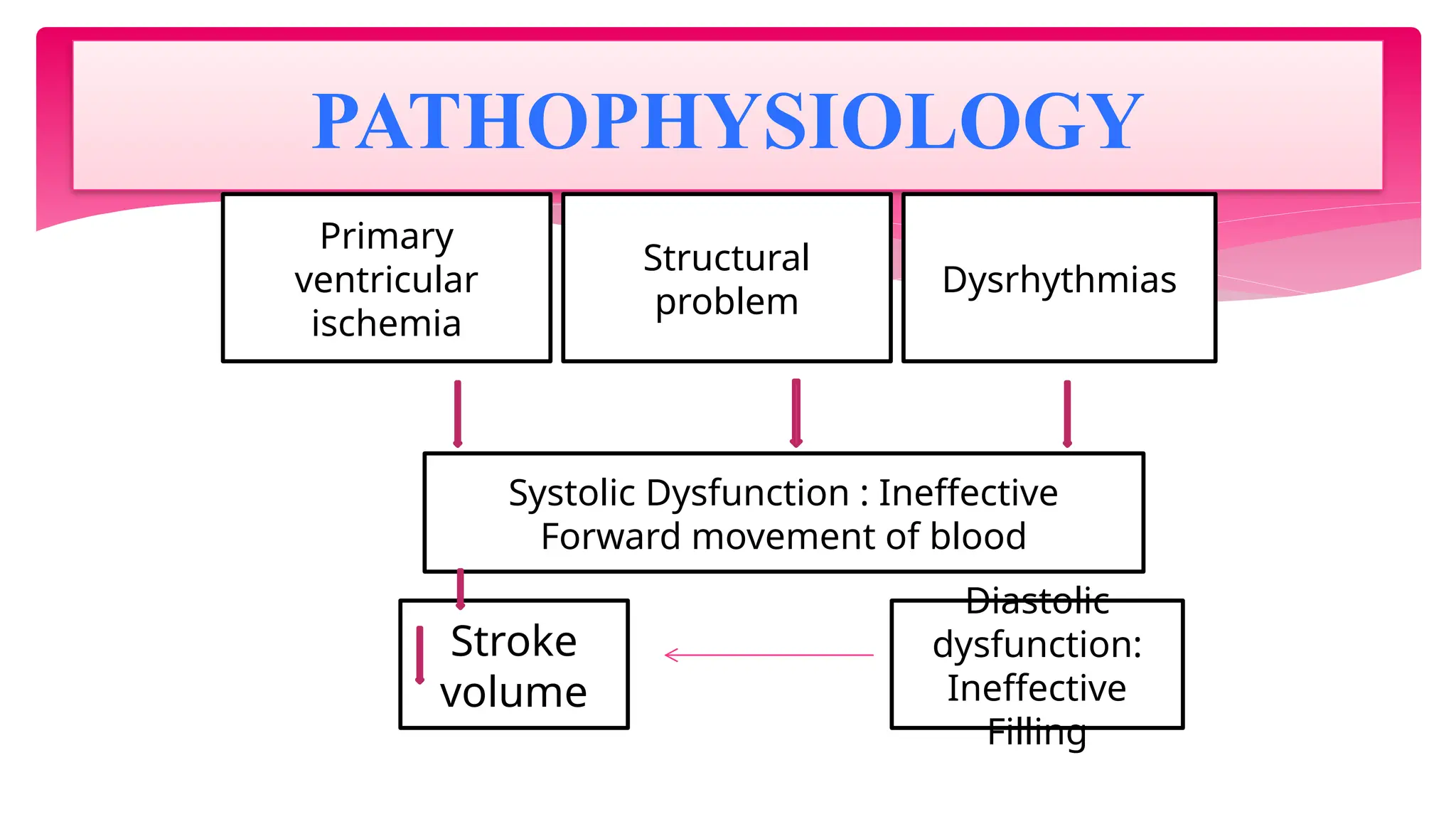
PATHOPHYSIOLOGY
Structural
problem
Dysrhythmias
Systolic Dysfunction : Ineffective
Forward movement of blood
Stroke
volume
Diastolic
dysfunction:
Ineffective
Filling
Primary
ventricular
ischemia
.
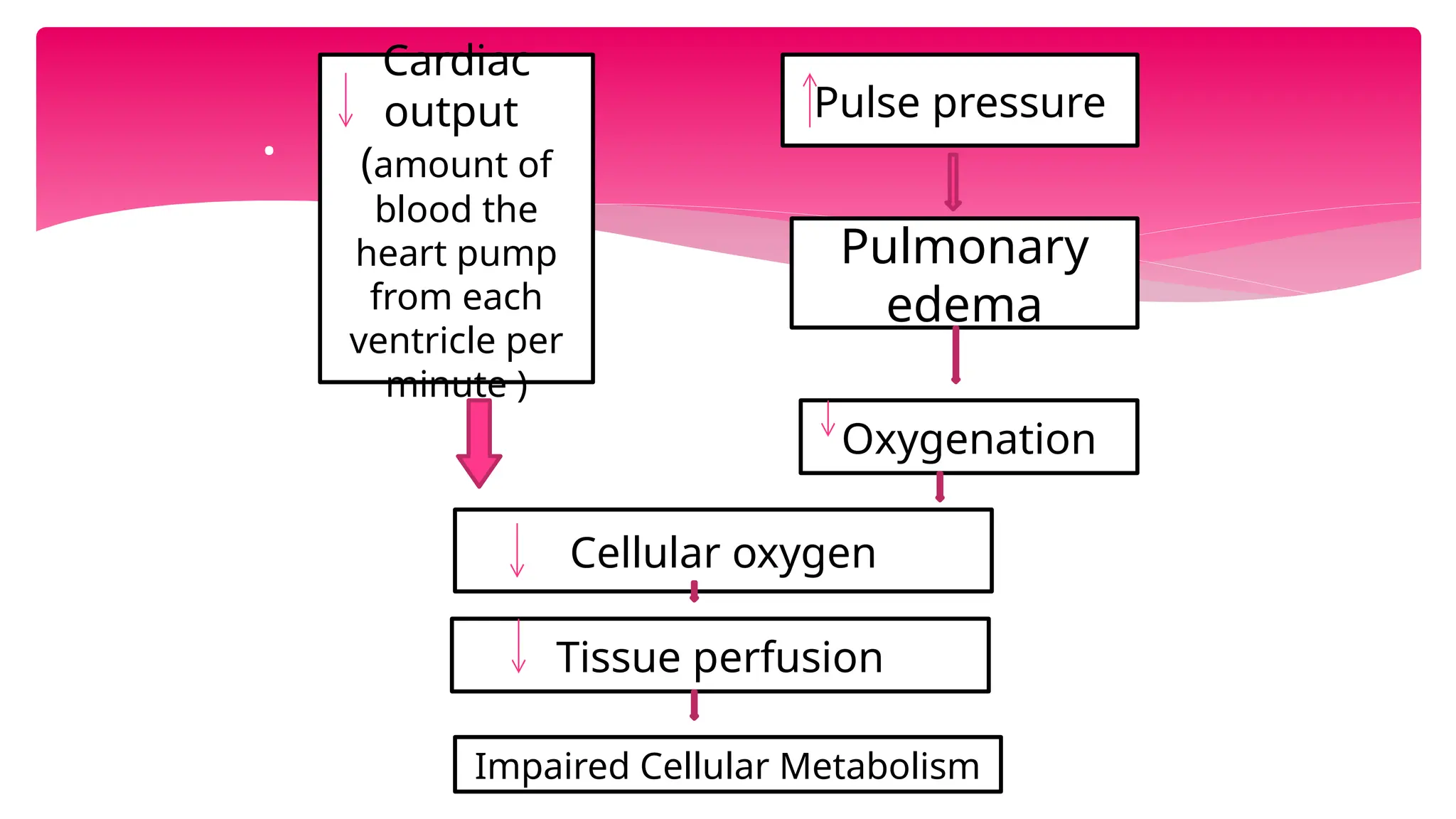
Cardiac
output
(amount of
blood the
heart pump
from each
ventricle per
minute )
Pulse pressure
Pulmonary
edema
Oxygenation
Cellular oxygen
Tissue perfusion
Impaired Cellular Metabolism
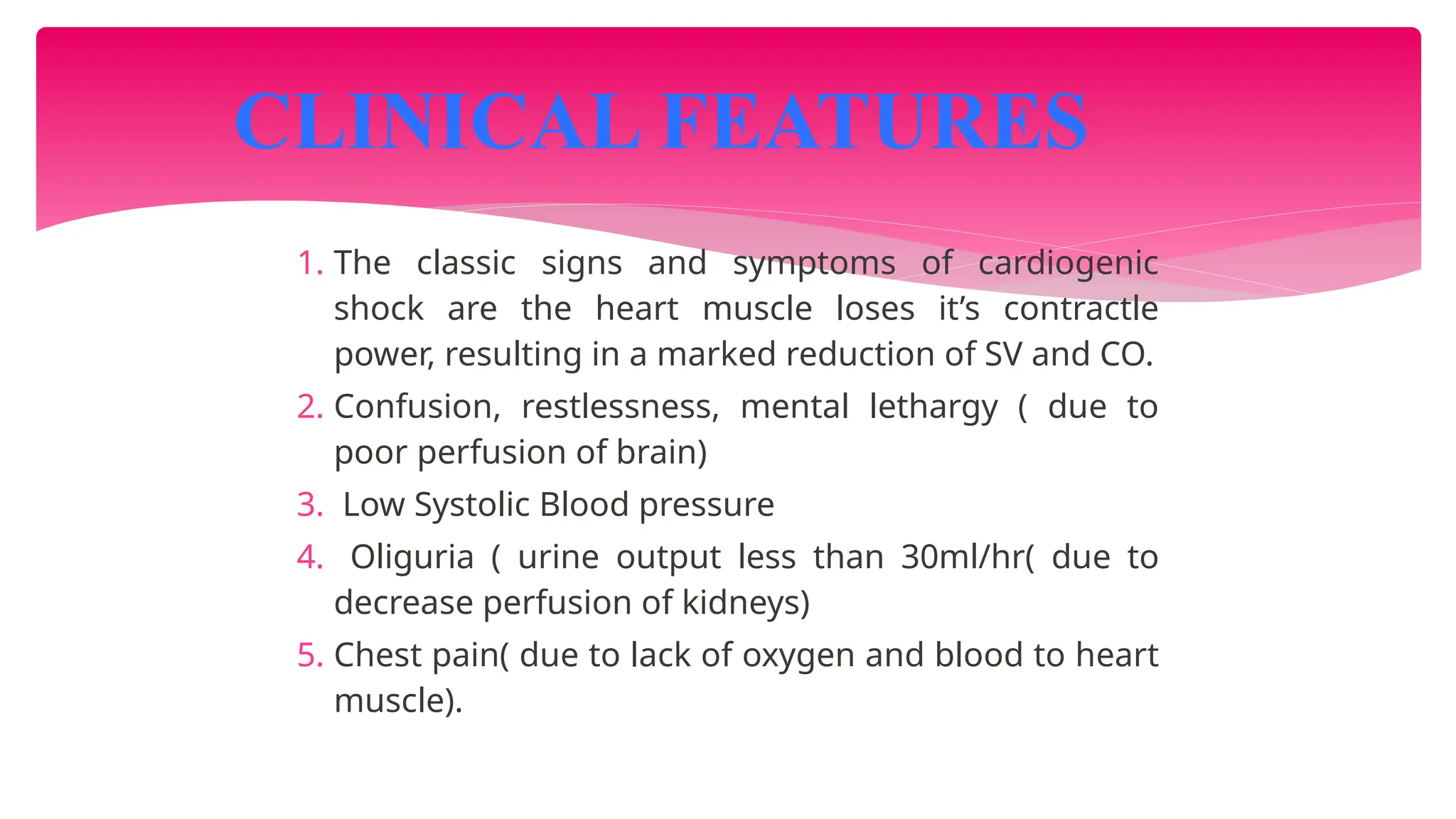
1. The classic signs and symptoms of cardiogenic
shock are the heart muscle loses it’s contractle
power, resulting in a marked reduction of SV and CO.
2. Confusion, restlessness, mental lethargy ( due to
poor perfusion of brain)
3. Low Systolic Blood pressure
4. Oliguria ( urine output less than 30ml/hr( due to
decrease perfusion of kidneys)
5. Chest pain( due to lack of oxygen and blood to heart
muscle).
CLINICAL FEATURES
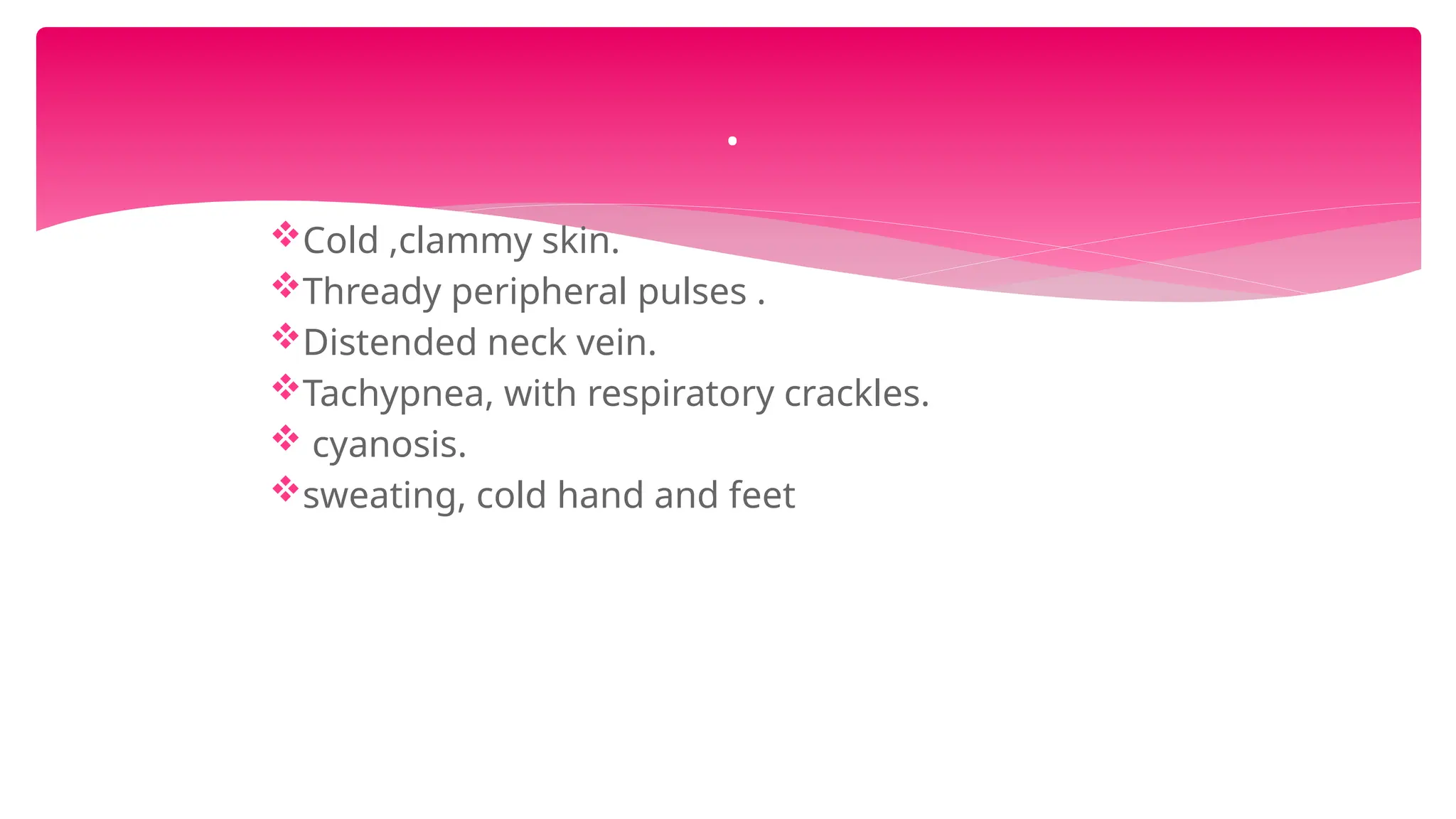
Cold ,clammy skin.
Thready peripheral pulses .
Distended neck vein.
Tachypnea, with respiratory crackles.
 cyanosis.
sweating, cold hand and feet
.
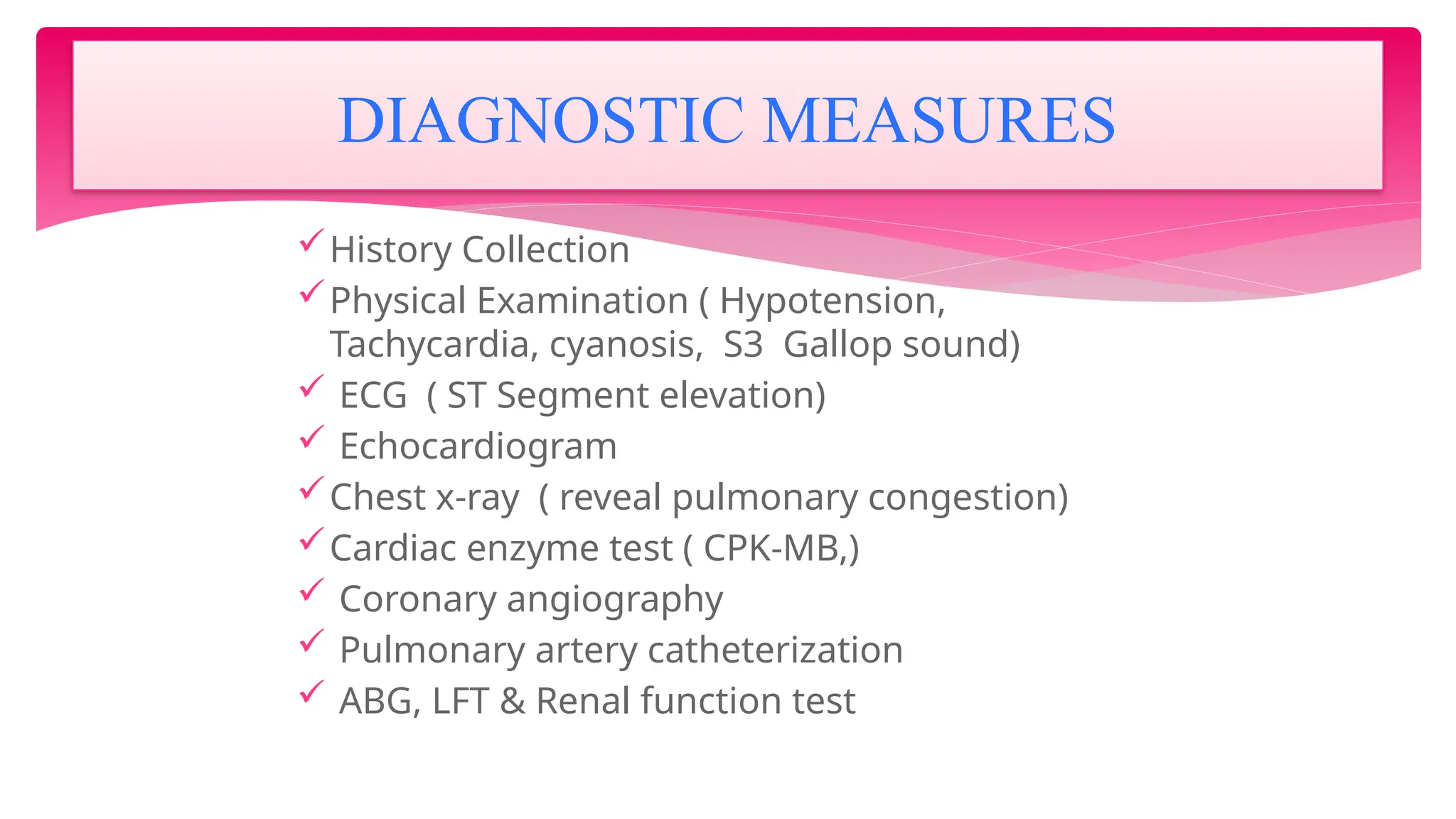
History Collection
Physical Examination ( Hypotension,
Tachycardia, cyanosis, S3 Gallop sound)
 ECG ( ST Segment elevation)
 Echocardiogram
Chest x-ray ( reveal pulmonary congestion)
Cardiac enzyme test ( CPK-MB,)
 Coronary angiography
 Pulmonary artery catheterization
 ABG, LFT & Renal function test
DIAGNOSTIC MEASURES
 Management measures include
MANAGEMENT
1. MEDICAL MANAGEMENT
2. SURGICAL MANAGEMENT
3. NURSING MANAGEMENT
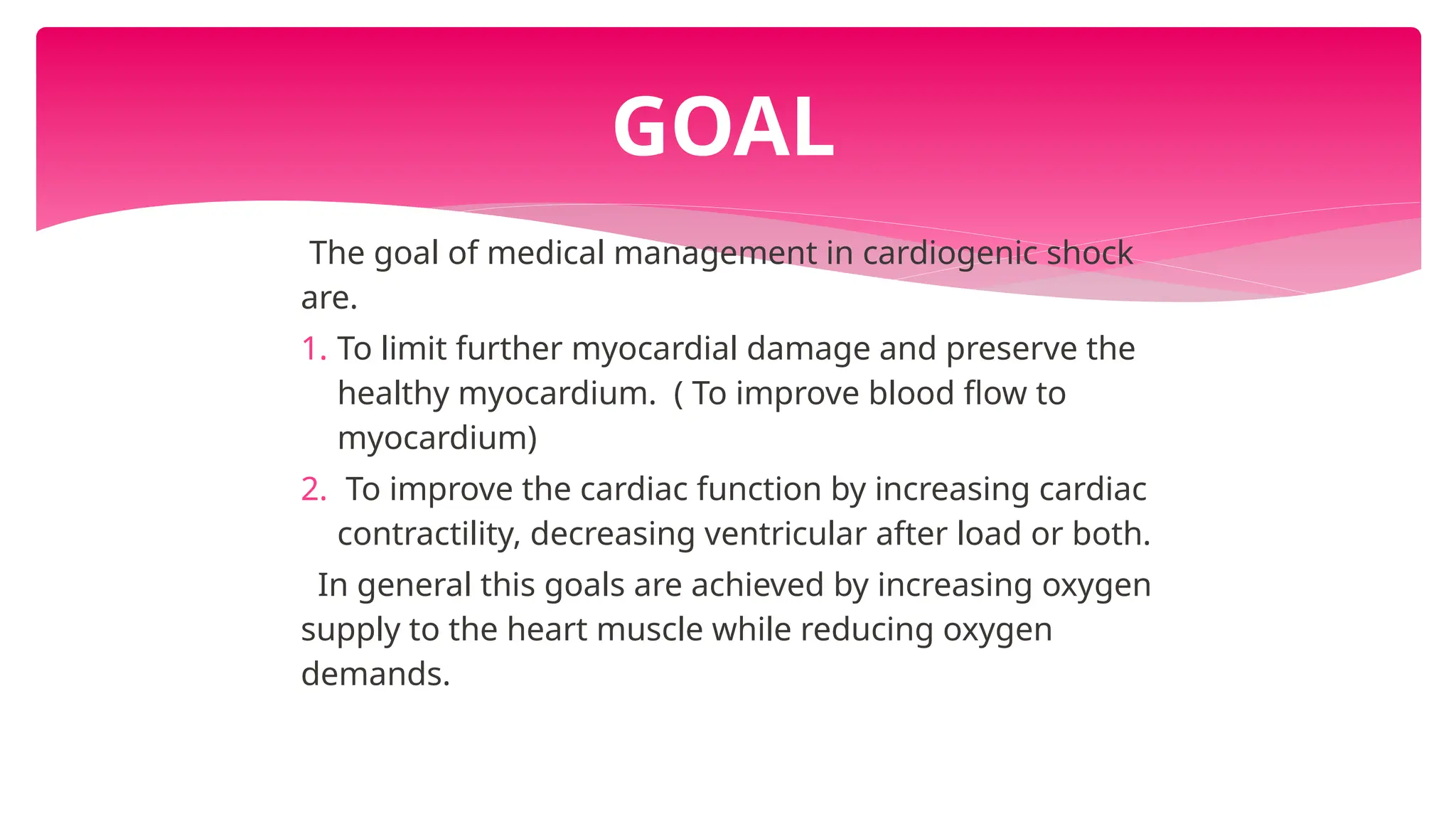
MEDICAL MANAGEMENT
The goal of medical management in cardiogenic shock
are.
1. To limit further myocardial damage and preserve the
healthy myocardium. ( To improve blood flow to
myocardium)
2. To improve the cardiac function by increasing cardiac
contractility, decreasing ventricular after load or both.
In general this goals are achieved by increasing oxygen
supply to the heart muscle while reducing oxygen
demands.
GOAL
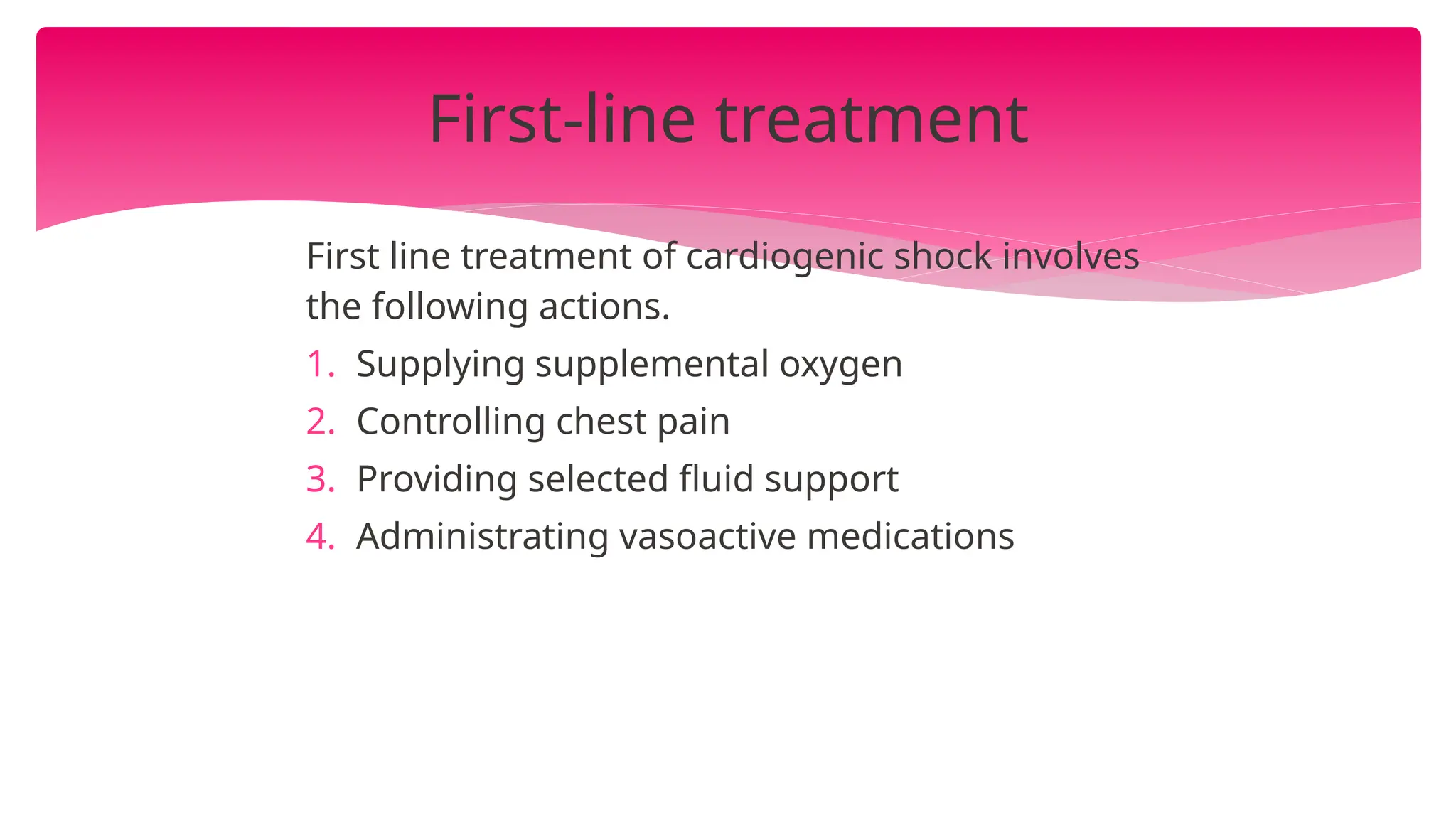
First line treatment of cardiogenic shock involves
the following actions.
1. Supplying supplemental oxygen
2. Controlling chest pain
3. Providing selected fluid support
4. Administrating vasoactive medications
First-line treatment
Oxygen is administrated at a rate 2 to 6
L/Min to achieve oxygen saturation above
90 %.
Monitoring of ABG Value and pulse
oximetry help
to determine if patient require more
oxygen therapy.
Pain Control
Morphine sulphate ( IV)
 Oxygen therapy
Vasopressors
Maintain mean arterial pressure
Eg Dopamine , Norepinephrine
 Inotropic Agents
Increase myocardial contractility
Eg Milrinone, Levosimendan, dobutamine
 Vasodilator
Relax vascular smooth muscles, reduce systemic
vascular resistance and cardiac output.
Eg Nitro-glycerine, Sodium Nitro prusside
 Drug therapy
 Other medications include antiarrhythmic
medications and fluid therapy.
Diuretics
Furosemide
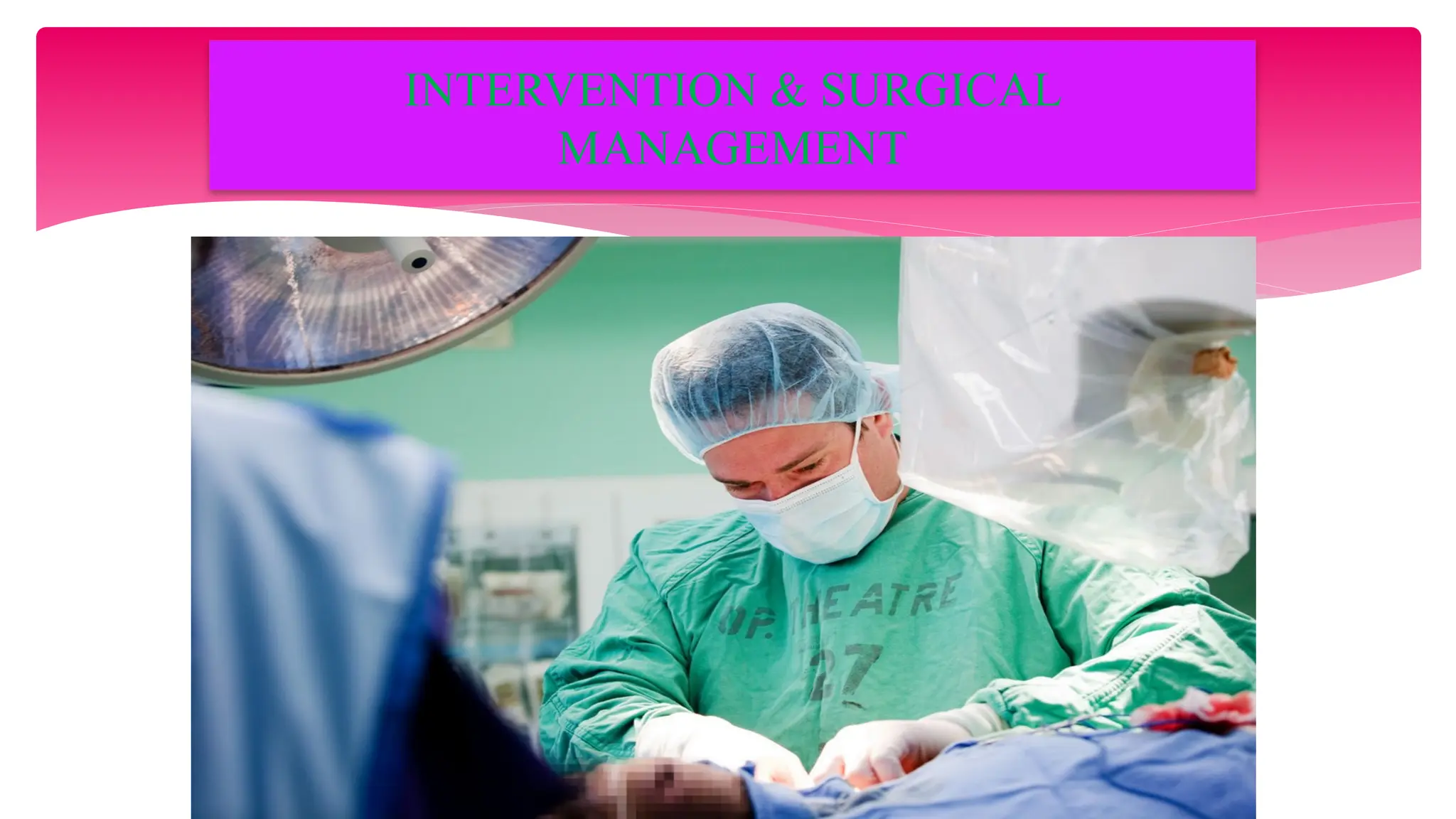
INTERVENTION & SURGICAL
MANAGEMENT
Percutaneous coronary intervention
Coronary Artery bypass graft
Intra – aortic Balloon Pump ( IABP)
Transvenous pacing
Percutaneous Ventricular Assist Device.
Extracorporeal Membrane oxygenation
Short or Long Term Left ventricular
assist Device
PROCEDURES
 PCI is recommended for Patient with acute MI
followed by cardiogenic shock.
 Percutaneous coronary intervention is performed
by inserting a catheter through the skin in the
groin or arm into an artery.
 At the leading tip of this catheter, several different
devices such as a balloon,Stent or cutting device
(artherectomy device) can be deployed.
 The catheter and its devices are threaded
through the inside of the artery back into an area
of coronary artery narrowing or blockage.
PERCUTANEOUS CORONARY INTERVENTION
( PCI)
 IABP Is a device used for mechanical circulatory
assistance in case of LV dysfunction on the
principle of counter pulsation
1. The goals of IABP include the following..
2. Increased SV
3. Improved coronary artery perfusion Decreased
preload
4. Decreased cardiac work load
INTRAAROTIC BALLON PUMP
 IABP Consist of intra aortic balloon about 1o
inches long placed over the distal end of
catheter.
 Catheter is inserted surgically or percutaneously
over femoral artery.
 When it reaches in aorta ,tip of balloon is
positioned just below the tip of the origin of left
subclavian artery.
PROCEDURE
 Pump console monitor the patient’s heartbeat
 R Wave in the ECG trigger pumps inflating mechanism
 As balloon inflates it displaces the blood, increase aortic
pressure, which increase coronary blood flow.
 During left ventricular ejection balloon deflates, thus reducing
aortic pressure, help in ejection of blood from left ventricle,
reducing workload of left ventricle.
.
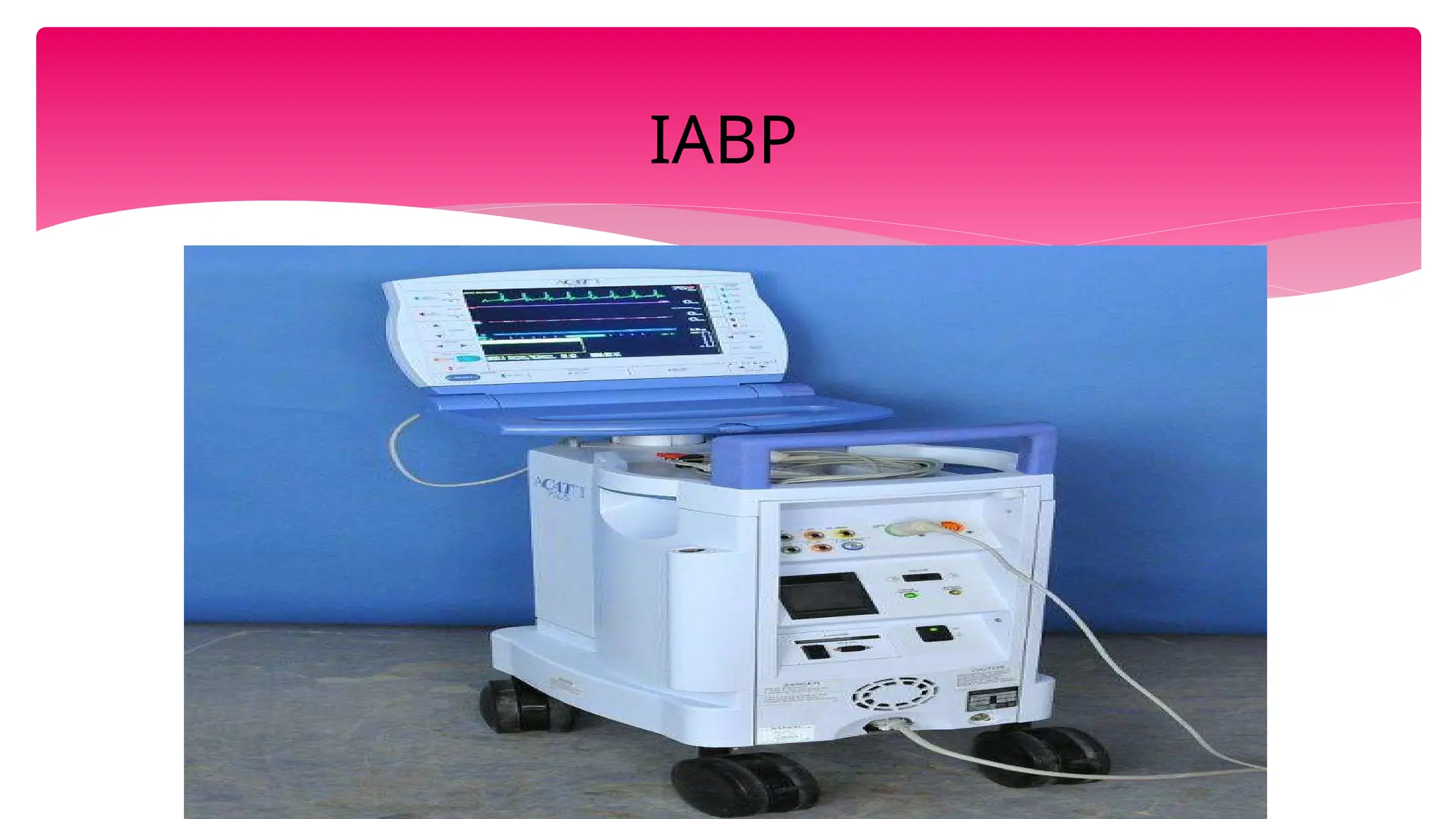
IABP
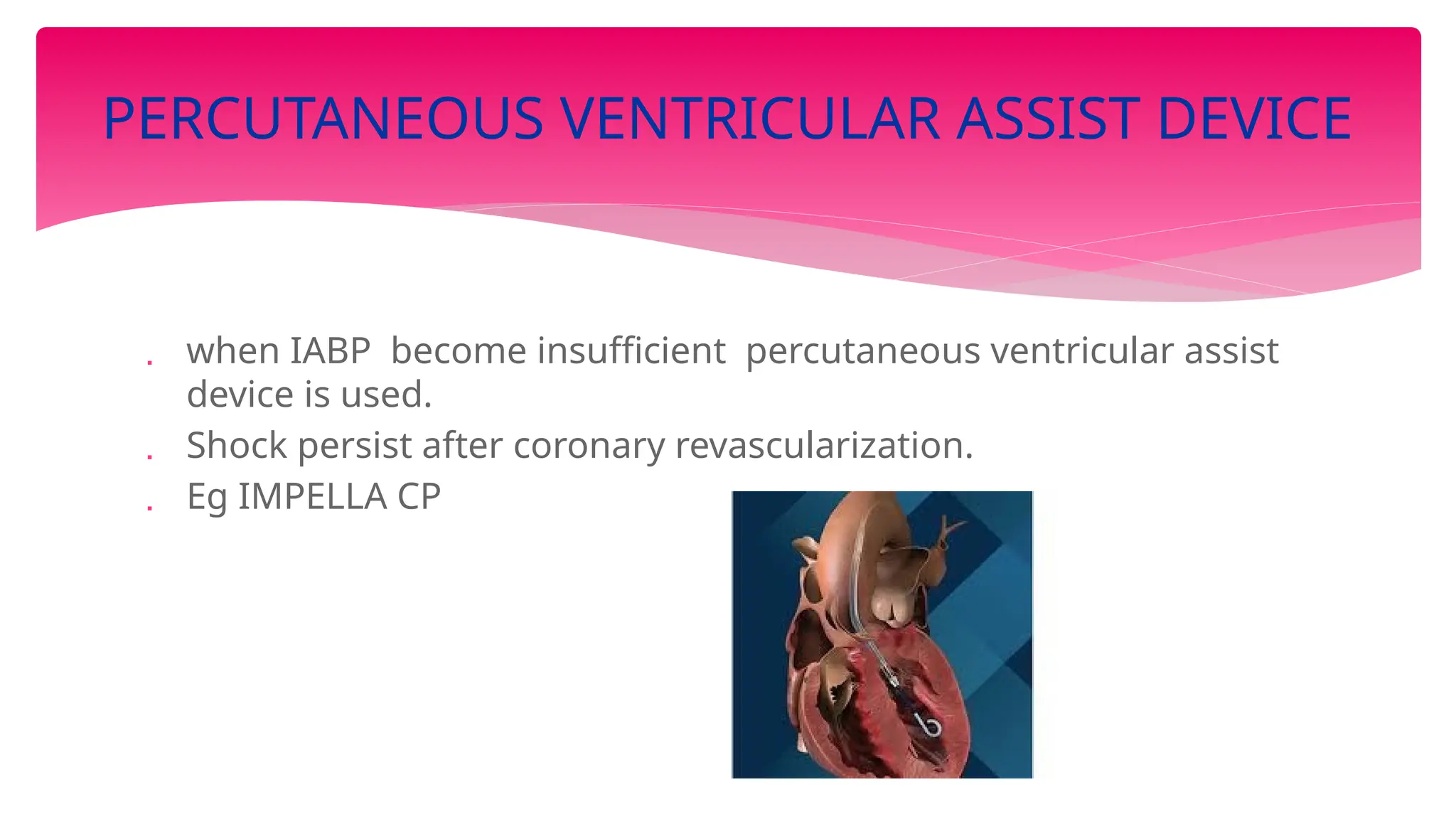
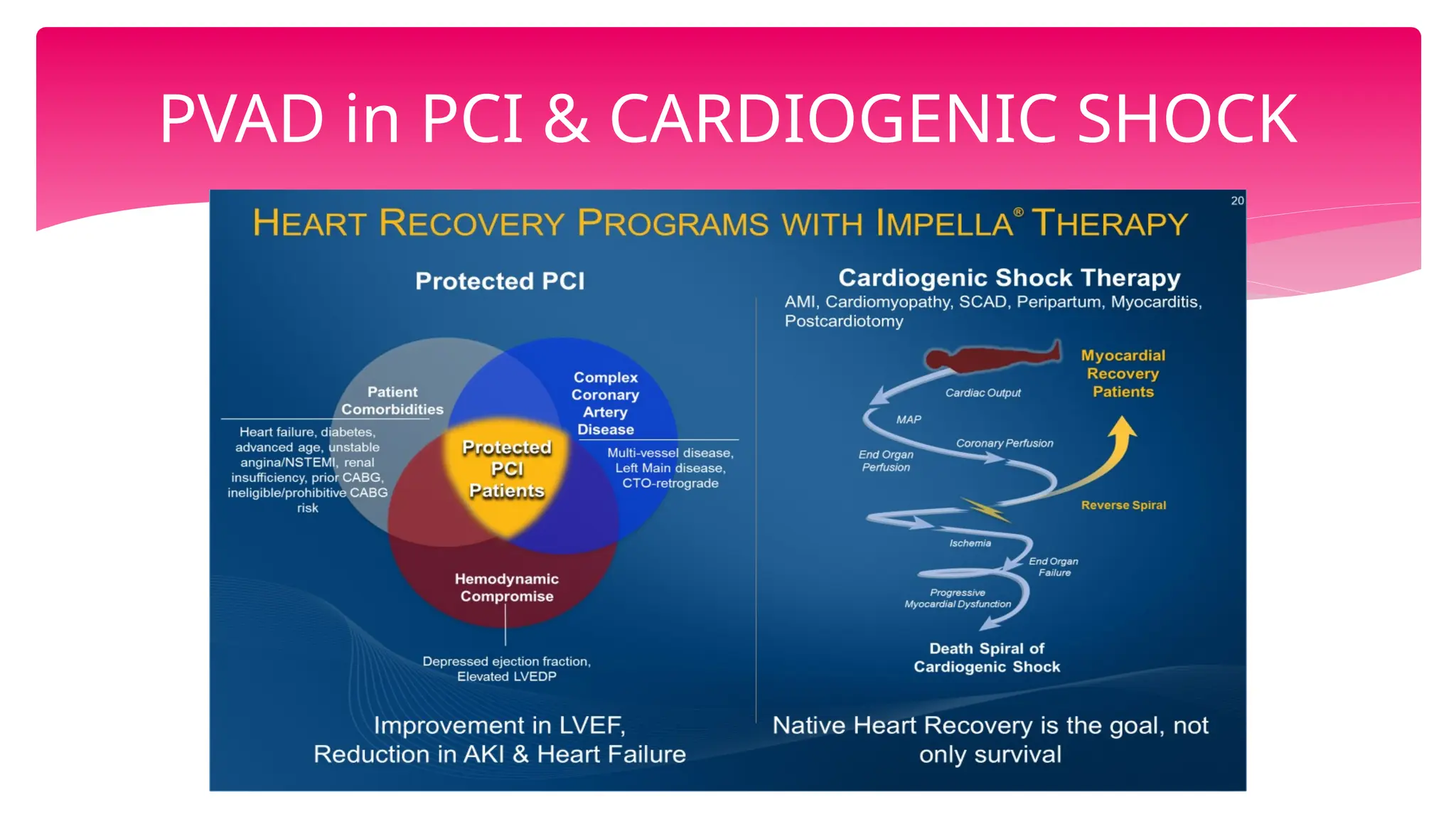
 when IABP become insufficient percutaneous ventricular assist
device is used.
 Shock persist after coronary revascularization.
 Eg IMPELLA CP
PERCUTANEOUS VENTRICULAR ASSIST DEVICE
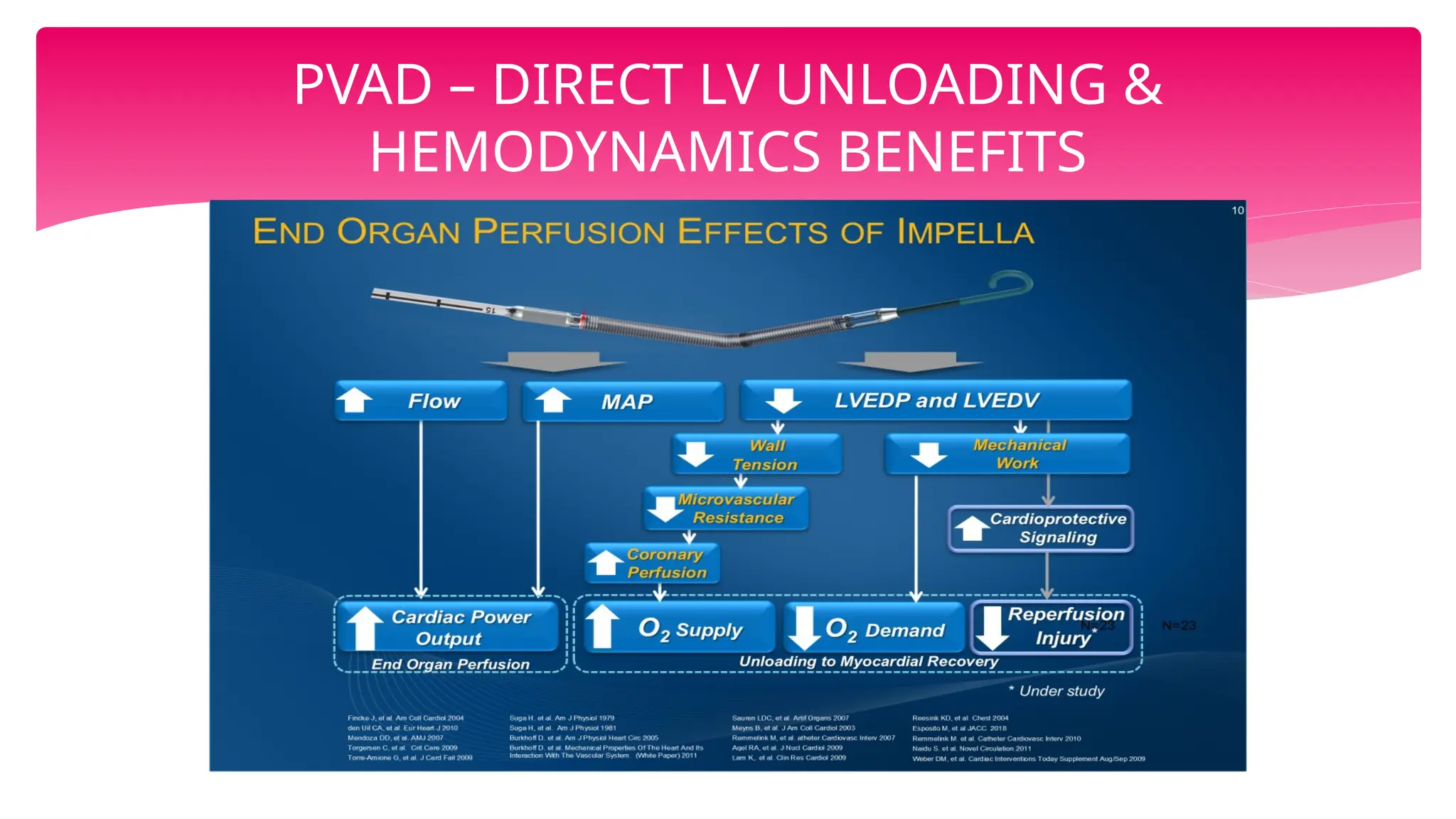
PVAD – DIRECT LV UNLOADING &
HEMODYNAMICS BENEFITS
PVAD in PCI & CARDIOGENIC SHOCK
 coronary artery bypass graft (CABG) surgeries are
among the most commonly performed major
operations.
 CABG surgery is advised for selected groups of
patients with significant narrowing and
blockages of the heart arteries (coronary artery
disease , cardiogenic shock).
 CABG surgery creates new routes around
narrowed and blocked arteries, allowing
sufficient blood flow to deliver oxygen and
nutrients to the heart muscle.(saphenous vein,
mammary or radial artery)
CORONARY ARTERY BYPASS GRAFT
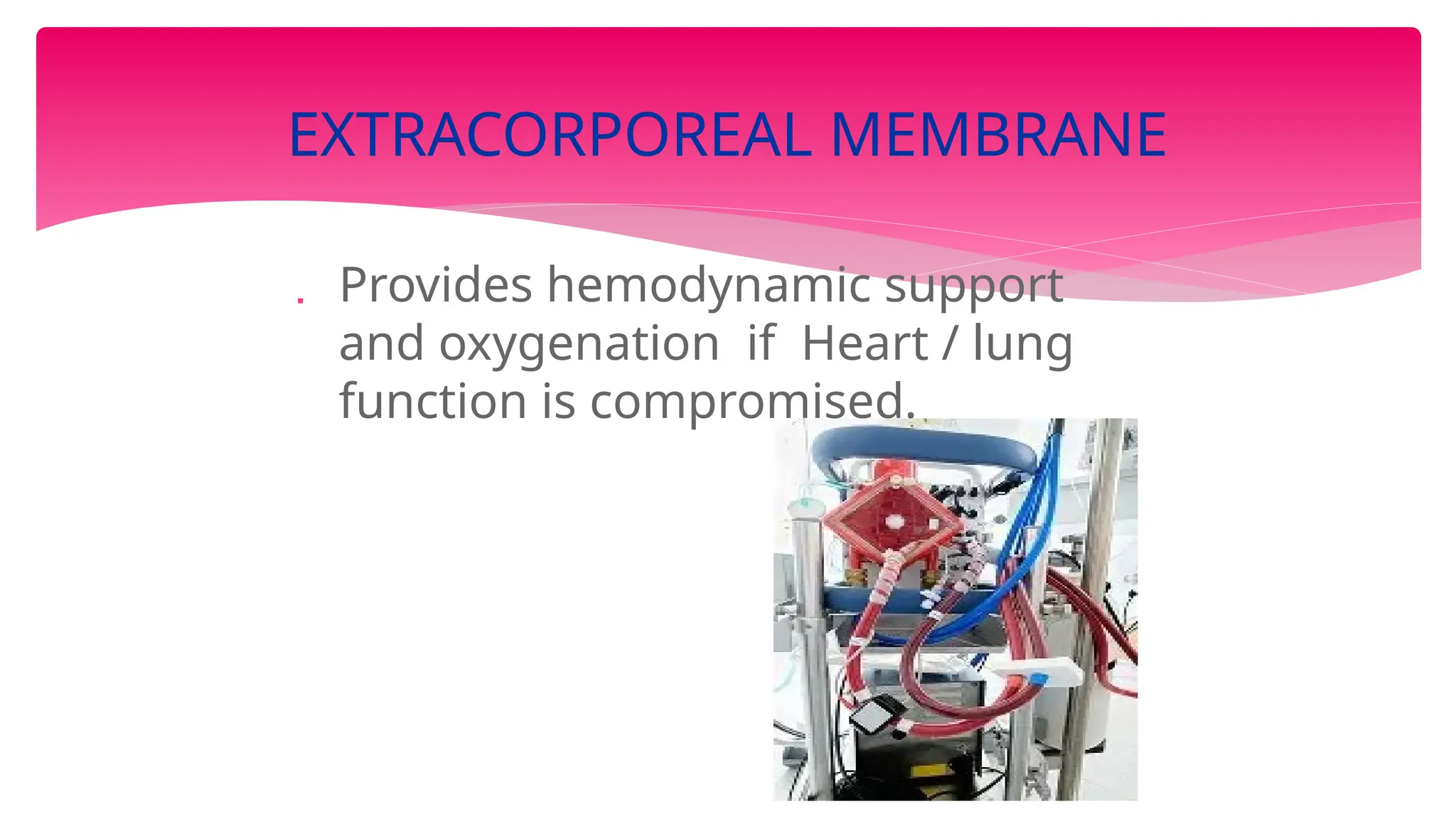
 Provides hemodynamic support
and oxygenation if Heart / lung
function is compromised.
EXTRACORPOREAL MEMBRANE
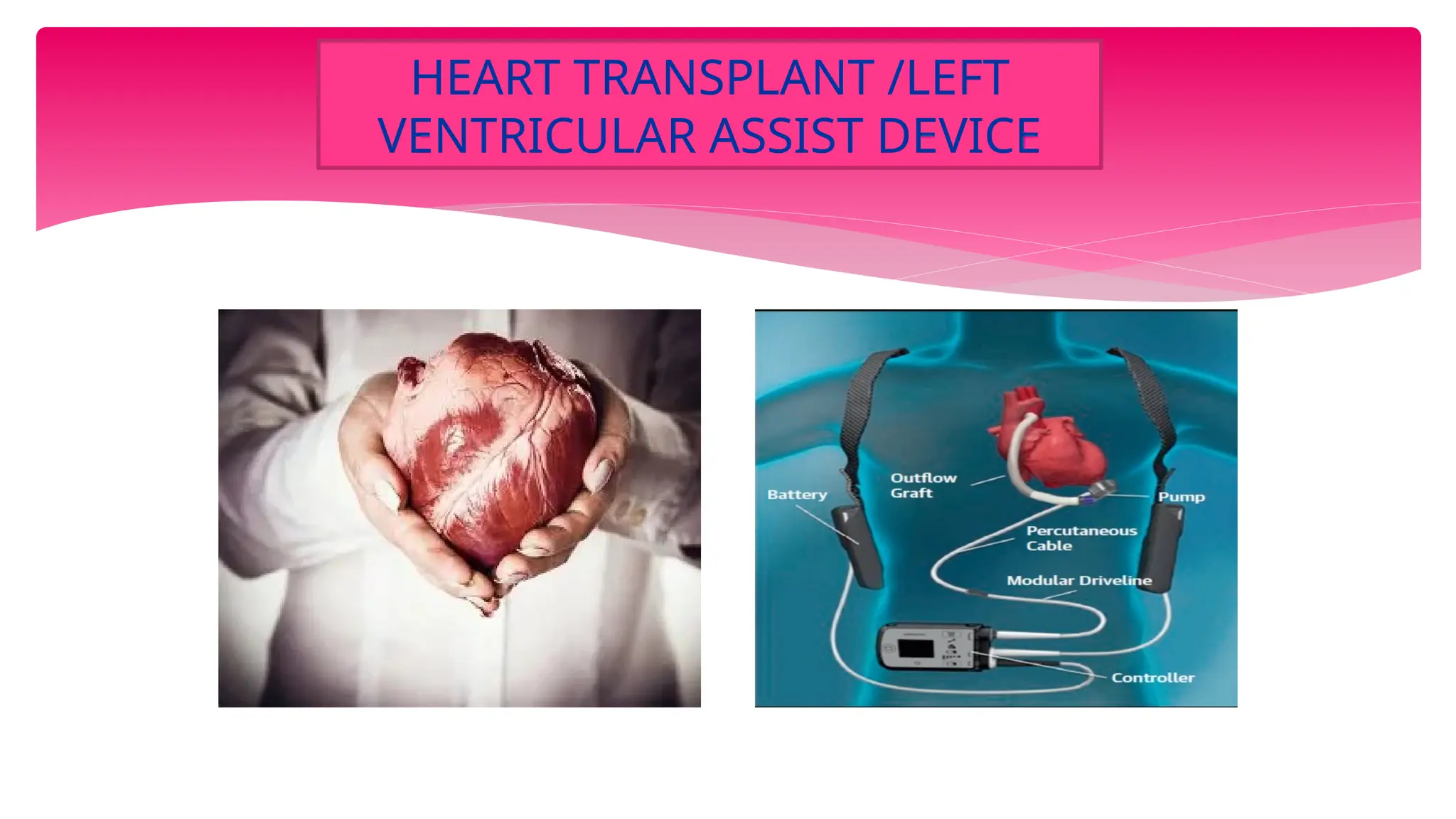
HEART TRANSPLANT /LEFT
VENTRICULAR ASSIST DEVICE
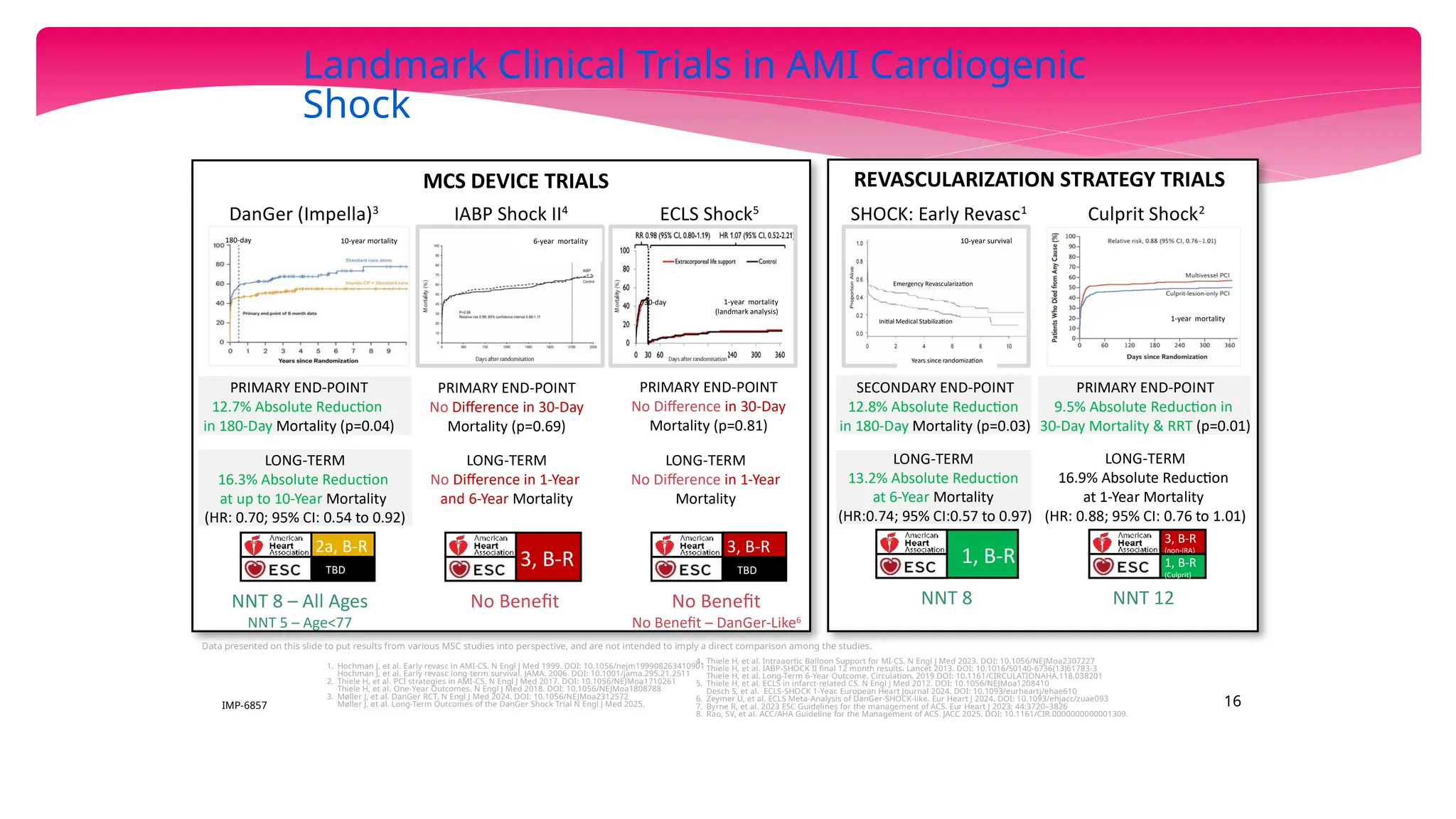
SHOCK: Early Revasc1
Landmark Clinical Trials in AMI Cardiogenic
Shock
REVASCULARIZATION STRATEGY TRIALS
MCS DEVICE TRIALS
PRIMARY END-POINT
12.7% Absolute Reduction
in 180-Day Mortality (p=0.04)
DanGer (Impella)3
PRIMARY END-POINT
No Difference in 30-Day
Mortality (p=0.81)
IABP Shock II4
Culprit Shock2
PRIMARY END-POINT
No Difference in 30-Day
Mortality (p=0.69)
PRIMARY END-POINT
9.5% Absolute Reduction in
30-Day Mortality & RRT (p=0.01)
LONG-TERM
16.9% Absolute Reduction
at 1-Year Mortality
(HR: 0.88; 95% CI: 0.76 to 1.01)
SECONDARY END-POINT
12.8% Absolute Reduction
in 180-Day Mortality (p=0.03)
LONG-TERM
13.2% Absolute Reduction
at 6-Year Mortality
(HR:0.74; 95% CI:0.57 to 0.97)
1. Hochman J, et al. Early revasc in AMI-CS. N Engl J Med 1999. DOI: 10.1056/nejm199908263410901
Hochman J, et al. Early revasc long-term survival. JAMA. 2006. DOI: 10.1001/jama.295.21.2511
2. Thiele H, et al. PCI strategies in AMI-CS. N Engl J Med 2017. DOI: 10.1056/NEJMoa1710261
Thiele H, et al. One-Year Outcomes. N Engl J Med 2018. DOI: 10.1056/NEJMoa1808788
3. Møller J, et al. DanGer RCT. N Engl J Med 2024. DOI: 10.1056/NEJMoa2312572
Møller J, et al. Long-Term Outcomes of the DanGer Shock Trial N Engl J Med 2025.
4. Thiele H, et al. Intraaortic Balloon Support for MI-CS. N Engl J Med 2023. DOI: 10.1056/NEJMoa2307227
Thiele H, et al. IABP-SHOCK II final 12 month results. Lancet 2013. DOI: 10.1016/S0140-6736(13)61783-3
Thiele H, et al. Long-Term 6-Year Outcome. Circulation. 2019 DOI: 10.1161/CIRCULATIONAHA.118.038201
5. Thiele H, et al. ECLS in infarct-related CS. N Engl J Med 2012. DOI: 10.1056/NEJMoa1208410
Desch S, et al. ECLS-SHOCK 1-Year. European Heart Journal 2024. DOI: 10.1093/eurheartj/ehae610
6. Zeymer U, et al. ECLS Meta-Analysis of DanGer-SHOCK-like. Eur Heart J 2024. DOI: 10.1093/ehjacc/zuae093
7. Byrne R, et al. 2023 ESC Guidelines for the management of ACS. Eur Heart J 2023; 44:3720–3826
8. Rao, SV, et al. ACC/AHA Guideline for the Management of ACS. JACC 2025. DOI: 10.1161/CIR.0000000000001309.
1, B-R
3, B-R
NNT 12
NNT 8
NNT 8 – All Ages
NNT 5 – Age<77
Data presented on this slide to put results from various MSC studies into perspective, and are not intended to imply a direct comparison among the studies.
LONG-TERM
No Difference in 1-Year
and 6-Year Mortality
EXTENDED END-POINT
No Difference in 180-Day
Mortality (p=0.91)
TBD
2a, B-R
No Benefit No Benefit
No Benefit – DanGer-Like6
3, B-R
(non-IRA)
1, B-R
(Culprit)
TBD
3, B-R
180-day 10-year mortality
LONG-TERM
16.3% Absolute Reduction
at up to 10-Year Mortality
(HR: 0.70; 95% CI: 0.54 to 0.92)
6-year mortality
ECLS Shock5
1-year mortality
(landmark analysis)
30-day
LONG-TERM
No Difference in 1-Year
Mortality
Years since randomization
Emergency Revascularization
Initial Medical Stabilization
10-year survival
1-year mortality
16
IMP-6857
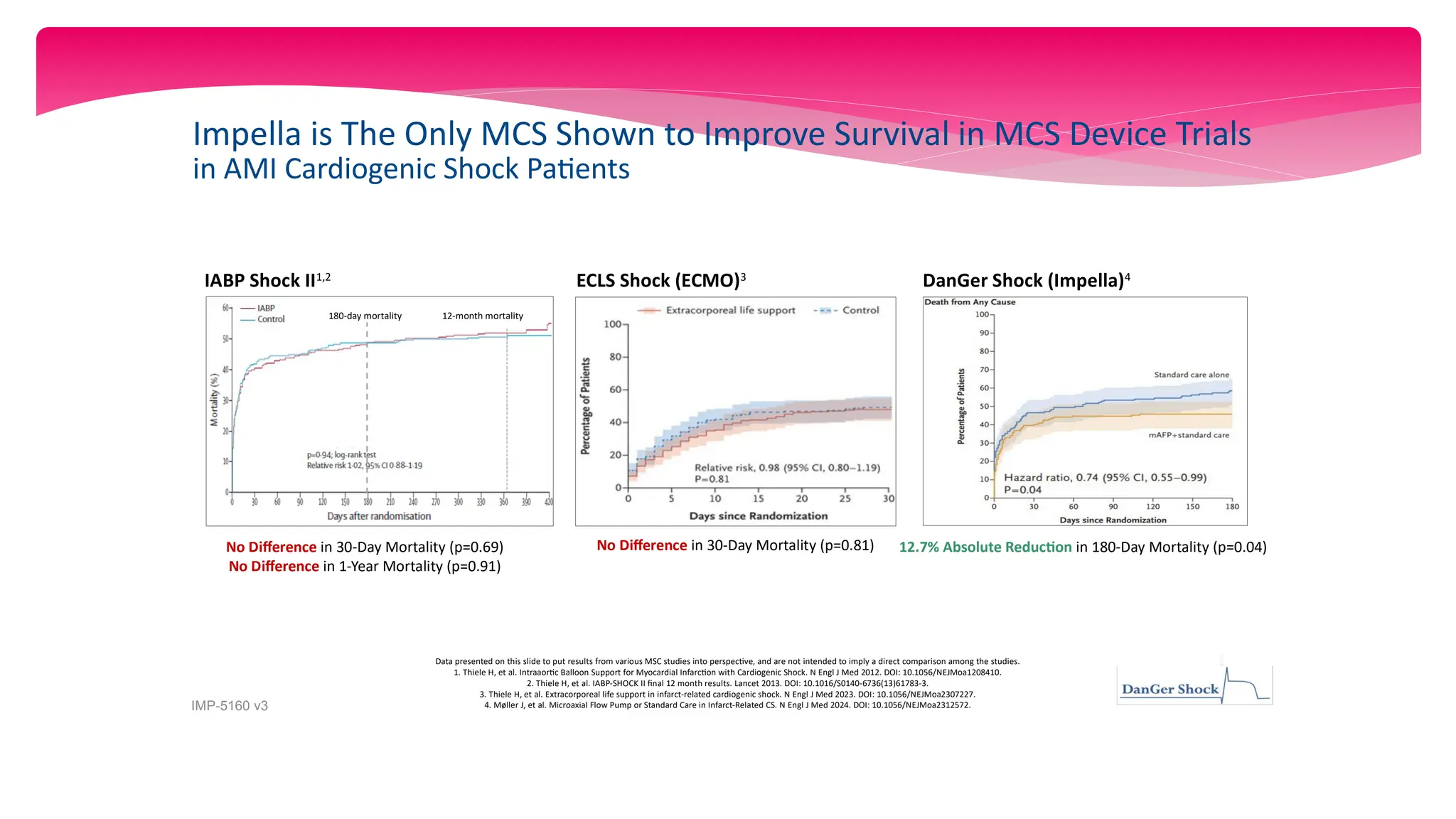
Impella is The Only MCS Shown to Improve Survival in MCS Device Trials
in AMI Cardiogenic Shock Patients
12.7% Absolute Reduction in 180-Day Mortality (p=0.04)
DanGer Shock (Impella)4
No Difference in 30-Day Mortality (p=0.81)
ECLS Shock (ECMO)3
IABP Shock II1,2
No Difference in 30-Day Mortality (p=0.69)
No Difference in 1-Year Mortality (p=0.91)
Data presented on this slide to put results from various MSC studies into perspective, and are not intended to imply a direct comparison among the studies.
1. Thiele H, et al. Intraaortic Balloon Support for Myocardial Infarction with Cardiogenic Shock. N Engl J Med 2012. DOI: 10.1056/NEJMoa1208410.
2. Thiele H, et al. IABP-SHOCK II final 12 month results. Lancet 2013. DOI: 10.1016/S0140-6736(13)61783-3.
3. Thiele H, et al. Extracorporeal life support in infarct-related cardiogenic shock. N Engl J Med 2023. DOI: 10.1056/NEJMoa2307227.
4. Møller J, et al. Microaxial Flow Pump or Standard Care in Infarct-Related CS. N Engl J Med 2024. DOI: 10.1056/NEJMoa2312572.
IMP-5160 v3
12-month mortality
180-day mortality
Heart Recovery
IMP-6064 v3
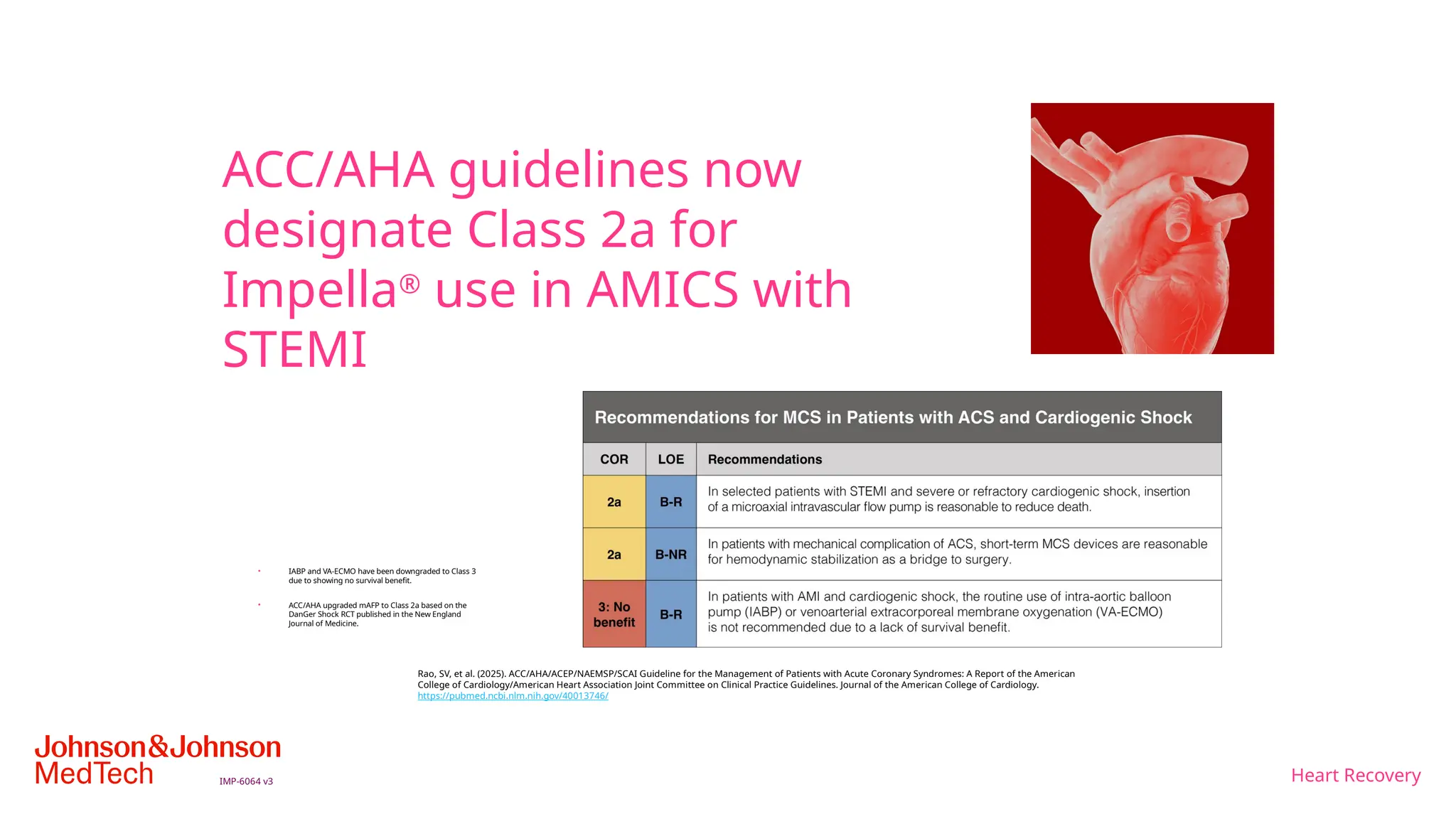
ACC/AHA guidelines now
designate Class 2a for
Impella®
use in AMICS with
STEMI
• IABP and VA-ECMO have been downgraded to Class 3
due to showing no survival benefit.
• ACC/AHA upgraded mAFP to Class 2a based on the
DanGer Shock RCT published in the New England
Journal of Medicine.
Rao, SV, et al. (2025). ACC/AHA/ACEP/NAEMSP/SCAI Guideline for the Management of Patients with Acute Coronary Syndromes: A Report of the American
College of Cardiology/American Heart Association Joint Committee on Clinical Practice Guidelines. Journal of the American College of Cardiology.
https://pubmed.ncbi.nlm.nih.gov/40013746/
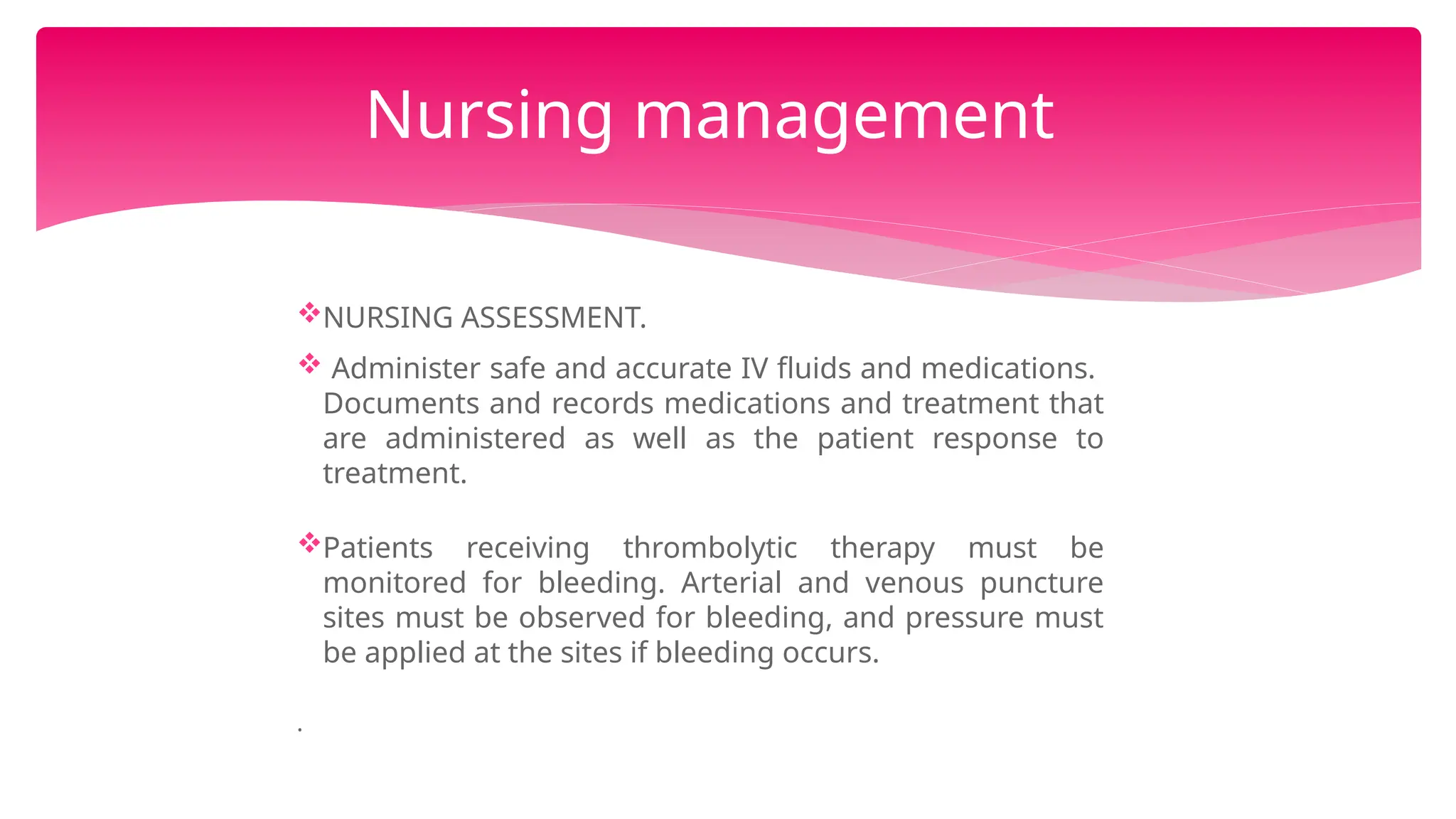
NURSING MANAGEMENT
NURSING ASSESSMENT.
 Administer safe and accurate IV fluids and medications.
Documents and records medications and treatment that
are administered as well as the patient response to
treatment.
Patients receiving thrombolytic therapy must be
monitored for bleeding. Arterial and venous puncture
sites must be observed for bleeding, and pressure must
be applied at the sites if bleeding occurs.
.
Nursing management
Neurologic assessment is essential after the
administration of thrombolytic therapy to assess for the
potential complications of cerebral haemorrhage
associated with the therapy.
 Urine output ,BUN ,creatinine levels should be
monitored.
Maintain mechanical assistive devices function Prevent
complications associated with cardiogenic shock.
Enhancing safety and comfort.
.
 Decreased cardiac output related to impaired
contractility due to extensive heart muscle damage.
GOAL
Improving cardiac output
INTERENTION
Establish continuous ECG monitoring
 Hemodynamic monitoring
Closely monitor adverse response to drug therapy
 Monitor BP with intra-arterial line continuously.
Measure and record intake and urine out put
NURSING DIAGNOSIS
 GOAL :Improving oxygenation
 INTERVENTION
1. Monitor rate and rhythm of respiratory every hour. *
Auscultation lung fields for abnormal sounds * ABG evaluation *
2. Administer oxygen * Invasive oxygen therapies (ET & MV)
 Impaired gas exchange related to pulmonary
congestion due to elevated left ventricular pressure
 GOAL : Maintaining adequate Tissue perfusion
INTERVENTION
 Perform neurologic assessment every hour using with “Glasgow
coma scale” ( GCS)
 Report changes immediately
 Obtain BUN & creatinine blood levels & monitor output to
evaluate renal function.
 Ineffective tissue perfusion ( renal,
cerebral, cardiopulmonary GI and
peripheral) related to decreased blood
flow
Goal : To Relive anxiety
 Assess the anxiety level
 Provide adequate information regarding
physical condition
 Encourage to ask questions
 Provide diverational therapy
Anxiety related to intensive care environment and invasive procedures.
 COMPLICATIONS
COMA
BRAINDAMAGE
MULTIPLE ORGAN FAILURE
KIDNEY DAMAGE
LIVER DAMAGE
DEATH
.
Summary & Takeaways
 Shock classification dictates treatment mismanagement can
worsen outcomes.
 Cardiogenic shock demands rapid intervention and
continuous monitoring.
 Combination of vasopressors, inotropes, and devices tailored
to each patient.
 Emerging drugs and MCS support devices hold promise for
refractory cases.
Cardiogenic shock is a treatable illness with a
reasonable chance for full recovery. The
Cardiogenic shock literature has traditionally
focused on the very high mortality associated
with this diagnosis. It is important to
recognize that although patients with
Cardiogenic shock are at very high risk for
early death, great potential exists for salvage.
CONCLUSION
Chintamani, Lewis, Text book of Medical
surgical Nursing, Elsevier Publication 13 th
edition. volume 1. 2011.pg no 1723-1725.
Black.M.Joyce.Text book of Medical SurgIcal
N.Elsevier Publication.8 th edition .PG . No 2134
3136.
Griffin .P.Brain, Manaul of Cardiovascular
Medicine. Lippincott punbllication.4 th edition.
volume 1. pg no 77 to 80.
BIBILIOGRAPHY
TREATMENT OPTION - SHOCK and its management

  • 1.
    Cardiogenic shock occurswhen the heart has been damaged so much, that it is unable to supply enough blood to the vital organs of the body. As a result of the failure of the heart to pump enough nutrients to the body, blood pressure falls and organs may begin to fail. Cardiogenic shock is uncommon, but when it does occur, it’s a serious medical emergency. INTRODUCTION
  • 2.
    Cardiogenic shock isthe failure of heart to pump blood adequately to meet the oxygenation needs of body. ( Cardiovascular Medicine) Cardiogenic Shock is defined as the hearts inability to contract and pump the blood effectively due to inadequate supply of oxygen and nutrients to the body. DEFINITION
  • 3.
     Incidence rateof cardiogenic shock is 43.7%.  40 to 70 % cardiogenic shock is with Acute MI INCIDENCE
  • 4.
    Acute MI Severe Hypoxia Cardiomyopathy Pericardialtamponade Acidosis Dysrhythmia Trauma Structural Abnormalities. ETIOLOGY
  • 5.
     Classification basedon .  Coronary cardiogenic shock  Non coronary Cardiogenic shock CORONARY CARDIOGENIC SHOCK Coronary cardiogenic shock occurs when the significant amount of the left ventricular myocardium has been damaged. Eg Myocardial infraction. More common .
  • 6.
     NON CORONARYCARDIOGENIC SHOCK  Occur mainly due to stress to myocardium. Examples severe hypoxemia  Acidosis  Hypoglycaemia Tension pneumothorax .
  • 7.
    Older age History ofheart disease Hypertension Diabetes mellitus Obesity Atherosclerosis RISK FACTORS
  • 8.
    PATHOPHYSIOLOGY Structural problem Dysrhythmias Systolic Dysfunction :Ineffective Forward movement of blood Stroke volume Diastolic dysfunction: Ineffective Filling Primary ventricular ischemia
  • 9.
    . Cardiac output (amount of blood the heartpump from each ventricle per minute ) Pulse pressure Pulmonary edema Oxygenation Cellular oxygen Tissue perfusion Impaired Cellular Metabolism
  • 10.
    1. The classicsigns and symptoms of cardiogenic shock are the heart muscle loses it’s contractle power, resulting in a marked reduction of SV and CO. 2. Confusion, restlessness, mental lethargy ( due to poor perfusion of brain) 3. Low Systolic Blood pressure 4. Oliguria ( urine output less than 30ml/hr( due to decrease perfusion of kidneys) 5. Chest pain( due to lack of oxygen and blood to heart muscle). CLINICAL FEATURES
  • 11.
    Cold ,clammy skin. Threadyperipheral pulses . Distended neck vein. Tachypnea, with respiratory crackles.  cyanosis. sweating, cold hand and feet .
  • 12.
    History Collection Physical Examination( Hypotension, Tachycardia, cyanosis, S3 Gallop sound)  ECG ( ST Segment elevation)  Echocardiogram Chest x-ray ( reveal pulmonary congestion) Cardiac enzyme test ( CPK-MB,)  Coronary angiography  Pulmonary artery catheterization  ABG, LFT & Renal function test DIAGNOSTIC MEASURES
  • 13.
     Management measuresinclude MANAGEMENT 1. MEDICAL MANAGEMENT 2. SURGICAL MANAGEMENT 3. NURSING MANAGEMENT
  • 14.
  • 15.
    The goal ofmedical management in cardiogenic shock are. 1. To limit further myocardial damage and preserve the healthy myocardium. ( To improve blood flow to myocardium) 2. To improve the cardiac function by increasing cardiac contractility, decreasing ventricular after load or both. In general this goals are achieved by increasing oxygen supply to the heart muscle while reducing oxygen demands. GOAL
  • 16.
    First line treatmentof cardiogenic shock involves the following actions. 1. Supplying supplemental oxygen 2. Controlling chest pain 3. Providing selected fluid support 4. Administrating vasoactive medications First-line treatment
  • 17.
    Oxygen is administratedat a rate 2 to 6 L/Min to achieve oxygen saturation above 90 %. Monitoring of ABG Value and pulse oximetry help to determine if patient require more oxygen therapy. Pain Control Morphine sulphate ( IV)  Oxygen therapy
  • 18.
    Vasopressors Maintain mean arterialpressure Eg Dopamine , Norepinephrine  Inotropic Agents Increase myocardial contractility Eg Milrinone, Levosimendan, dobutamine  Vasodilator Relax vascular smooth muscles, reduce systemic vascular resistance and cardiac output. Eg Nitro-glycerine, Sodium Nitro prusside  Drug therapy
  • 19.
     Other medicationsinclude antiarrhythmic medications and fluid therapy. Diuretics Furosemide
  • 20.
  • 21.
    Percutaneous coronary intervention CoronaryArtery bypass graft Intra – aortic Balloon Pump ( IABP) Transvenous pacing Percutaneous Ventricular Assist Device. Extracorporeal Membrane oxygenation Short or Long Term Left ventricular assist Device PROCEDURES
  • 22.
     PCI isrecommended for Patient with acute MI followed by cardiogenic shock.  Percutaneous coronary intervention is performed by inserting a catheter through the skin in the groin or arm into an artery.  At the leading tip of this catheter, several different devices such as a balloon,Stent or cutting device (artherectomy device) can be deployed.  The catheter and its devices are threaded through the inside of the artery back into an area of coronary artery narrowing or blockage. PERCUTANEOUS CORONARY INTERVENTION ( PCI)
  • 23.
     IABP Isa device used for mechanical circulatory assistance in case of LV dysfunction on the principle of counter pulsation 1. The goals of IABP include the following.. 2. Increased SV 3. Improved coronary artery perfusion Decreased preload 4. Decreased cardiac work load INTRAAROTIC BALLON PUMP
  • 24.
     IABP Consistof intra aortic balloon about 1o inches long placed over the distal end of catheter.  Catheter is inserted surgically or percutaneously over femoral artery.  When it reaches in aorta ,tip of balloon is positioned just below the tip of the origin of left subclavian artery. PROCEDURE
  • 25.
     Pump consolemonitor the patient’s heartbeat  R Wave in the ECG trigger pumps inflating mechanism  As balloon inflates it displaces the blood, increase aortic pressure, which increase coronary blood flow.  During left ventricular ejection balloon deflates, thus reducing aortic pressure, help in ejection of blood from left ventricle, reducing workload of left ventricle. .
  • 26.
  • 27.
     when IABPbecome insufficient percutaneous ventricular assist device is used.  Shock persist after coronary revascularization.  Eg IMPELLA CP PERCUTANEOUS VENTRICULAR ASSIST DEVICE
  • 28.
    PVAD – DIRECTLV UNLOADING & HEMODYNAMICS BENEFITS
  • 29.
    PVAD in PCI& CARDIOGENIC SHOCK
  • 30.
     coronary arterybypass graft (CABG) surgeries are among the most commonly performed major operations.  CABG surgery is advised for selected groups of patients with significant narrowing and blockages of the heart arteries (coronary artery disease , cardiogenic shock).  CABG surgery creates new routes around narrowed and blocked arteries, allowing sufficient blood flow to deliver oxygen and nutrients to the heart muscle.(saphenous vein, mammary or radial artery) CORONARY ARTERY BYPASS GRAFT
  • 31.
     Provides hemodynamicsupport and oxygenation if Heart / lung function is compromised. EXTRACORPOREAL MEMBRANE
  • 32.
  • 33.
    SHOCK: Early Revasc1 LandmarkClinical Trials in AMI Cardiogenic Shock REVASCULARIZATION STRATEGY TRIALS MCS DEVICE TRIALS PRIMARY END-POINT 12.7% Absolute Reduction in 180-Day Mortality (p=0.04) DanGer (Impella)3 PRIMARY END-POINT No Difference in 30-Day Mortality (p=0.81) IABP Shock II4 Culprit Shock2 PRIMARY END-POINT No Difference in 30-Day Mortality (p=0.69) PRIMARY END-POINT 9.5% Absolute Reduction in 30-Day Mortality & RRT (p=0.01) LONG-TERM 16.9% Absolute Reduction at 1-Year Mortality (HR: 0.88; 95% CI: 0.76 to 1.01) SECONDARY END-POINT 12.8% Absolute Reduction in 180-Day Mortality (p=0.03) LONG-TERM 13.2% Absolute Reduction at 6-Year Mortality (HR:0.74; 95% CI:0.57 to 0.97) 1. Hochman J, et al. Early revasc in AMI-CS. N Engl J Med 1999. DOI: 10.1056/nejm199908263410901 Hochman J, et al. Early revasc long-term survival. JAMA. 2006. DOI: 10.1001/jama.295.21.2511 2. Thiele H, et al. PCI strategies in AMI-CS. N Engl J Med 2017. DOI: 10.1056/NEJMoa1710261 Thiele H, et al. One-Year Outcomes. N Engl J Med 2018. DOI: 10.1056/NEJMoa1808788 3. Møller J, et al. DanGer RCT. N Engl J Med 2024. DOI: 10.1056/NEJMoa2312572 Møller J, et al. Long-Term Outcomes of the DanGer Shock Trial N Engl J Med 2025. 4. Thiele H, et al. Intraaortic Balloon Support for MI-CS. N Engl J Med 2023. DOI: 10.1056/NEJMoa2307227 Thiele H, et al. IABP-SHOCK II final 12 month results. Lancet 2013. DOI: 10.1016/S0140-6736(13)61783-3 Thiele H, et al. Long-Term 6-Year Outcome. Circulation. 2019 DOI: 10.1161/CIRCULATIONAHA.118.038201 5. Thiele H, et al. ECLS in infarct-related CS. N Engl J Med 2012. DOI: 10.1056/NEJMoa1208410 Desch S, et al. ECLS-SHOCK 1-Year. European Heart Journal 2024. DOI: 10.1093/eurheartj/ehae610 6. Zeymer U, et al. ECLS Meta-Analysis of DanGer-SHOCK-like. Eur Heart J 2024. DOI: 10.1093/ehjacc/zuae093 7. Byrne R, et al. 2023 ESC Guidelines for the management of ACS. Eur Heart J 2023; 44:3720–3826 8. Rao, SV, et al. ACC/AHA Guideline for the Management of ACS. JACC 2025. DOI: 10.1161/CIR.0000000000001309. 1, B-R 3, B-R NNT 12 NNT 8 NNT 8 – All Ages NNT 5 – Age<77 Data presented on this slide to put results from various MSC studies into perspective, and are not intended to imply a direct comparison among the studies. LONG-TERM No Difference in 1-Year and 6-Year Mortality EXTENDED END-POINT No Difference in 180-Day Mortality (p=0.91) TBD 2a, B-R No Benefit No Benefit No Benefit – DanGer-Like6 3, B-R (non-IRA) 1, B-R (Culprit) TBD 3, B-R 180-day 10-year mortality LONG-TERM 16.3% Absolute Reduction at up to 10-Year Mortality (HR: 0.70; 95% CI: 0.54 to 0.92) 6-year mortality ECLS Shock5 1-year mortality (landmark analysis) 30-day LONG-TERM No Difference in 1-Year Mortality Years since randomization Emergency Revascularization Initial Medical Stabilization 10-year survival 1-year mortality 16 IMP-6857
  • 34.
    Impella is TheOnly MCS Shown to Improve Survival in MCS Device Trials in AMI Cardiogenic Shock Patients 12.7% Absolute Reduction in 180-Day Mortality (p=0.04) DanGer Shock (Impella)4 No Difference in 30-Day Mortality (p=0.81) ECLS Shock (ECMO)3 IABP Shock II1,2 No Difference in 30-Day Mortality (p=0.69) No Difference in 1-Year Mortality (p=0.91) Data presented on this slide to put results from various MSC studies into perspective, and are not intended to imply a direct comparison among the studies. 1. Thiele H, et al. Intraaortic Balloon Support for Myocardial Infarction with Cardiogenic Shock. N Engl J Med 2012. DOI: 10.1056/NEJMoa1208410. 2. Thiele H, et al. IABP-SHOCK II final 12 month results. Lancet 2013. DOI: 10.1016/S0140-6736(13)61783-3. 3. Thiele H, et al. Extracorporeal life support in infarct-related cardiogenic shock. N Engl J Med 2023. DOI: 10.1056/NEJMoa2307227. 4. Møller J, et al. Microaxial Flow Pump or Standard Care in Infarct-Related CS. N Engl J Med 2024. DOI: 10.1056/NEJMoa2312572. IMP-5160 v3 12-month mortality 180-day mortality
  • 35.
    Heart Recovery IMP-6064 v3 ACC/AHAguidelines now designate Class 2a for Impella® use in AMICS with STEMI • IABP and VA-ECMO have been downgraded to Class 3 due to showing no survival benefit. • ACC/AHA upgraded mAFP to Class 2a based on the DanGer Shock RCT published in the New England Journal of Medicine. Rao, SV, et al. (2025). ACC/AHA/ACEP/NAEMSP/SCAI Guideline for the Management of Patients with Acute Coronary Syndromes: A Report of the American College of Cardiology/American Heart Association Joint Committee on Clinical Practice Guidelines. Journal of the American College of Cardiology. https://pubmed.ncbi.nlm.nih.gov/40013746/
  • 36.
  • 37.
    NURSING ASSESSMENT.  Administersafe and accurate IV fluids and medications. Documents and records medications and treatment that are administered as well as the patient response to treatment. Patients receiving thrombolytic therapy must be monitored for bleeding. Arterial and venous puncture sites must be observed for bleeding, and pressure must be applied at the sites if bleeding occurs. . Nursing management
  • 38.
    Neurologic assessment isessential after the administration of thrombolytic therapy to assess for the potential complications of cerebral haemorrhage associated with the therapy.  Urine output ,BUN ,creatinine levels should be monitored. Maintain mechanical assistive devices function Prevent complications associated with cardiogenic shock. Enhancing safety and comfort. .
  • 39.
     Decreased cardiacoutput related to impaired contractility due to extensive heart muscle damage. GOAL Improving cardiac output INTERENTION Establish continuous ECG monitoring  Hemodynamic monitoring Closely monitor adverse response to drug therapy  Monitor BP with intra-arterial line continuously. Measure and record intake and urine out put NURSING DIAGNOSIS
  • 40.
     GOAL :Improvingoxygenation  INTERVENTION 1. Monitor rate and rhythm of respiratory every hour. * Auscultation lung fields for abnormal sounds * ABG evaluation * 2. Administer oxygen * Invasive oxygen therapies (ET & MV)  Impaired gas exchange related to pulmonary congestion due to elevated left ventricular pressure
  • 41.
     GOAL :Maintaining adequate Tissue perfusion INTERVENTION  Perform neurologic assessment every hour using with “Glasgow coma scale” ( GCS)  Report changes immediately  Obtain BUN & creatinine blood levels & monitor output to evaluate renal function.  Ineffective tissue perfusion ( renal, cerebral, cardiopulmonary GI and peripheral) related to decreased blood flow
  • 42.
    Goal : ToRelive anxiety  Assess the anxiety level  Provide adequate information regarding physical condition  Encourage to ask questions  Provide diverational therapy Anxiety related to intensive care environment and invasive procedures.
  • 43.
     COMPLICATIONS COMA BRAINDAMAGE MULTIPLE ORGANFAILURE KIDNEY DAMAGE LIVER DAMAGE DEATH .
  • 44.
    Summary & Takeaways Shock classification dictates treatment mismanagement can worsen outcomes.  Cardiogenic shock demands rapid intervention and continuous monitoring.  Combination of vasopressors, inotropes, and devices tailored to each patient.  Emerging drugs and MCS support devices hold promise for refractory cases.
  • 45.
    Cardiogenic shock isa treatable illness with a reasonable chance for full recovery. The Cardiogenic shock literature has traditionally focused on the very high mortality associated with this diagnosis. It is important to recognize that although patients with Cardiogenic shock are at very high risk for early death, great potential exists for salvage. CONCLUSION
  • 46.
    Chintamani, Lewis, Textbook of Medical surgical Nursing, Elsevier Publication 13 th edition. volume 1. 2011.pg no 1723-1725. Black.M.Joyce.Text book of Medical SurgIcal N.Elsevier Publication.8 th edition .PG . No 2134 3136. Griffin .P.Brain, Manaul of Cardiovascular Medicine. Lippincott punbllication.4 th edition. volume 1. pg no 77 to 80. BIBILIOGRAPHY
Editor's Notes

  • #33 DanGer: 6 months: REF-2701 Long-term: REF-3453 IABP SHOCK II Primary: REF-0032 12 months: REF-0034 6 year: REF-1992 ECLS: Primary: REF-2699 Long-Term: REF-3461 SHOCK Secondary: REF-0138 Long-term: REF-3460 Culprit Primary:REF-2703 Long-Term: REF-1375 Zeymer- no benefit DanGer-like : REF-3214 Byrne- 2023 ESC guidelines: REF-2789 Rao- 2025 ACC guidelines: REF-3131
  • #34 The first RCT in the MCS device trial history to demonstrate a survival benefit in AMI-CS.