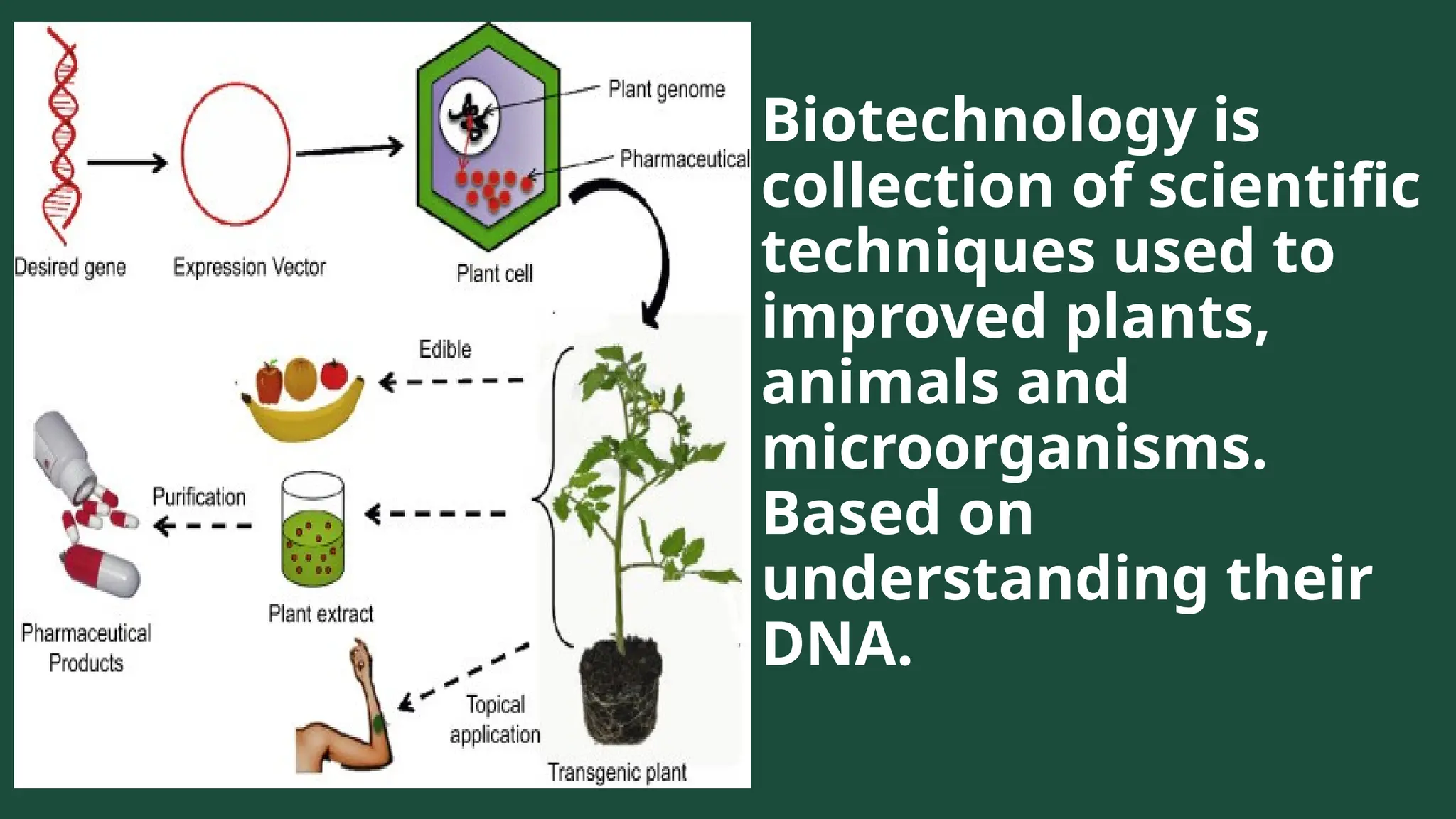
Biotechnology is
collection of scientific
techniques used to
improved plants,
animals and
microorganisms.
Based on
understanding their
DNA.
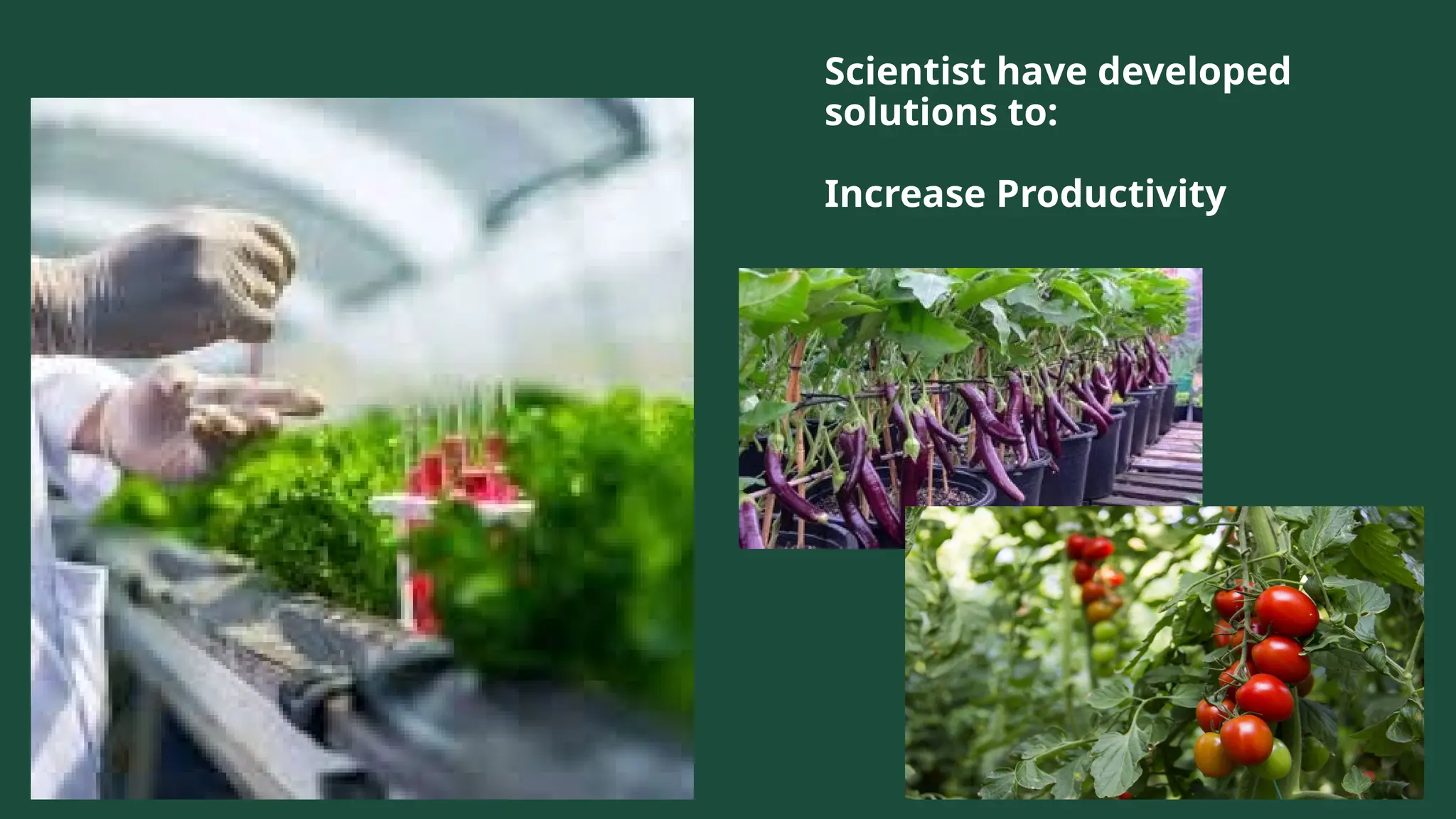
Scientist have developed
solutions to:
Increase Productivity
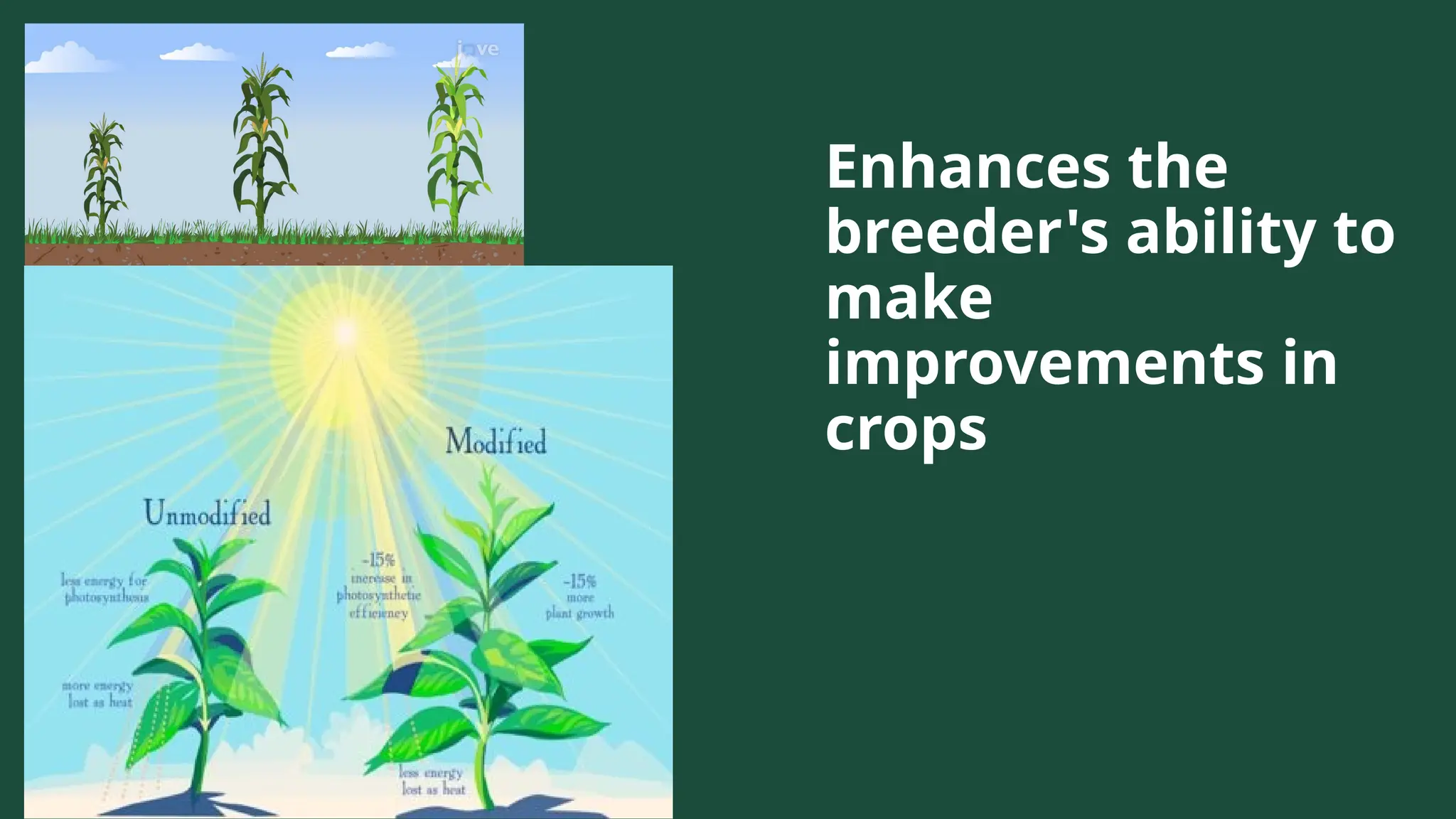
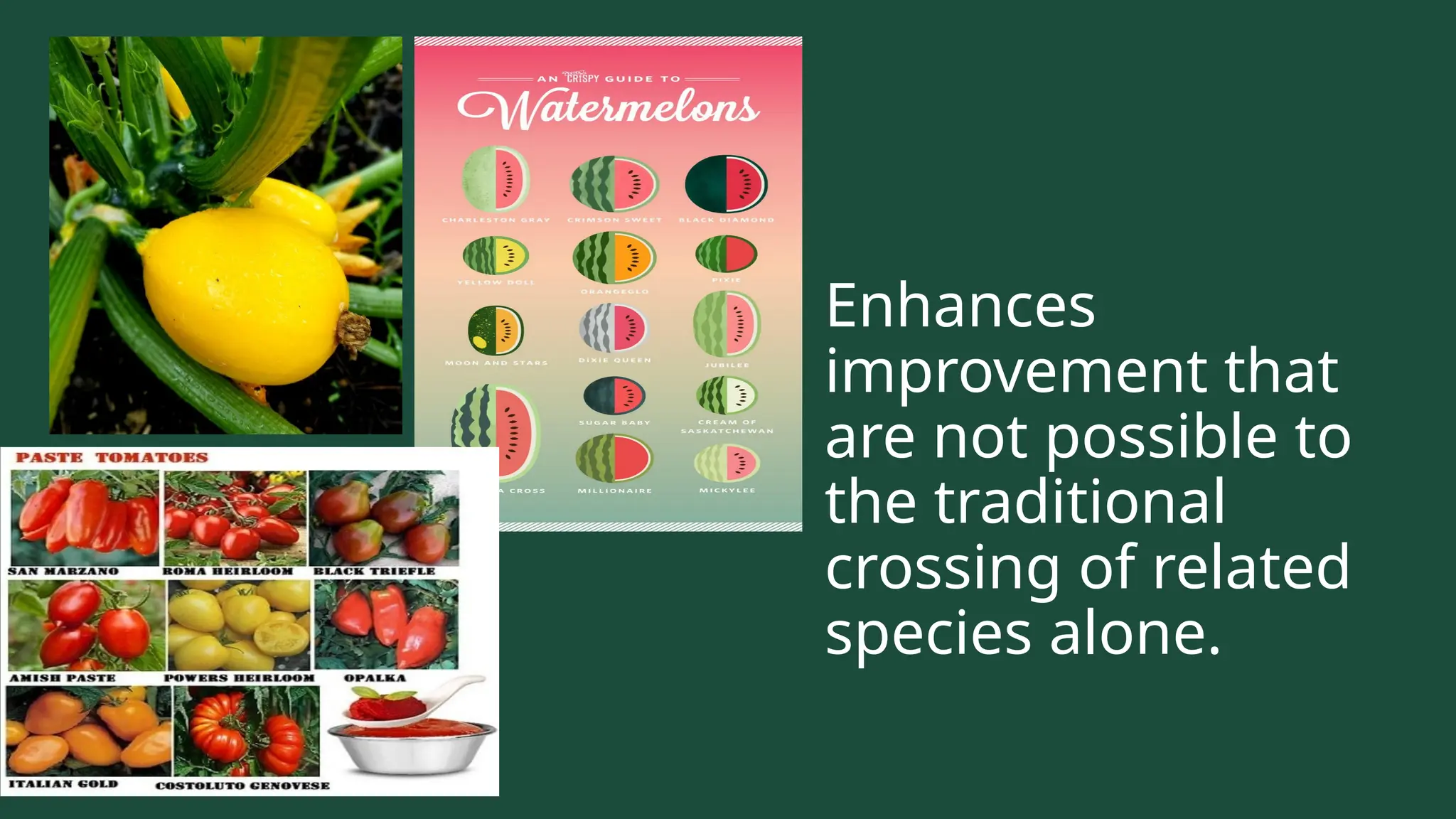
Enhances the
breeder's ability to
make
improvements in
crops
Enhances
improvement that
are not possible to
the traditional
crossing of related
species alone.
CROP PRODUCTIVITY
• Overall, biotechnology offers a wide
array of solutions for enhancing
crop productivity through genetic
improvements, increased resistance
to stressors, and optimized
agricultural practices. By integrating
these biotechnological
advancements into agriculture,
farmers can achieve higher yields,
ensure food security, and contribute
to sustainable farming practices in
the face of global challenges such
as climate change and population
growth.
RESISTANCE OF
PEST/INSECTS
• Through genetic engineering, natural
pest resistance mechanisms, RNA
interference, and the development of
biopesticides, biotechnology provides
powerful tools for managing pests and
insects in agriculture. These
technologies not only help reduce pest
populations but also minimize the
environmental and health impacts
associated with conventional pesticide
use, promoting sustainable agricultural
practices and enhancing food security.
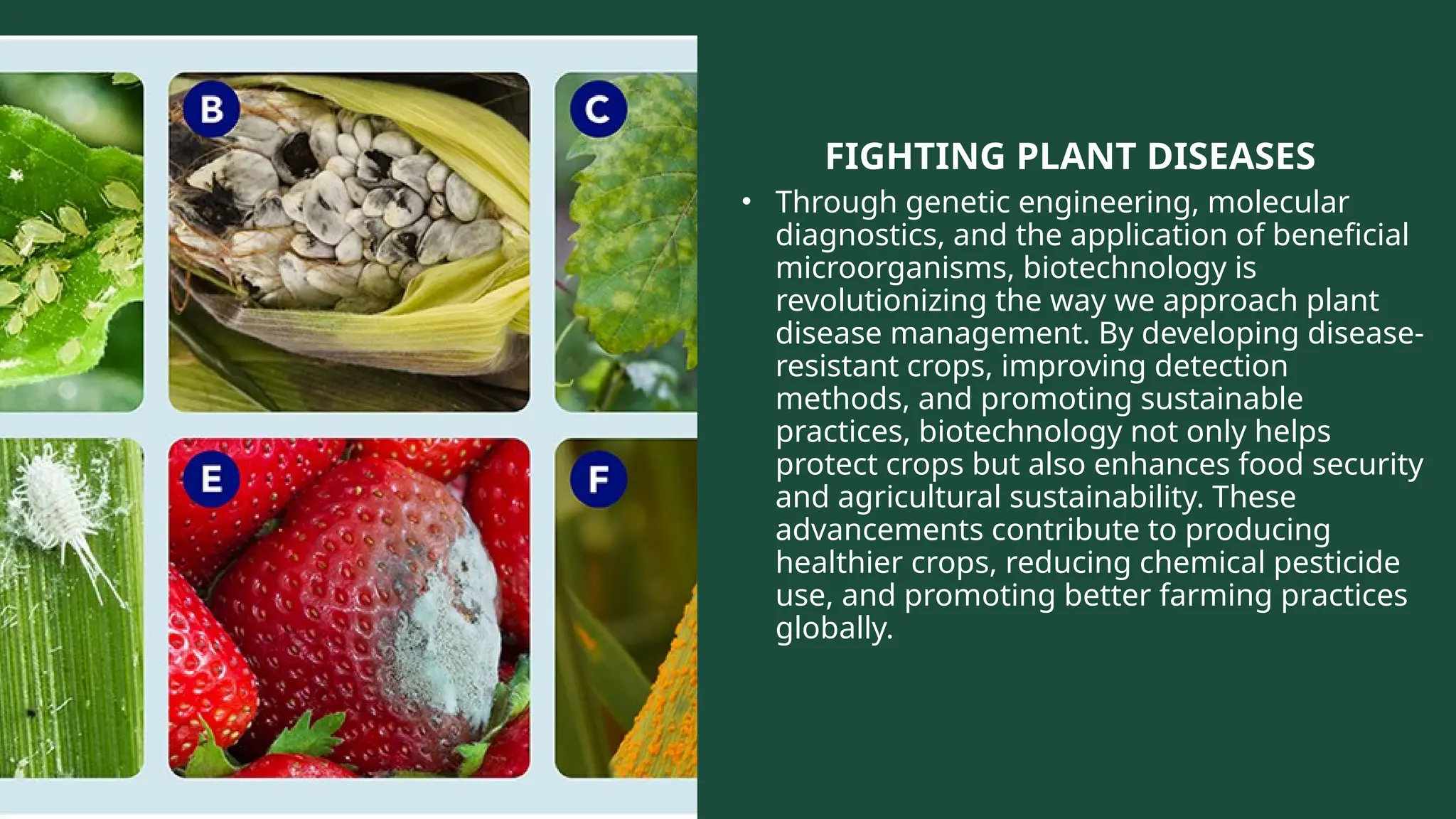
FIGHTING PLANT DISEASES
• Through genetic engineering, molecular
diagnostics, and the application of beneficial
microorganisms, biotechnology is
revolutionizing the way we approach plant
disease management. By developing disease-
resistant crops, improving detection
methods, and promoting sustainable
practices, biotechnology not only helps
protect crops but also enhances food security
and agricultural sustainability. These
advancements contribute to producing
healthier crops, reducing chemical pesticide
use, and promoting better farming practices
globally.
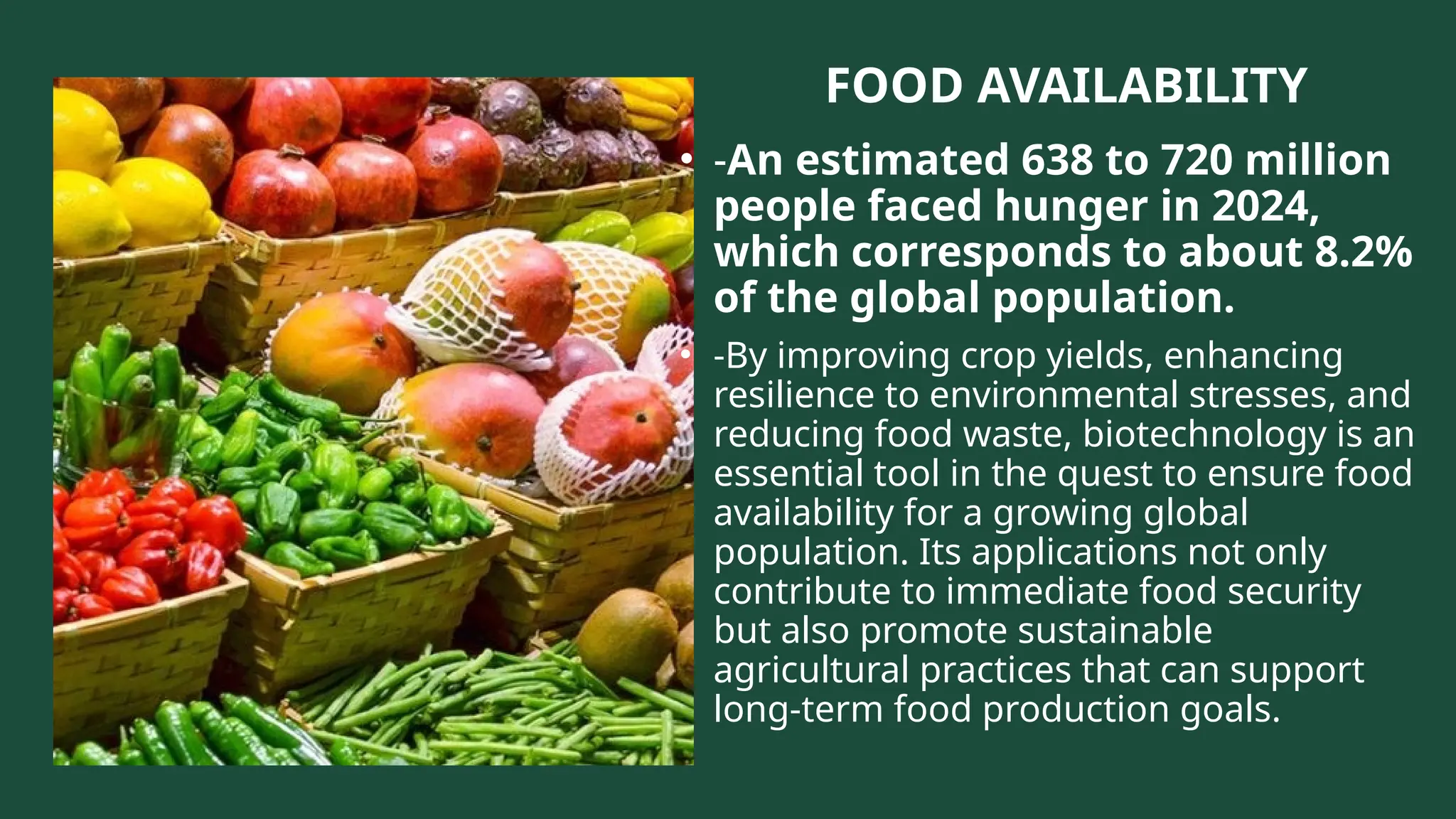
FOOD AVAILABILITY
• -An estimated 638 to 720 million
people faced hunger in 2024,
which corresponds to about 8.2%
of the global population.
• -By improving crop yields, enhancing
resilience to environmental stresses, and
reducing food waste, biotechnology is an
essential tool in the quest to ensure food
availability for a growing global
population. Its applications not only
contribute to immediate food security
but also promote sustainable
agricultural practices that can support
long-term food production goals.
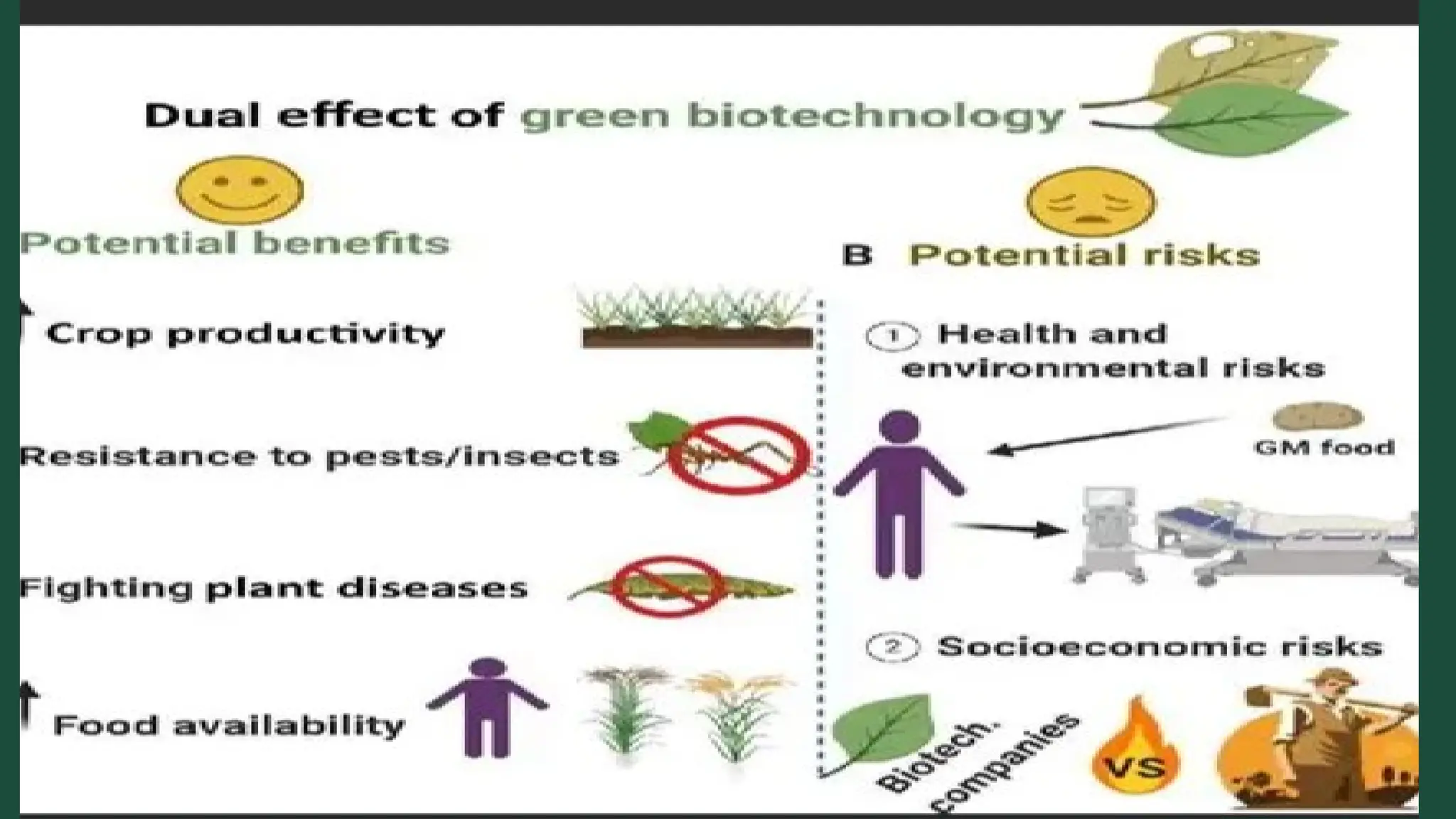
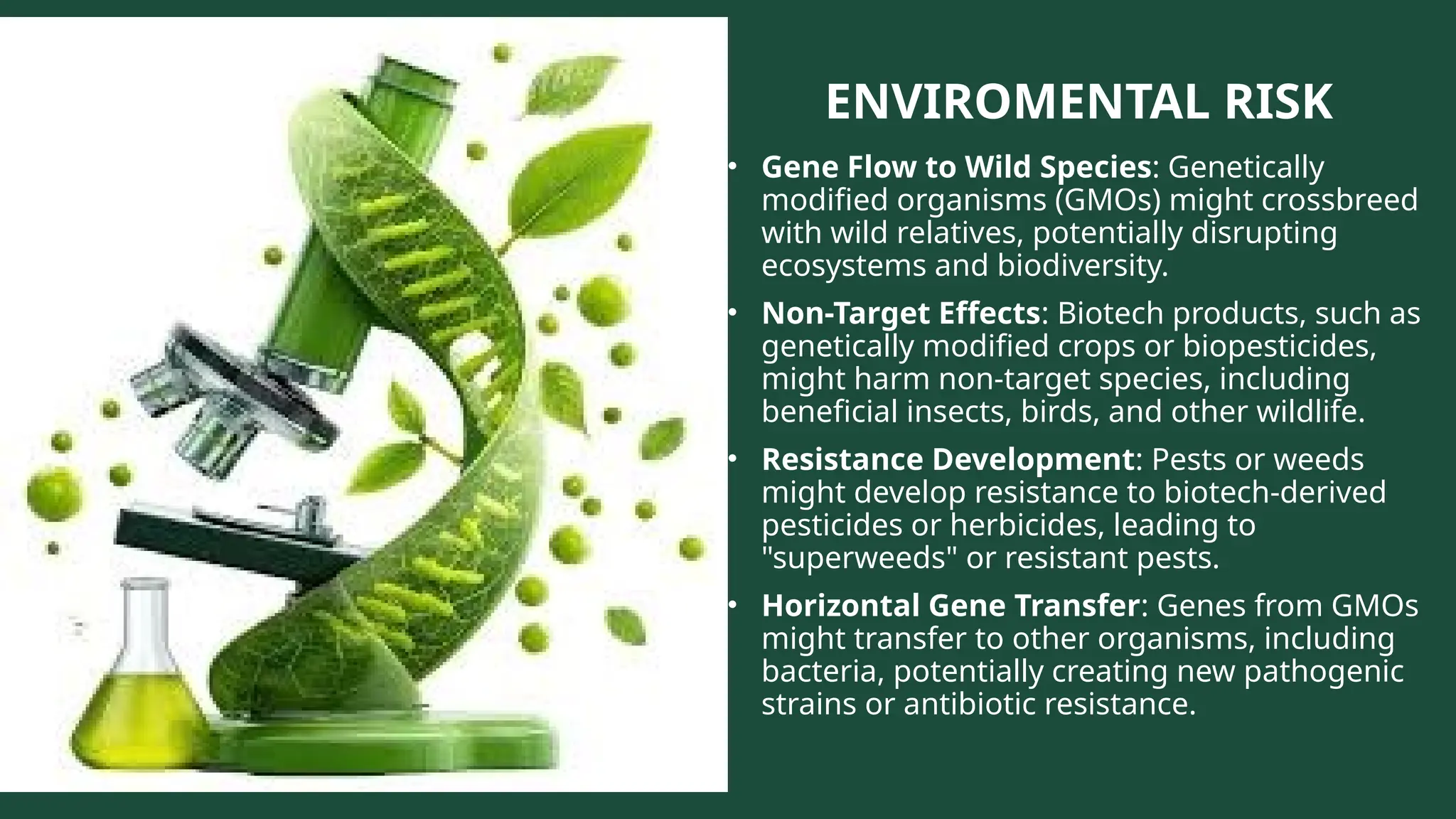
ENVIROMENTAL RISK
• Gene Flow to Wild Species: Genetically
modified organisms (GMOs) might crossbreed
with wild relatives, potentially disrupting
ecosystems and biodiversity.
• Non-Target Effects: Biotech products, such as
genetically modified crops or biopesticides,
might harm non-target species, including
beneficial insects, birds, and other wildlife.
• Resistance Development: Pests or weeds
might develop resistance to biotech-derived
pesticides or herbicides, leading to
"superweeds" or resistant pests.
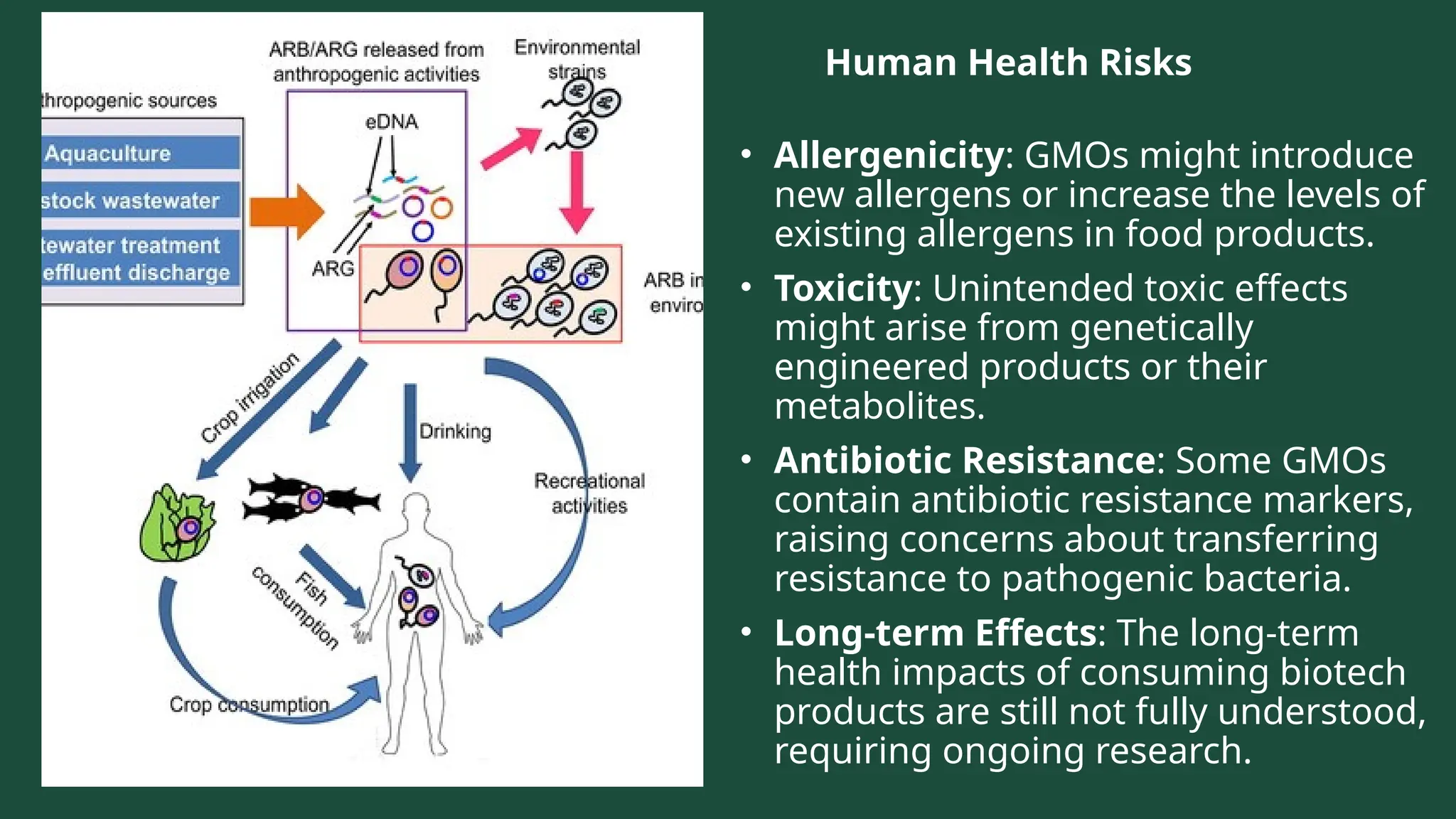
• Horizontal Gene Transfer: Genes from GMOs
might transfer to other organisms, including
bacteria, potentially creating new pathogenic
strains or antibiotic resistance.
Human Health Risks
• Allergenicity: GMOs might introduce
new allergens or increase the levels of
existing allergens in food products.
• Toxicity: Unintended toxic effects
might arise from genetically
engineered products or their
metabolites.
• Antibiotic Resistance: Some GMOs
contain antibiotic resistance markers,
raising concerns about transferring
resistance to pathogenic bacteria.
• Long-term Effects: The long-term
health impacts of consuming biotech
products are still not fully understood,
requiring ongoing research.
SOCIO-ECONOMIC RISK
• 1. Economic Inequality
• Patent and Intellectual Property Issues: Biotech companies
often patent genetically modified seeds and technologies, which
can lead to monopolies. This limits access for small farmers and
can increase dependency on large corporations.
• Cost of Innovation: High costs for developing and adopting
biotech solutions may widen the gap between developed and
developing countries, exacerbating global inequalities.
• 2. Market Disruptions
• Impact on Traditional Agriculture: The
adoption of biotech crops can threaten
traditional farming practices and local crop
diversity, potentially leading to loss of
livelihoods for small-scale farmers.
• Market Monopoly: Large biotech firms
may dominate seed markets, reducing
competition and increasing prices for
farmers.
3.Food Security and Sovereignty
• Dependence on biotech seeds can threaten
food sovereignty, as farmers rely on
proprietary seeds that must be purchased
annually, reducing self-sufficiency.
• Potential reduction in crop diversity due to
monoculture practices promoted by biotech
crops.
• 4. Ethical and Cultural Concerns
• Ethical issues surrounding genetic modification,
such as “playing God,” can lead to social
resistance.
• Cultural beliefs and traditional practices might
conflict with biotech interventions, causing
social tensions.
• 5. Regulatory and Trade Barriers
• Differences in biotech regulations among
countries can lead to trade disputes and
barriers, affecting global markets.
• Uncertainty about safety and regulation
can slow down adoption and investment
• 6. Job Market Impact
• Automation and biotech innovations may
lead to job displacement in traditional
sectors like farming and agriculture.
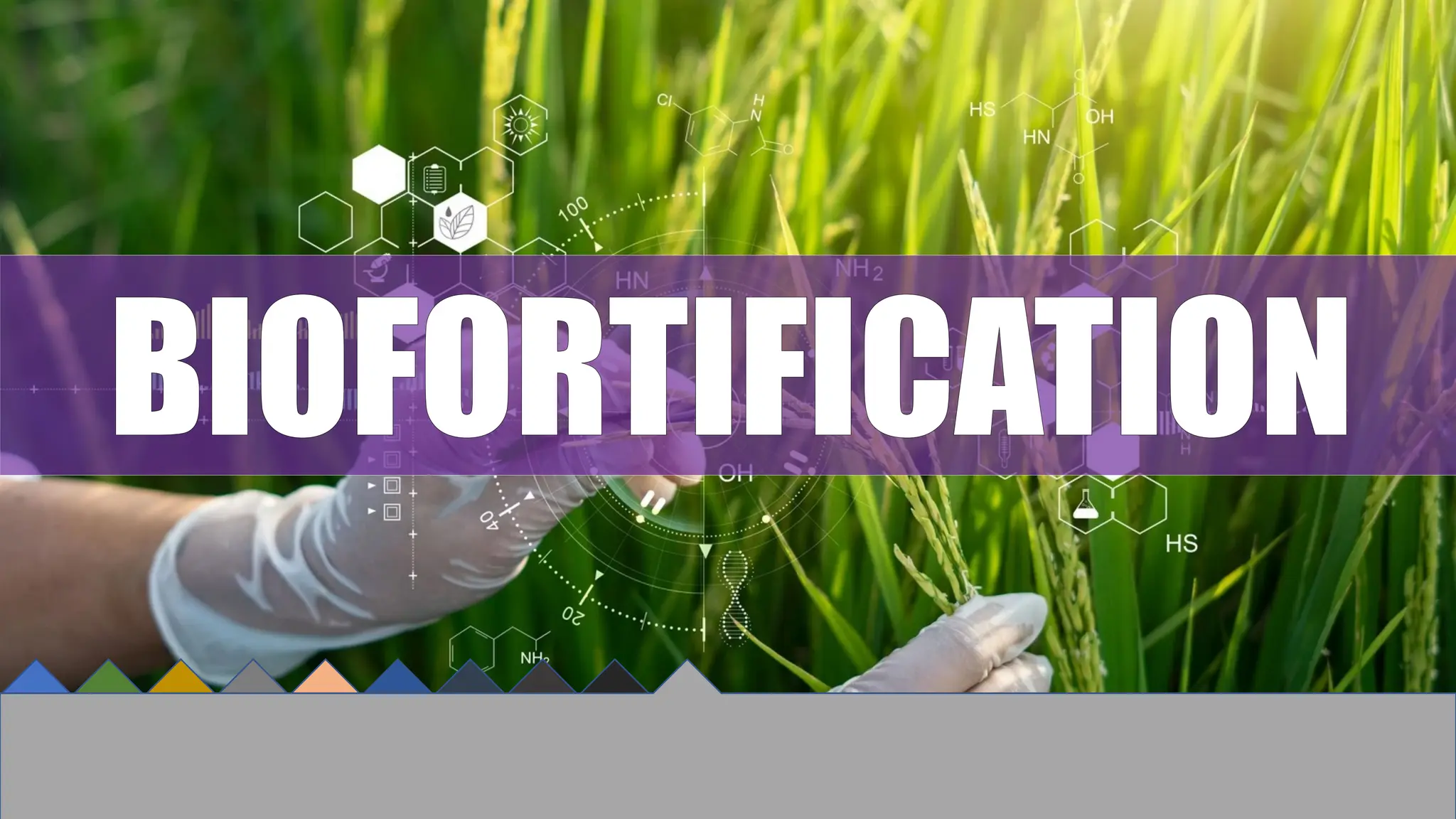
BIOFORTIFICATION
What is
hidden
hunger?
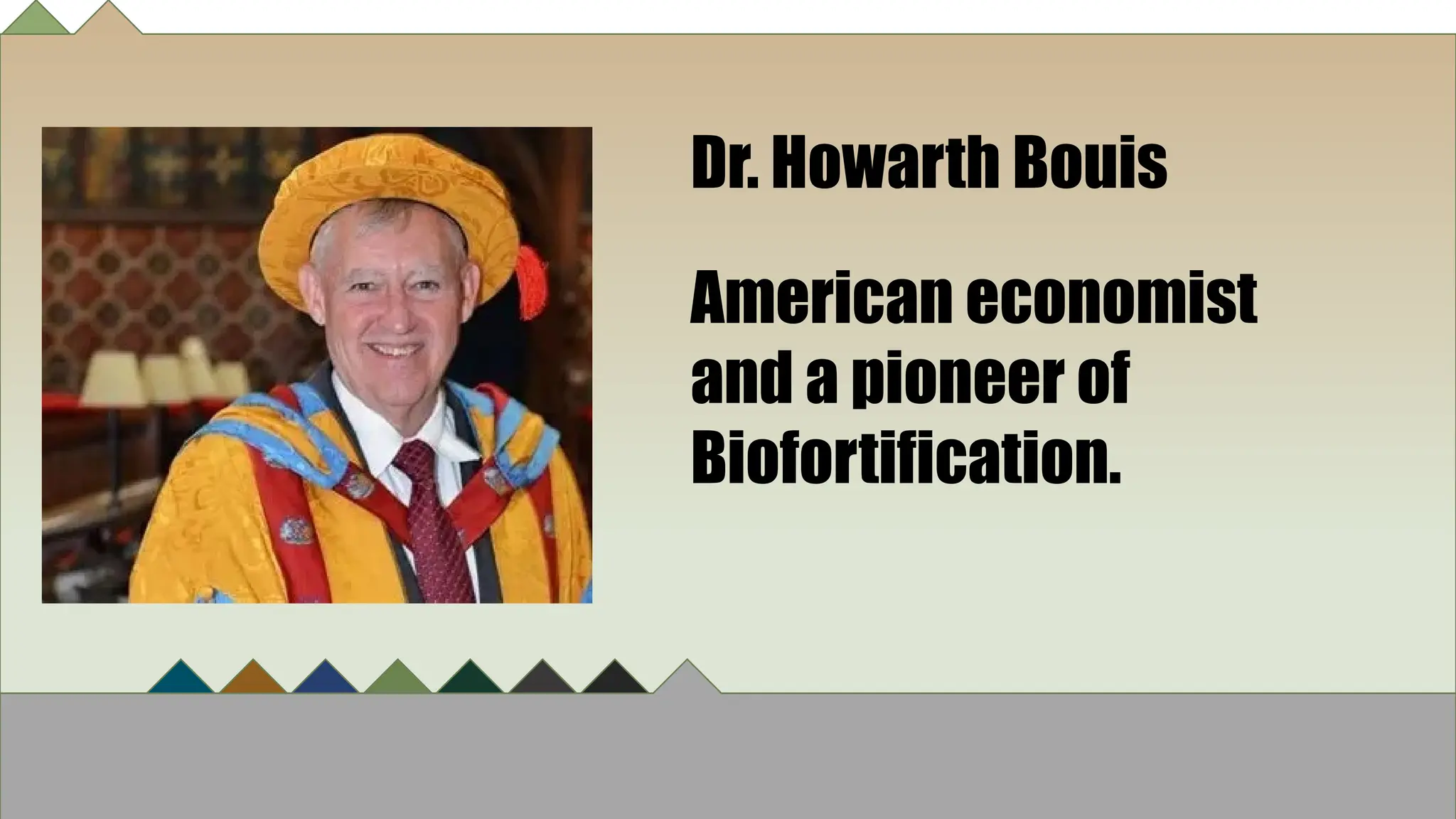
Dr. Howarth Bouis
American economist
and a pioneer of
Biofortification.
Biofortification
Process of increasing the density of
essential vitamins and minerals in a
staple food crop while the plant is
growing, rather than adding them
during the process.
3 primary
approaches/methods to
achieve Biofortification
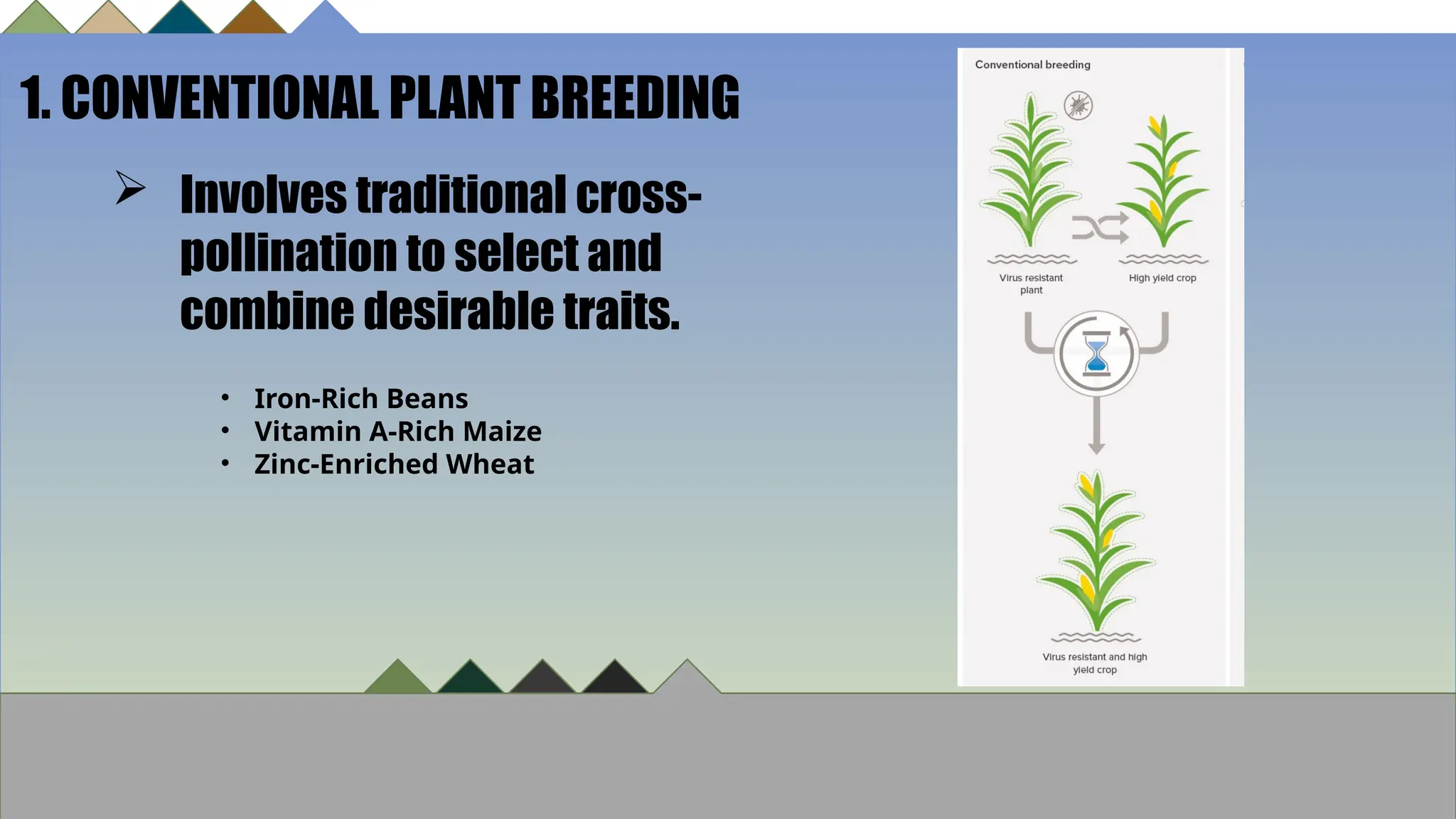
1. CONVENTIONAL PLANT BREEDING
 Involves traditional cross-
pollination to select and
combine desirable traits.
• Iron-Rich Beans
• Vitamin A-Rich Maize
• Zinc-Enriched Wheat
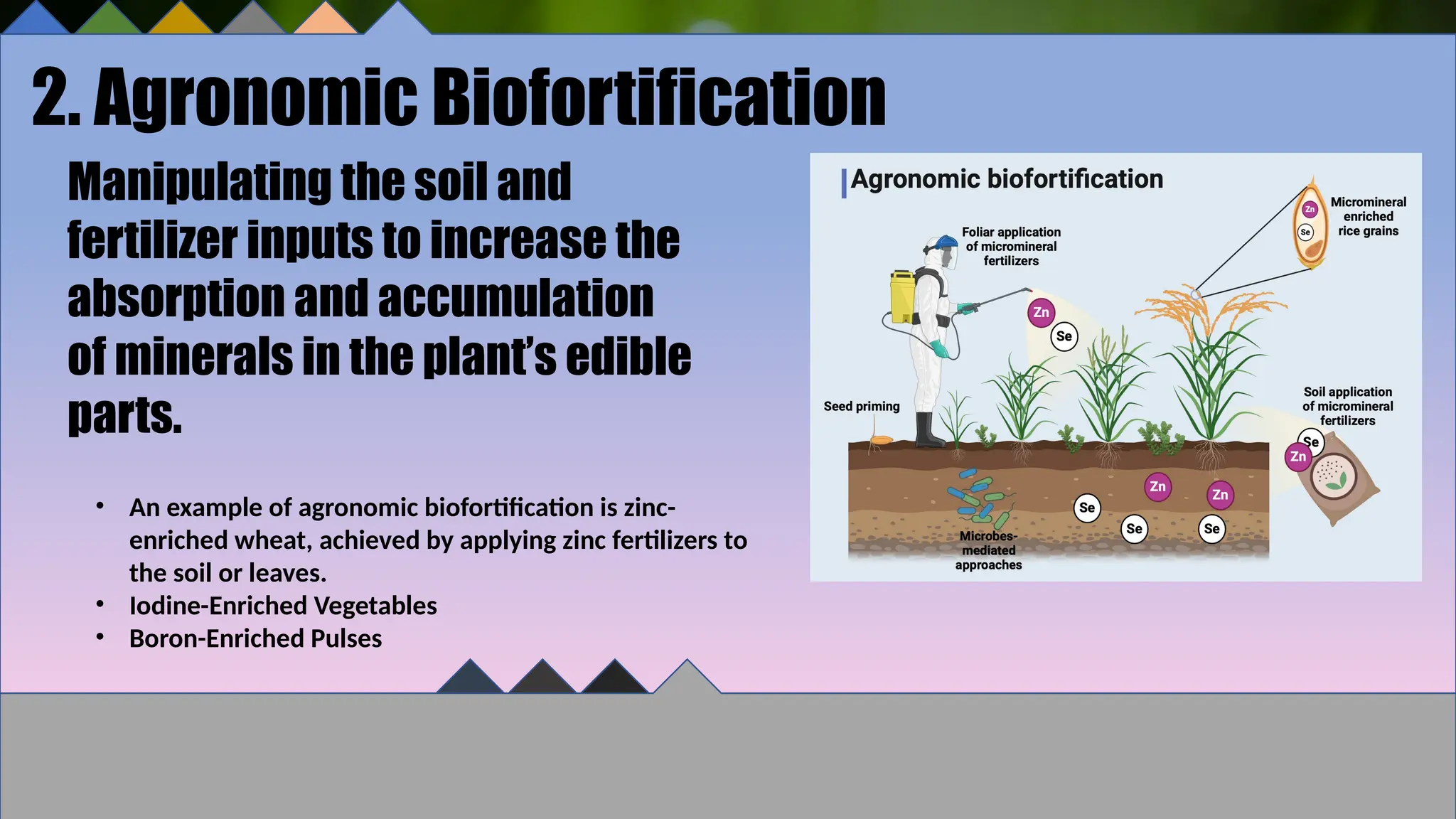
2. Agronomic Biofortification
Manipulating the soil and
fertilizer inputs to increase the
absorption and accumulation
of minerals in the plant’s edible
parts.
• An example of agronomic biofortification is zinc-
enriched wheat, achieved by applying zinc fertilizers to
the soil or leaves.
• Iodine-Enriched Vegetables
• Boron-Enriched Pulses
3. Transgenic Biofortification:
is a method of improving the nutritional
quality of crops by using genetic engineering
to insert genes from other organisms into a
plant’s DNA. These genes enable the plant to
produce or accumulate nutrients that it
normally wouldn’t.
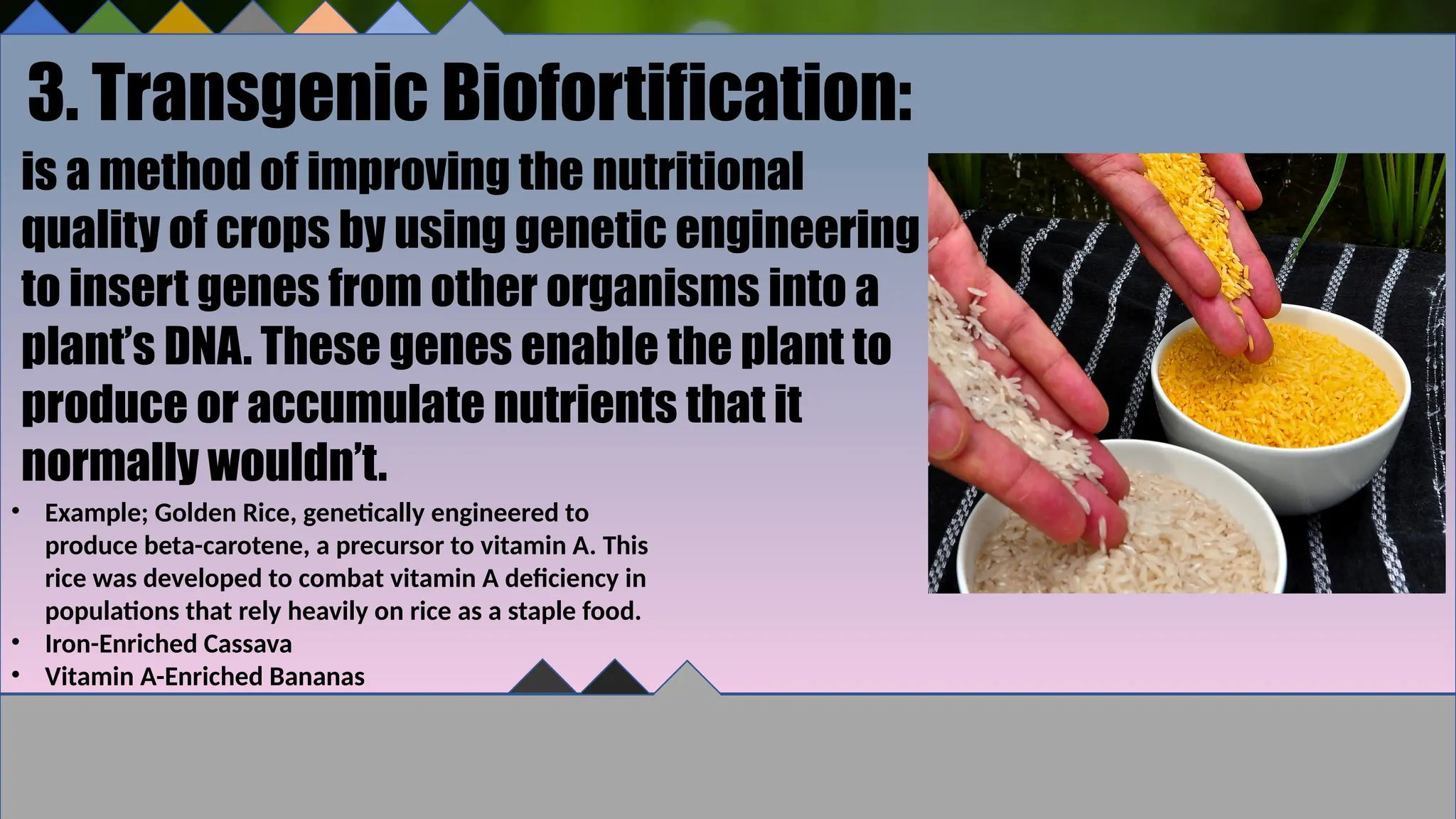
• Example; Golden Rice, genetically engineered to
produce beta-carotene, a precursor to vitamin A. This
rice was developed to combat vitamin A deficiency in
populations that rely heavily on rice as a staple food.
• Iron-Enriched Cassava
• Vitamin A-Enriched Bananas
BENEFITS OF BIOFORTIFICATION
• Improves the nutritional quality of staple crops
• Contribute to food security, and enhances agricultural
productivity
• Support economic development in vulnerable communities
• Offers a cost-effective solution to combat hidden hunger, as it
can be integrated into existing agricultural practices without
requiring significant changes to farming systems.
Challenges and Considerations
Need for extensive research and development, the importance
of farmer acceptance and adoption, and the necessity of
ensuring that biofortified crops are accessible and affordable for
the populations that need them most. Additionally, there is a
need for ongoing education and awareness-raising to inform
consumers about the benefits of biofortified foods.
Conclusion
Biofortification represents a promising strategy to combat hidden
hunger and improve global nutrition. By leveraging agricultural
innovation and traditional breeding techniques, we can enhance
the nutritional quality of staple crops and contribute to the health
and well-being of populations worldwide. As we move forward, it is
crucial to continue investing in research, fostering collaboration
among stakeholders, and promoting the adoption of biofortified
crops to ensure a healthier future for all.
GMO(Genetically Modified
Organism)
Click icon to add picture
Engineering Basically
aims to improve the life of people. How
many Genetically modified organisms
do you Know?
>You might not aware that you might
have eaten some GMO.
What Is GMO?
• GMO stands for Genetically Modified Organism, which refers to a plant,
animal, or microorganism whose genetic material (DNA) has been
changed using modern biotechnology.
• In agriculture, GMOs are developed to improve crop performance and
address farming challenges such as pests, diseases, and poor yield.
• The main goals of using GMO technology in agriculture are:
• To make crops resistant to pests, diseases, and herbicides.
• To increase yield and improve food quality.
• To enhance nutritional content of crops.
• To reduce post-harvest losses and improve shelf life.
In the 1970s, scientists Paul Berg, Stanley Cohen,
and Herbert Boyer pioneered the development of
recombinant DNA technology, which allowed genes
from one organism to be inserted into another.
Werner Arber, Hamilton O. Smith, and Daniel
Nathans also discovered restriction enzymes that
are used to cut DNA at specific places — a key tool
in genetic engineering.
Because of their work, modern biotechnology and
genetic modification became possible, leading to
the creation of genetically modified plants and
animals used today.
How GMO’s Are Used in Agricultural Products (Vegetables, Fruits, and Other Foods)
• In agriculture, GMOs are used to enhance the characteristics of crops.
Here are the most common uses:
• Pest resistance – Example: Bt corn and Bt eggplant contain a gene from
the bacterium Bacillus thuringiensis that produces a protein toxic to
certain insects, reducing the need for pesticides.
• Disease resistance – Example: GMO papaya resistant to the Papaya
Ringspot Virus.
• Herbicide tolerance – Example: Soybeans and corn that can survive
specific weed killers, making it easier for farmers to manage weeds.
• Improved quality and nutrition – Example: Golden Rice, which contains
Vitamin A; non-browning apples that stay fresh longer.
• Longer shelf life and processing benefits – Example: GMO potatoes
that resist bruising and reduce the formation of harmful compounds
during cooking.
General Steps in Gene Extraction and Transfer
for GMO Production
1. Identify the trait and gene
Scientists first determine what trait they want to add (for example, pest resistance or better
nutrition)
and find the specific gene responsible for that trait.
2. Isolate and prepare the gene
The target gene is copied and prepared by attaching special sequences called “promoters” and
“terminators,”
which control how the gene works inside the new organism.
3. Insert the gene into plant cells
The new DNA can be delivered into plant cells in two main ways:
•Using a bacterium (Agrobacterium tumefaciens) that naturally transfers DNA into plants.
•Using a gene gun, which shoots microscopic DNA-coated particles into plant tissue.
4. Select and regenerate the modified cells
Scientists identify which cells successfully received the new
gene, then grow those cells into whole plants through tissue
culture techniques.
5. Testing and breeding The new plants are tested in the
greenhouse and field to confirm that the new trait works
properly. The plants are then bred with traditional varieties to
produce stable GMO lines.
6. Regulatory testing and approval Before release, GMOs
undergo strict testing to ensure food safety, environmental
safety, and compliance with government regulations.
7. Commercial release and monitoring. Once approved, the
seeds are distributed to farmers and monitored to ensure
continued safety and effectiveness
Examples of GMO Vegetable and Fruit Products
1. Fruits
Papaya – Resistant to Papaya
Ringspot Virus (used in Hawaii and
other regions).
Apple – The “Arctic Apple,” which
does not turn brown after being cut.
Pineapple – The “Pink Pineapple,”
modified for color and sweetness.
• Vegetables
Sweet Corn – Bt sweet corn resistant to
insect pests.
Potato – “Innate Potato” resists bruising
and reduces harmful chemical formation
during frying.
Eggplant (Bt Brinjal) – Engineered to
resist fruit and shoot borer insects.
Squash/Zucchini – Modified to resist
viral diseases.
Tomato – The “Flavr Savr Tomato,” the
first commercial GMO crop, designed to
delay ripening.
Other include
soybean, corn,
cotton, and
canola, mainly for
animal feed and
industrial uses.
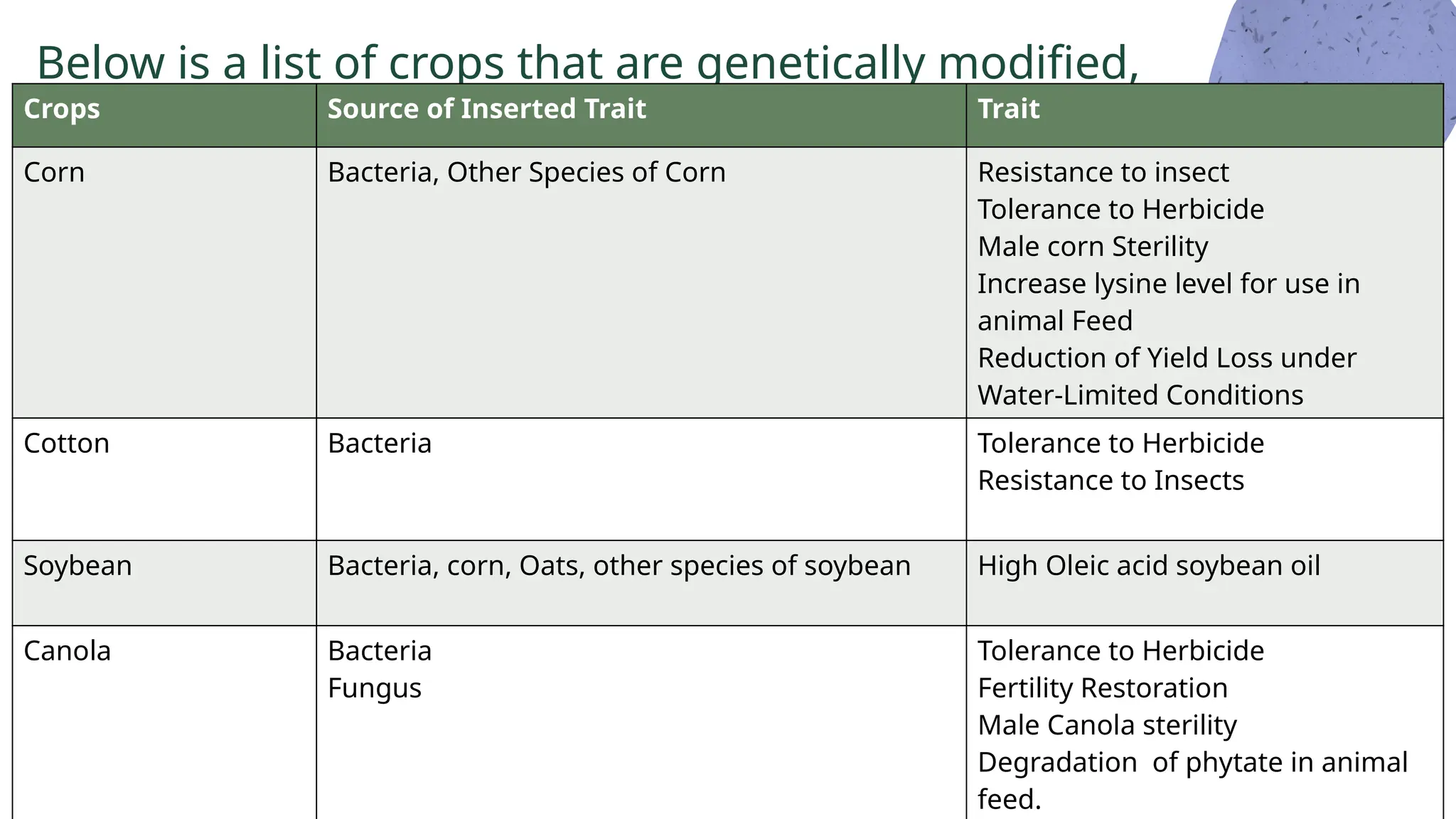
Below is a list of crops that are genetically modified,
Crops Source of Inserted Trait Trait
Corn Bacteria, Other Species of Corn Resistance to insect
Tolerance to Herbicide
Male corn Sterility
Increase lysine level for use in
animal Feed
Reduction of Yield Loss under
Water-Limited Conditions
Cotton Bacteria Tolerance to Herbicide
Resistance to Insects
Soybean Bacteria, corn, Oats, other species of soybean High Oleic acid soybean oil
Canola Bacteria
Fungus
Tolerance to Herbicide
Fertility Restoration
Male Canola sterility
Degradation of phytate in animal
feed.
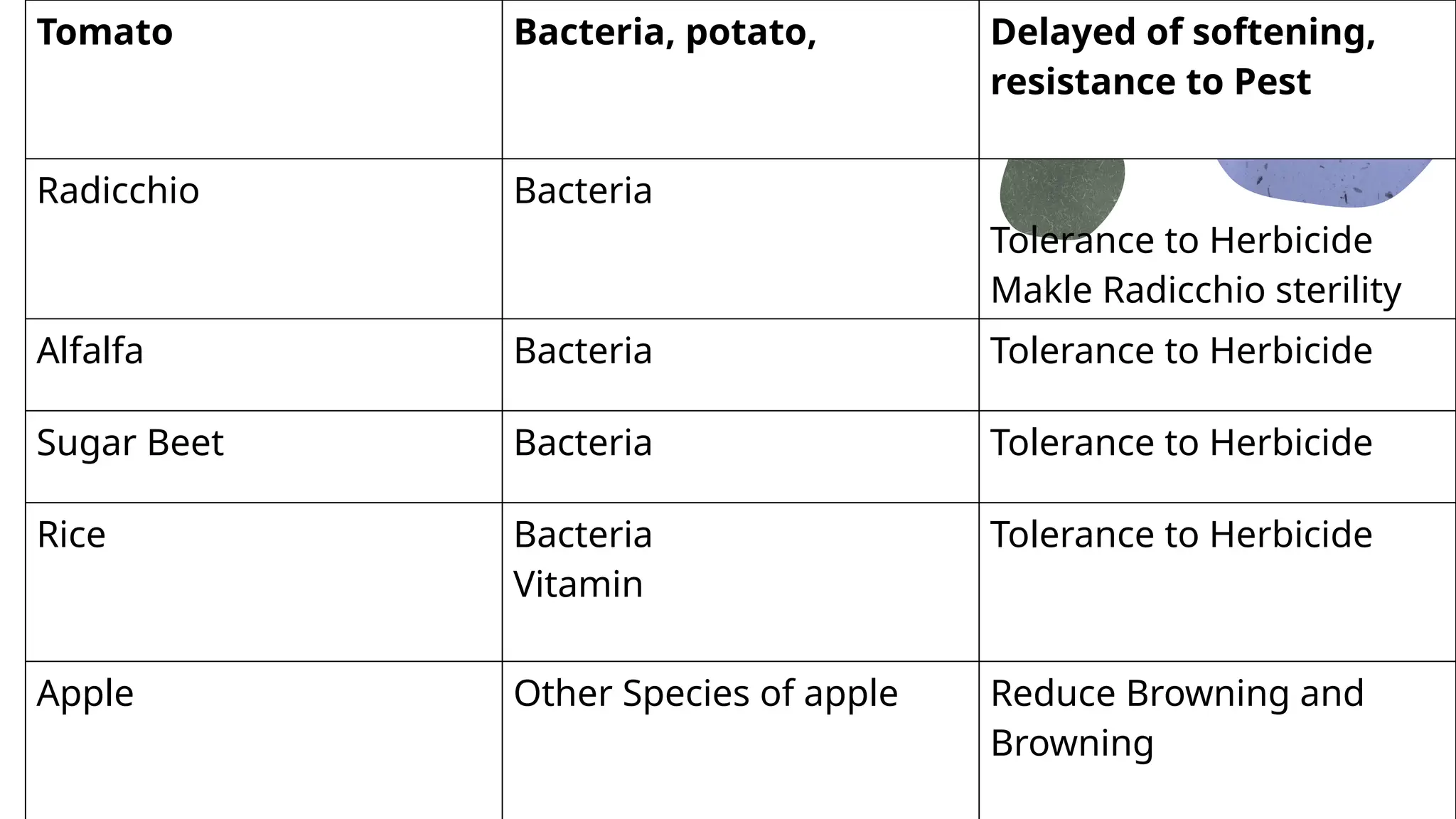
Tomato Bacteria, potato, Delayed of softening,
resistance to Pest
Radicchio Bacteria
Tolerance to Herbicide
Makle Radicchio sterility
Alfalfa Bacteria Tolerance to Herbicide
Sugar Beet Bacteria Tolerance to Herbicide
Rice Bacteria
Vitamin
Tolerance to Herbicide
Apple Other Species of apple Reduce Browning and
Browning
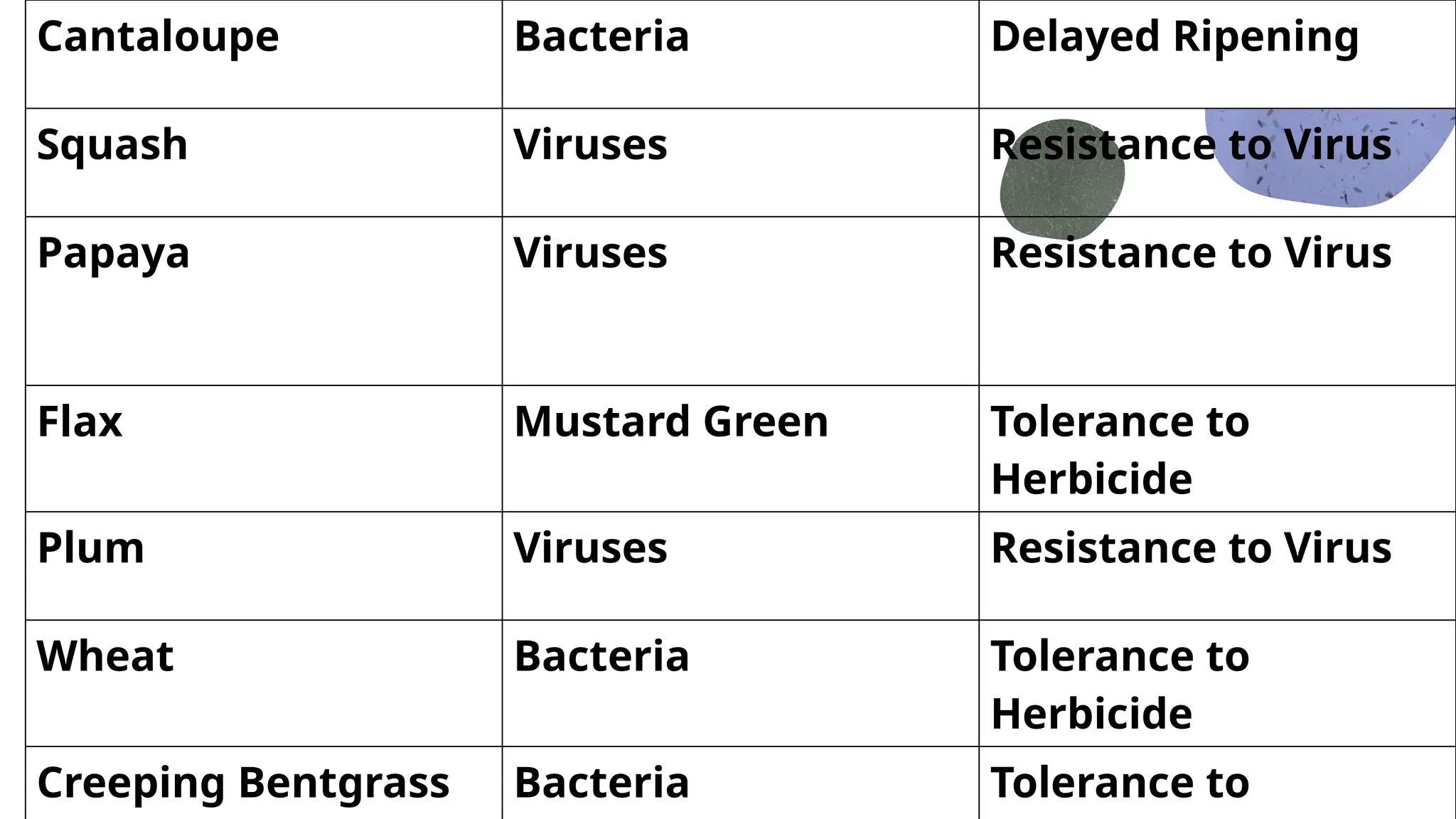
Cantaloupe Bacteria Delayed Ripening
Squash Viruses Resistance to Virus
Papaya Viruses Resistance to Virus
Flax Mustard Green Tolerance to
Herbicide
Plum Viruses Resistance to Virus
Wheat Bacteria Tolerance to
Herbicide
Creeping Bentgrass Bacteria Tolerance to
The Evolution of
Food: Biotechnology,
GMOs, &
Biofortification
Ancient Biotechnology & Early Agriculture
(Pre-20th Century)
• Selective Breeding: For millennia, farmers
selected crops and animals with desirable traits
(e.g., larger yields).
• Early Science (1866): Gregor Mendel's work on
genetics provided the scientific foundation for
controlled breeding.
• Core Motivation: Addressing the fundamental
need for reliable food resources and improving
quantity.
The Green Revolution (Mid-20th
Century)
Time Period: 1940s – 1960s
Methods: Intensive conventional breeding,
improved fertilizers, and irrigation.
Goal: Dramatically increase crop yields (e.g.,
wheat, rice) to combat global hunger.
Result: Succeeded in increasing calorie
production, but often overlooked nutritional
density (quality)
The Dawn of Modern Genetic
Engineering (Late 20th Century)
1953: DNA structure discovered by Watson and
Crick.
1973: First successful genetic engineering
experiment (modified bacteria).
1980s: Focus shifts to agricultural applications.
1990s: First commercial GMO crops introduced:
Primary Traits: Pest resistance (Bt corn) and
herbicide tolerance (Roundup Ready soybeans).
Motivation: Improving production efficiency,
protecting yields, and reducing costs.
The Emergence of
Biofortification
Late 1990s/Early 2000s: Realization that "hidden
hunger" (micronutrient deficiency) persists
despite sufficient calories.
Definition: Biofortification focuses on breeding
crops to be more nutritious inherently.
Early Methods: Primarily conventional breeding
to find naturally nutrient-rich varieties (e.g., iron-
rich beans).
Golden Rice: A Case Study in
GMO Biofortification
Problem: Vitamin A deficiency causes blindness and
death in developing countries.
Solution: Genetic engineering used to insert genes from
maize (corn) and bacteria into the rice genome.
Result: The rice grains produce beta-carotene (which the
body converts to Vitamin A), giving it a golden color.
Significance: Demonstrates the use of modern
biotechnology to achieve a specific nutritional goal
(quality focus).
Biotechnology, GMO, Fortification.pptx3.pptx

Biotechnology, GMO, Fortification.pptx3.pptx

  • 2.
    Biotechnology is collection ofscientific techniques used to improved plants, animals and microorganisms. Based on understanding their DNA.
  • 3.
    Scientist have developed solutionsto: Increase Productivity
  • 4.
    Enhances the breeder's abilityto make improvements in crops
  • 5.
    Enhances improvement that are notpossible to the traditional crossing of related species alone.
  • 7.
    CROP PRODUCTIVITY • Overall,biotechnology offers a wide array of solutions for enhancing crop productivity through genetic improvements, increased resistance to stressors, and optimized agricultural practices. By integrating these biotechnological advancements into agriculture, farmers can achieve higher yields, ensure food security, and contribute to sustainable farming practices in the face of global challenges such as climate change and population growth.
  • 8.
    RESISTANCE OF PEST/INSECTS • Throughgenetic engineering, natural pest resistance mechanisms, RNA interference, and the development of biopesticides, biotechnology provides powerful tools for managing pests and insects in agriculture. These technologies not only help reduce pest populations but also minimize the environmental and health impacts associated with conventional pesticide use, promoting sustainable agricultural practices and enhancing food security.
  • 9.
    FIGHTING PLANT DISEASES •Through genetic engineering, molecular diagnostics, and the application of beneficial microorganisms, biotechnology is revolutionizing the way we approach plant disease management. By developing disease- resistant crops, improving detection methods, and promoting sustainable practices, biotechnology not only helps protect crops but also enhances food security and agricultural sustainability. These advancements contribute to producing healthier crops, reducing chemical pesticide use, and promoting better farming practices globally.
  • 10.
    FOOD AVAILABILITY • -Anestimated 638 to 720 million people faced hunger in 2024, which corresponds to about 8.2% of the global population. • -By improving crop yields, enhancing resilience to environmental stresses, and reducing food waste, biotechnology is an essential tool in the quest to ensure food availability for a growing global population. Its applications not only contribute to immediate food security but also promote sustainable agricultural practices that can support long-term food production goals.
  • 11.
    ENVIROMENTAL RISK • GeneFlow to Wild Species: Genetically modified organisms (GMOs) might crossbreed with wild relatives, potentially disrupting ecosystems and biodiversity. • Non-Target Effects: Biotech products, such as genetically modified crops or biopesticides, might harm non-target species, including beneficial insects, birds, and other wildlife. • Resistance Development: Pests or weeds might develop resistance to biotech-derived pesticides or herbicides, leading to "superweeds" or resistant pests. • Horizontal Gene Transfer: Genes from GMOs might transfer to other organisms, including bacteria, potentially creating new pathogenic strains or antibiotic resistance.
  • 12.
    Human Health Risks •Allergenicity: GMOs might introduce new allergens or increase the levels of existing allergens in food products. • Toxicity: Unintended toxic effects might arise from genetically engineered products or their metabolites. • Antibiotic Resistance: Some GMOs contain antibiotic resistance markers, raising concerns about transferring resistance to pathogenic bacteria. • Long-term Effects: The long-term health impacts of consuming biotech products are still not fully understood, requiring ongoing research.
  • 13.
    SOCIO-ECONOMIC RISK • 1.Economic Inequality • Patent and Intellectual Property Issues: Biotech companies often patent genetically modified seeds and technologies, which can lead to monopolies. This limits access for small farmers and can increase dependency on large corporations. • Cost of Innovation: High costs for developing and adopting biotech solutions may widen the gap between developed and developing countries, exacerbating global inequalities.
  • 14.
    • 2. MarketDisruptions • Impact on Traditional Agriculture: The adoption of biotech crops can threaten traditional farming practices and local crop diversity, potentially leading to loss of livelihoods for small-scale farmers. • Market Monopoly: Large biotech firms may dominate seed markets, reducing competition and increasing prices for farmers.
  • 15.
    3.Food Security andSovereignty • Dependence on biotech seeds can threaten food sovereignty, as farmers rely on proprietary seeds that must be purchased annually, reducing self-sufficiency. • Potential reduction in crop diversity due to monoculture practices promoted by biotech crops.
  • 16.
    • 4. Ethicaland Cultural Concerns • Ethical issues surrounding genetic modification, such as “playing God,” can lead to social resistance. • Cultural beliefs and traditional practices might conflict with biotech interventions, causing social tensions.
  • 17.
    • 5. Regulatoryand Trade Barriers • Differences in biotech regulations among countries can lead to trade disputes and barriers, affecting global markets. • Uncertainty about safety and regulation can slow down adoption and investment
  • 18.
    • 6. JobMarket Impact • Automation and biotech innovations may lead to job displacement in traditional sectors like farming and agriculture.
  • 19.
  • 20.
  • 21.
    Dr. Howarth Bouis Americaneconomist and a pioneer of Biofortification.
  • 22.
    Biofortification Process of increasingthe density of essential vitamins and minerals in a staple food crop while the plant is growing, rather than adding them during the process.
  • 23.
  • 25.
    1. CONVENTIONAL PLANTBREEDING  Involves traditional cross- pollination to select and combine desirable traits. • Iron-Rich Beans • Vitamin A-Rich Maize • Zinc-Enriched Wheat
  • 26.
    2. Agronomic Biofortification Manipulatingthe soil and fertilizer inputs to increase the absorption and accumulation of minerals in the plant’s edible parts. • An example of agronomic biofortification is zinc- enriched wheat, achieved by applying zinc fertilizers to the soil or leaves. • Iodine-Enriched Vegetables • Boron-Enriched Pulses
  • 27.
    3. Transgenic Biofortification: isa method of improving the nutritional quality of crops by using genetic engineering to insert genes from other organisms into a plant’s DNA. These genes enable the plant to produce or accumulate nutrients that it normally wouldn’t. • Example; Golden Rice, genetically engineered to produce beta-carotene, a precursor to vitamin A. This rice was developed to combat vitamin A deficiency in populations that rely heavily on rice as a staple food. • Iron-Enriched Cassava • Vitamin A-Enriched Bananas
  • 28.
    BENEFITS OF BIOFORTIFICATION •Improves the nutritional quality of staple crops • Contribute to food security, and enhances agricultural productivity • Support economic development in vulnerable communities • Offers a cost-effective solution to combat hidden hunger, as it can be integrated into existing agricultural practices without requiring significant changes to farming systems.
  • 29.
    Challenges and Considerations Needfor extensive research and development, the importance of farmer acceptance and adoption, and the necessity of ensuring that biofortified crops are accessible and affordable for the populations that need them most. Additionally, there is a need for ongoing education and awareness-raising to inform consumers about the benefits of biofortified foods.
  • 30.
    Conclusion Biofortification represents apromising strategy to combat hidden hunger and improve global nutrition. By leveraging agricultural innovation and traditional breeding techniques, we can enhance the nutritional quality of staple crops and contribute to the health and well-being of populations worldwide. As we move forward, it is crucial to continue investing in research, fostering collaboration among stakeholders, and promoting the adoption of biofortified crops to ensure a healthier future for all.
  • 31.
  • 32.
    Click icon toadd picture Engineering Basically aims to improve the life of people. How many Genetically modified organisms do you Know? >You might not aware that you might have eaten some GMO.
  • 33.
    What Is GMO? •GMO stands for Genetically Modified Organism, which refers to a plant, animal, or microorganism whose genetic material (DNA) has been changed using modern biotechnology. • In agriculture, GMOs are developed to improve crop performance and address farming challenges such as pests, diseases, and poor yield. • The main goals of using GMO technology in agriculture are: • To make crops resistant to pests, diseases, and herbicides. • To increase yield and improve food quality. • To enhance nutritional content of crops. • To reduce post-harvest losses and improve shelf life.
  • 34.
    In the 1970s,scientists Paul Berg, Stanley Cohen, and Herbert Boyer pioneered the development of recombinant DNA technology, which allowed genes from one organism to be inserted into another. Werner Arber, Hamilton O. Smith, and Daniel Nathans also discovered restriction enzymes that are used to cut DNA at specific places — a key tool in genetic engineering. Because of their work, modern biotechnology and genetic modification became possible, leading to the creation of genetically modified plants and animals used today.
  • 35.
    How GMO’s AreUsed in Agricultural Products (Vegetables, Fruits, and Other Foods) • In agriculture, GMOs are used to enhance the characteristics of crops. Here are the most common uses: • Pest resistance – Example: Bt corn and Bt eggplant contain a gene from the bacterium Bacillus thuringiensis that produces a protein toxic to certain insects, reducing the need for pesticides. • Disease resistance – Example: GMO papaya resistant to the Papaya Ringspot Virus. • Herbicide tolerance – Example: Soybeans and corn that can survive specific weed killers, making it easier for farmers to manage weeds. • Improved quality and nutrition – Example: Golden Rice, which contains Vitamin A; non-browning apples that stay fresh longer. • Longer shelf life and processing benefits – Example: GMO potatoes that resist bruising and reduce the formation of harmful compounds during cooking.
  • 36.
    General Steps inGene Extraction and Transfer for GMO Production 1. Identify the trait and gene Scientists first determine what trait they want to add (for example, pest resistance or better nutrition) and find the specific gene responsible for that trait. 2. Isolate and prepare the gene The target gene is copied and prepared by attaching special sequences called “promoters” and “terminators,” which control how the gene works inside the new organism. 3. Insert the gene into plant cells The new DNA can be delivered into plant cells in two main ways: •Using a bacterium (Agrobacterium tumefaciens) that naturally transfers DNA into plants. •Using a gene gun, which shoots microscopic DNA-coated particles into plant tissue.
  • 37.
    4. Select andregenerate the modified cells Scientists identify which cells successfully received the new gene, then grow those cells into whole plants through tissue culture techniques. 5. Testing and breeding The new plants are tested in the greenhouse and field to confirm that the new trait works properly. The plants are then bred with traditional varieties to produce stable GMO lines. 6. Regulatory testing and approval Before release, GMOs undergo strict testing to ensure food safety, environmental safety, and compliance with government regulations. 7. Commercial release and monitoring. Once approved, the seeds are distributed to farmers and monitored to ensure continued safety and effectiveness
  • 38.
    Examples of GMOVegetable and Fruit Products 1. Fruits Papaya – Resistant to Papaya Ringspot Virus (used in Hawaii and other regions). Apple – The “Arctic Apple,” which does not turn brown after being cut. Pineapple – The “Pink Pineapple,” modified for color and sweetness.
  • 39.
    • Vegetables Sweet Corn– Bt sweet corn resistant to insect pests. Potato – “Innate Potato” resists bruising and reduces harmful chemical formation during frying. Eggplant (Bt Brinjal) – Engineered to resist fruit and shoot borer insects. Squash/Zucchini – Modified to resist viral diseases. Tomato – The “Flavr Savr Tomato,” the first commercial GMO crop, designed to delay ripening. Other include soybean, corn, cotton, and canola, mainly for animal feed and industrial uses.
  • 40.
    Below is alist of crops that are genetically modified, Crops Source of Inserted Trait Trait Corn Bacteria, Other Species of Corn Resistance to insect Tolerance to Herbicide Male corn Sterility Increase lysine level for use in animal Feed Reduction of Yield Loss under Water-Limited Conditions Cotton Bacteria Tolerance to Herbicide Resistance to Insects Soybean Bacteria, corn, Oats, other species of soybean High Oleic acid soybean oil Canola Bacteria Fungus Tolerance to Herbicide Fertility Restoration Male Canola sterility Degradation of phytate in animal feed.
  • 41.
    Tomato Bacteria, potato,Delayed of softening, resistance to Pest Radicchio Bacteria Tolerance to Herbicide Makle Radicchio sterility Alfalfa Bacteria Tolerance to Herbicide Sugar Beet Bacteria Tolerance to Herbicide Rice Bacteria Vitamin Tolerance to Herbicide Apple Other Species of apple Reduce Browning and Browning
  • 42.
    Cantaloupe Bacteria DelayedRipening Squash Viruses Resistance to Virus Papaya Viruses Resistance to Virus Flax Mustard Green Tolerance to Herbicide Plum Viruses Resistance to Virus Wheat Bacteria Tolerance to Herbicide Creeping Bentgrass Bacteria Tolerance to
  • 43.
    The Evolution of Food:Biotechnology, GMOs, & Biofortification
  • 44.
    Ancient Biotechnology &Early Agriculture (Pre-20th Century) • Selective Breeding: For millennia, farmers selected crops and animals with desirable traits (e.g., larger yields). • Early Science (1866): Gregor Mendel's work on genetics provided the scientific foundation for controlled breeding. • Core Motivation: Addressing the fundamental need for reliable food resources and improving quantity.
  • 45.
    The Green Revolution(Mid-20th Century) Time Period: 1940s – 1960s Methods: Intensive conventional breeding, improved fertilizers, and irrigation. Goal: Dramatically increase crop yields (e.g., wheat, rice) to combat global hunger. Result: Succeeded in increasing calorie production, but often overlooked nutritional density (quality)
  • 46.
    The Dawn ofModern Genetic Engineering (Late 20th Century) 1953: DNA structure discovered by Watson and Crick. 1973: First successful genetic engineering experiment (modified bacteria). 1980s: Focus shifts to agricultural applications. 1990s: First commercial GMO crops introduced: Primary Traits: Pest resistance (Bt corn) and herbicide tolerance (Roundup Ready soybeans). Motivation: Improving production efficiency, protecting yields, and reducing costs.
  • 47.
    The Emergence of Biofortification Late1990s/Early 2000s: Realization that "hidden hunger" (micronutrient deficiency) persists despite sufficient calories. Definition: Biofortification focuses on breeding crops to be more nutritious inherently. Early Methods: Primarily conventional breeding to find naturally nutrient-rich varieties (e.g., iron- rich beans).
  • 48.
    Golden Rice: ACase Study in GMO Biofortification Problem: Vitamin A deficiency causes blindness and death in developing countries. Solution: Genetic engineering used to insert genes from maize (corn) and bacteria into the rice genome. Result: The rice grains produce beta-carotene (which the body converts to Vitamin A), giving it a golden color. Significance: Demonstrates the use of modern biotechnology to achieve a specific nutritional goal (quality focus).