Objectives
• 1. Describethe consequences of
population growth in Pakistan.
• 2. Identify Family Planning (FP)
services available in Pakistan.
• 3. Identify social, economic,
political and religious aspects of
FP in Pakistan.
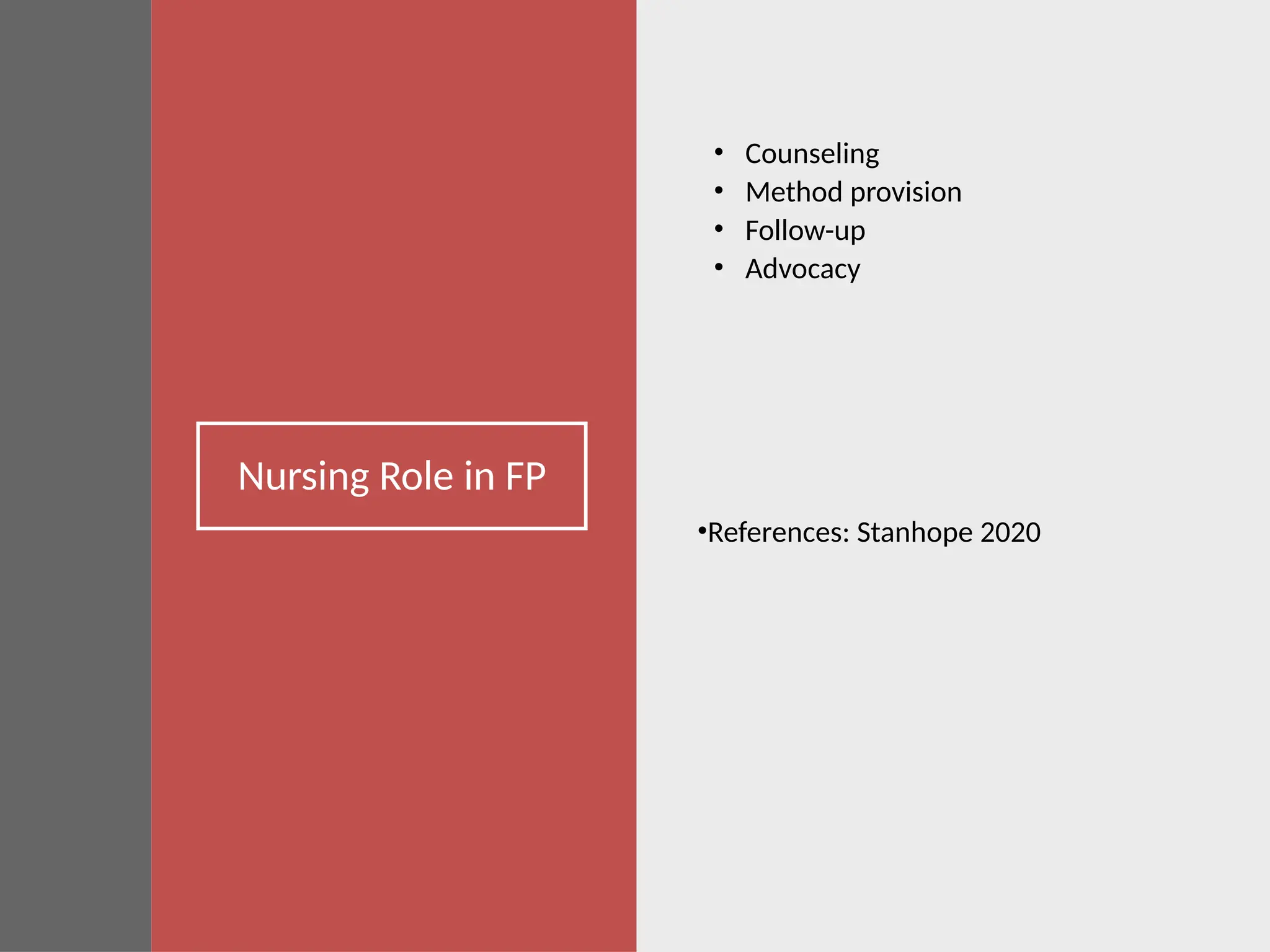
• 4. Discuss the responsibilities /
role of a nurse for Family Planning.
• 5. Describe the indications,
contraindications, advantages and
side effects of different
contraceptive methods.
• 6. Discuss the importance and
steps of counseling skills
3.
Definition of Family
Planning
•WHO: FP allows control over
timing/number of children
• Achieved via contraception &
infertility care
• Supports rights & health
•References: WHO 2022
4.
Importance of FP
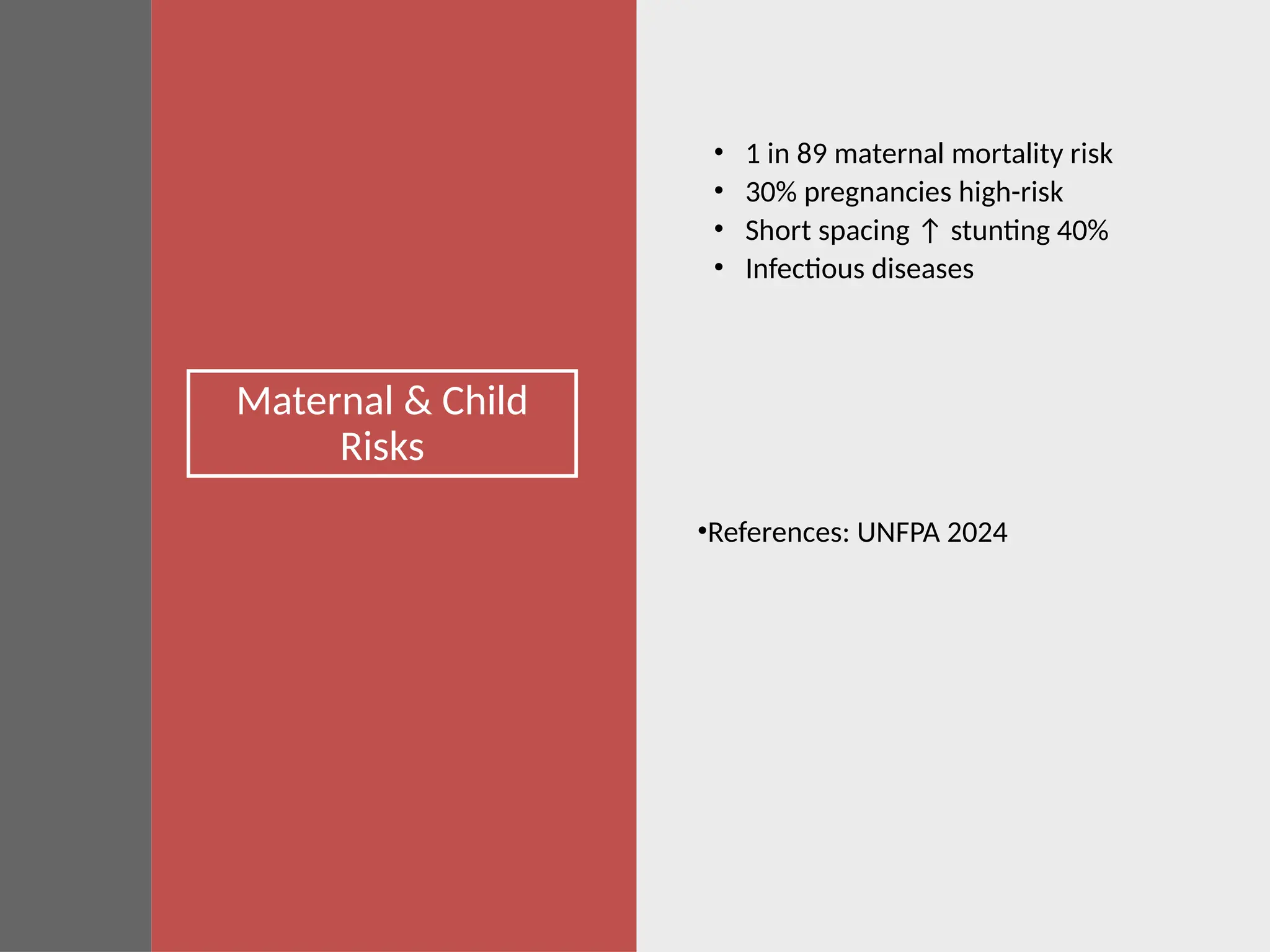
•Improves maternal/child health
• Reduces population pressure
•References: UNFPA 2024
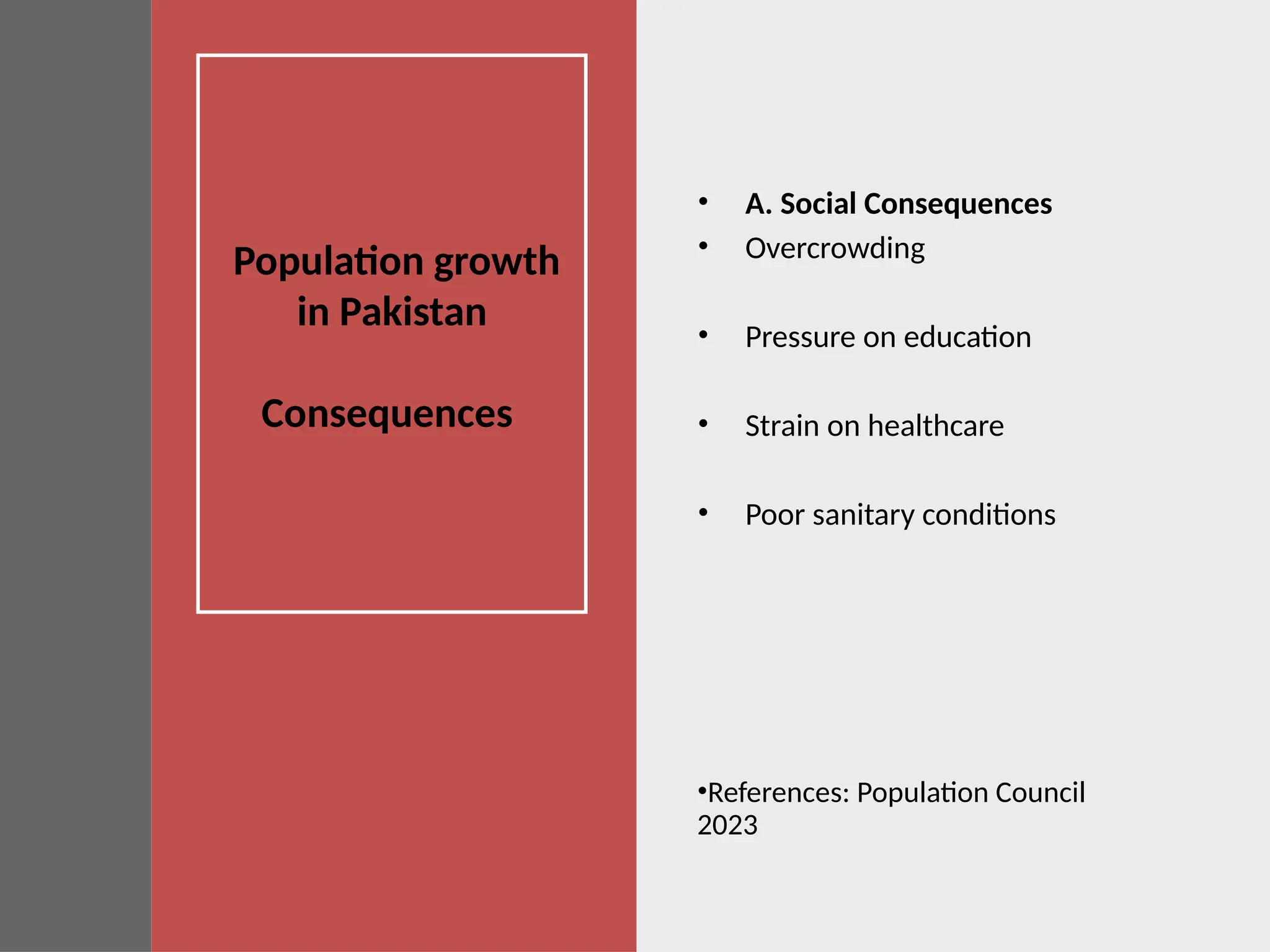
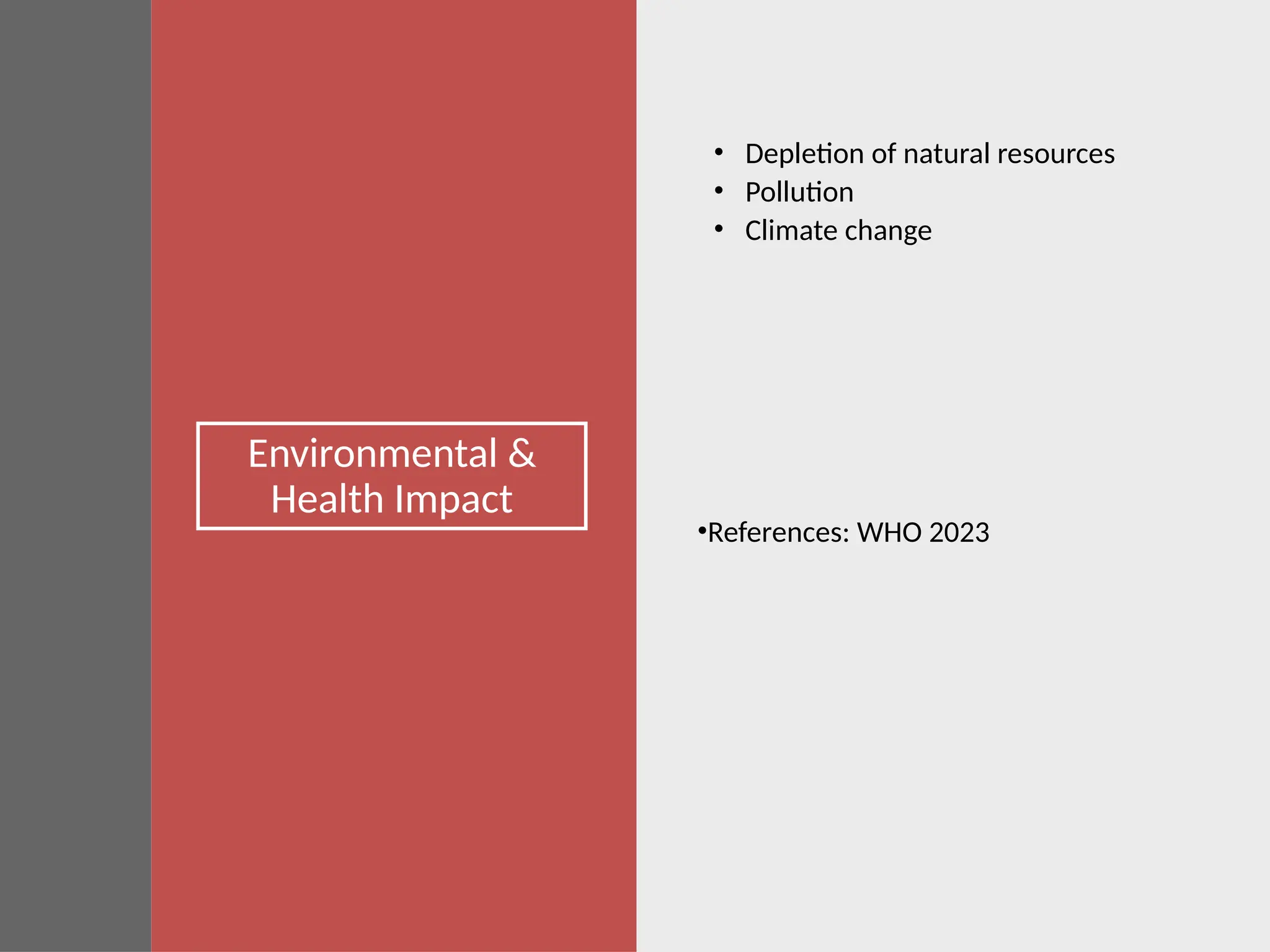
Population growth
in Pakistan
Consequences
•A. Social Consequences
• Overcrowding
• Pressure on education
• Strain on healthcare
• Poor sanitary conditions
•References: Population Council
2023
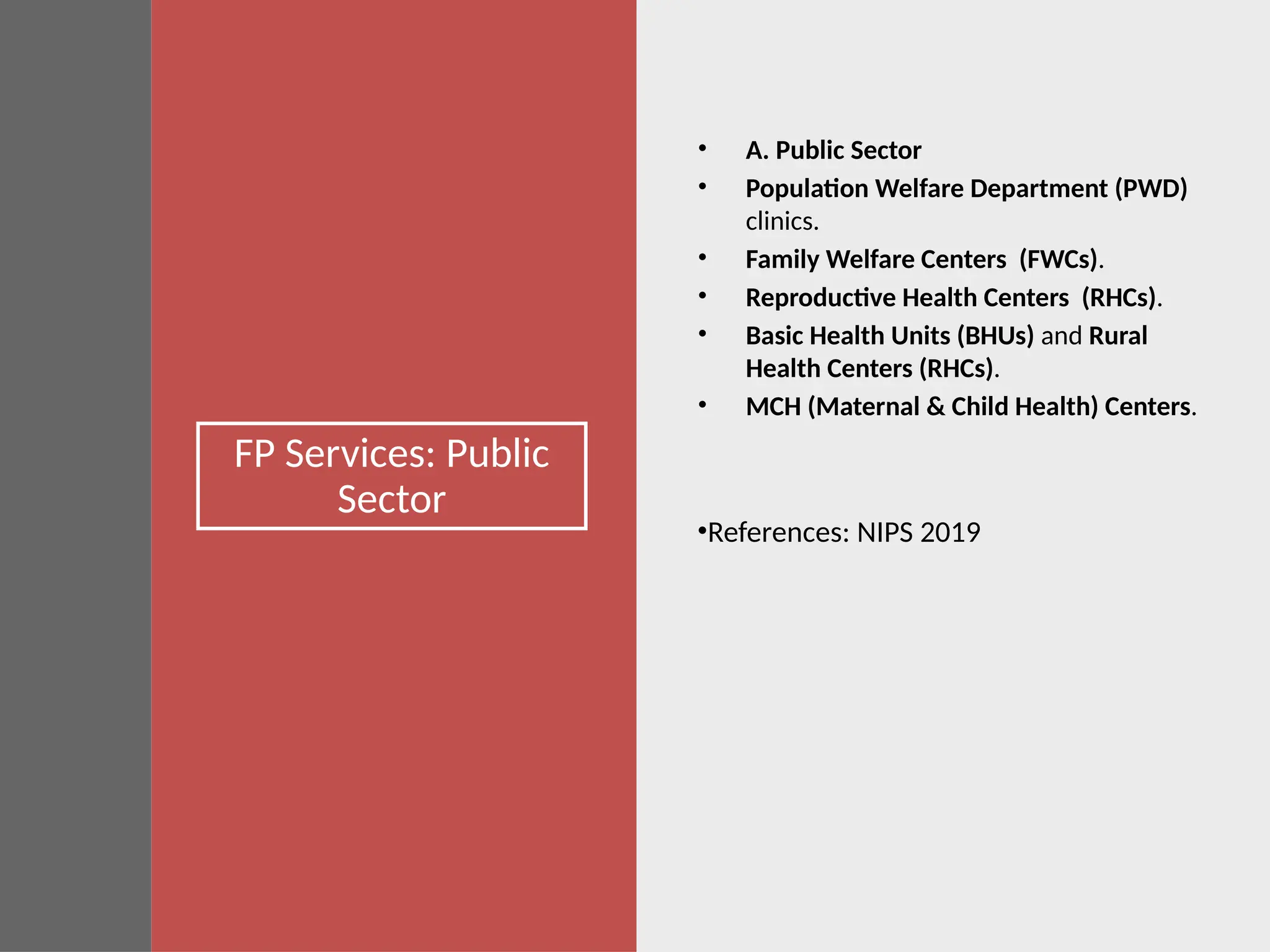
FP Services: Public
Sector
•A. Public Sector
• Population Welfare Department (PWD)
clinics.
• Family Welfare Centers (FWCs).
• Reproductive Health Centers (RHCs).
• Basic Health Units (BHUs) and Rural
Health Centers (RHCs).
• MCH (Maternal & Child Health) Centers.
•References: NIPS 2019
12.
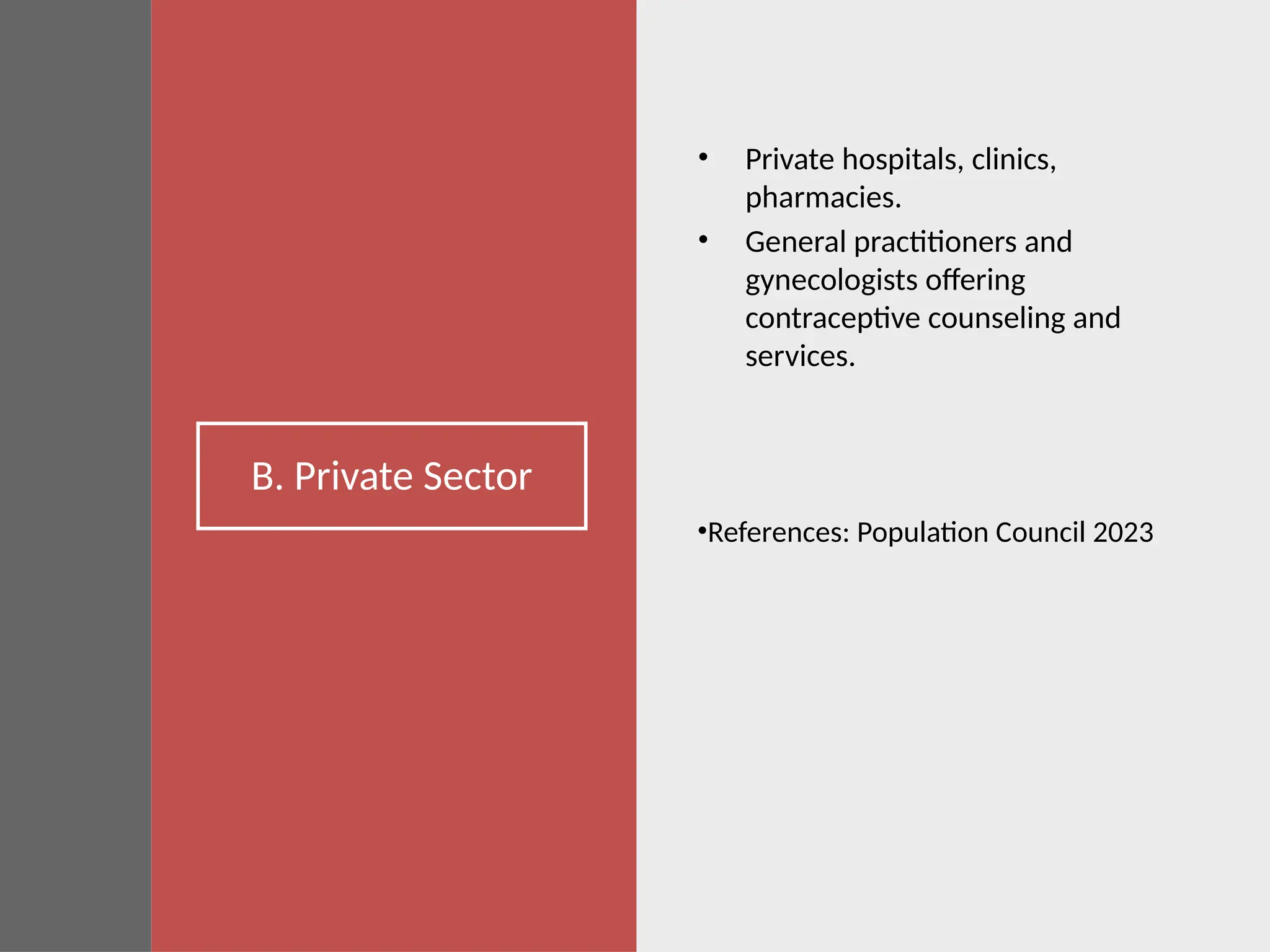
B. Private Sector
•Private hospitals, clinics,
pharmacies.
• General practitioners and
gynecologists offering
contraceptive counseling and
services.
•References: Population Council 2023
13.
FP Services: NGO
Sector
•Greenstar
• Marie Stopes
• UNFPA and USAID supported services.
•References: UNFPA 2024
14.
D. Community-Based Services
•Lady Health Workers (LHWs) providing:
– Counseling
– Distribution of condoms & oral pills
– Referral for IUD, injectable, implants, sterilization
15.
Social Barriers
• Lowliteracy
• Son preference
• Myths & fears
•References: NIPS 2019
•(Nadeem, Malik et al. 2021)
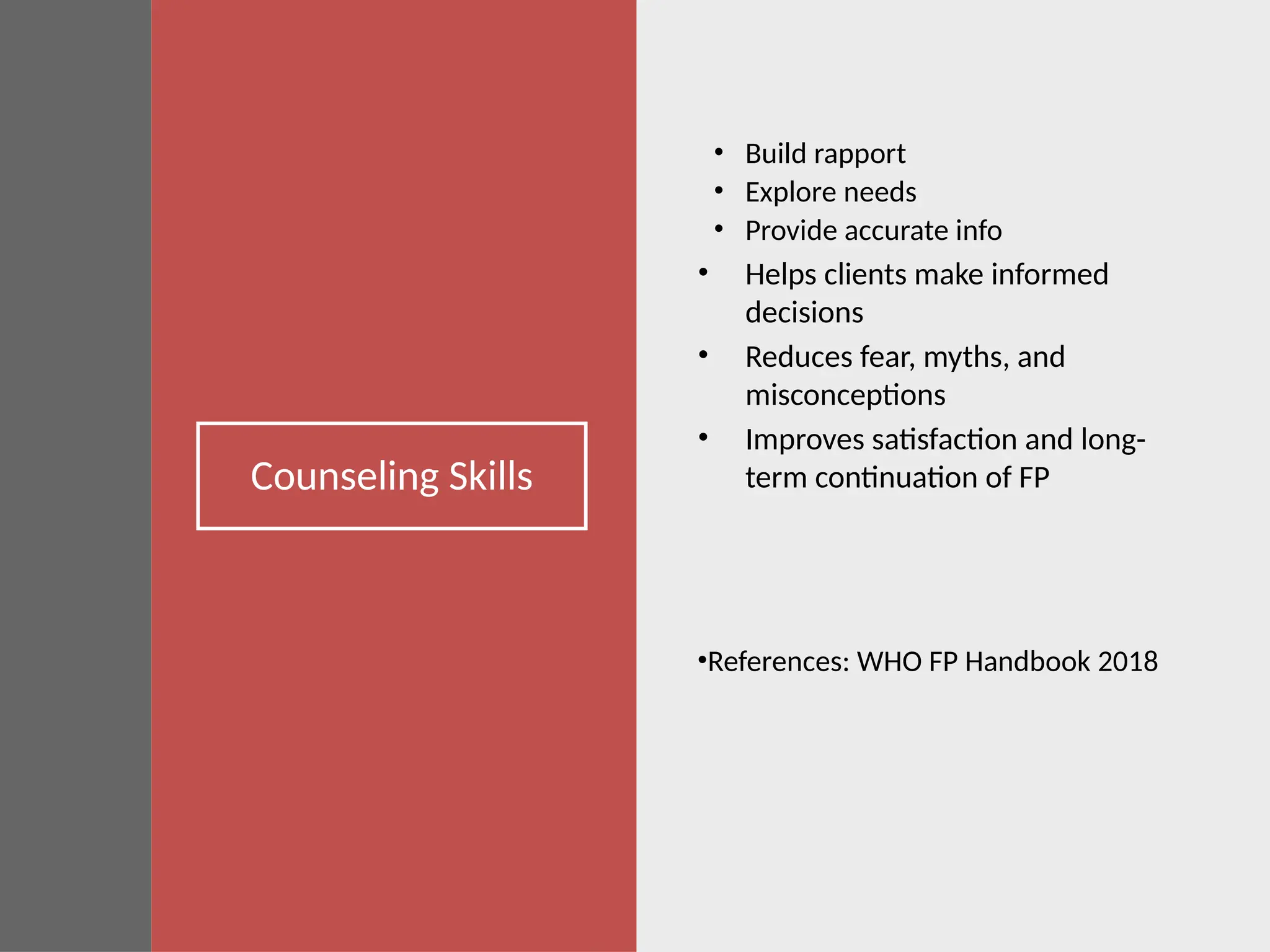
Counseling Skills
• Buildrapport
• Explore needs
• Provide accurate info
• Helps clients make informed
decisions
• Reduces fear, myths, and
misconceptions
• Improves satisfaction and long-
term continuation of FP
•References: WHO FP Handbook 2018
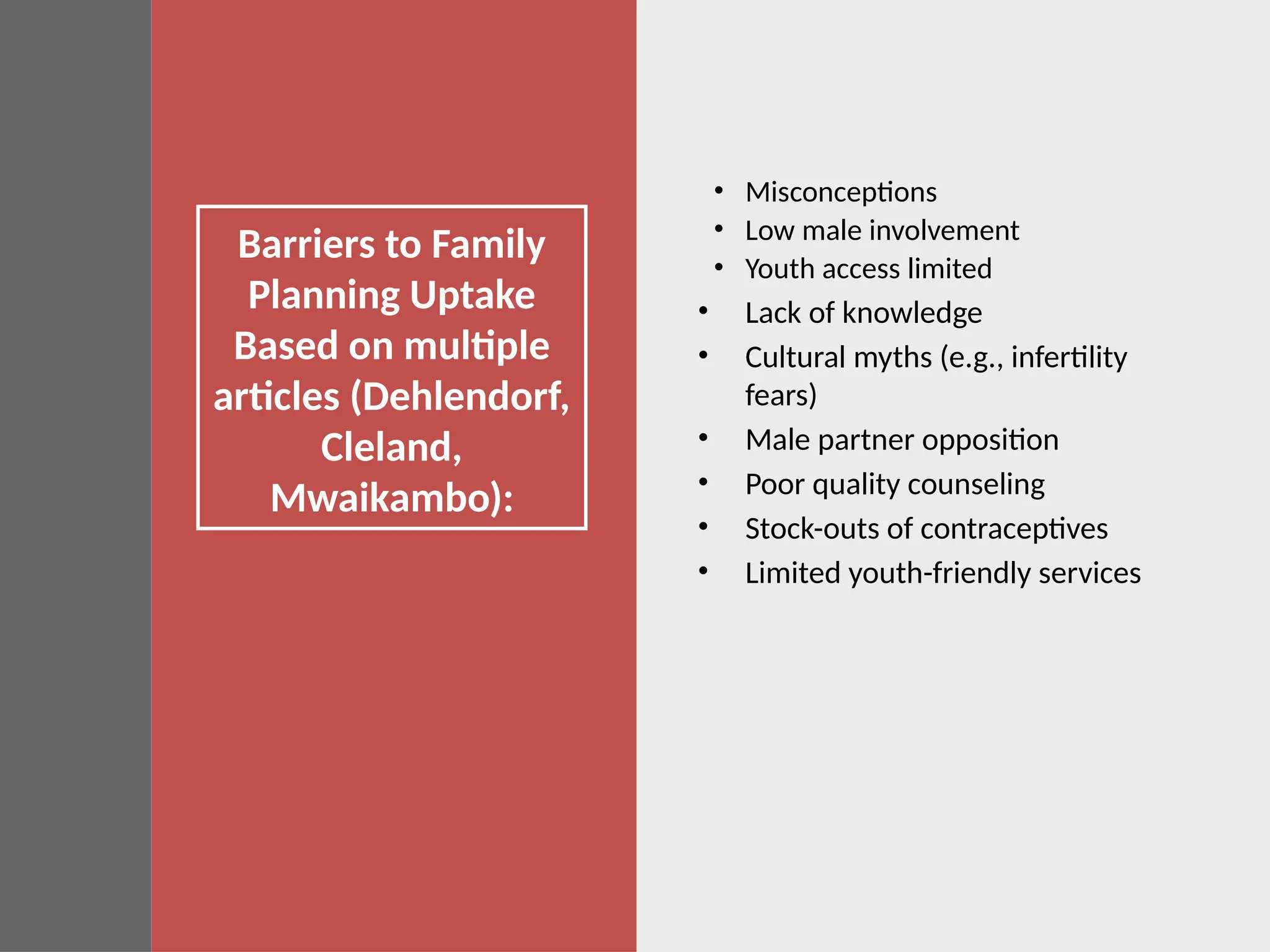
Barriers to Family
PlanningUptake
Based on multiple
articles (Dehlendorf,
Cleland,
Mwaikambo):
• Misconceptions
• Low male involvement
• Youth access limited
• Lack of knowledge
• Cultural myths (e.g., infertility
fears)
• Male partner opposition
• Poor quality counseling
• Stock-outs of contraceptives
• Limited youth-friendly services
31.
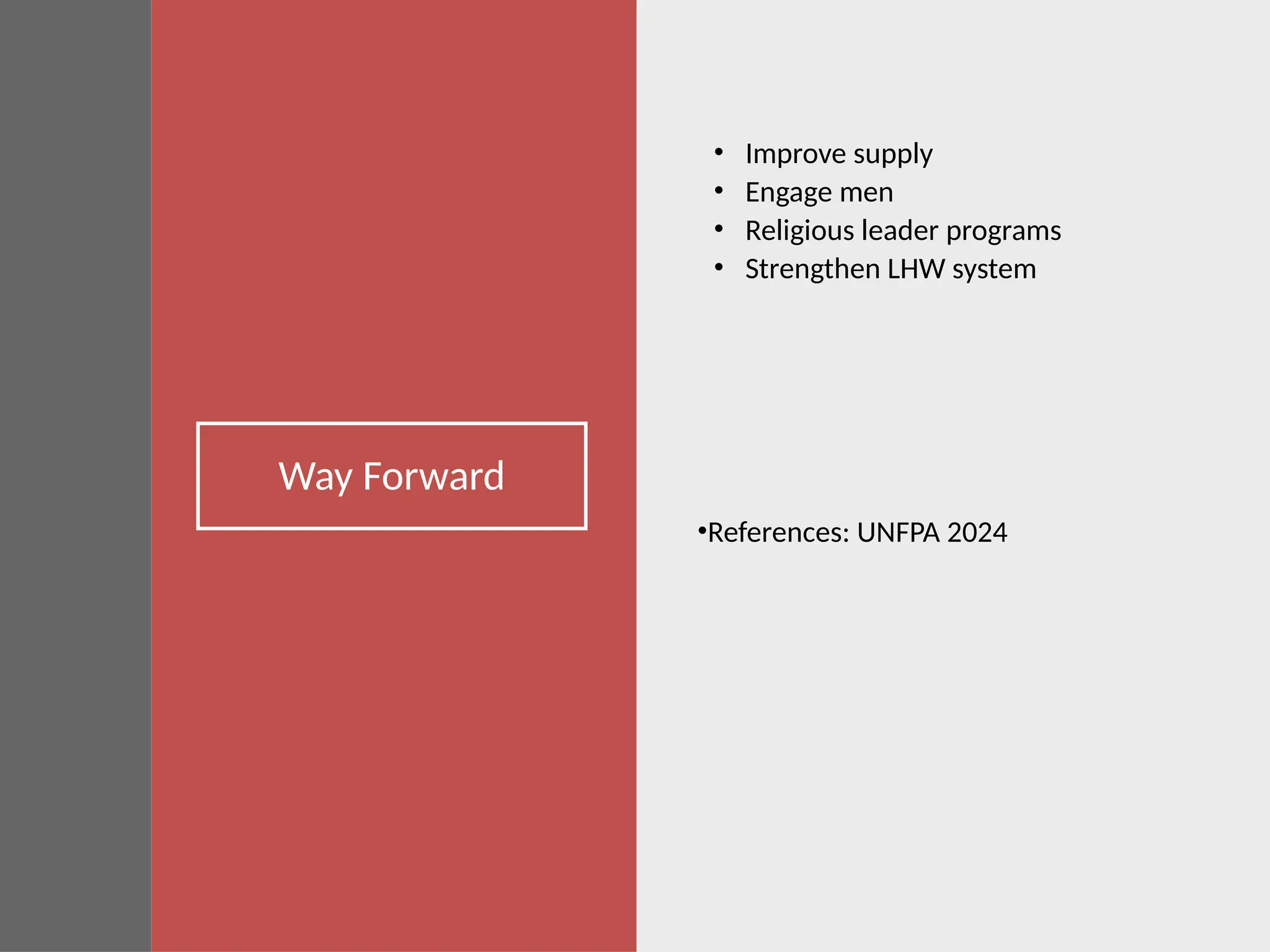
Way Forward
• Improvesupply
• Engage men
• Religious leader programs
• Strengthen LHW system
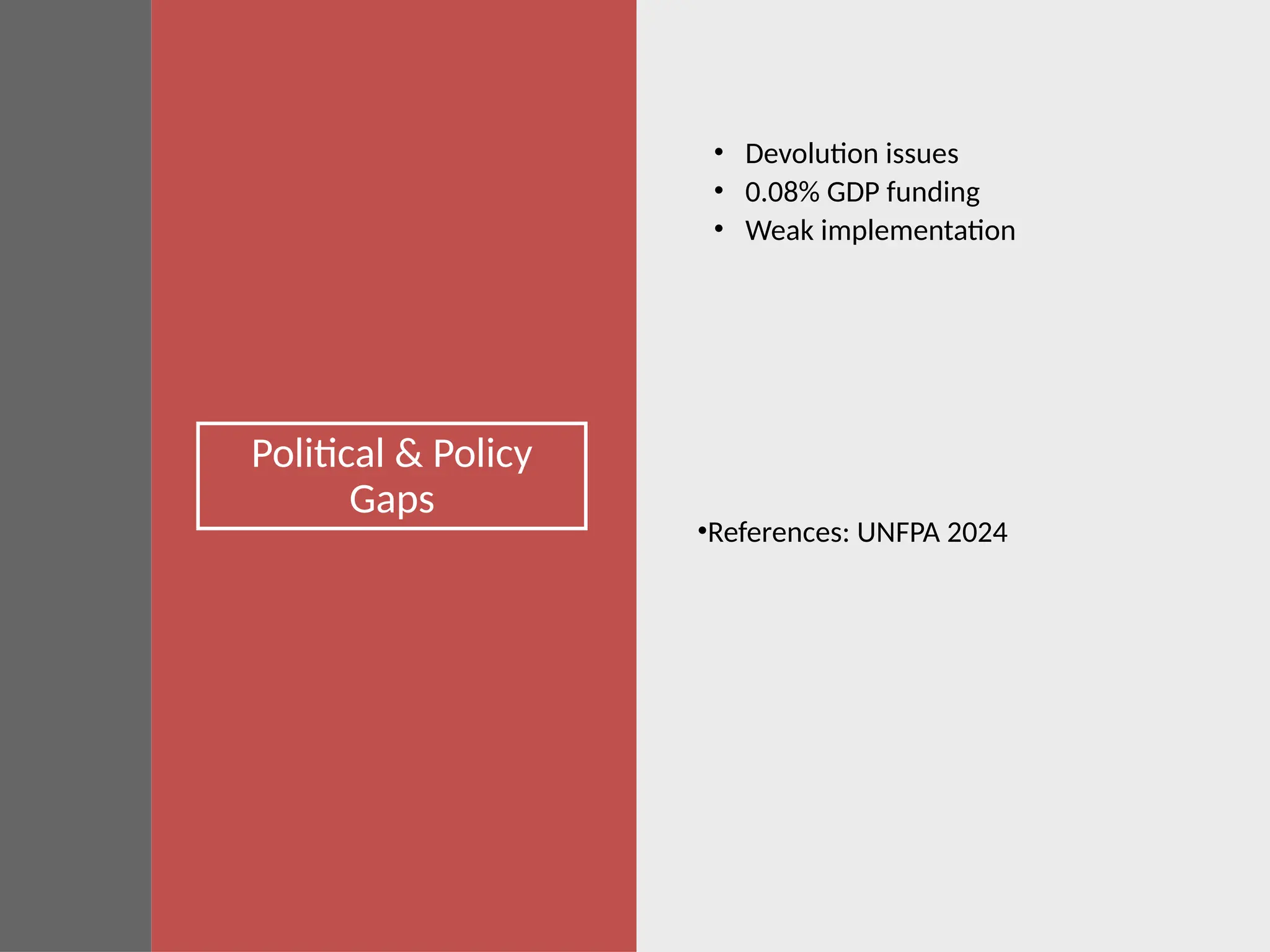
•References: UNFPA 2024
32.
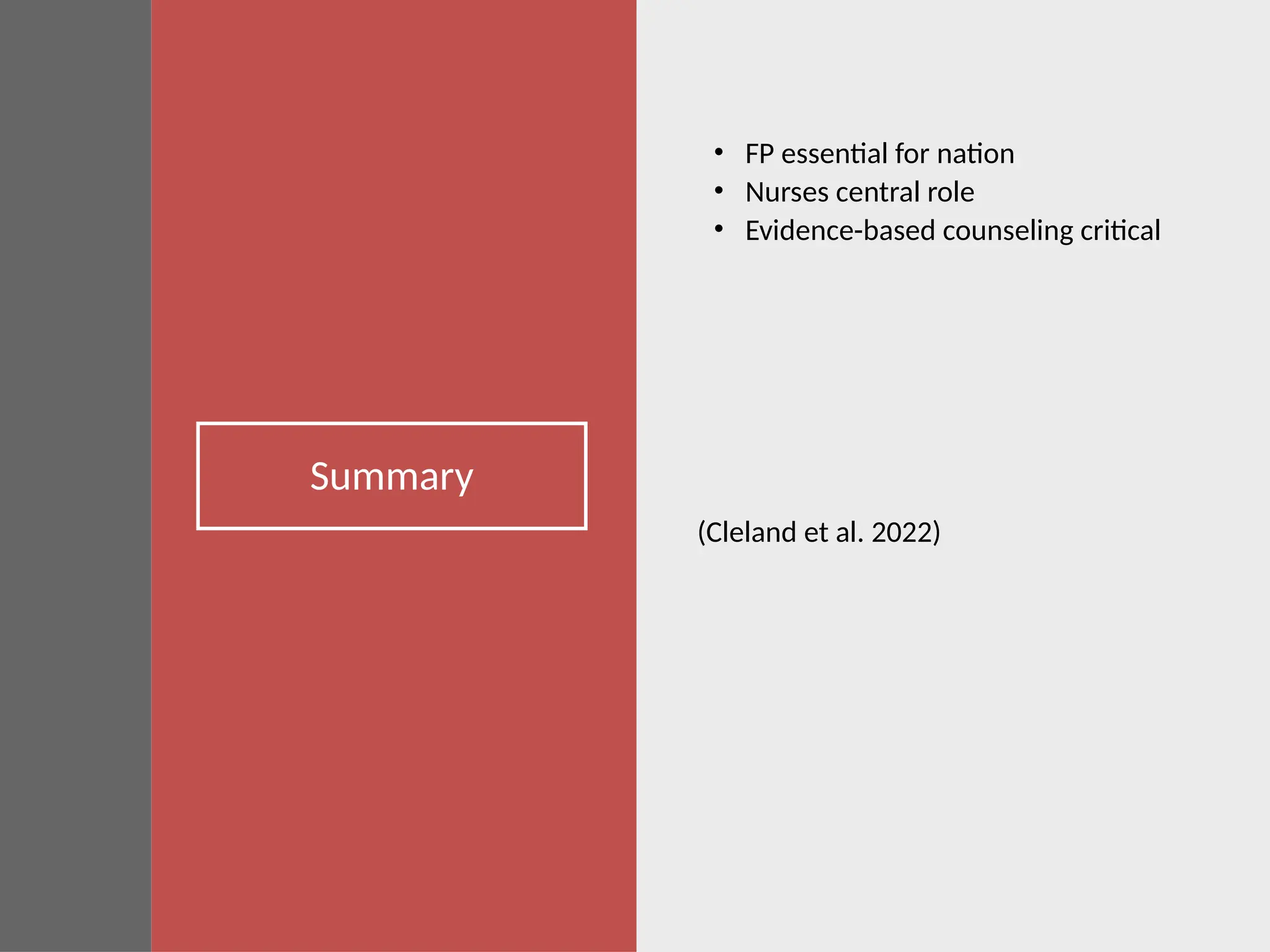
Summary
• FP essentialfor nation
• Nurses central role
• Evidence-based counseling critical
(Cleland et al. 2022)
33.
References
• WHO 2022;
•UNFPA 2024;
• NIPS 2019;
• : PBS 2025
• Population Council 2023;
Cleland et al. 2022;
• Islamic Advisory Group 2018
• Nadeem, M., et al. (2021).
"Women Decision Making
Autonomy as a Facilitating Factor
for Contraceptive Use for Family
Planning in Pakistan." Social
Indicators Research 156(1): 71-89