WHO AM I
SHAHEE
MIRZA
▪Co-Founder & Chief Cyber Operations Officer, BEETLES
Cyber Security
▪ GIAC Advisory Board Member
▪ ISC2 Unified Body of Knowledge (UBK) - Lead Editor
▪ 20+ Years of Offensive Security Experience
▪ CISSP, GRTP, CISSO, CCISO
3.
AGENDA
• Understanding OffensiveOperations
• Case Study of a Notable Operation
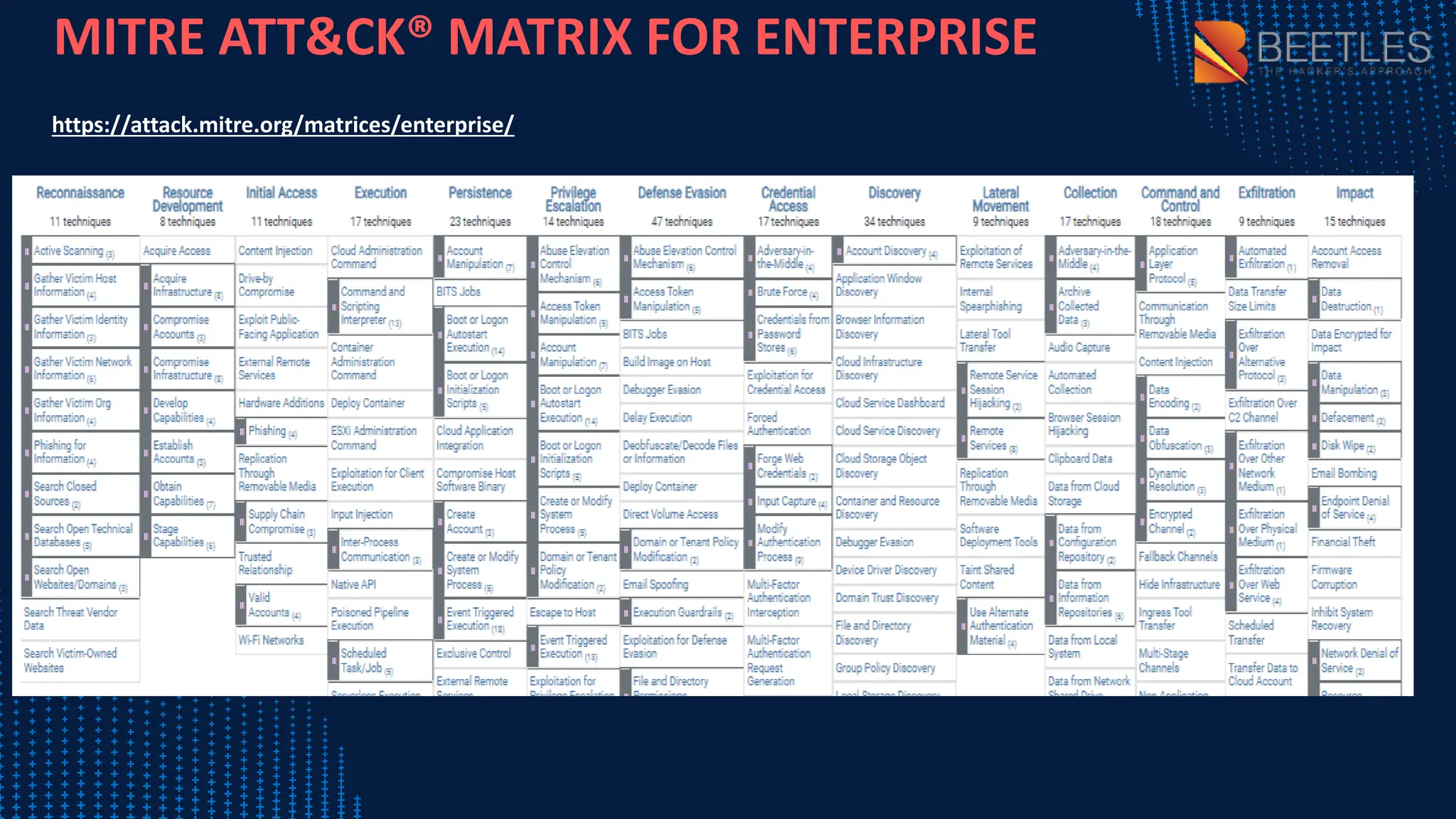
• Tactics, Techniques and Procedures (TTPs)
• Key Takeaways
• Source of Knowledge
4.
“If you knowthe enemy and know yourself, you need
not fear the result of a hundred battles. If you know
yourself but not the enemy, for every victory gained you
will also suffer a defeat. If you know neither the enemy
nor yourself. You will succumb in every battle.”
-Sun Tzu | The Art of War
5.
Offensive Operations isthe art and science of thinking like an
attacker to strengthen defense. It goes beyond vulnerability
scanning or penetration testing. It is about emulating real
adversaries, understanding how they move through networks, and
uncovering the blind spots defenders miss.
In simple terms, it is ethical hacking with a purpose. The goal is to
identify, exploit, and demonstrate risks before real attackers do.
8.
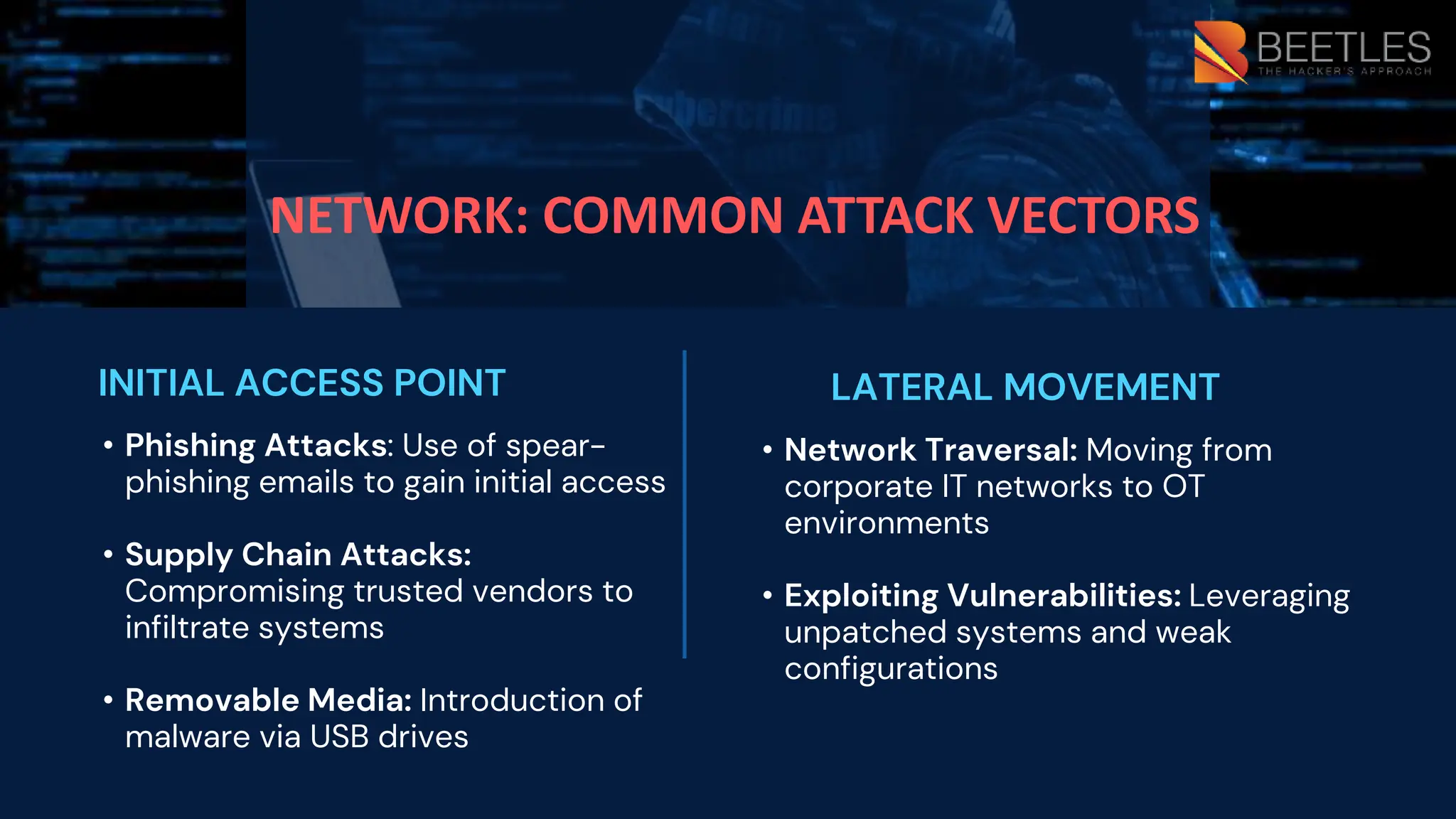
NETWORK: COMMON ATTACKVECTORS
INITIAL ACCESS POINT
• Phishing Attacks: Use of spear-
phishing emails to gain initial access
• Supply Chain Attacks:
Compromising trusted vendors to
infiltrate systems
• Removable Media: Introduction of
malware via USB drives
LATERAL MOVEMENT
• Network Traversal: Moving from
corporate IT networks to OT
environments
• Exploiting Vulnerabilities: Leveraging
unpatched systems and weak
configurations
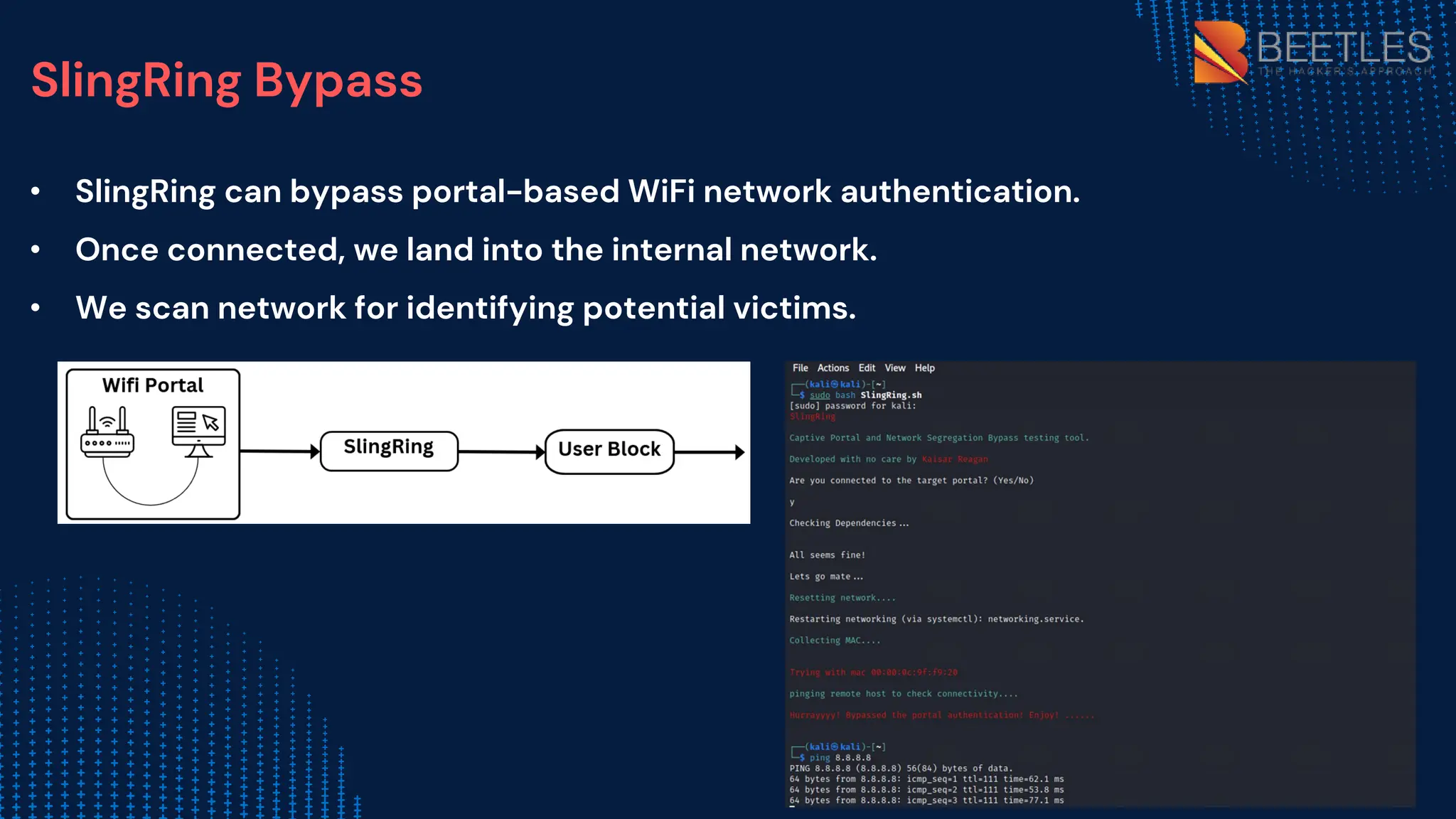
SlingRing Bypass
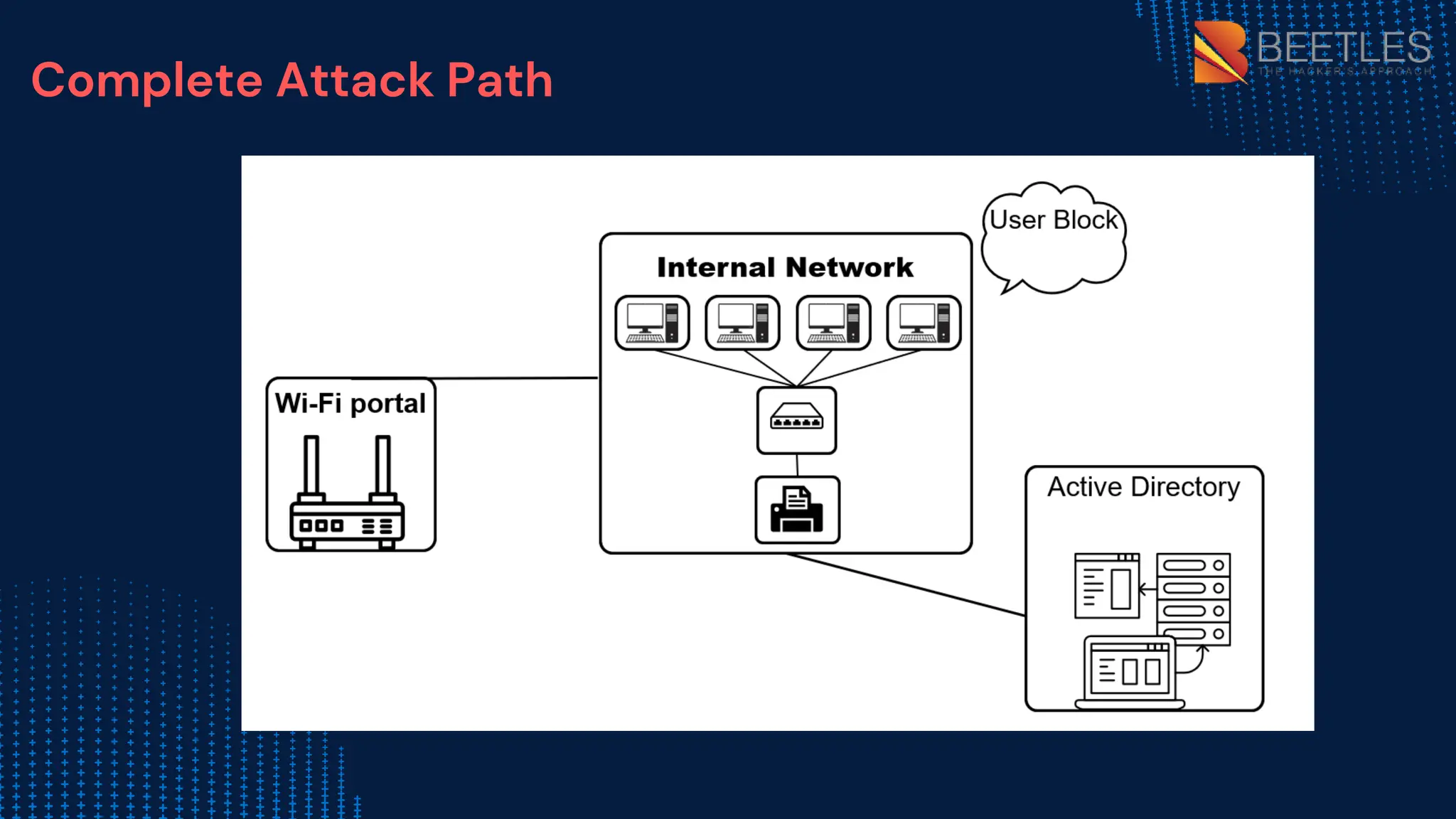
• SlingRingcan bypass portal-based WiFi network authentication.
• Once connected, we land into the internal network.
• We scan network for identifying potential victims.
14.
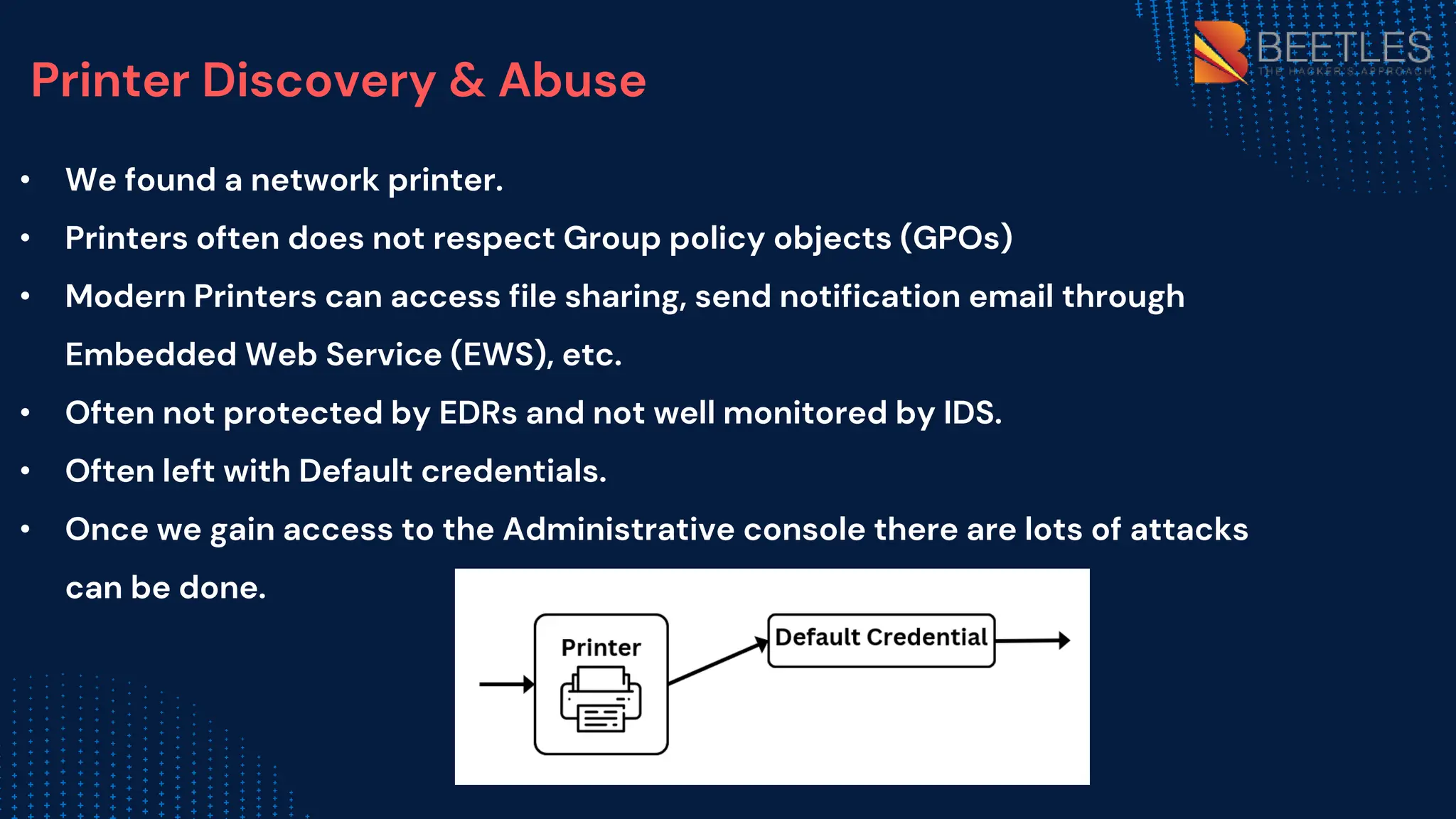
Printer Discovery &Abuse
• We found a network printer.
• Printers often does not respect Group policy objects (GPOs)
• Modern Printers can access file sharing, send notification email through
Embedded Web Service (EWS), etc.
• Often not protected by EDRs and not well monitored by IDS.
• Often left with Default credentials.
• Once we gain access to the Administrative console there are lots of attacks
can be done.
15.
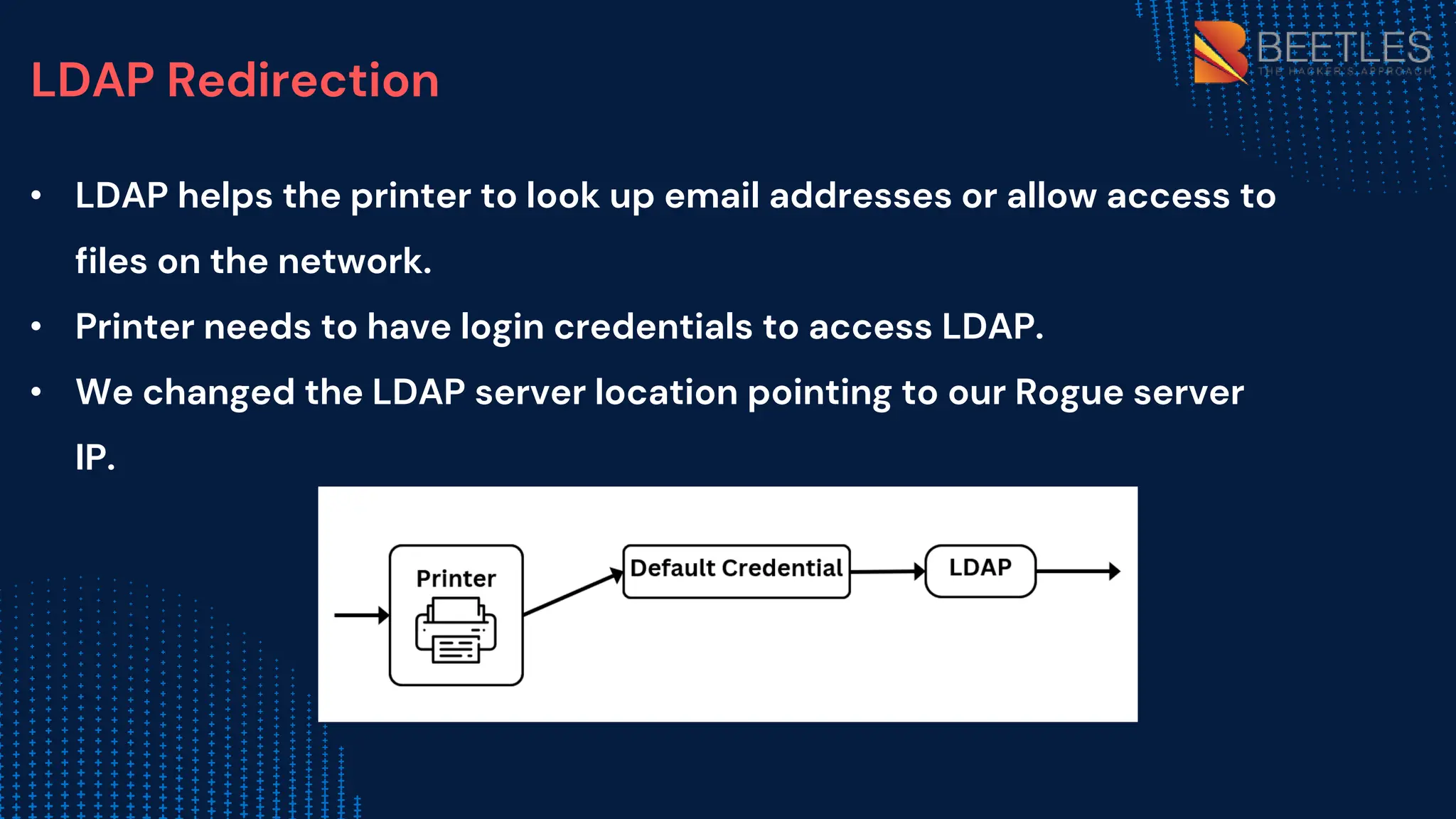
LDAP Redirection
• LDAPhelps the printer to look up email addresses or allow access to
files on the network.
• Printer needs to have login credentials to access LDAP.
• We changed the LDAP server location pointing to our Rogue server
IP.
16.
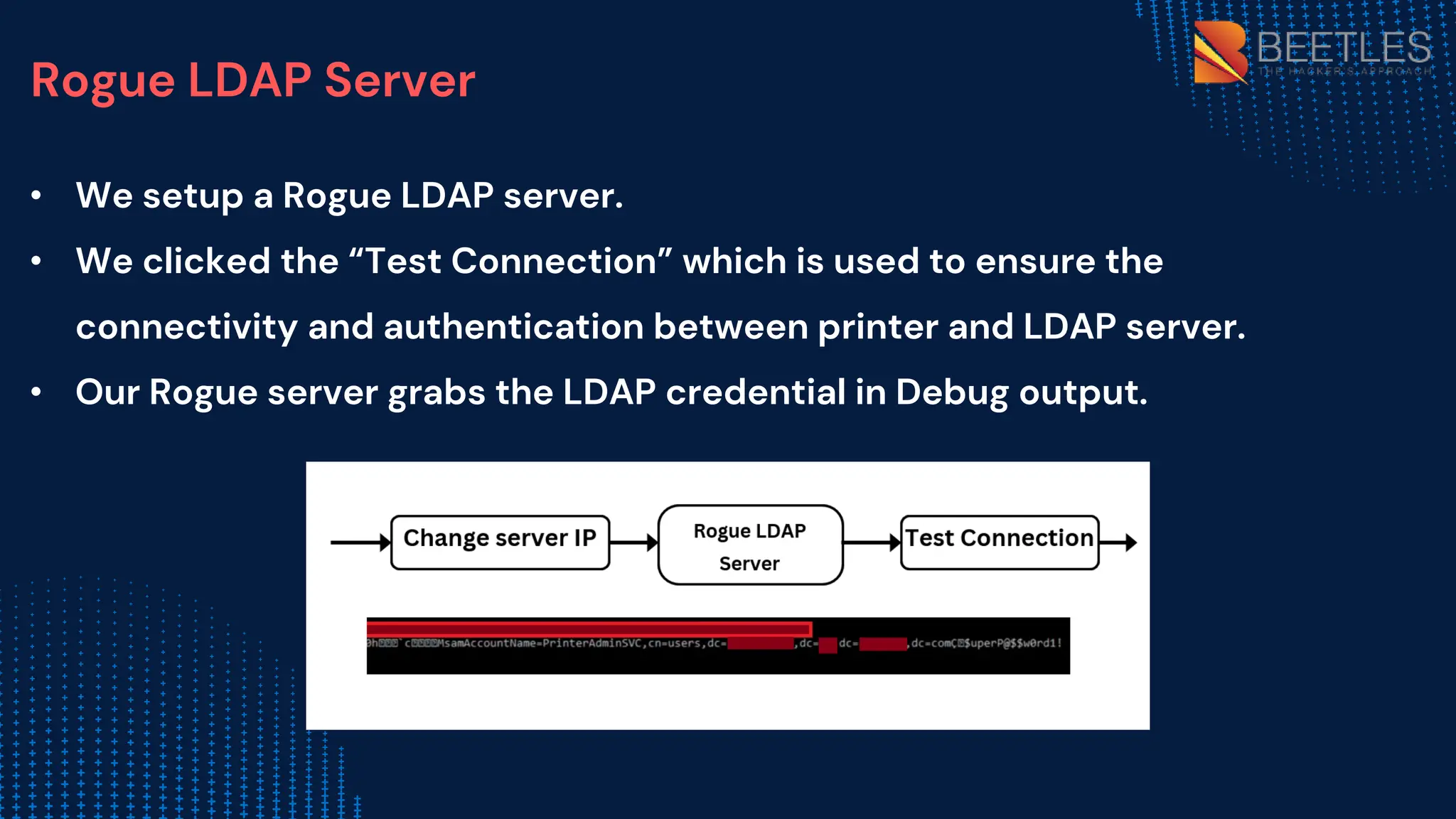
Rogue LDAP Server
•We setup a Rogue LDAP server.
• We clicked the “Test Connection” which is used to ensure the
connectivity and authentication between printer and LDAP server.
• Our Rogue server grabs the LDAP credential in Debug output.
17.
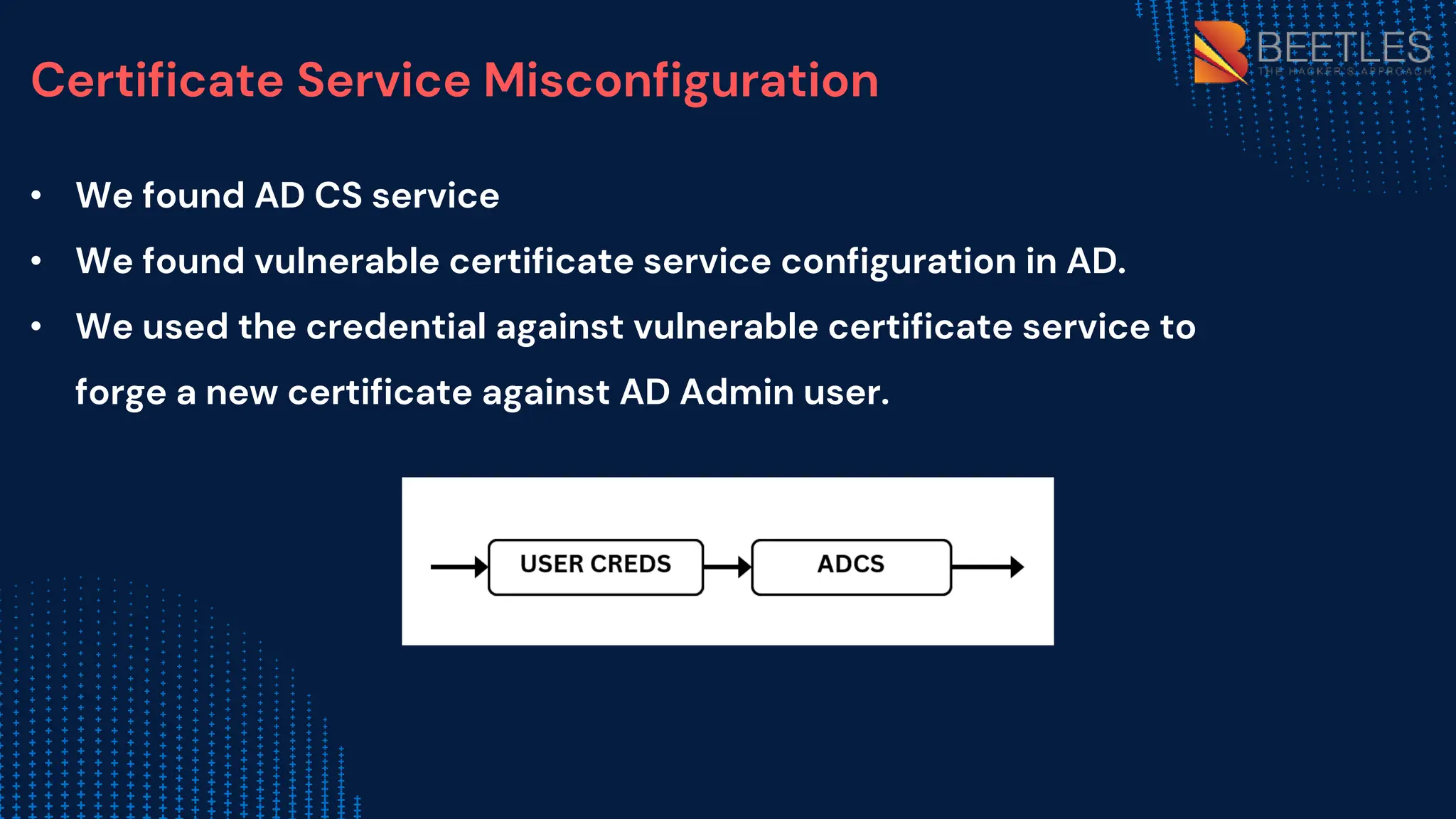
Certificate Service Misconfiguration
•We found AD CS service
• We found vulnerable certificate service configuration in AD.
• We used the credential against vulnerable certificate service to
forge a new certificate against AD Admin user.
18.
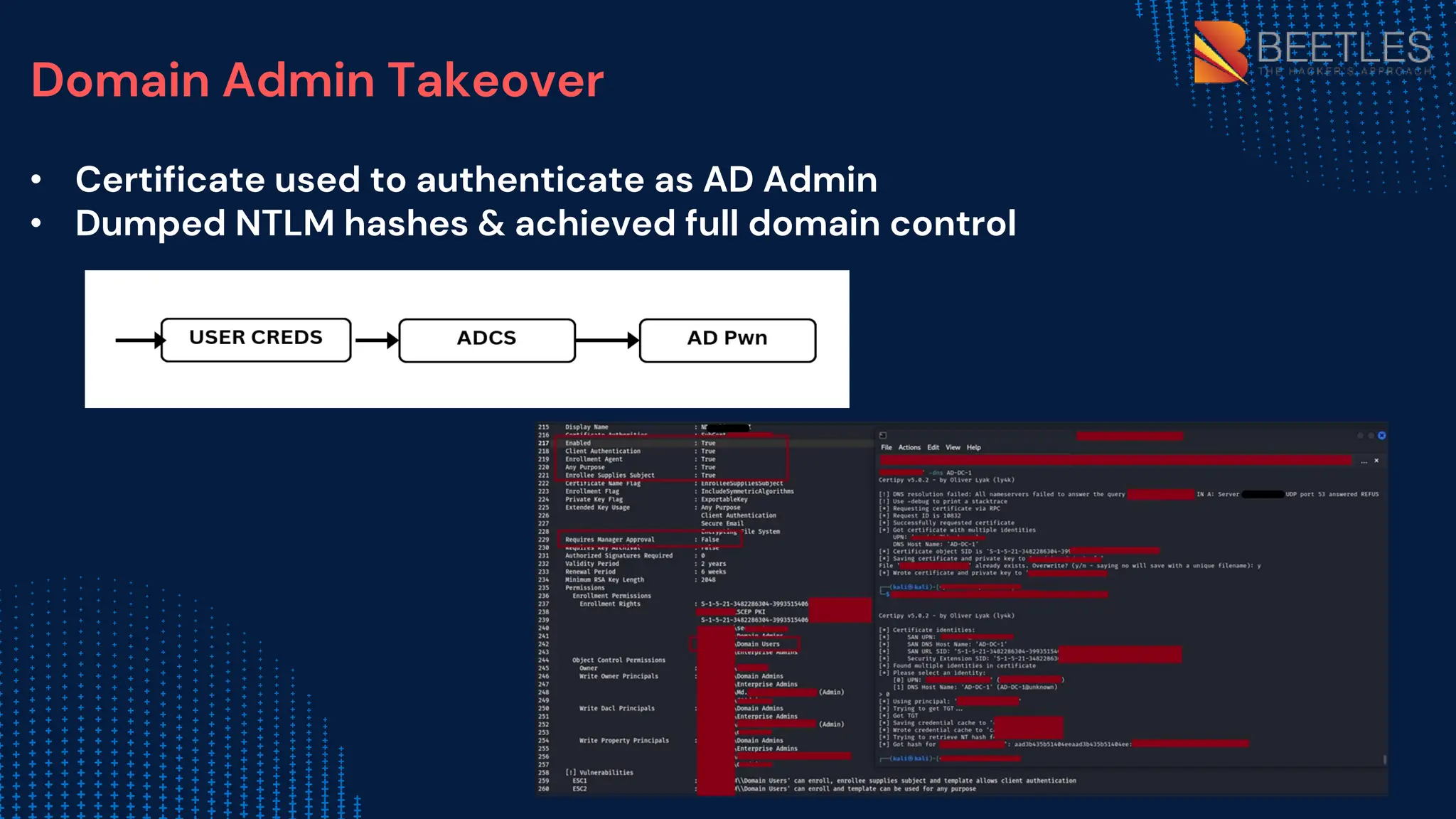
Domain Admin Takeover
•Certificate used to authenticate as AD Admin
• Dumped NTLM hashes & achieved full domain control
Defensive Takeaways
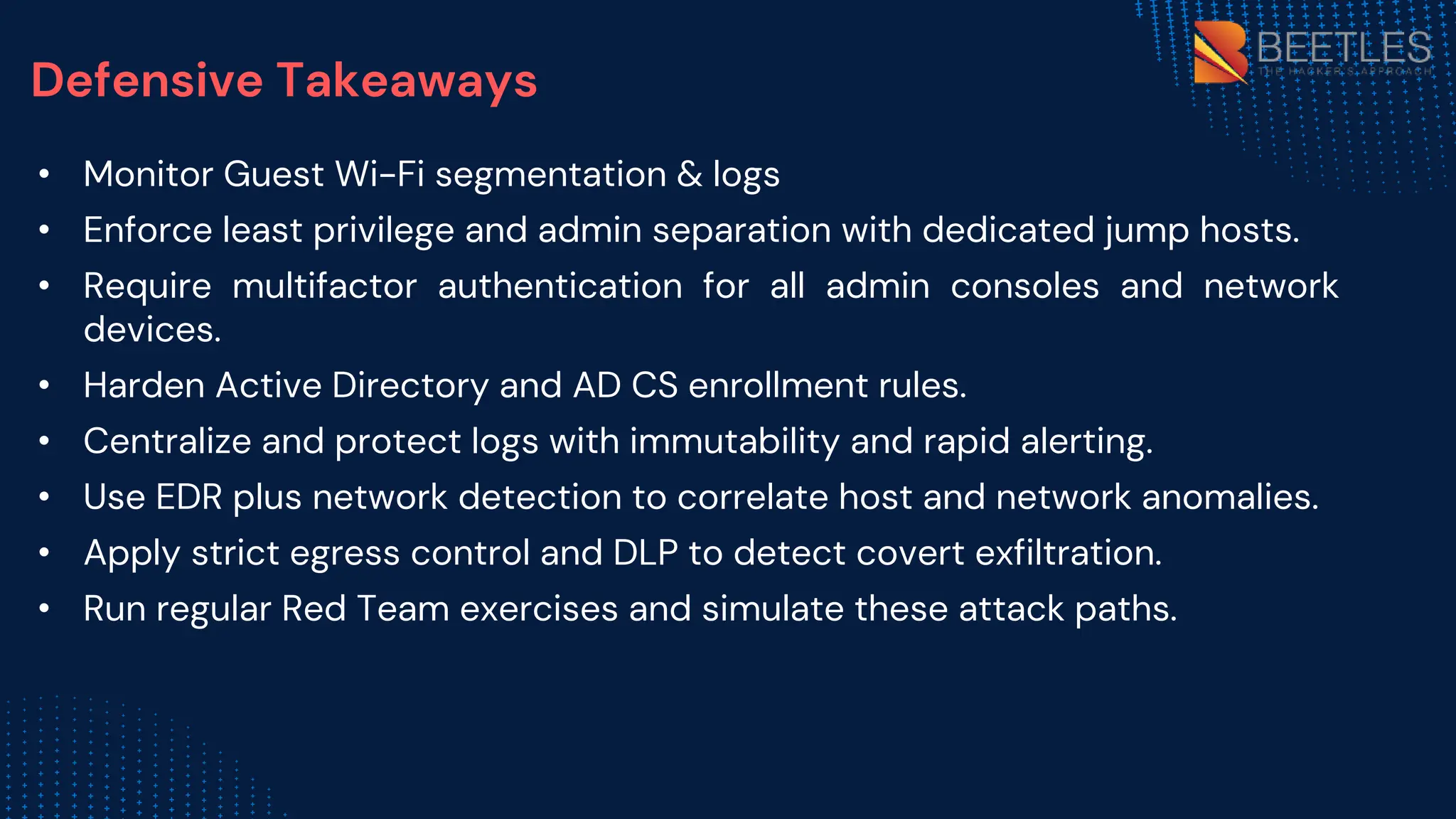
• MonitorGuest Wi-Fi segmentation & logs
• Enforce least privilege and admin separation with dedicated jump hosts.
• Require multifactor authentication for all admin consoles and network
devices.
• Harden Active Directory and AD CS enrollment rules.
• Centralize and protect logs with immutability and rapid alerting.
• Use EDR plus network detection to correlate host and network anomalies.
• Apply strict egress control and DLP to detect covert exfiltration.
• Run regular Red Team exercises and simulate these attack paths.







![Taking the Attacker Eviction Red Pill [updated]](https://cdn.slidesharecdn.com/ss_thumbnails/2018-06-26first-hommedalapt-eviction-red-pillfinal-v1-181123184926-thumbnail.jpg?width=640&height=640&fit=bounds)


![[Bucharest] Attack is easy, let's talk defence](https://cdn.slidesharecdn.com/ss_thumbnails/attackiseasyletstalkdefencev3-151026104559-lva1-app6891-thumbnail.jpg?width=640&height=640&fit=bounds)


![Automating ISP Networks Using Ansible and IPAM as a Source of Truth [SoT]](https://cdn.slidesharecdn.com/ss_thumbnails/automatingispnetworksusingansibleandipamasasourceoftruthsot-v25-1-251124105117-d7d4ca24-thumbnail.jpg?width=640&height=640&fit=bounds)


