PRINCIPLES OF DESIGN
AND ELEMENTS OF ARTS
QUESTIONS…
• Do you know that there were several areas in which
impressionist artists moved away from the established
practices of art at that time?
QUESTIONS…
• Do you know that there were several areas in which
impressionist artists moved away from the established
practices of art at that time?
These involved their use of color, choice of subject
matter and setting, and technique for capturing light
and conveying movement.
OBJECTIVES
1. identify the different principles of design and the elements of
arts present in the various art movements;
2. appreciate the different principles of design and the details of
arts; and
3. create your artwork by applying the principles of design and
the elements of arts-based on the example of arts.
PRE-TEST ACTIVITY
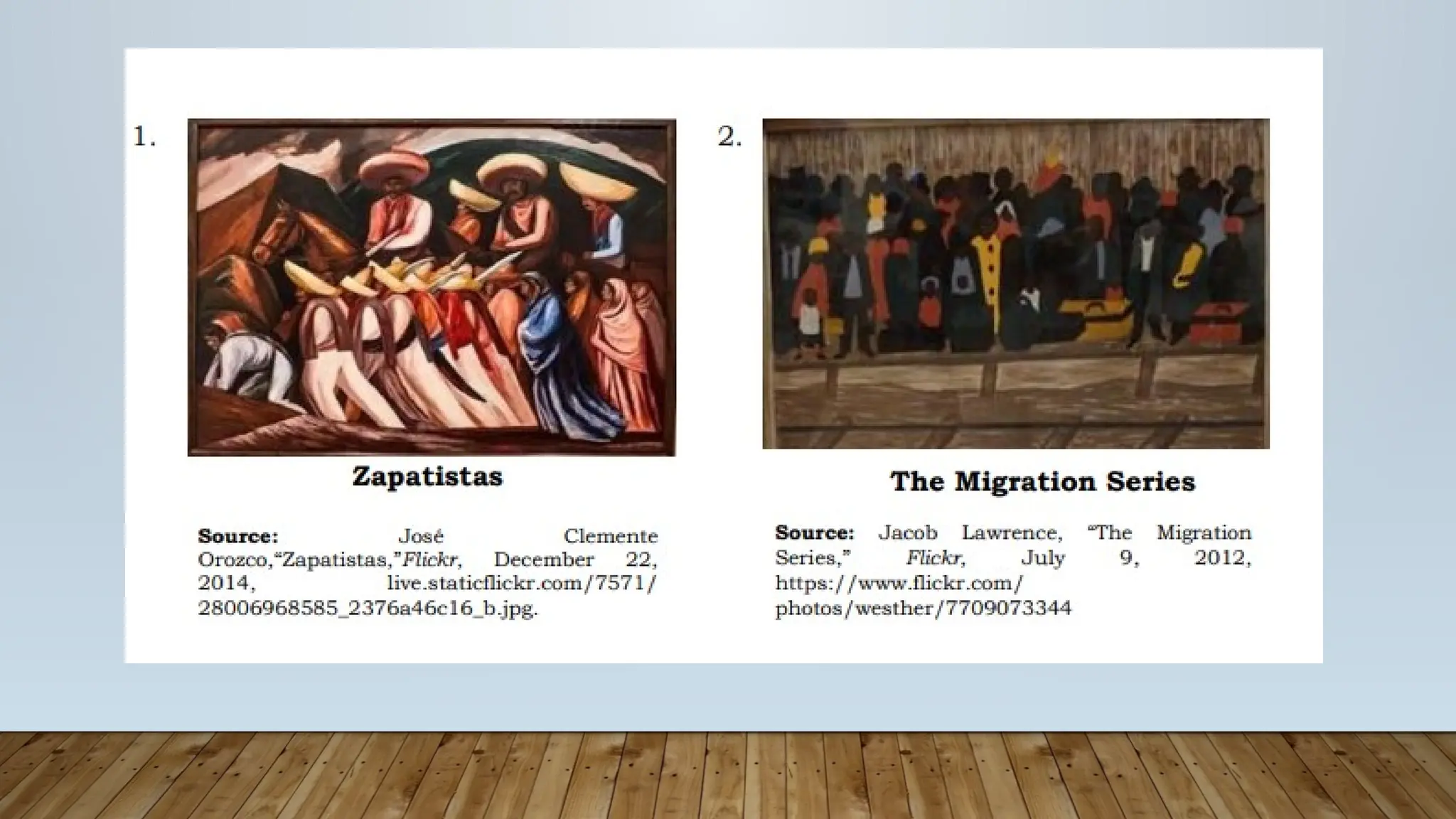
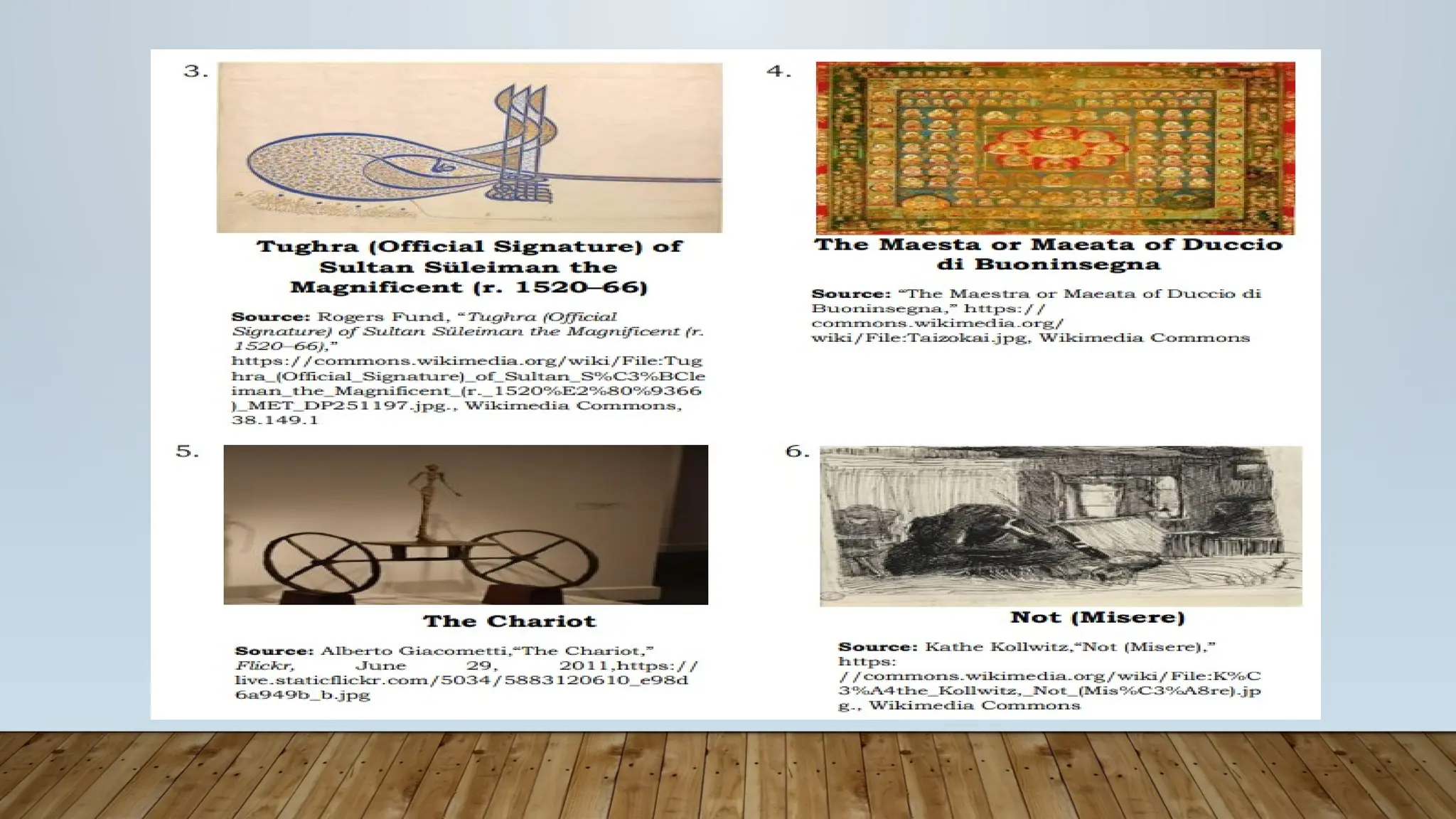
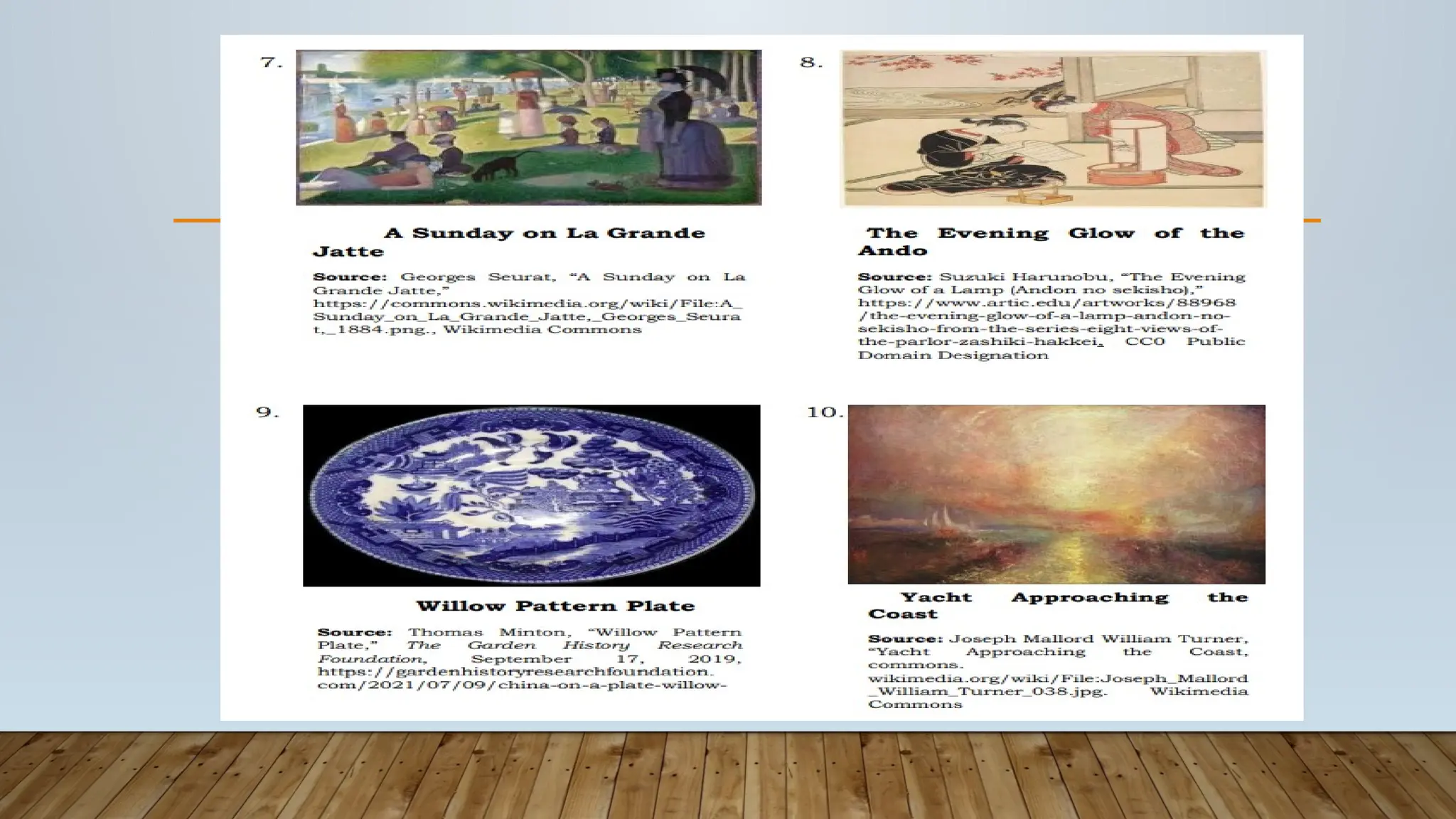
Directions: Use the pictures below to check how much you
know about this topic. Classify them according to what principle
of design they belong to.Write your answer in your notebook.
CHOOSEYOUR ANSWER FROMTHE FOLLOWING:
Unity andVariety Scale and Proportion
Contrast Balance
Emphasis and subordination
Repetition and Rhythm
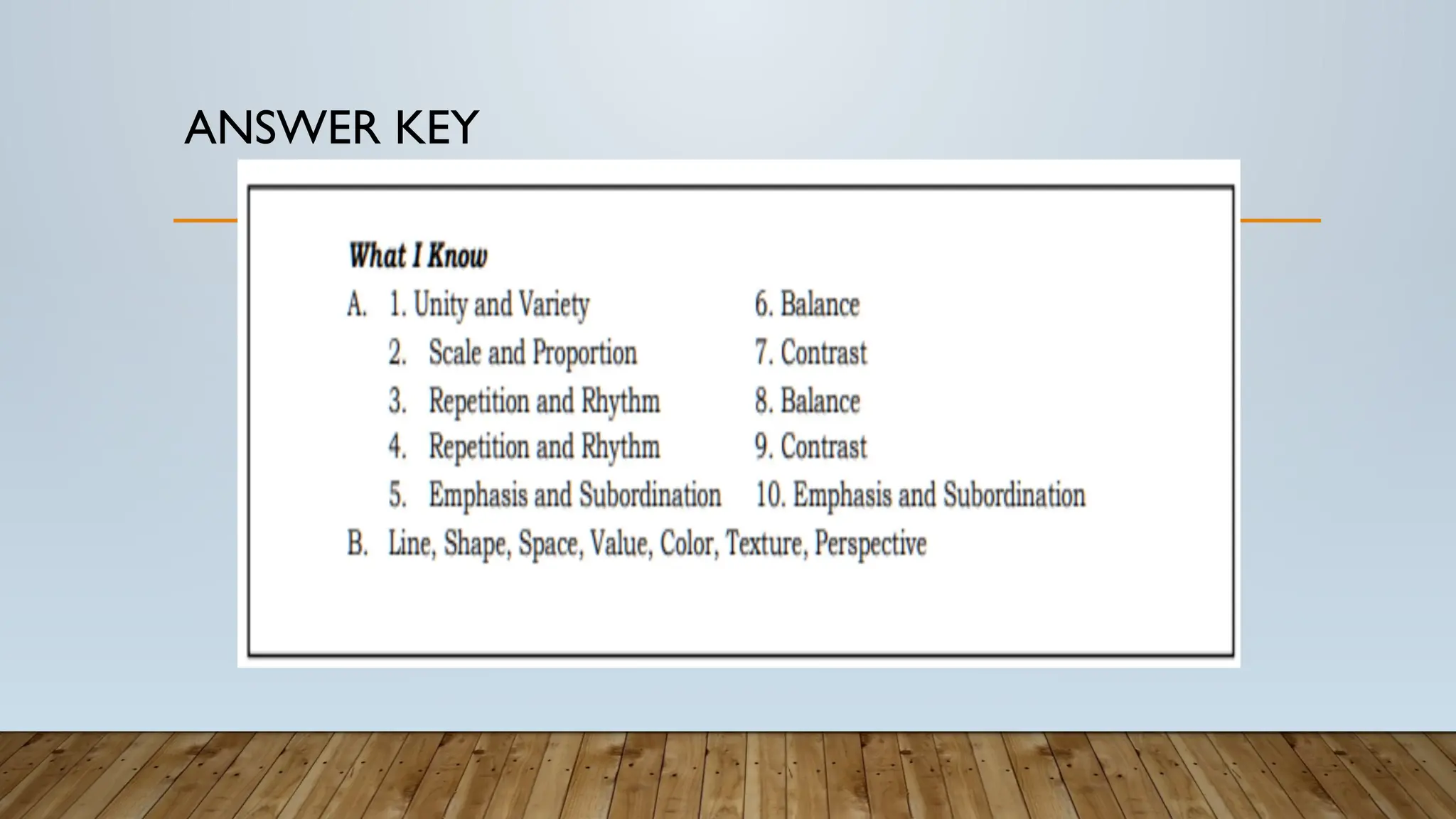
ANSWER KEY
PRINCIPLES OF
DESIGN
PRINCIPLES OF DESIGN
• Art can be seen in all aspects of life. It is everywhere. It can be
seen in our surroundings.The popular feeling about art is that it
exists only in concert halls, museums, and art galleries in a world
by itself, which are accessible only to those who can afford to pay
for its enjoyment or to the critics and scholars who take time to
study the art and objects of the art.
WHAT IS IT?
• The word design indicates both the process of organizing
visual elements and the product of that process. It is a
result of our basic need for meaningful order. Some
designs are so well integrated that they have qualities
beyond a mere sum of their parts. Such is said to be
beautiful, interesting, absorbing, or surprising.
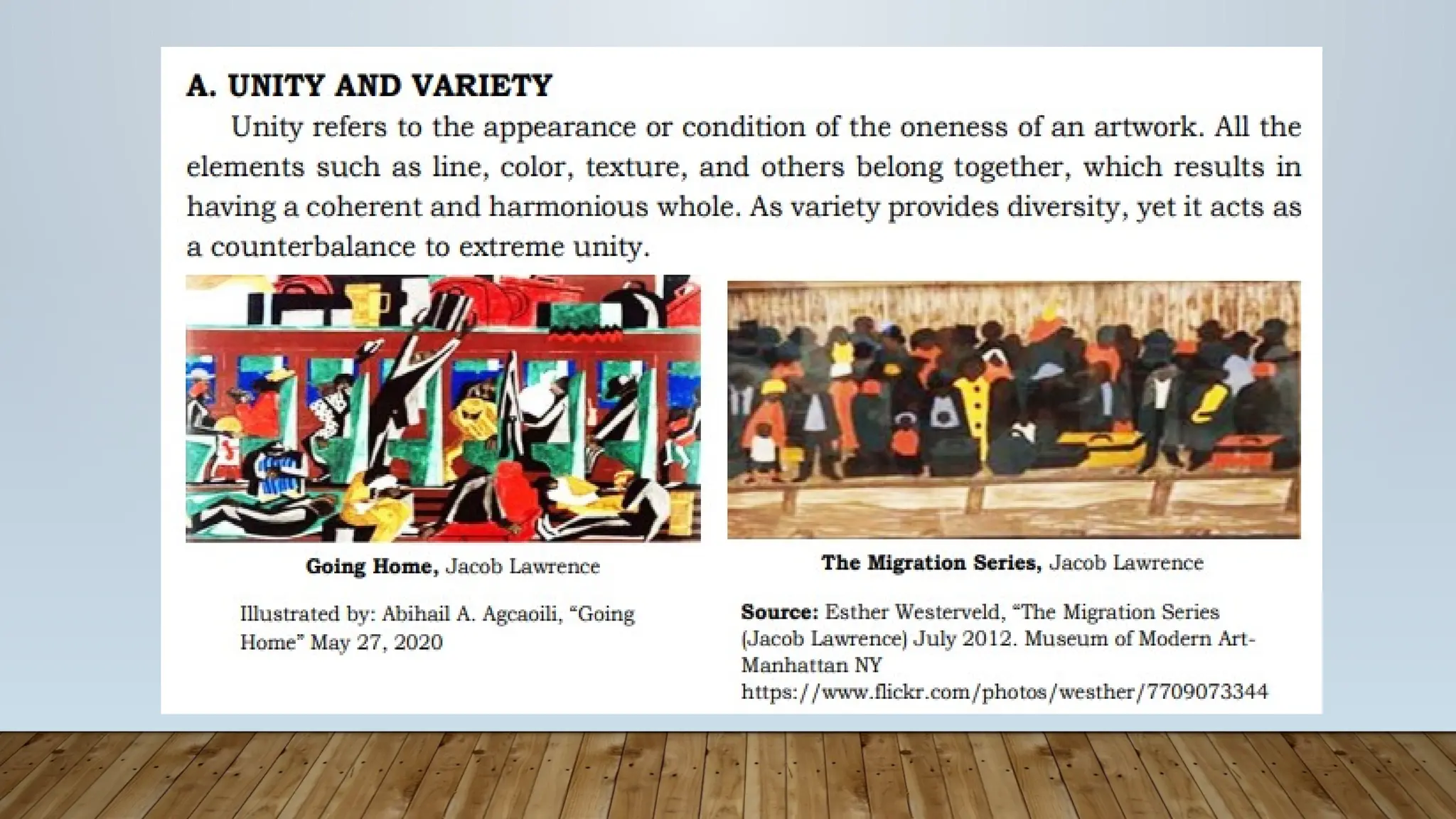
• Depicted in his works are the principles of design that
made his work beautiful, fascinating, and expressive.
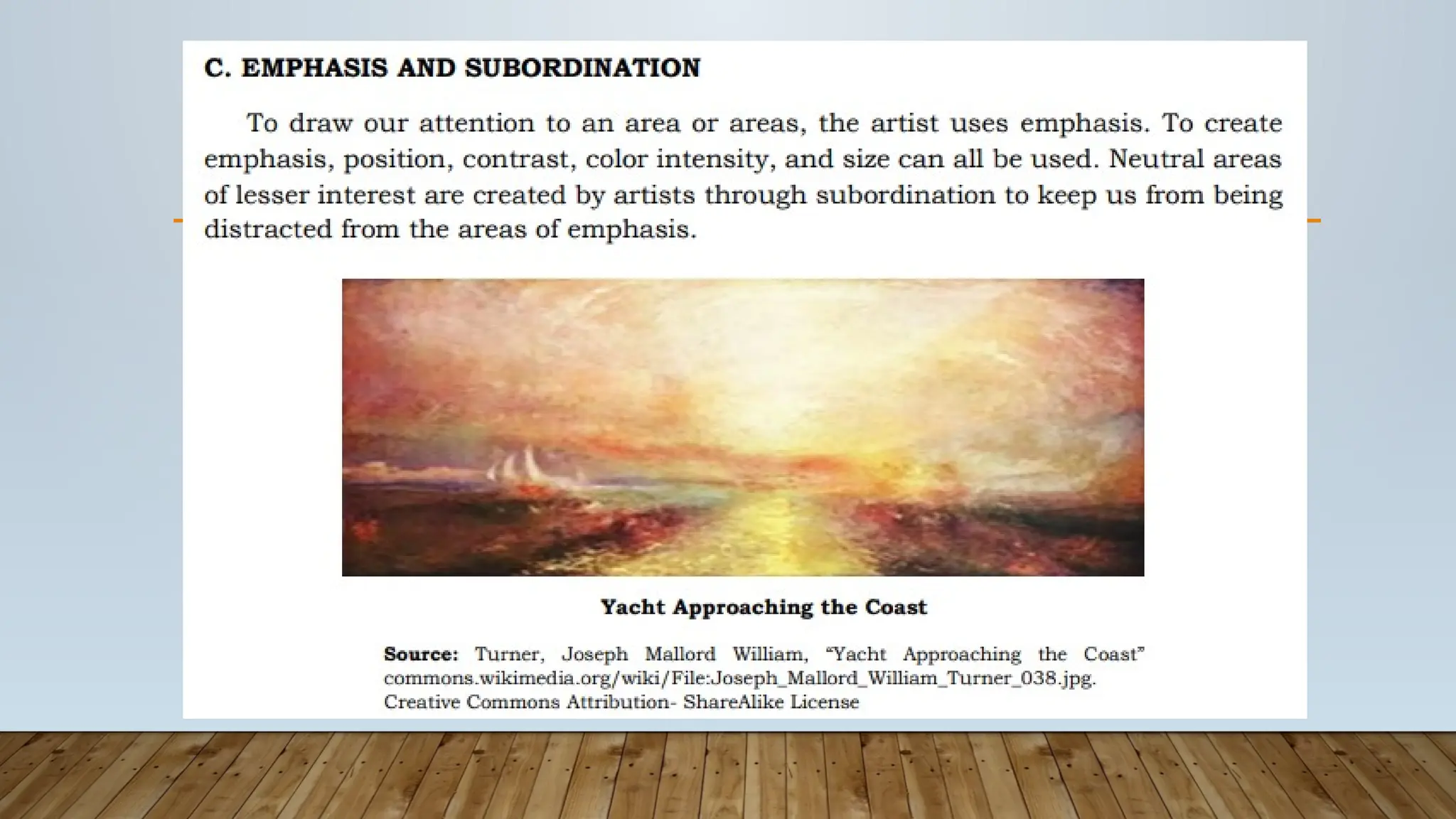
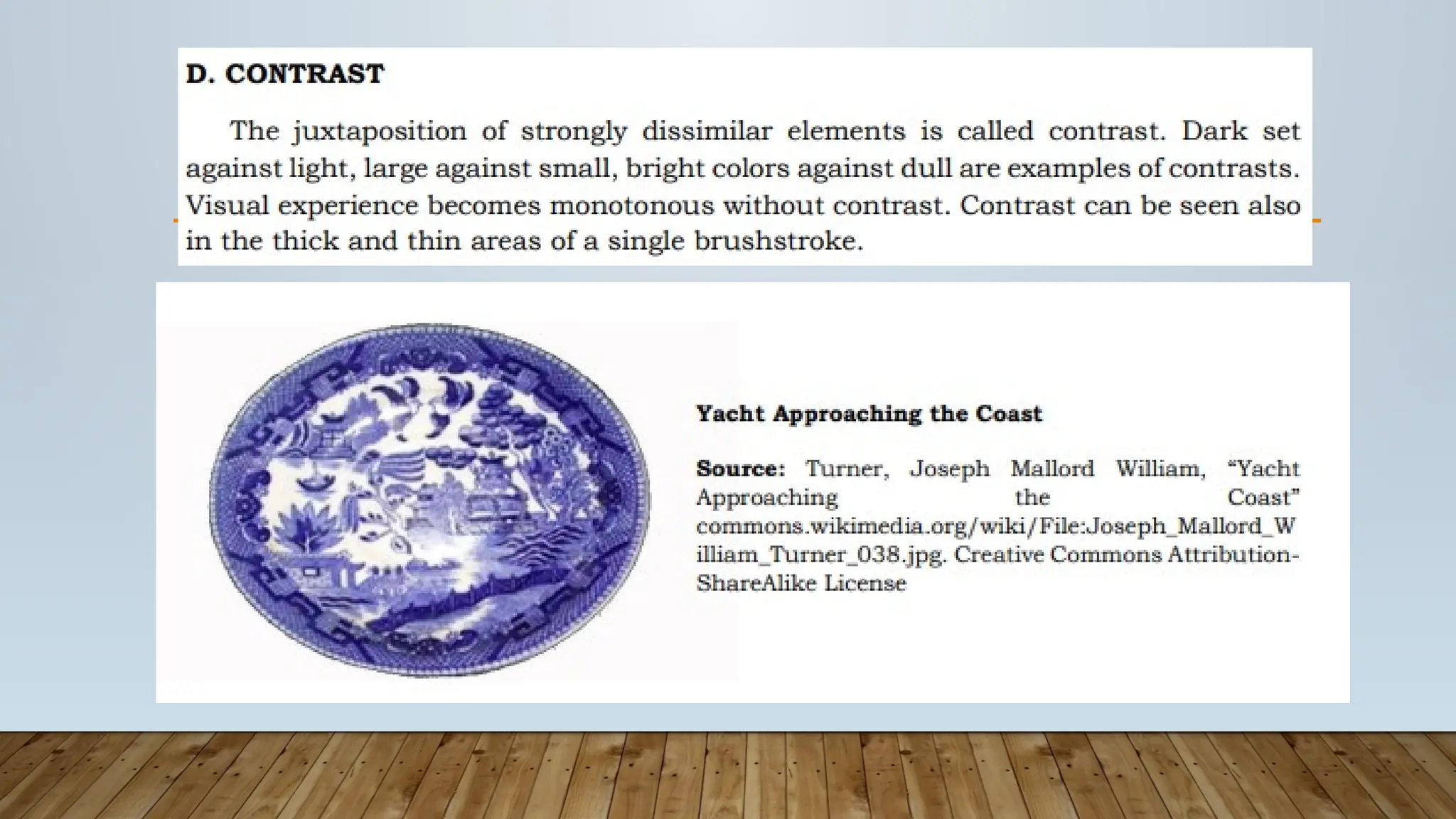
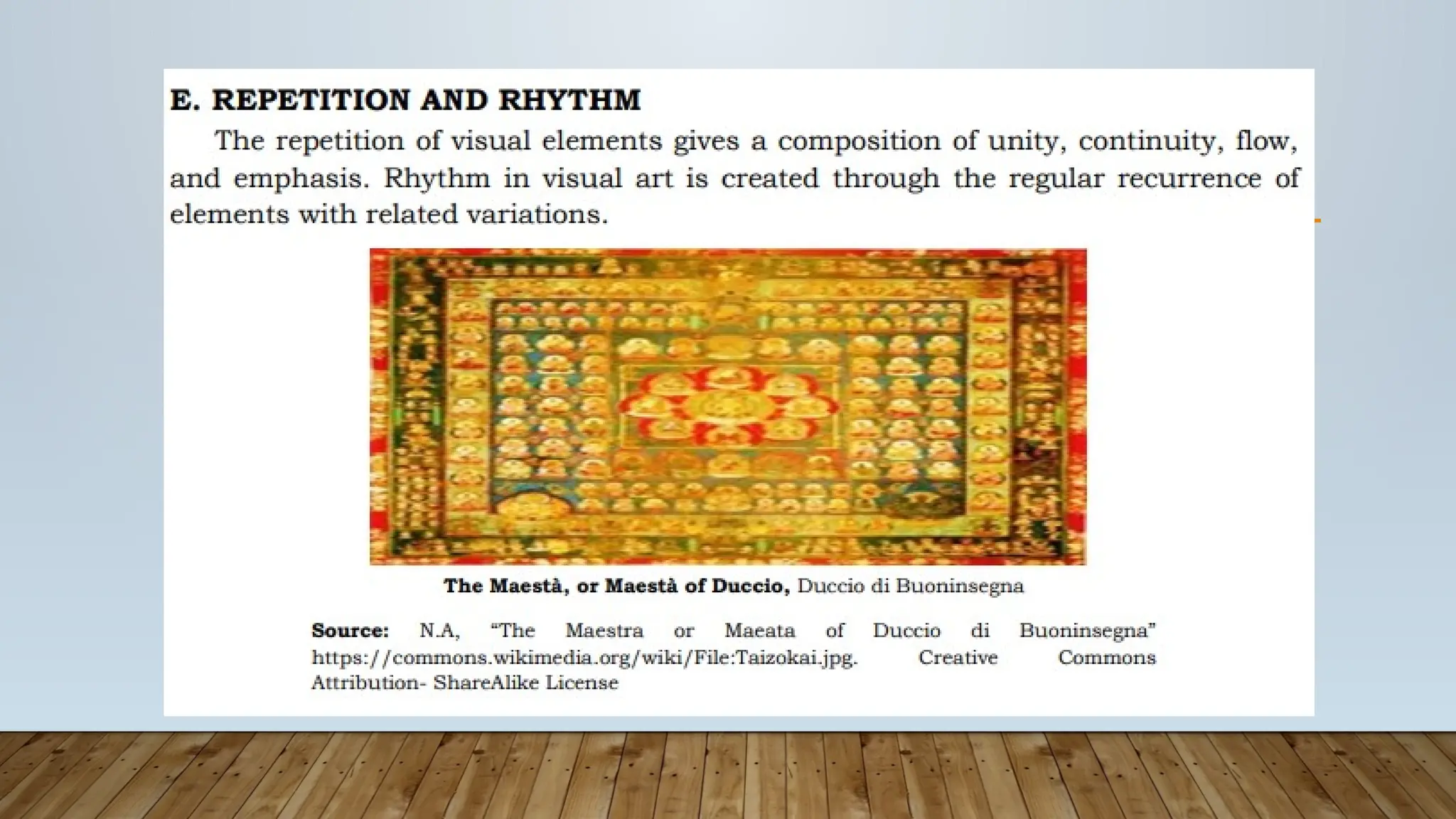
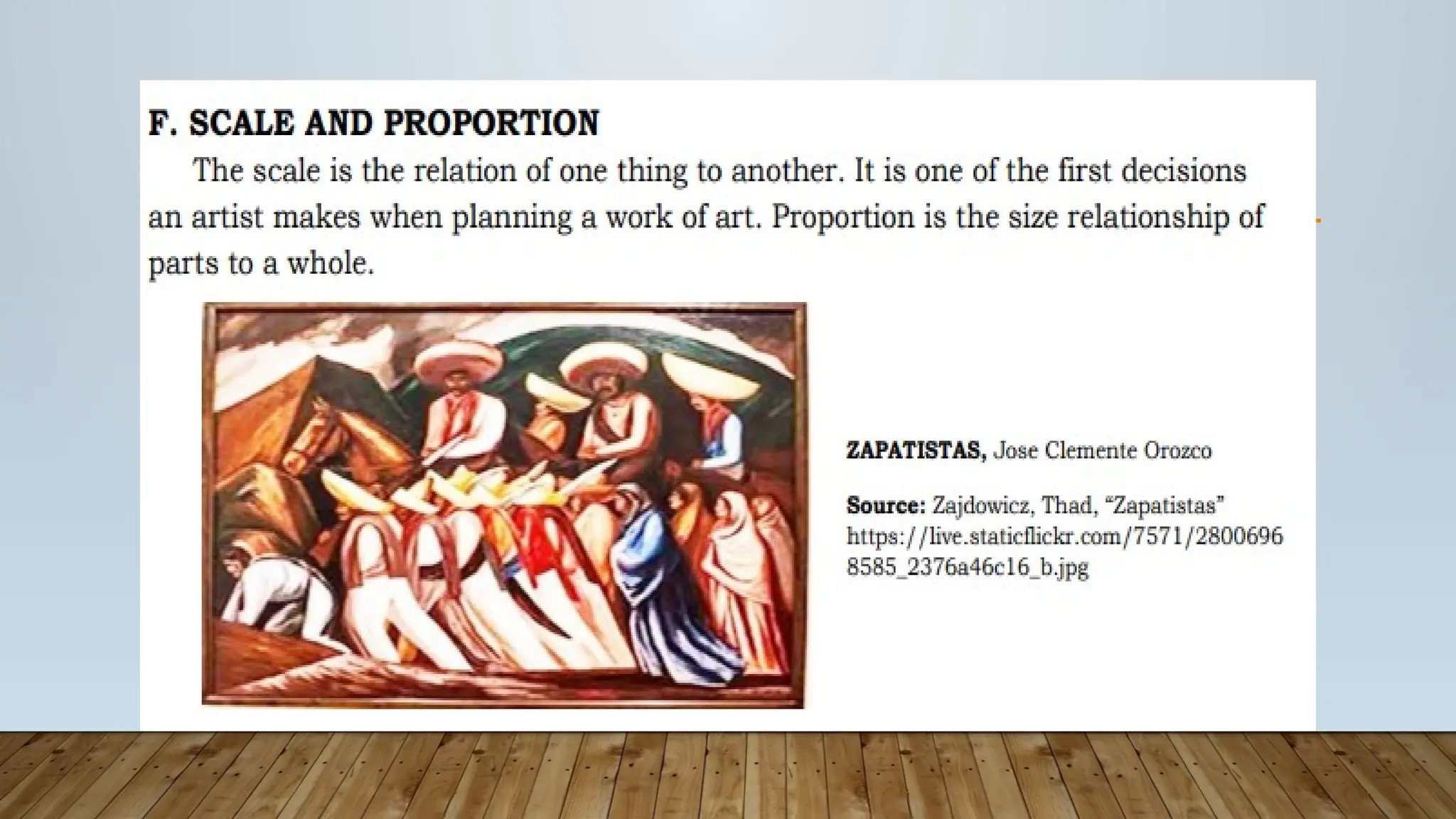
There are six principles of design: unity and variety,
balance, emphasis and subordination, contrast,
repetition and rhythm, and scale and proportion.
• The visual themes were established with the use of
lines, shapes, and colors.The many figures and the
objects in the complex compositions of Lawrence
formed a unified design through the artist's skillful use
of abstraction, theme, and variation.
ELEMENTS OF ARTS
• Medium and elements together are the materials the
artist uses in creating a work of art.The distinction
between them is easy to see but hard to define.An
element can be known only in some medium, but as
an element, it is independent of the medium
• When we study elements, we consider them with no attention to how we
can come into contact with a work of art.The elements are its qualities or
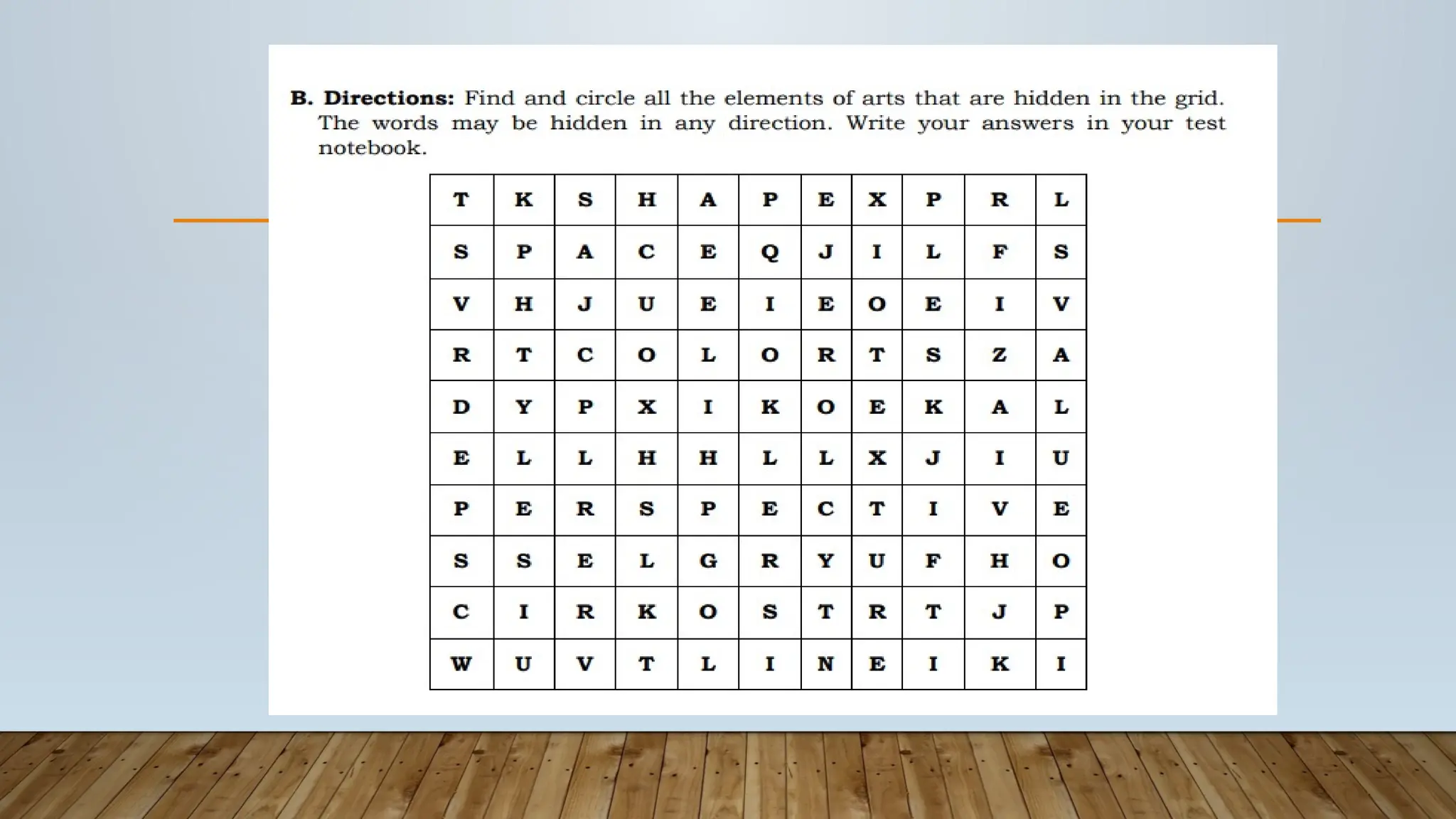
properties.The seven elements of art are:
1. Line
2. Shape
3. Space
4.Value
5. Color
6.Texture
7. Perspective
•We now look with greater care at the
elements of the visual arts as a kind of
basic language with which the artist's
work.
1. LINE
•The line is our basic means for recording and
symbolizing ideas, observations, and feelings; it is
a primary means of visual communication. Lines
always have direction.They are always active.
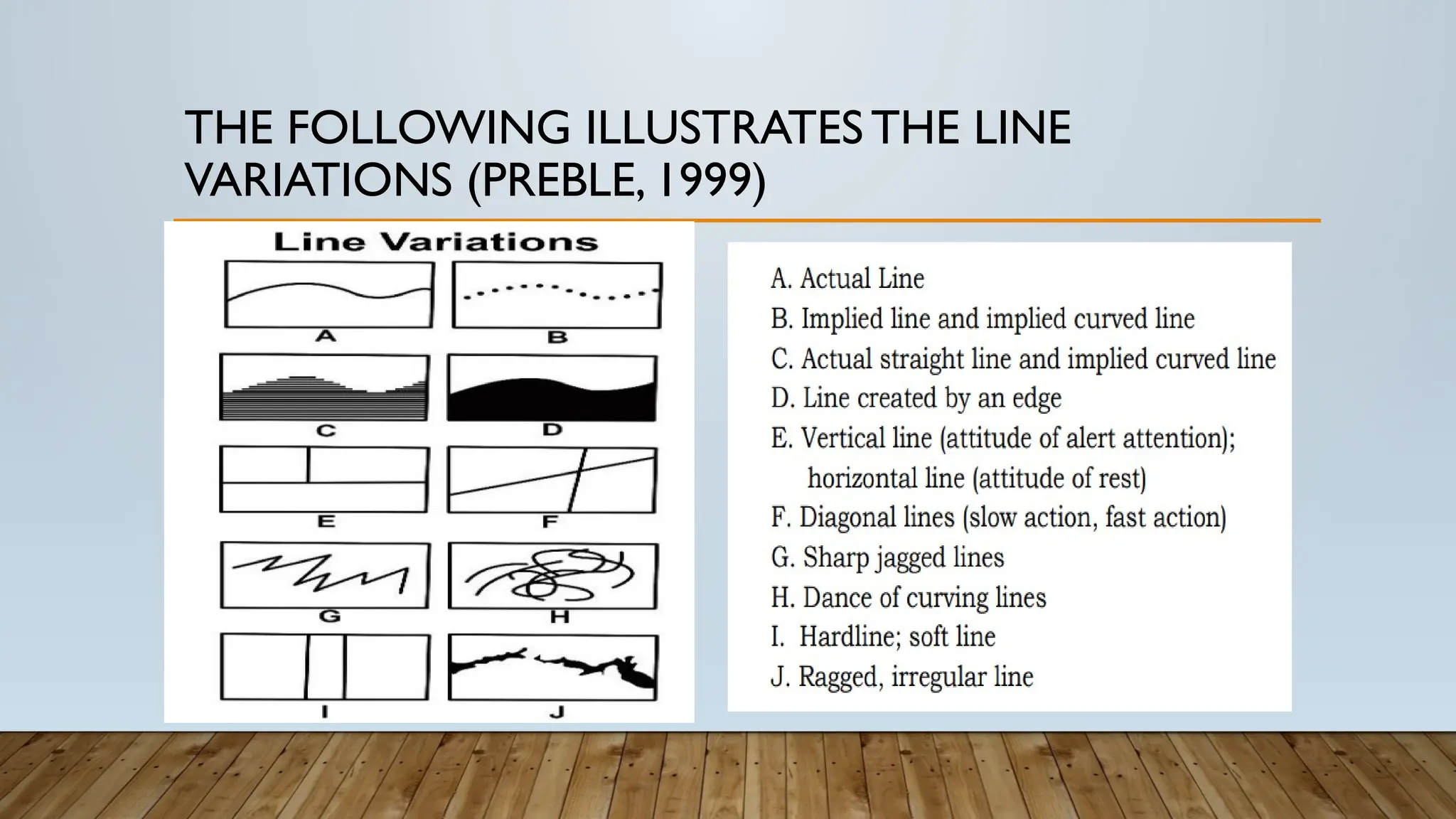
THE FOLLOWING ILLUSTRATESTHE LINE
VARIATIONS (PREBLE, 1999)
2. SHAPE
• Shape refers to the expanse within the outline of a two-
dimensional area or within the outer boundaries of a
three-dimensional object. It may be geometric, which tends
to be precise or regular (circles, triangles, squares) or
organic, which are irregular, often curving or rounded, and
seem relaxed and more informal.
2. SHAPE
• Most common shapes in the human-made world are geometric,
while most shapes in nature are organic.
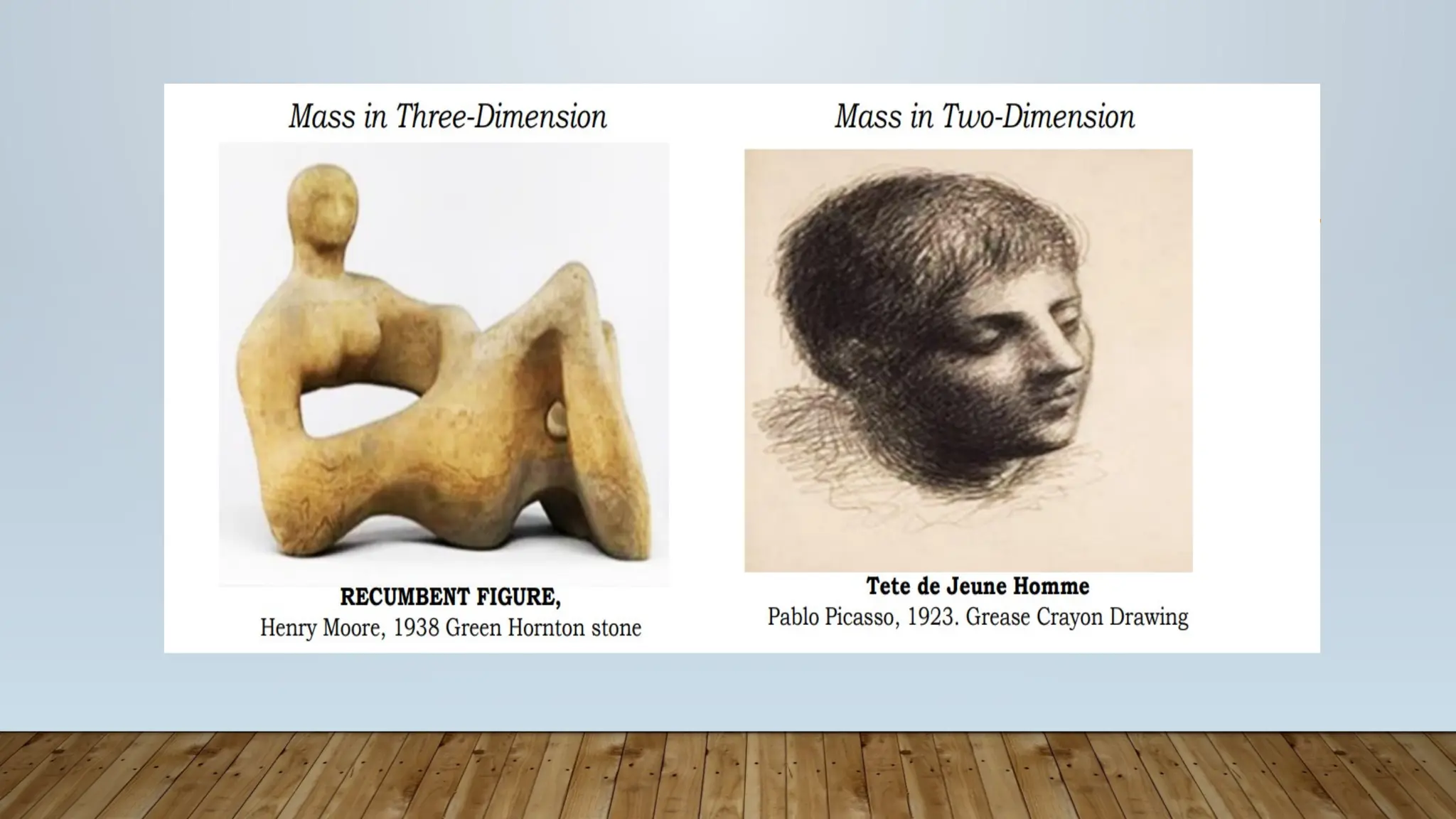
• Mass is a physical bulk of solid body material, and it has a
three-dimensional area
3. SPACE
•Space is the indefinable, general receptacle of all
things. It is continuous, infinite, and ever-present.
The visual arts are sometimes referred to as
spatial arts because most of the art forms are
organized in space.
3. SPACE
• Architects are mainly concerned with space.
• With three-dimensional objects such as in architecture and sculpture, one
has to move around to get a full experience of three-dimensional space.
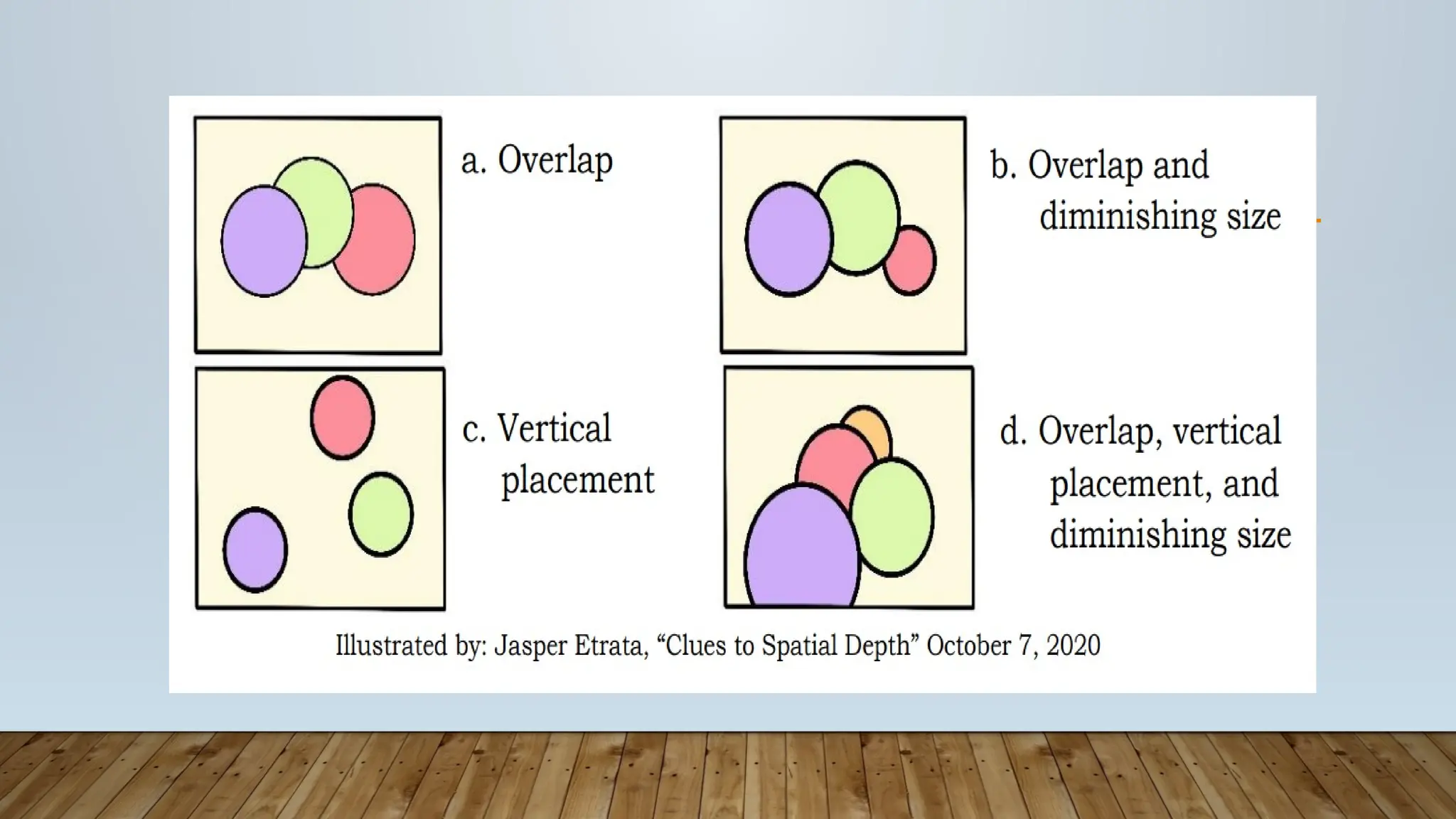
• With two-dimensional works, such as drawings, prints, photographs, and
paintings, the actual space is defined by its edges- usually the
twodimensions of height and width. The illusion of third-dimension in
two-dimensional works is spatial depth.
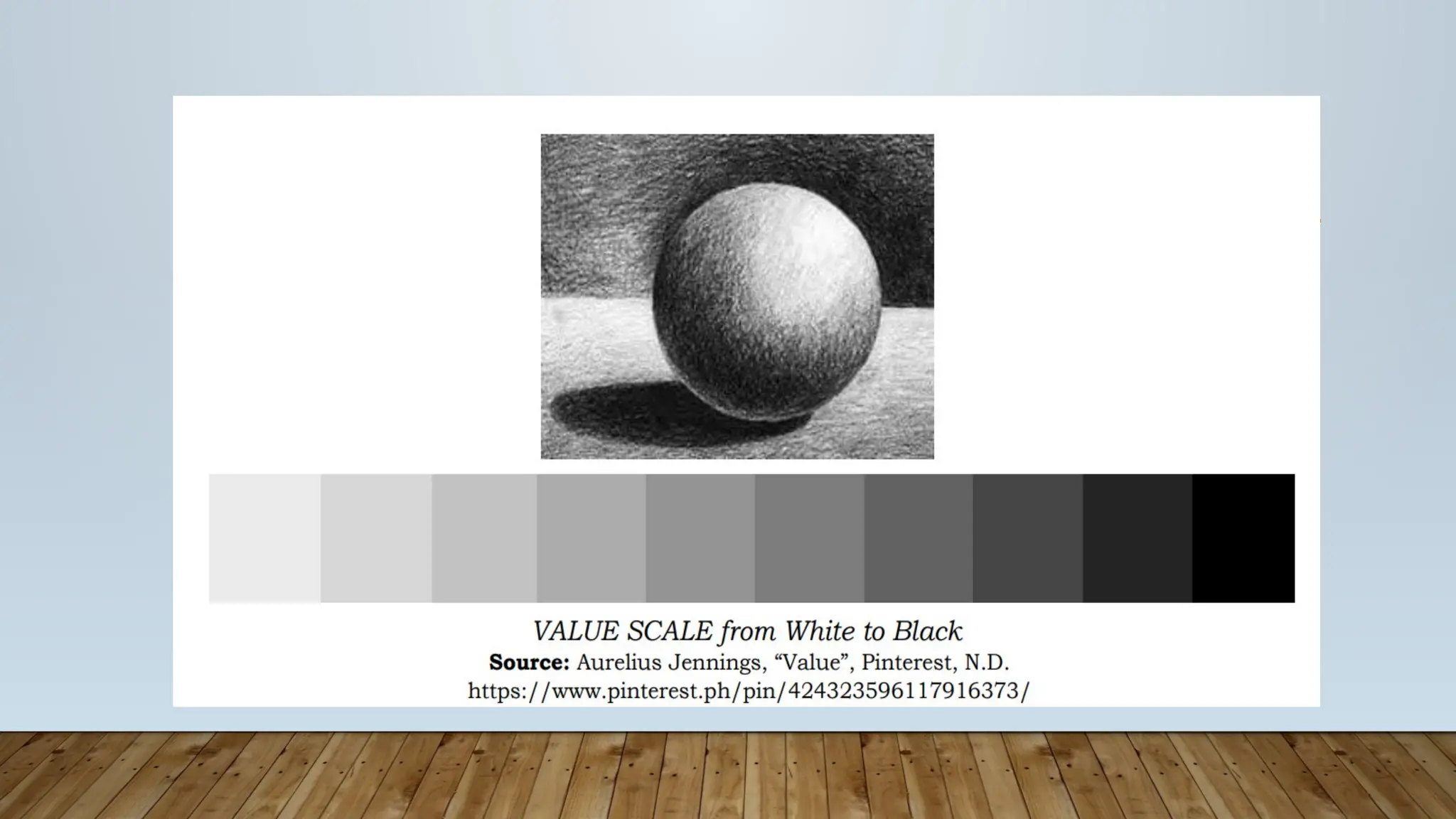
3. VALUE
•Value refers to the lightness and darkness of
surfaces. It ranges from white to various
grays to black. It can be a property of color
or an independent element color.
3. VALUE
• Chiaroscuro is the use of gradations of light and shade, in
which the forms are revealed by the subtle shifting from light
to dark areas.
• This technique was developed during the Renaissance Period
to create an illusion that figures and objects depicted on a flat
surface appear as they do in the natural light conditions.
3. COLOR
• Color is a component of light, affects us directly by
modifying our thoughts, moods, actions, and even our
health. Color exists only in light, but light itself seems
colorless to the human eye. The so-called "color" is the
effect on our eyes of light waves of differing wavelengths
or frequencies.
Principles of design Arts 10 Quarter 1.pptx

  • 1.
    PRINCIPLES OF DESIGN ANDELEMENTS OF ARTS
  • 2.
    QUESTIONS… • Do youknow that there were several areas in which impressionist artists moved away from the established practices of art at that time?
  • 3.
    QUESTIONS… • Do youknow that there were several areas in which impressionist artists moved away from the established practices of art at that time? These involved their use of color, choice of subject matter and setting, and technique for capturing light and conveying movement.
  • 4.
    OBJECTIVES 1. identify thedifferent principles of design and the elements of arts present in the various art movements; 2. appreciate the different principles of design and the details of arts; and 3. create your artwork by applying the principles of design and the elements of arts-based on the example of arts.
  • 5.
    PRE-TEST ACTIVITY Directions: Usethe pictures below to check how much you know about this topic. Classify them according to what principle of design they belong to.Write your answer in your notebook.
  • 6.
    CHOOSEYOUR ANSWER FROMTHEFOLLOWING: Unity andVariety Scale and Proportion Contrast Balance Emphasis and subordination Repetition and Rhythm
  • 11.
  • 12.
  • 13.
    PRINCIPLES OF DESIGN •Art can be seen in all aspects of life. It is everywhere. It can be seen in our surroundings.The popular feeling about art is that it exists only in concert halls, museums, and art galleries in a world by itself, which are accessible only to those who can afford to pay for its enjoyment or to the critics and scholars who take time to study the art and objects of the art.
  • 16.
    WHAT IS IT? •The word design indicates both the process of organizing visual elements and the product of that process. It is a result of our basic need for meaningful order. Some designs are so well integrated that they have qualities beyond a mere sum of their parts. Such is said to be beautiful, interesting, absorbing, or surprising.
  • 18.
    • Depicted inhis works are the principles of design that made his work beautiful, fascinating, and expressive. There are six principles of design: unity and variety, balance, emphasis and subordination, contrast, repetition and rhythm, and scale and proportion.
  • 20.
    • The visualthemes were established with the use of lines, shapes, and colors.The many figures and the objects in the complex compositions of Lawrence formed a unified design through the artist's skillful use of abstraction, theme, and variation.
  • 29.
  • 30.
    • Medium andelements together are the materials the artist uses in creating a work of art.The distinction between them is easy to see but hard to define.An element can be known only in some medium, but as an element, it is independent of the medium
  • 31.
    • When westudy elements, we consider them with no attention to how we can come into contact with a work of art.The elements are its qualities or properties.The seven elements of art are: 1. Line 2. Shape 3. Space 4.Value 5. Color 6.Texture 7. Perspective
  • 32.
    •We now lookwith greater care at the elements of the visual arts as a kind of basic language with which the artist's work.
  • 33.
    1. LINE •The lineis our basic means for recording and symbolizing ideas, observations, and feelings; it is a primary means of visual communication. Lines always have direction.They are always active.
  • 34.
    THE FOLLOWING ILLUSTRATESTHELINE VARIATIONS (PREBLE, 1999)
  • 35.
    2. SHAPE • Shaperefers to the expanse within the outline of a two- dimensional area or within the outer boundaries of a three-dimensional object. It may be geometric, which tends to be precise or regular (circles, triangles, squares) or organic, which are irregular, often curving or rounded, and seem relaxed and more informal.
  • 36.
    2. SHAPE • Mostcommon shapes in the human-made world are geometric, while most shapes in nature are organic. • Mass is a physical bulk of solid body material, and it has a three-dimensional area
  • 38.
    3. SPACE •Space isthe indefinable, general receptacle of all things. It is continuous, infinite, and ever-present. The visual arts are sometimes referred to as spatial arts because most of the art forms are organized in space.
  • 39.
    3. SPACE • Architectsare mainly concerned with space. • With three-dimensional objects such as in architecture and sculpture, one has to move around to get a full experience of three-dimensional space. • With two-dimensional works, such as drawings, prints, photographs, and paintings, the actual space is defined by its edges- usually the twodimensions of height and width. The illusion of third-dimension in two-dimensional works is spatial depth.
  • 41.
    3. VALUE •Value refersto the lightness and darkness of surfaces. It ranges from white to various grays to black. It can be a property of color or an independent element color.
  • 42.
    3. VALUE • Chiaroscurois the use of gradations of light and shade, in which the forms are revealed by the subtle shifting from light to dark areas. • This technique was developed during the Renaissance Period to create an illusion that figures and objects depicted on a flat surface appear as they do in the natural light conditions.
  • 44.
    3. COLOR • Coloris a component of light, affects us directly by modifying our thoughts, moods, actions, and even our health. Color exists only in light, but light itself seems colorless to the human eye. The so-called "color" is the effect on our eyes of light waves of differing wavelengths or frequencies.