Xanthinuria
Presented by
Vaibhav Undirwade
Introduction
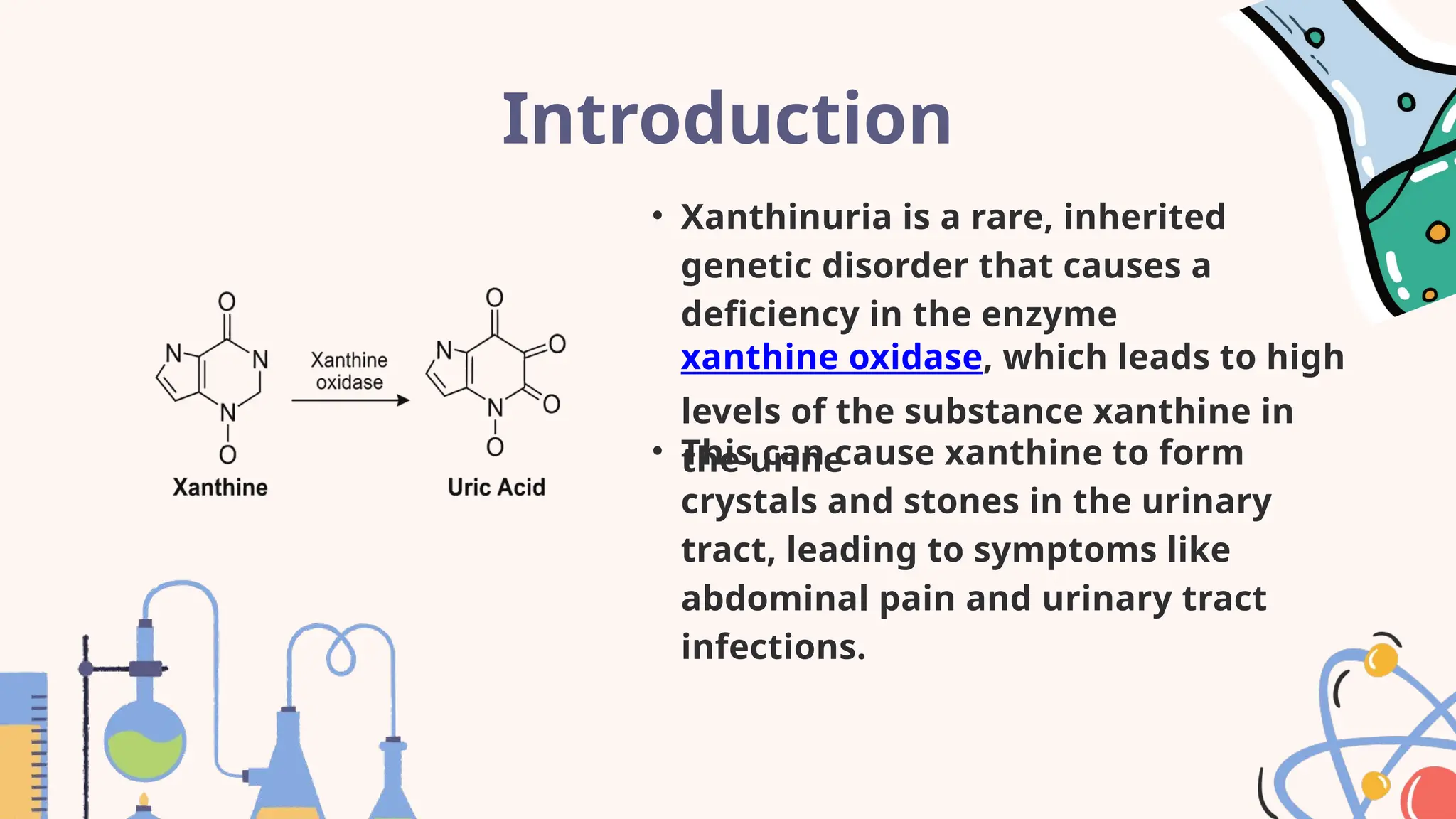
• Xanthinuria is a rare, inherited
genetic disorder that causes a
deficiency in the enzyme
xanthine oxidase, which leads to high
levels of the substance xanthine in
the urine
• This can cause xanthine to form
crystals and stones in the urinary
tract, leading to symptoms like
abdominal pain and urinary tract
infections.
CAUSES
• Genetic: Autosomal recessive mutation in
XDH or MOCOS gene.
• Acquired: Rarely due to inhibitors of
xanthine oxidase (e.g., allopurinol therapy).
• Cofactor deficiency: Molybdenum cofactor
deficiency (in Type III).
SYMTOMS
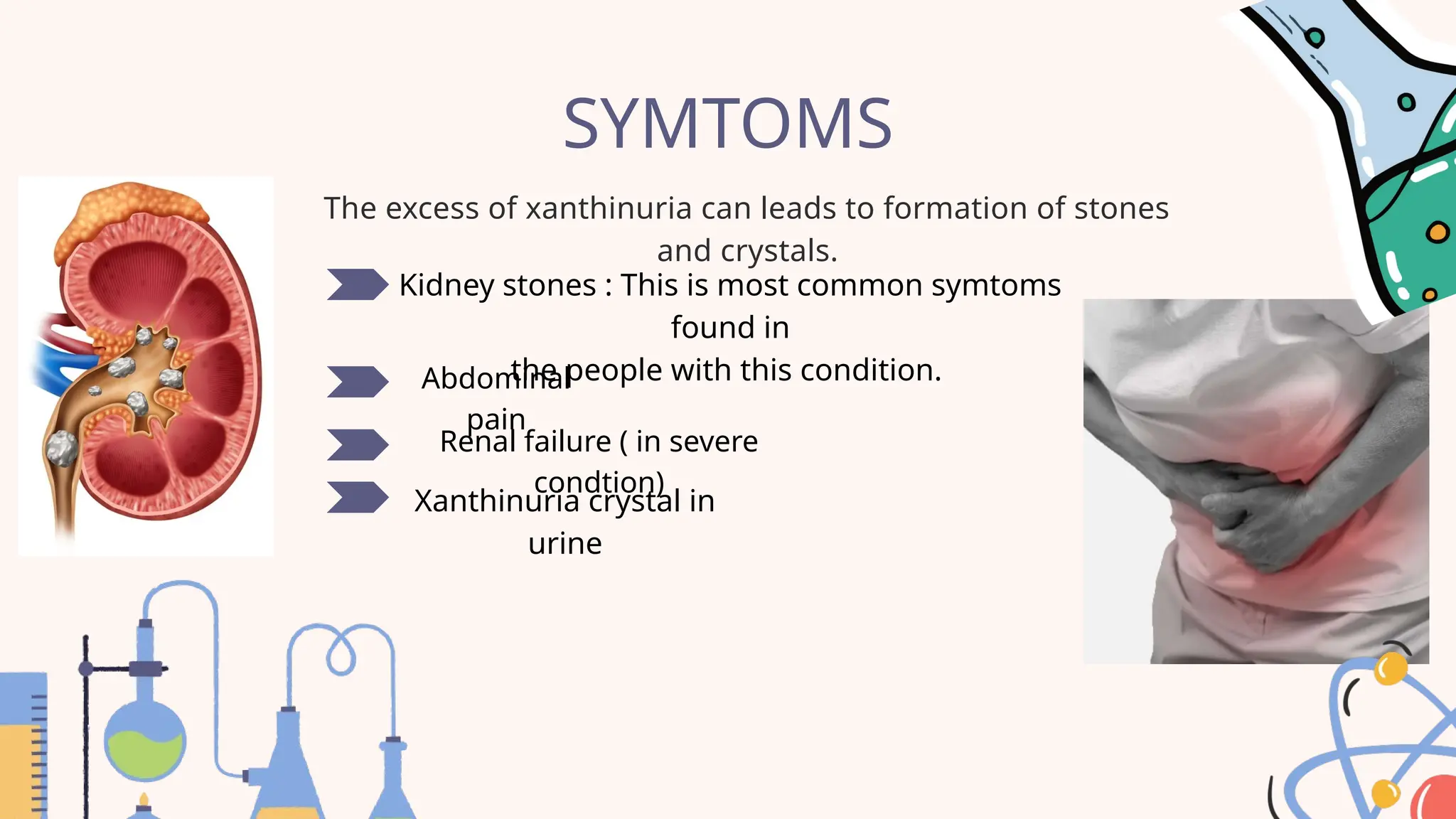
The excess of xanthinuria can leads to formation of stones
and crystals.
Kidney stones : This is most common symtoms
found in
the people with this condition.
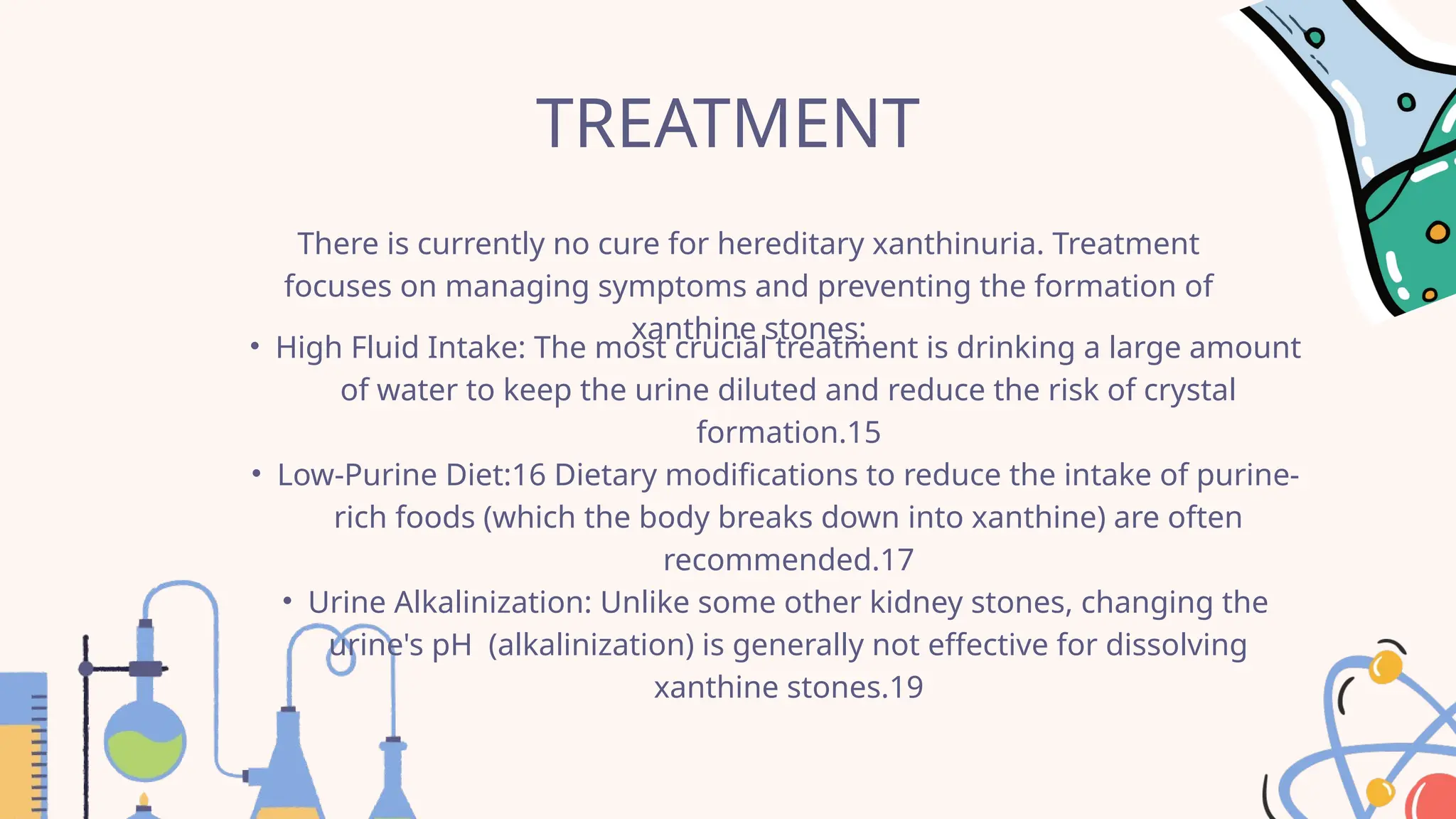
Abdominal
pain
Renal failure ( in severe
condtion)
Xanthinuria crystal in
urine
TREATMENT
There is currently no cure for hereditary xanthinuria. Treatment
focuses on managing symptoms and preventing the formation of
xanthine stones:
• High Fluid Intake: The most crucial treatment is drinking a large amount
of water to keep the urine diluted and reduce the risk of crystal
formation.15
• Low-Purine Diet:16 Dietary modifications to reduce the intake of purine-
rich foods (which the body breaks down into xanthine) are often
recommended.17
• Urine Alkalinization: Unlike some other kidney stones, changing the
urine's pH (alkalinization) is generally not effective for dissolving
xanthine stones.19
Thank You

xanthinurias and its parmacological effects.pptx

  • 1.
  • 2.
    Introduction • Xanthinuria isa rare, inherited genetic disorder that causes a deficiency in the enzyme xanthine oxidase, which leads to high levels of the substance xanthine in the urine • This can cause xanthine to form crystals and stones in the urinary tract, leading to symptoms like abdominal pain and urinary tract infections.
  • 3.
    CAUSES • Genetic: Autosomalrecessive mutation in XDH or MOCOS gene. • Acquired: Rarely due to inhibitors of xanthine oxidase (e.g., allopurinol therapy). • Cofactor deficiency: Molybdenum cofactor deficiency (in Type III).
  • 4.
    SYMTOMS The excess ofxanthinuria can leads to formation of stones and crystals. Kidney stones : This is most common symtoms found in the people with this condition. Abdominal pain Renal failure ( in severe condtion) Xanthinuria crystal in urine
  • 5.
    TREATMENT There is currentlyno cure for hereditary xanthinuria. Treatment focuses on managing symptoms and preventing the formation of xanthine stones: • High Fluid Intake: The most crucial treatment is drinking a large amount of water to keep the urine diluted and reduce the risk of crystal formation.15 • Low-Purine Diet:16 Dietary modifications to reduce the intake of purine- rich foods (which the body breaks down into xanthine) are often recommended.17 • Urine Alkalinization: Unlike some other kidney stones, changing the urine's pH (alkalinization) is generally not effective for dissolving xanthine stones.19
  • 6.