Fashion
Evolution
Exploring the Shifts in Style Across Centuries
Introduction
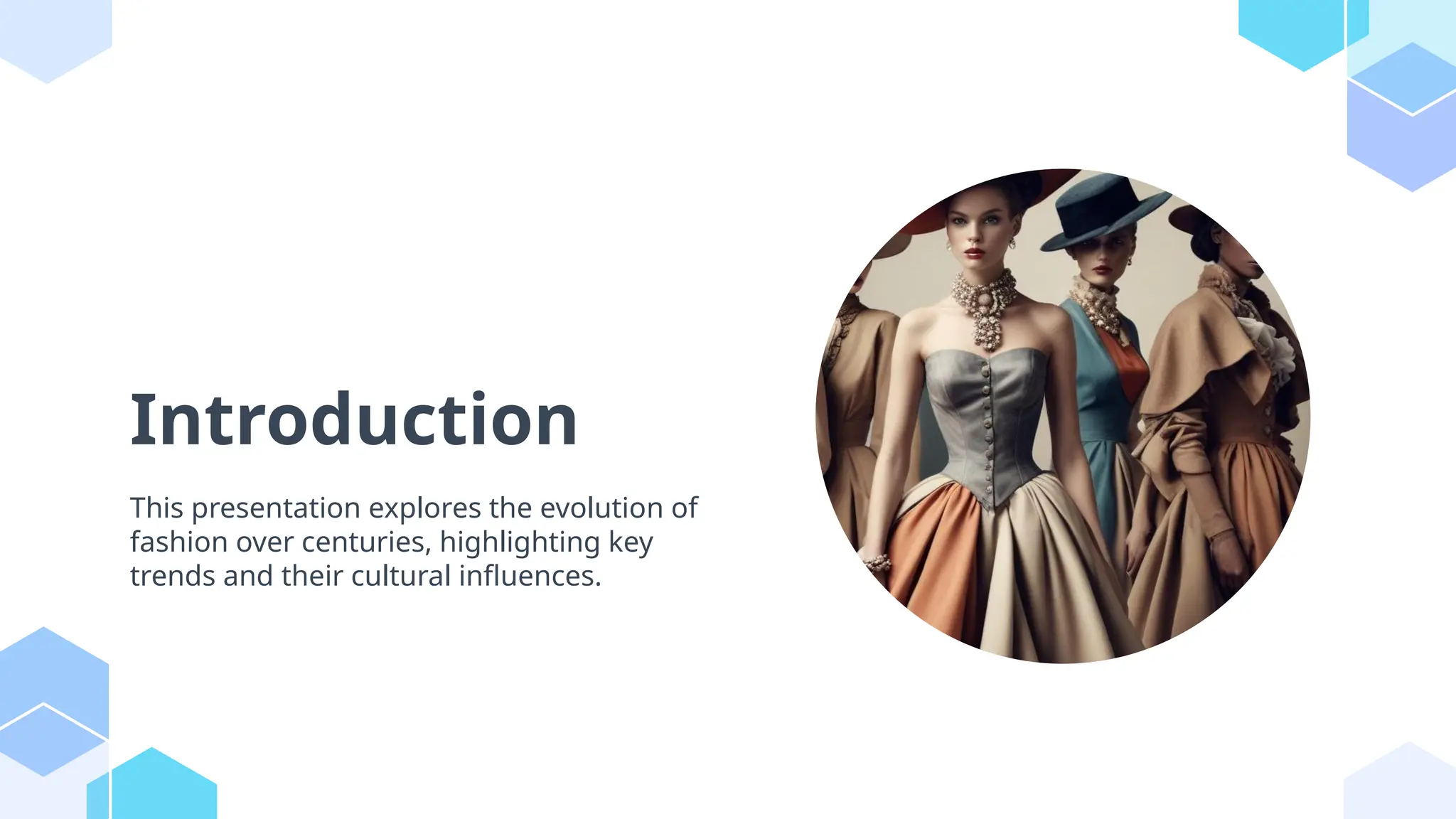
This presentation explores the evolution of
fashion over centuries, highlighting key
trends and their cultural influences.
Historical Evolution
01
Early Fashion Trends
Early fashion was closely tied to usefulness and social status, where clothing was primarily functional and
dictated by social class. Natural materials were used and styles reflected climate and availability. As
civilizations advanced, establishing unique identities through attire became prominent, with specific
fashions emerging in different regions, influenced by culture and artistry.
Fashion in the
Renaissance
The Renaissance marked a significant shift in fashion, characterized by opulence and
elaborate designs. Fabrics like silk became widely used, and clothing often displayed
wealth through intricate details and accessories. Social status was accentuated through
fashion, as it became a means of cultural expression. The emergence of tailors and a
fashion industry began to shape public styles, reflecting the era's art and values.
20th Century
Transformations
The 20th century was a period of radical change in fashion, influenced by significant historical events, technological advancements, and
shifting social norms. The rise of the industrial revolution enabled mass production of clothing, leading to ready-to-wear garments. The
emergence of street style, youth culture, and celebrity influence transformed fashion into a diverse expression of individuality, resulting
in global fashion trends that transcended cultural boundaries. Iconic designers like Coco Chanel and Yves Saint Laurent challenged
traditional gender norms, introducing styles that offered greater freedom and expression.
Cultural Impact
02
Fashion and Identity
Fashion plays a pivotal role in personal and group identity, serving as an expression of culture, social status, and individuality. Choices
in clothing can reflect a person's values, beliefs, and affiliations. For many cultures, traditional attire symbolizes heritage and history,
while modern fashion trends can signify contemporary societal issues. The way people dress often speaks volumes about their identity,
enabling them to align with certain communities or movements while also pushing back against societal expectations and norms.
Influence on Art and
Literature
Fashion has significantly influenced art and literature throughout history. Artists have drawn inspiration from clothing styles,
depicting them in paintings and sculptures. In literature, fashion often serves as a symbol of character development and societal
commentary, providing insights into the era's cultural norms. Authors have used fashion to highlight themes such as class, gender,
and personal transformation, making it a vital element in storytelling that reflects the social dynamics of different periods.
Globalization of
Fashion
In recent decades, globalization has dramatically transformed the fashion landscape,
fostering a blend of styles from around the world. The interconnectedness of cultures has led
to the cross-pollination of fashion ideas and practices, resulting in eclectic trends that draw
from diverse influences. Global fashion weeks and online platforms have contributed to the
rapid dissemination of trends, allowing for instant access to fashion from different cultures
and regions, which often raises discussions about cultural appropriation and authenticity.
Conclusions
Fashion has evolved significantly over the centuries, not only reflecting aesthetic preferences but
also influencing and mirroring cultural and societal changes. Each era has contributed to the rich
tapestry of style, making fashion an integral part of identity and expression across the globe.
CREDITS: This presentation template was created by Slidesgo, and
includes icons by Flaticon, and infographics & images by Freepik
Thank you!
Do you have any questions?

MediaHuman YouTube Downloader 3.9.9.98 Crack

  • 1.
    Fashion Evolution Exploring the Shiftsin Style Across Centuries
  • 2.
    Introduction This presentation exploresthe evolution of fashion over centuries, highlighting key trends and their cultural influences.
  • 3.
  • 4.
    Early Fashion Trends Earlyfashion was closely tied to usefulness and social status, where clothing was primarily functional and dictated by social class. Natural materials were used and styles reflected climate and availability. As civilizations advanced, establishing unique identities through attire became prominent, with specific fashions emerging in different regions, influenced by culture and artistry.
  • 5.
    Fashion in the Renaissance TheRenaissance marked a significant shift in fashion, characterized by opulence and elaborate designs. Fabrics like silk became widely used, and clothing often displayed wealth through intricate details and accessories. Social status was accentuated through fashion, as it became a means of cultural expression. The emergence of tailors and a fashion industry began to shape public styles, reflecting the era's art and values.
  • 6.
    20th Century Transformations The 20thcentury was a period of radical change in fashion, influenced by significant historical events, technological advancements, and shifting social norms. The rise of the industrial revolution enabled mass production of clothing, leading to ready-to-wear garments. The emergence of street style, youth culture, and celebrity influence transformed fashion into a diverse expression of individuality, resulting in global fashion trends that transcended cultural boundaries. Iconic designers like Coco Chanel and Yves Saint Laurent challenged traditional gender norms, introducing styles that offered greater freedom and expression.
  • 7.
  • 8.
    Fashion and Identity Fashionplays a pivotal role in personal and group identity, serving as an expression of culture, social status, and individuality. Choices in clothing can reflect a person's values, beliefs, and affiliations. For many cultures, traditional attire symbolizes heritage and history, while modern fashion trends can signify contemporary societal issues. The way people dress often speaks volumes about their identity, enabling them to align with certain communities or movements while also pushing back against societal expectations and norms.
  • 9.
    Influence on Artand Literature Fashion has significantly influenced art and literature throughout history. Artists have drawn inspiration from clothing styles, depicting them in paintings and sculptures. In literature, fashion often serves as a symbol of character development and societal commentary, providing insights into the era's cultural norms. Authors have used fashion to highlight themes such as class, gender, and personal transformation, making it a vital element in storytelling that reflects the social dynamics of different periods.
  • 10.
    Globalization of Fashion In recentdecades, globalization has dramatically transformed the fashion landscape, fostering a blend of styles from around the world. The interconnectedness of cultures has led to the cross-pollination of fashion ideas and practices, resulting in eclectic trends that draw from diverse influences. Global fashion weeks and online platforms have contributed to the rapid dissemination of trends, allowing for instant access to fashion from different cultures and regions, which often raises discussions about cultural appropriation and authenticity.
  • 11.
    Conclusions Fashion has evolvedsignificantly over the centuries, not only reflecting aesthetic preferences but also influencing and mirroring cultural and societal changes. Each era has contributed to the rich tapestry of style, making fashion an integral part of identity and expression across the globe.
  • 12.
    CREDITS: This presentationtemplate was created by Slidesgo, and includes icons by Flaticon, and infographics & images by Freepik Thank you! Do you have any questions?