Leadership
Styles
Exploring Different Approaches to Lead and
Inspire Teams
Introduction
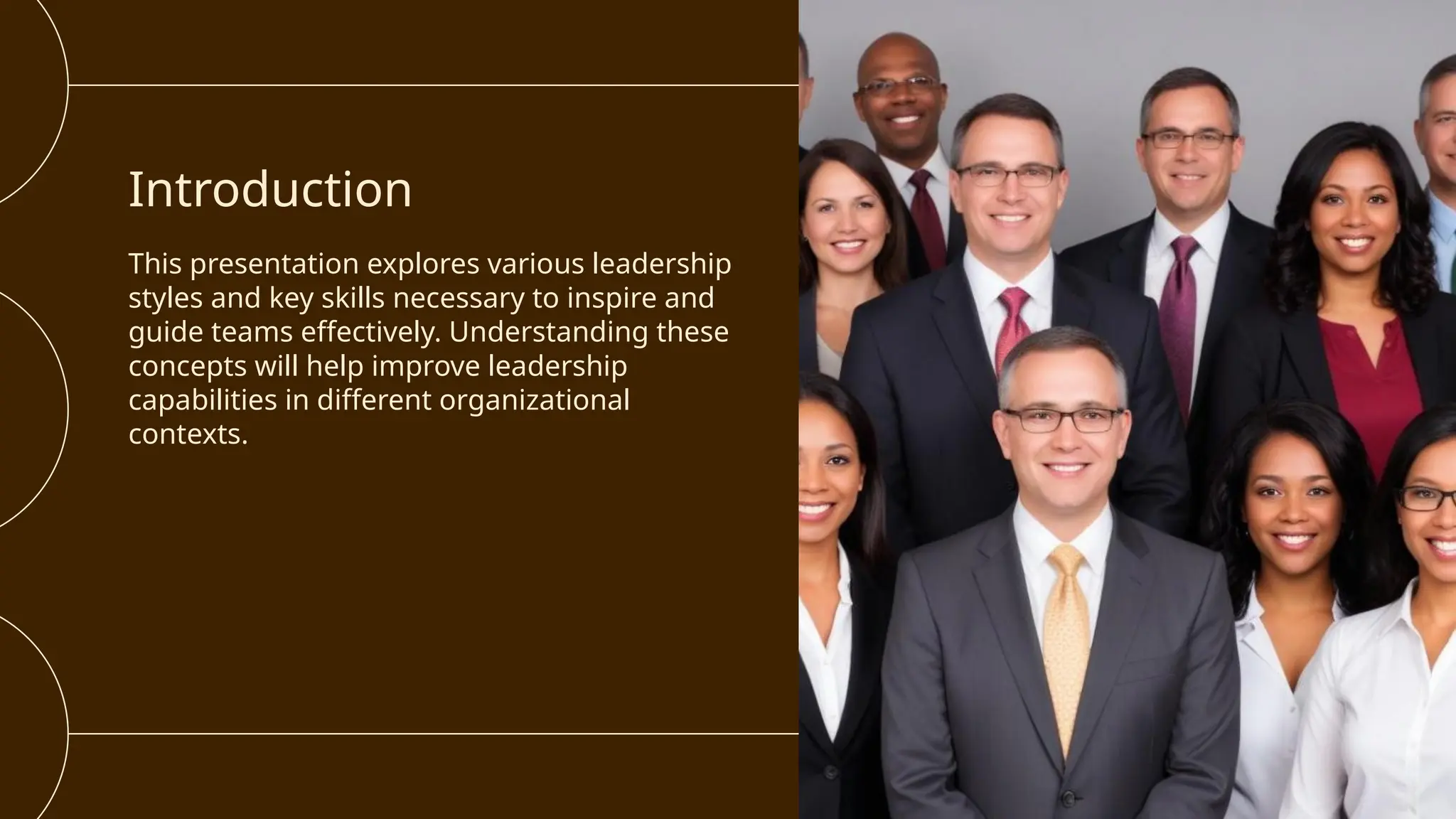
This presentation explores various leadership
styles and key skills necessary to inspire and
guide teams effectively. Understanding these
concepts will help improve leadership
capabilities in different organizational
contexts.
Leadership
Styles
01
Autocratic Leadership is a style where the leader makes decisions
unilaterally without much input from team members. This can lead to quick
decision-making, but may result in low team morale and lack of creativity.
Key characteristics include clear expectations and strict control over the
team, making it suitable for situations requiring fast decisions and where
tasks are simple and require little team collaboration.
Autocratic Leadership
Democratic Leadership
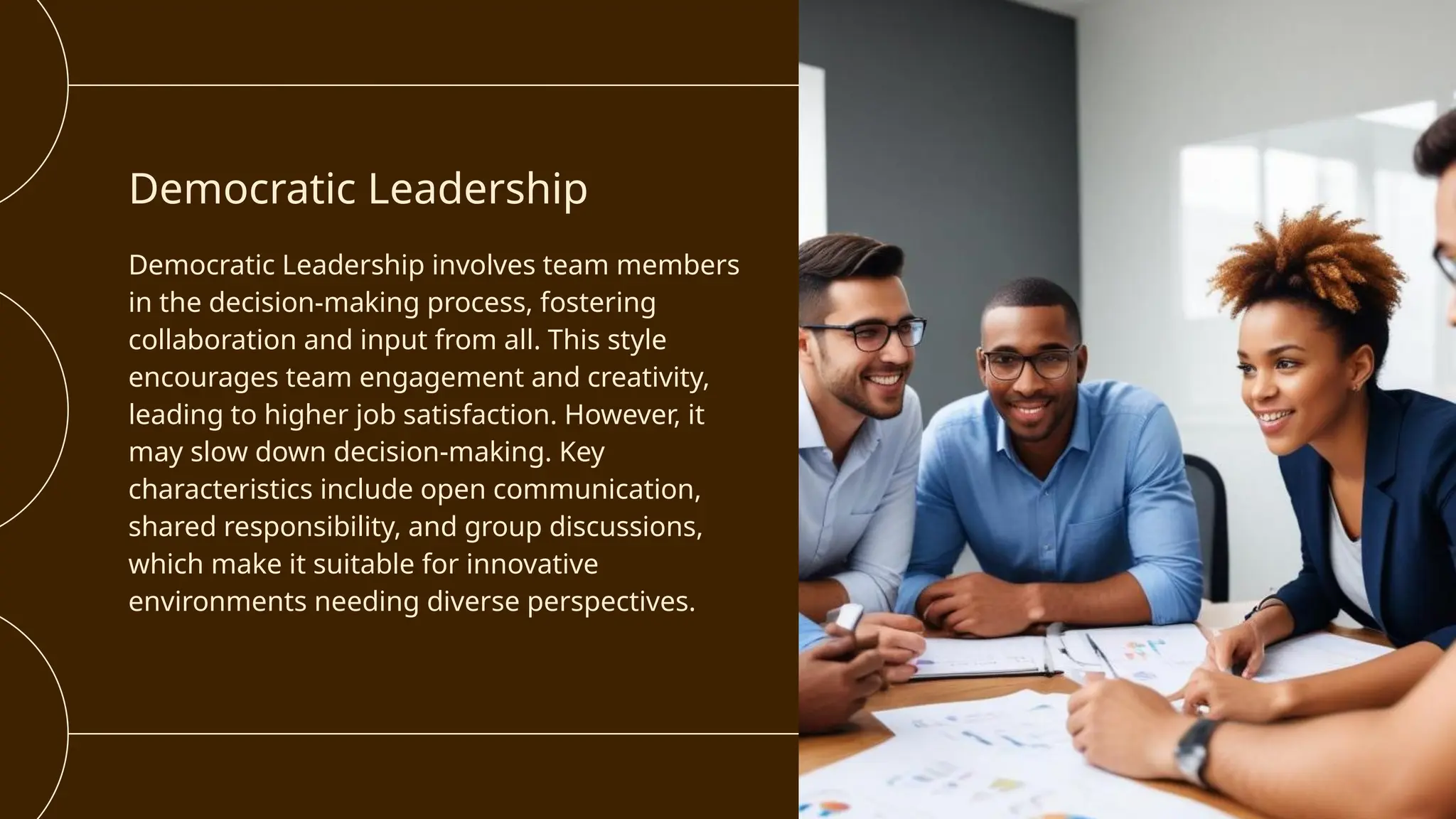
Democratic Leadership involves team members
in the decision-making process, fostering
collaboration and input from all. This style
encourages team engagement and creativity,
leading to higher job satisfaction. However, it
may slow down decision-making. Key
characteristics include open communication,
shared responsibility, and group discussions,
which make it suitable for innovative
environments needing diverse perspectives.
Transformational Leadership is a style where leaders inspire and motivate
their team towards achieving a shared vision. This approach encourages
innovation and growth by fostering an environment of trust and
collaboration. Key components include charismatic motivation, intellectual
stimulation, and individualized consideration, making it effective in driving
change and inspiring high levels of performance from team members.
Transformational Leadership
Key Skills
02
Effective Communication is essential for successful leadership, as it ensures
clarity and understanding between leaders and team members. This skill
involves active listening, providing clear instructions, and offering
constructive feedback. Strong communicators can foster trust, enhance
cooperation, and minimize misunderstandings, resulting in a more
harmonious and productive work environment.
Effective Communication
Emotional Intelligence (EI) refers to the ability to recognize, understand, and
manage one’s own emotions and the emotions of others. Leaders with high
EI can navigate social complexities, respond empathetically to team
members, and create a positive work atmosphere. This skill helps in conflict
resolution and enhances team dynamics, leading to improved overall
performance.
Emotional Intelligence
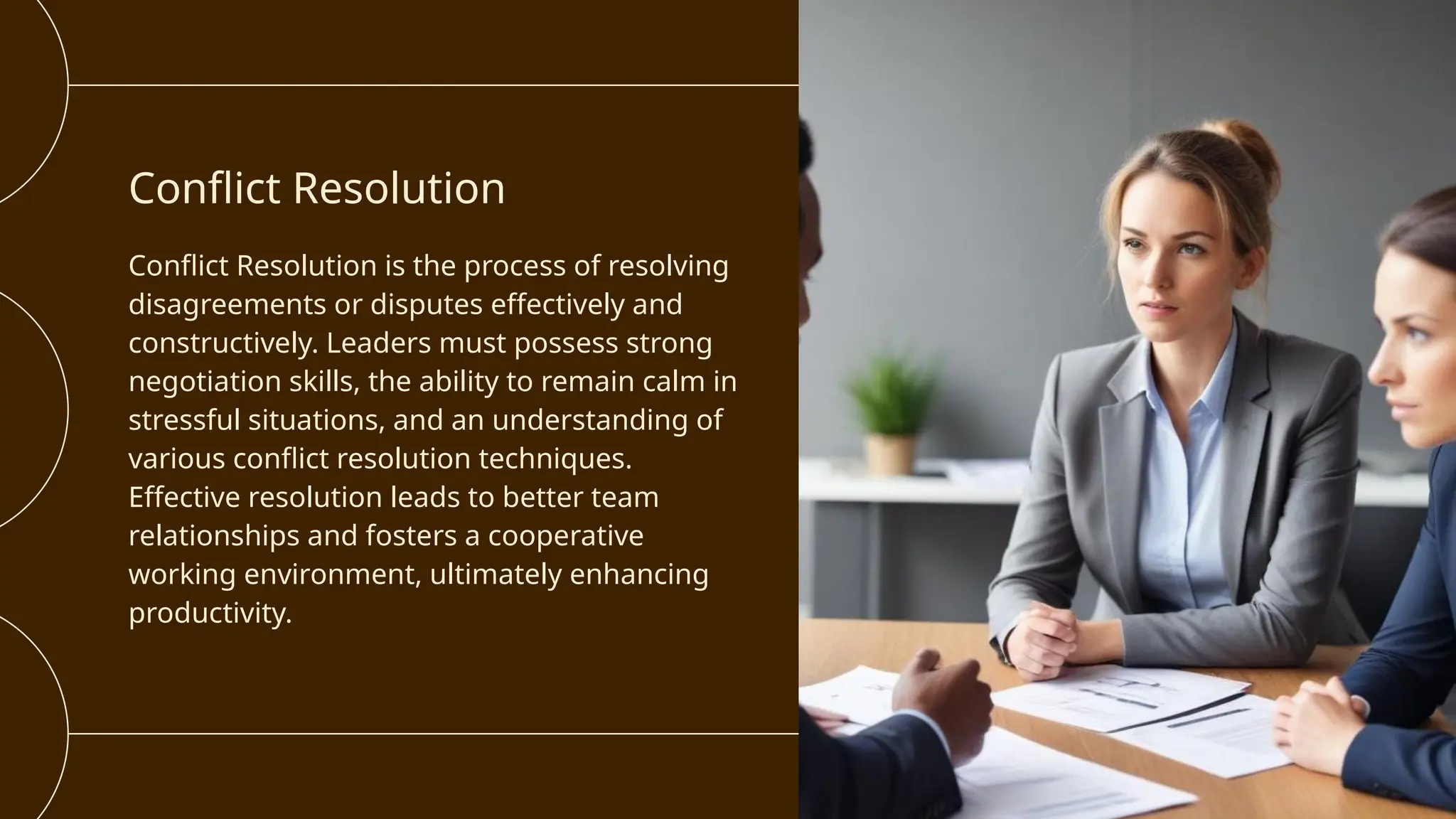
Conflict Resolution
Conflict Resolution is the process of resolving
disagreements or disputes effectively and
constructively. Leaders must possess strong
negotiation skills, the ability to remain calm in
stressful situations, and an understanding of
various conflict resolution techniques.
Effective resolution leads to better team
relationships and fosters a cooperative
working environment, ultimately enhancing
productivity.
Conclusions
In conclusion, understanding various
leadership styles and developing key skills
such as effective communication, emotional
intelligence, and conflict resolution are crucial
for inspiring teams. By adapting their
approach based on situational needs, leaders
can foster a supportive and high-performing
team environment.
CREDITS: This presentation template was created by Slidesgo,
and includes icons by Flaticon, and infographics & images by
Freepik
Thank you!
Do you have any questions?

BarTender Enterprise Crack + License Key (2025)

  • 1.
  • 2.
    Introduction This presentation exploresvarious leadership styles and key skills necessary to inspire and guide teams effectively. Understanding these concepts will help improve leadership capabilities in different organizational contexts.
  • 3.
  • 4.
    Autocratic Leadership isa style where the leader makes decisions unilaterally without much input from team members. This can lead to quick decision-making, but may result in low team morale and lack of creativity. Key characteristics include clear expectations and strict control over the team, making it suitable for situations requiring fast decisions and where tasks are simple and require little team collaboration. Autocratic Leadership
  • 5.
    Democratic Leadership Democratic Leadershipinvolves team members in the decision-making process, fostering collaboration and input from all. This style encourages team engagement and creativity, leading to higher job satisfaction. However, it may slow down decision-making. Key characteristics include open communication, shared responsibility, and group discussions, which make it suitable for innovative environments needing diverse perspectives.
  • 6.
    Transformational Leadership isa style where leaders inspire and motivate their team towards achieving a shared vision. This approach encourages innovation and growth by fostering an environment of trust and collaboration. Key components include charismatic motivation, intellectual stimulation, and individualized consideration, making it effective in driving change and inspiring high levels of performance from team members. Transformational Leadership
  • 7.
  • 8.
    Effective Communication isessential for successful leadership, as it ensures clarity and understanding between leaders and team members. This skill involves active listening, providing clear instructions, and offering constructive feedback. Strong communicators can foster trust, enhance cooperation, and minimize misunderstandings, resulting in a more harmonious and productive work environment. Effective Communication
  • 9.
    Emotional Intelligence (EI)refers to the ability to recognize, understand, and manage one’s own emotions and the emotions of others. Leaders with high EI can navigate social complexities, respond empathetically to team members, and create a positive work atmosphere. This skill helps in conflict resolution and enhances team dynamics, leading to improved overall performance. Emotional Intelligence
  • 10.
    Conflict Resolution Conflict Resolutionis the process of resolving disagreements or disputes effectively and constructively. Leaders must possess strong negotiation skills, the ability to remain calm in stressful situations, and an understanding of various conflict resolution techniques. Effective resolution leads to better team relationships and fosters a cooperative working environment, ultimately enhancing productivity.
  • 11.
    Conclusions In conclusion, understandingvarious leadership styles and developing key skills such as effective communication, emotional intelligence, and conflict resolution are crucial for inspiring teams. By adapting their approach based on situational needs, leaders can foster a supportive and high-performing team environment.
  • 12.
    CREDITS: This presentationtemplate was created by Slidesgo, and includes icons by Flaticon, and infographics & images by Freepik Thank you! Do you have any questions?