PATEINT SAFETY INDICATORS
BY RISHIKA RAWAT
RN/RM
[BSC.NURSING]
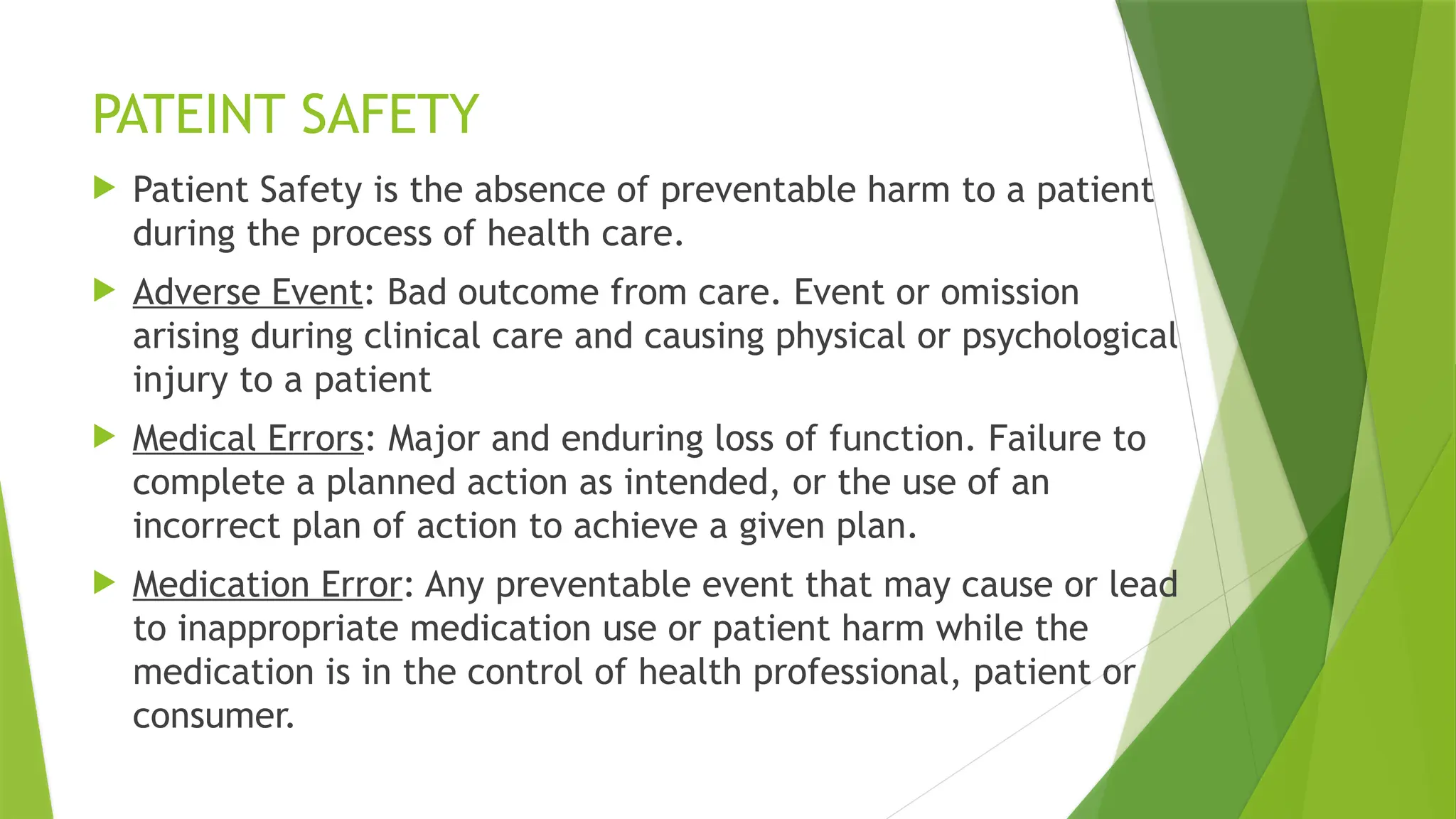
PATEINT SAFETY
 Patient Safety is the absence of preventable harm to a patient
during the process of health care.
 Adverse Event: Bad outcome from care. Event or omission
arising during clinical care and causing physical or psychological
injury to a patient
 Medical Errors: Major and enduring loss of function. Failure to
complete a planned action as intended, or the use of an
incorrect plan of action to achieve a given plan.
 Medication Error: Any preventable event that may cause or lead
to inappropriate medication use or patient harm while the
medication is in the control of health professional, patient or
consumer.
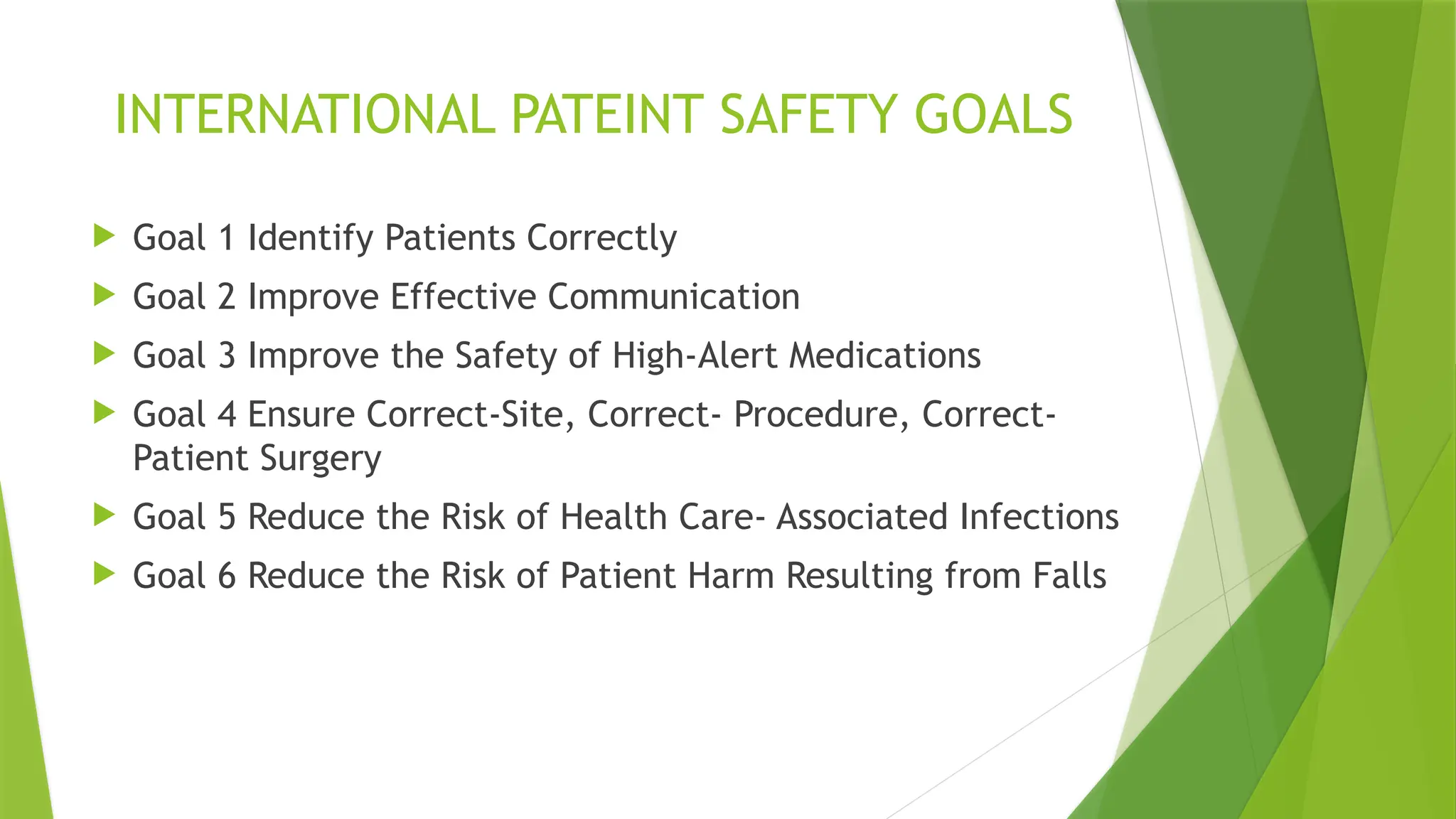
INTERNATIONAL PATEINT SAFETY GOALS
 Goal 1 Identify Patients Correctly
 Goal 2 Improve Effective Communication
 Goal 3 Improve the Safety of High-Alert Medications
 Goal 4 Ensure Correct-Site, Correct- Procedure, Correct-
Patient Surgery
 Goal 5 Reduce the Risk of Health Care- Associated Infections
 Goal 6 Reduce the Risk of Patient Harm Resulting from Falls
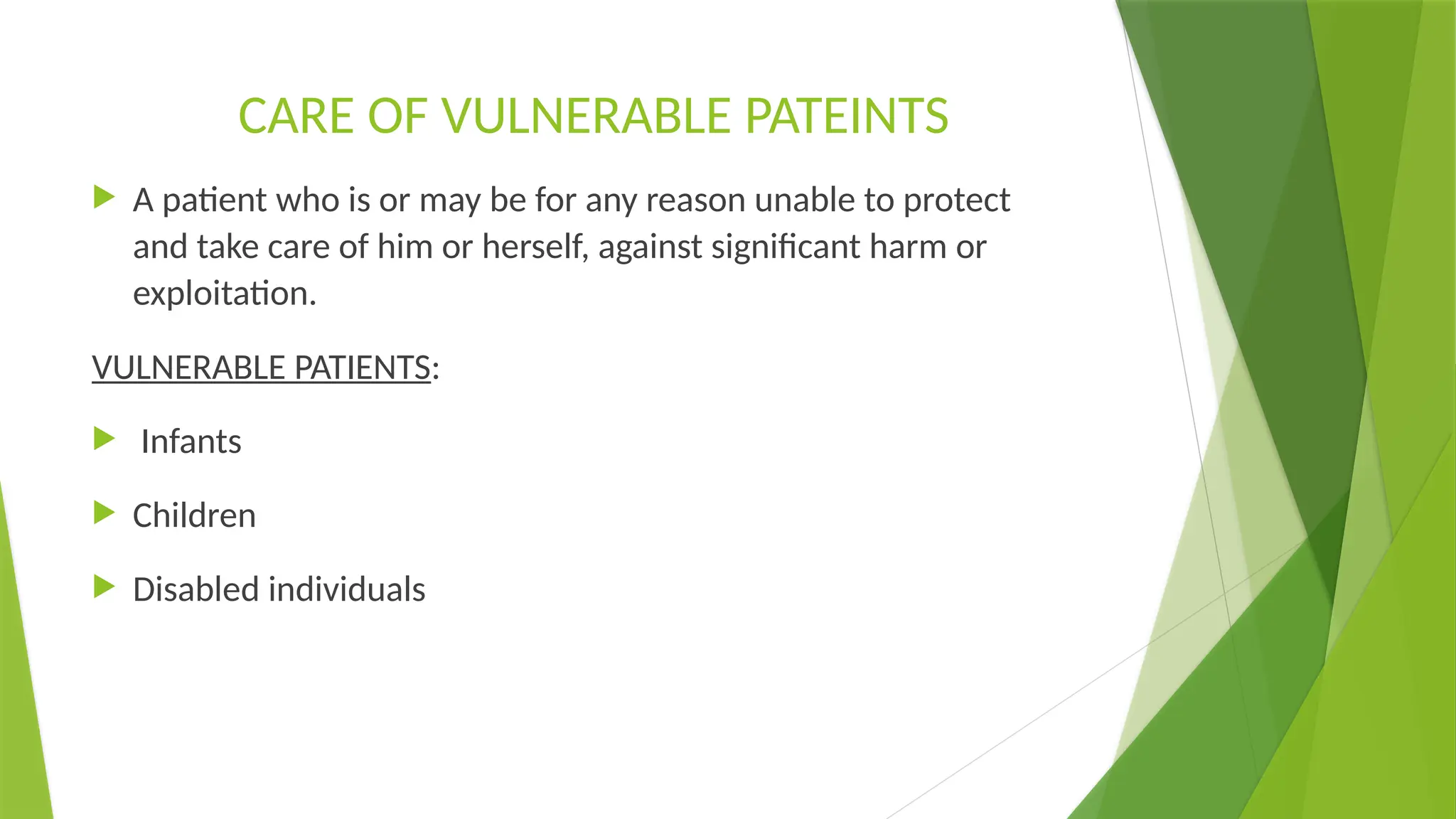
CARE OF VULNERABLE PATEINTS
 A patient who is or may be for any reason unable to protect
and take care of him or herself, against significant harm or
exploitation.
VULNERABLE PATIENTS:
 Infants
 Children
 Disabled individuals
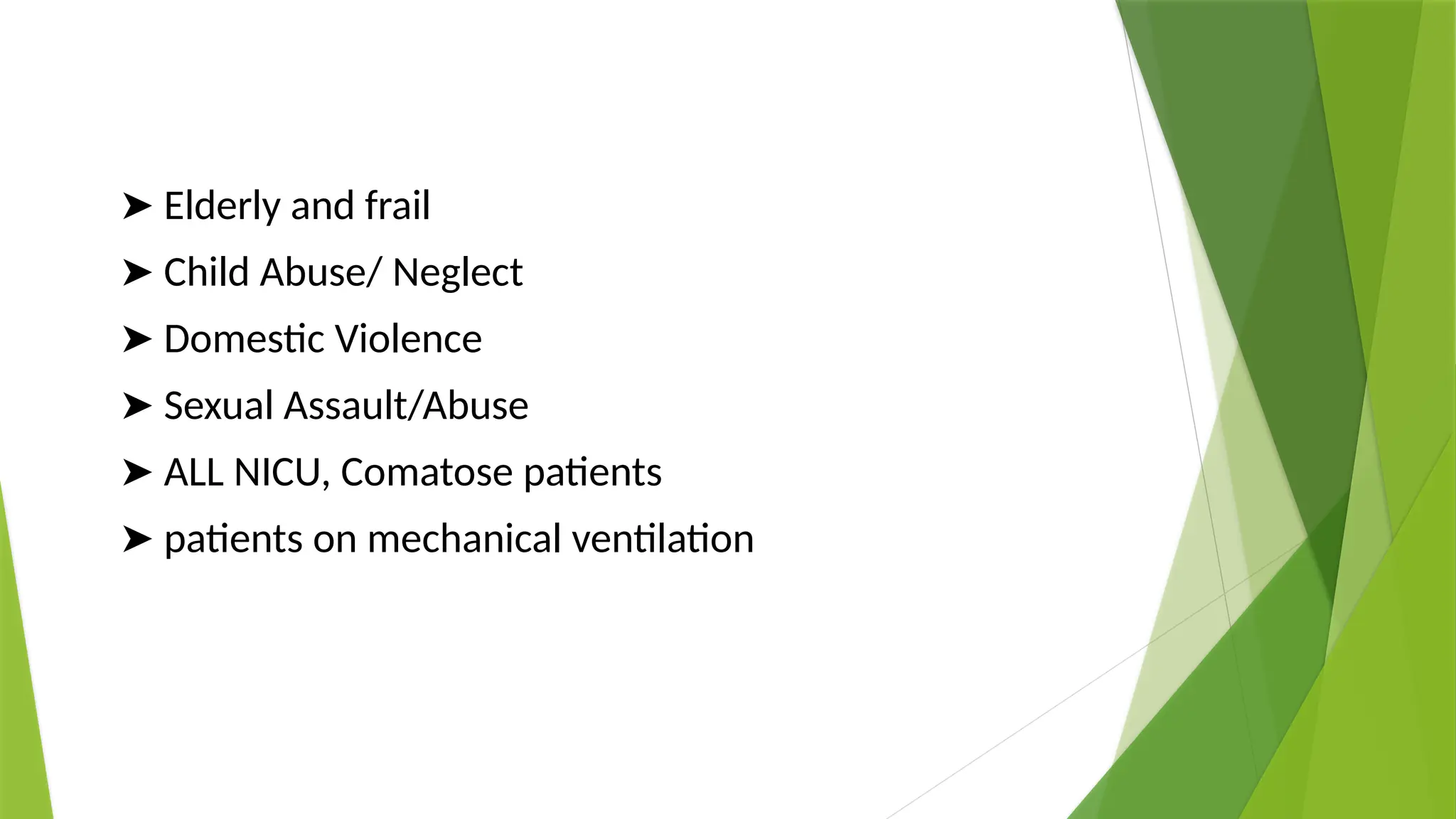
➤ Elderly and frail
➤ Child Abuse/ Neglect
➤ Domestic Violence
➤ Sexual Assault/Abuse
➤ ALL NICU, Comatose patients
➤ patients on mechanical ventilation
CARE AND POLICY FOR VULNERABLE PATIENTS
 Within the hospital the all-vulnerable elderly and children given all-
necessary care needed with consideration.
 If the patient's condition demands further care which is no available in
our hospital, patient will be transferred to the hospitals/facilities.
 While transferring the patients a staff nurse will be accompany the
patient along with the caregiver.
 If the patient's condition is critical, will be escorted by a doctor and a
nurse while transferring them form hospital to hospital.
 Staff taking care of high-risk patients must have adequate
training and skills.
 The identified vulnerable patients will be under close monitoring
at all times during their hospitalization to minimize risks of
health care services.
 All healthcare providers will maintain a safe environment related
but not limited to: equipment, wheelchairs, bed rail mobility
needs, fall precautions.
 All healthcare providers will encourage family involvement and
support in care delivery, education and decisions as appropriate.
 Special consent considerations will be taken when needed for
each individual case following the hospital approved consenting
policies
.
 Once the patient is stabilized with the disease process, they will
be fit for the discharge.
 The discharge patient will be discharged with follow-up advise.
 All documentation required for the team to work and
communicate effectively in the care of high-risk patients must be
maintained as per hospital documentation policy.
PREVENTION OF IATROGENIC INJURIES
 Iatrogenic injury refers to tissue or organ damage, caused
by necessary medical treatment, pharmacotherapy, or the
application of medical devices unrelated with the primary
disease.
Preventions of Iatrogenic injuries are as follows
 Minimization of medication, particularly, of self-
modification and concomitant drugs.
 Identification of the high-risk elderly group, early
recognition and treatment of illness.
 Minimization of incidence of adverse drug events, better
use of drug, especially in the elderly. A geriatric
interdisciplinary team should evaluate all patients' needs,
develop a coordinated care plan and manage with
physicians and managers. They are also encouraged to
prepare advance directives to make a medical decision.
 The risk benefit ratio of the drug administered can be
improved with the better knowledge of the patient's
medical history and risk factors for adverse drug events
CARE OF LINES, DRAINS AND TUBING
 Closed cavities of the body are sterile cavities and
insertion of any tube must be performed with adherence
to the principles of asepsis.
 A portal of entry that comes into contact with a non-
sterile surface immediately becomes non-sterile. When
disconnecting drainage tubes, such as a urinary catheter
or a T-tube, the ends must be kept sterile.
 Gravity promotes the flow of drainage from a cavity, so
keep drainage tubes and collection bags lower level than
the cavity being drained.
.
 Avoid kinks and coils in the tubing and watch that the
person does not lie on the tubing. We should not clamp
tubes without a prescriber's order.
 Site should be cleaned properly before accessing any
tubing to reduce possible introduction of microorganisms
into a cavity. Sometimes contrast media and
radiopharmaceuticals are injected via the tubing. An
alcohol swab may be used to clean the entry point prior to
accessing the tubing
Guidelines for Caring of Patients with Tubes
 Secure tubes to the skin with adhesive or tape.
 Connect tube to sterile tubing and drainage bag. Do not
clamp tubing unless ordered.
 To ensure continuous drainage, be sure tubing is not
kinked, not caught in the bed rails, not underneath the
patient, and free from tension when turning, etc.
 Dressing around tube, if any, should be clean and dry.
Sterile technique should be used if it is necessary to change
the dressing.
 Record and report patency of tube, amount, colour,
character, and odor of drainage and if an unusual situation
arise. If the contents of a drainage tube are spilled, the
approximate amount must be reported.
 Change the tube as per protocol
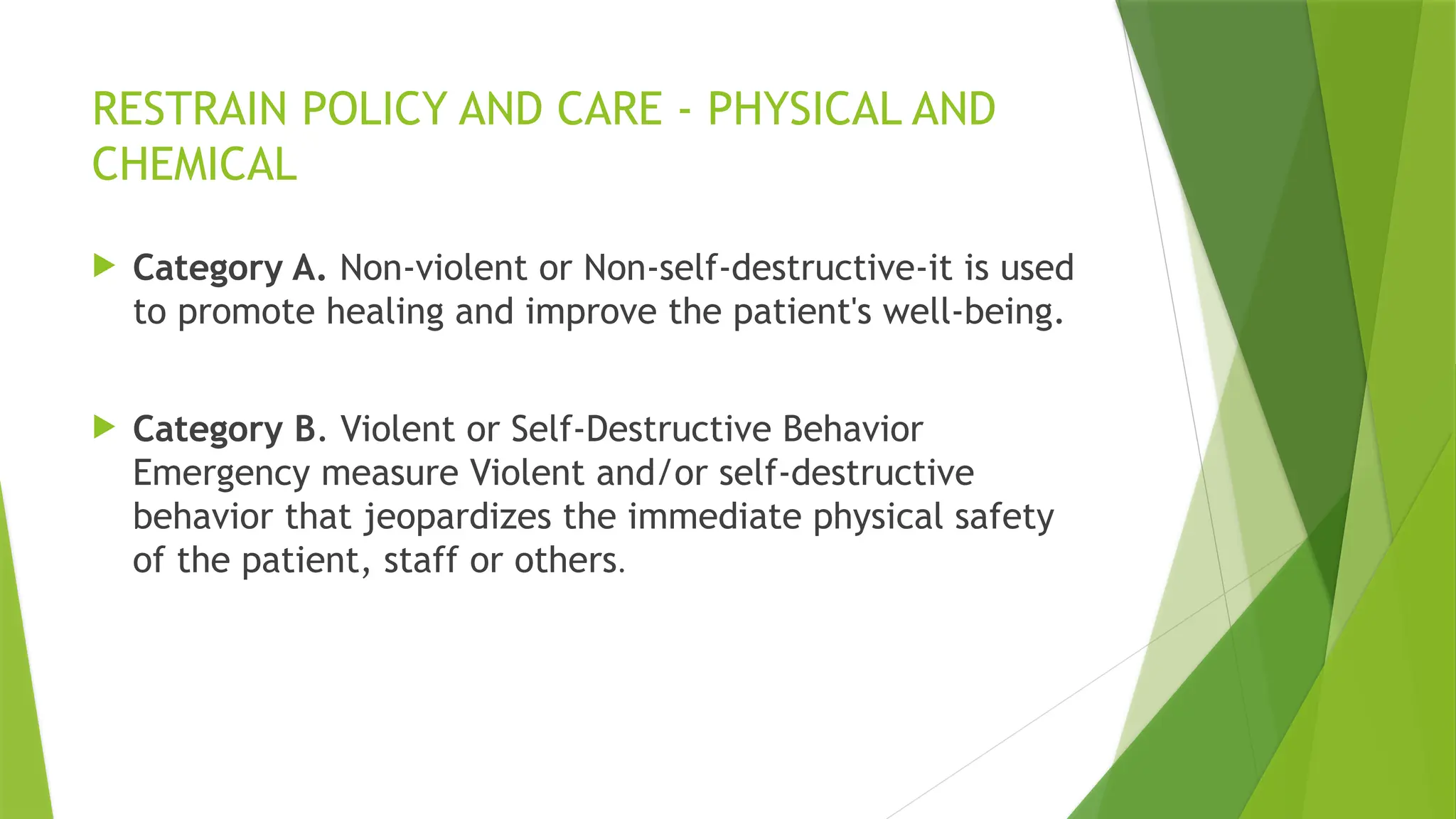
RESTRAIN POLICY AND CARE - PHYSICAL AND
CHEMICAL
 Category A. Non-violent or Non-self-destructive-it is used
to promote healing and improve the patient's well-being.
 Category B. Violent or Self-Destructive Behavior
Emergency measure Violent and/or self-destructive
behavior that jeopardizes the immediate physical safety
of the patient, staff or others.
.
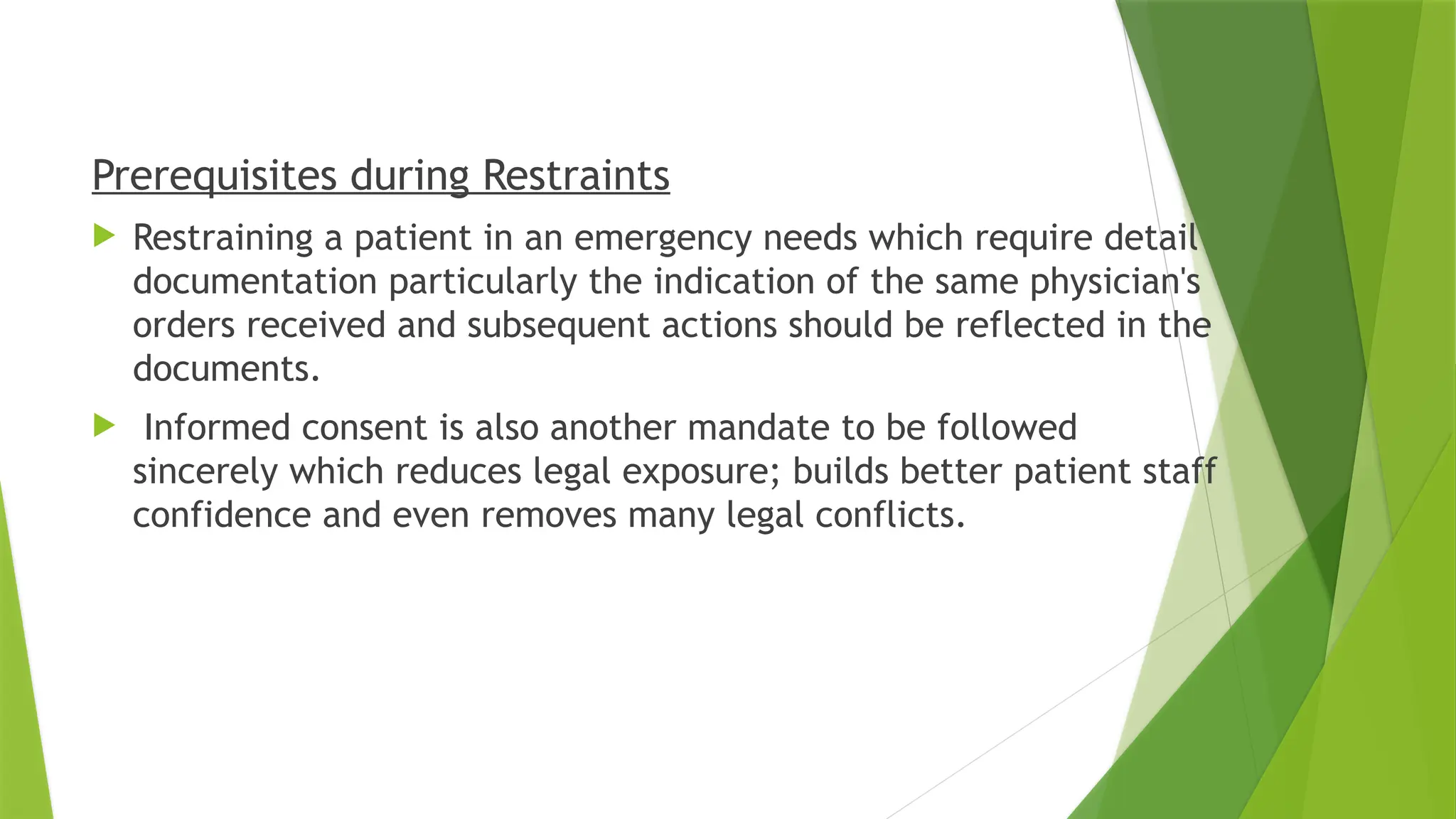
Prerequisites during Restraints
 Restraining a patient in an emergency needs which require detail
documentation particularly the indication of the same physician's
orders received and subsequent actions should be reflected in the
documents.
 Informed consent is also another mandate to be followed
sincerely which reduces legal exposure; builds better patient staff
confidence and even removes many legal conflicts.
.
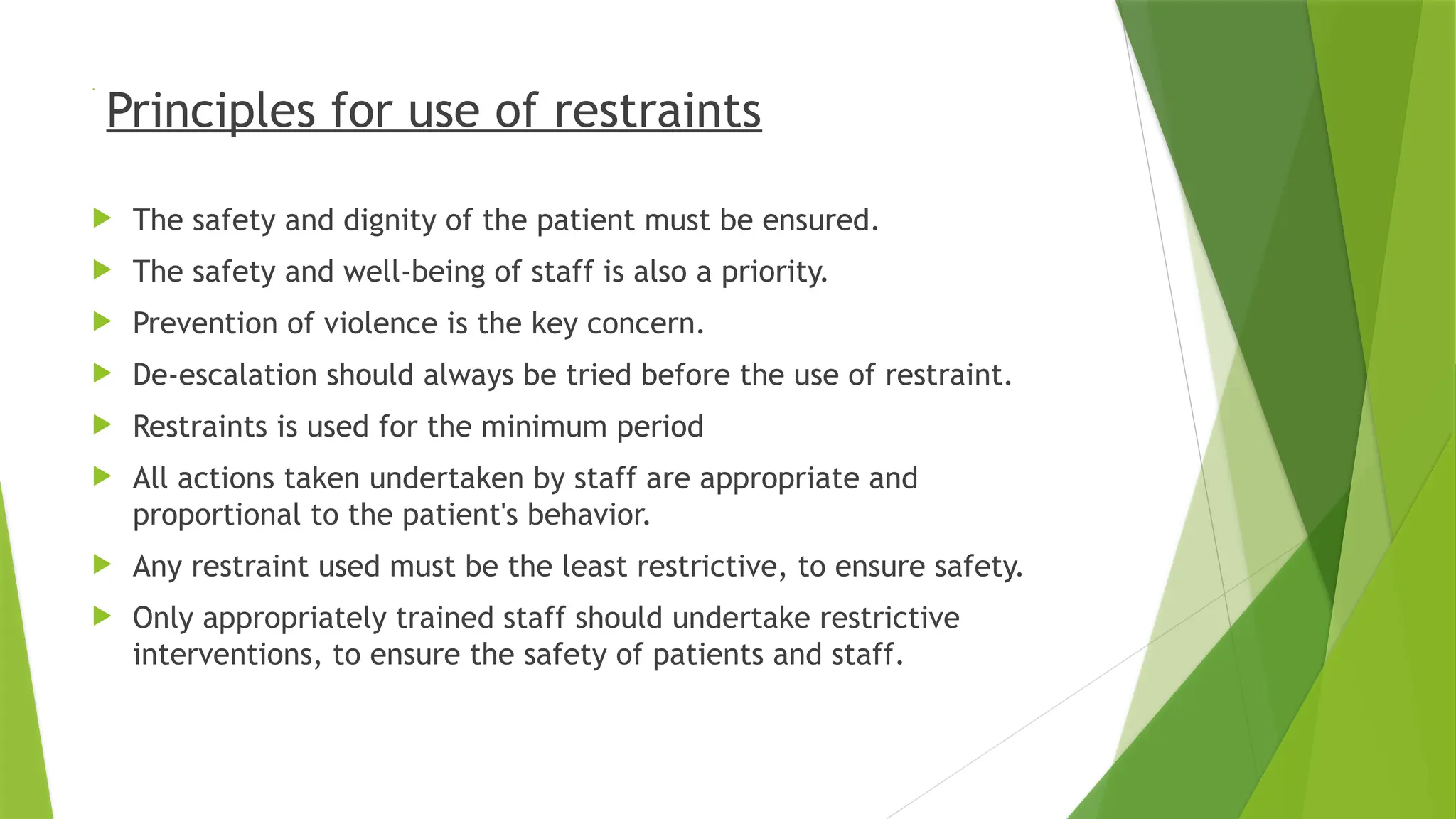
Principles for use of restraints
 The safety and dignity of the patient must be ensured.
 The safety and well-being of staff is also a priority.
 Prevention of violence is the key concern.
 De-escalation should always be tried before the use of restraint.
 Restraints is used for the minimum period
 All actions taken undertaken by staff are appropriate and
proportional to the patient's behavior.
 Any restraint used must be the least restrictive, to ensure safety.
 Only appropriately trained staff should undertake restrictive
interventions, to ensure the safety of patients and staff.
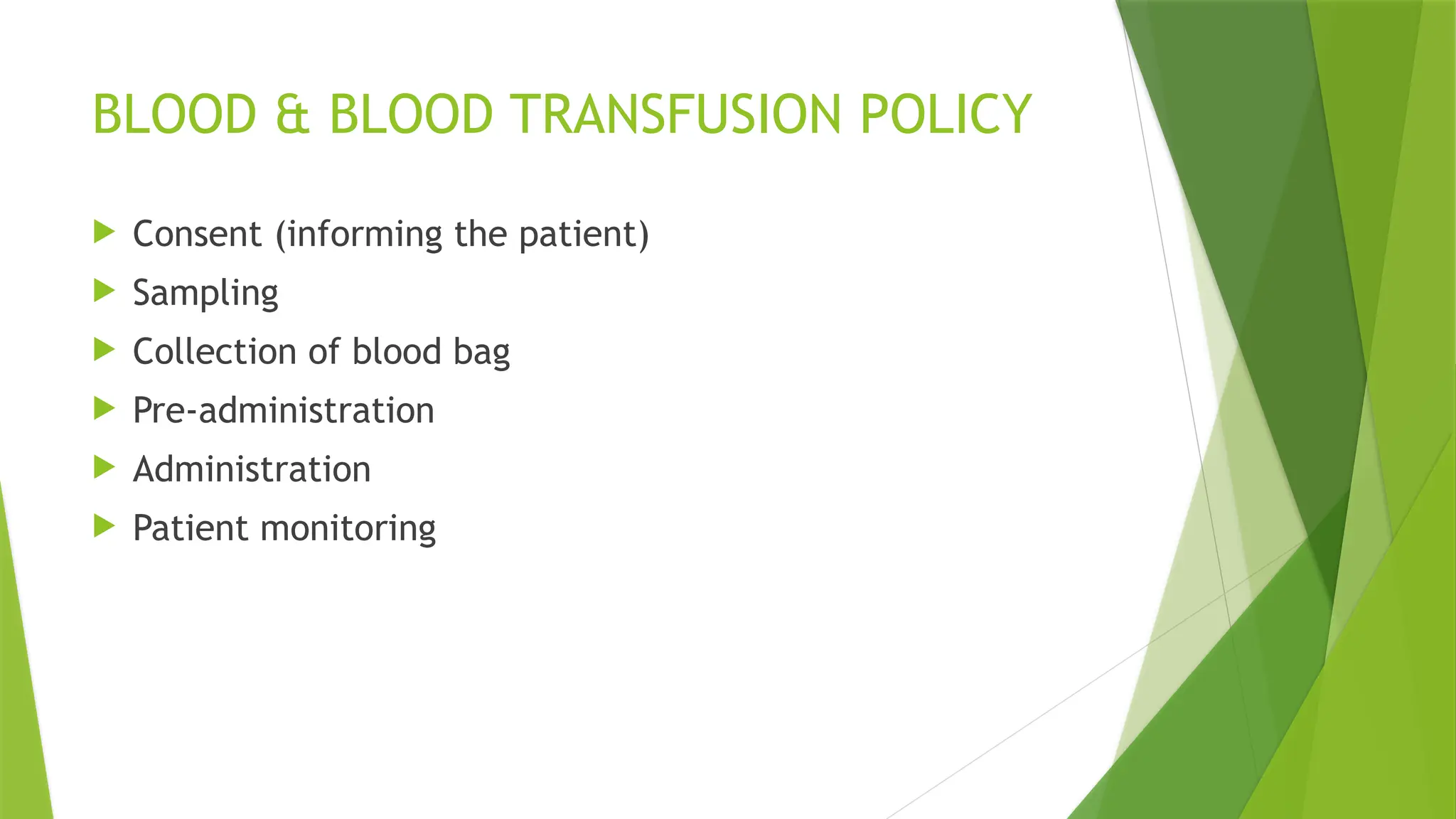
BLOOD & BLOOD TRANSFUSION POLICY
 Consent (informing the patient)
 Sampling
 Collection of blood bag
 Pre-administration
 Administration
 Patient monitoring
Informing the patient
Every patient has a fundamental legal and ethical right to determine what happens to
his or her own body.
When a patient is about to undergo a blood transfusion, then staff should check
-Written transfusion order in the patient's file /case note.
-Information and discussion with patient about intended transfusion therapy followed
by written consent is obtained from patient for each unit of blood transfusion.
Sampling
When staff takes a blood sample, she/he should do the following:
a. Ask the patient to state his/her first name, surname, and identification ID to check
the right patient before drawing the sample.
c. Collect the required amount of blood into the appropriate container and label it
clearly and accurately and send it to laboratory.
.
Pre-administration
We should check the following before transfusing blood
a. Patient understands the transfusion process and the indication for the same.
b. Appropriate blood component has been prescribed.
c. c. Pre-transfusion checking: baseline temperature, pulse, blood pressure,
expiry date of the blood, visual inspection for any signs of discoloration,
clumping or leaks, any special medication prescription such as a diuretic etc.
Administration
Every patient who needs a blood transfusion as an inpatient or day care patient
should undergo all identity checking processes and complete medical
examination.
Ask another member of staff, relative to verify the patient identification details
Patient monitoring
- Patient should stay in a setting where they can be closely observed.
-Advise and encourage the patient to notify staff immediately in case of
any anxiety feeling, any adverse reactions such as shivering, flushing,
pain or shortness of breath.
-Document the donation number, component type, and date of transfusion
of each blood component transfused.
-Monitor the vitals after every 30 min
-Screening of all donated blood for transfusion transmutable infections
i.e., HIV, HBV, HCV, Syphilis and Malaria.
PREVENTION OF INTRAVENOUS COMPLICATION
 Select an appropriate I.V. site, avoiding areas of flexion.
 Use proper venipuncture technique.
 Securing the LV. catheter as per hospital protocol
 Observe the IV. site frequently.
 Advise the patient to report any swelling or tenderness at the IV site.
 Avoid small and/or fragile veins, in areas of flexion, in extremities
with preexisting oedema.
 Vesicant medication such as certain antineoplastic drugs (doxorubicin,
vinblastine, and vincristine) should be administered via a central
venous access only.
PREVENTION OF FALL
 Orient the surrounding environment. Instruct patient to call for assistance.
 Secure call bell, phone, bed table.
 Instruct to use the rubber - soled shoes or non-slip footwear to prevent slipping.
 Identify as falls risk on medical record and include in shift endorsement.
 Asist and supervise ambulation, reinforce to always call for assistance.
 Conduct hourly safety checks.
 Perform regular pain assessment
 Offer assistance to the bathroom or use bedpan hourly while awake.
 Evaluate for reversible causes
 Adequate Hydration
PREVENTION OF DVT [Deep vein thrombosis]
For General medical in patients
 congestive heart failure or severe respiratory disease, or who are confined to bed
and inflammatory bowel disease, prophylaxis with low-dose unfractionated
heparin-(LDUH) or low molecular weight heparin (LMWH) is recommended
For Surgery patients
 In patients who have undergone surgery, low molecular weight heparins (LMWH)
are routinely administered to prevent thrombosis. LMWH can only currently be
administered subcutaneously.
 Prophylaxis for pregnant women who have a history of thrombosis may be limited
to LMWH injections or may not be necessary if their risk factors are mainly
temporary.
SHIFTING AND TRANSFERRING OF PATIENTS
 Transfer is the movement of a patient to hospital, from one room to
another, within a unit, from one unit to another of the health agency,
from agency to another or to car / ambulance.
Levels of Transfer
 Independent transfer: Patient is able to perform all aspect of transfer
without assistance by additional personnel.
 Assisted transfer: Patient participate actively with some assistance by
personnel.
 Dependent transfer: Patient does not participate actively or
participate on minimal basis.
ROLE OF NURSE IN THE TRANSFER OF PATEINT
 Give the patient a full explanation of the reasons for transfer
 Inform the patient about the date and time the transfer is to occur.
 Assess whether he is able to walk, or if he requires a wheelchair or trolley.
 Explain about equipment and procedures that may be different in the unit to which
the patient is being transferred.
 Notify the receiving unit or the facility of the date and time of the transfer, his/her
condition and care plan.
 Arrange for transportation if transferred to another agency e.g. Ambulance, Taxi,
family/friend private car.
 Record time, method of transfer and receiving unit in the medical record
CARE COORDINATION EVENT RELATED TO
MEDICATION RECONCILIATION AND ADMINISTRATION
 It is the process of identifying the most accurate list of all
medications a patient is taking. This process includes writing
medicine name, dosage, frequency and route. It is used to provide
correct medications for patients anywhere within the health care
system.
Three Steps for confirmation of medicine
 Verification-collection of medication history
 Clarification ensuring medications and the dosages are appropriate
 Reconciliation-documenting the changes in the orders
.
 Ask about allergies[Medication allergies, reactions, other allergies]
 Do the patient take any prescribe medication on daily basis
 How many time a day the medication is taken
 Do the patient take any medication over the counter.
 Do the patient use any patches or creams.
 Do the Patient take any medications that don't need a prescription.
PREVENTION OF COMMUNICATION ERRORS
 Completeness: Effective communication depends on the completeness of
the message. A complete message gives desired results without any
additional information. Incomplete messages create confusion in the
audience.
 Conciseness: Conciseness means "convey the message by using fewest
words". For achieving the conciseness Avoid unnecessary repetition Always
try to provide only relevant information to the receiver of the message.
 Consideration: While sending a message the sender should look from the
angle of the audience. The sender should understand the feelings and
emotions of the receivers. focus on "we" instead of "I“.
 Clarity: Accuracy is the purpose of clarity. Complete clarity of thoughts
and ideas enhances the meaning of messages. Always choose familiar
words. Construct effective sentences and paragraphs.
.
 Courtesy: Knowing our audience allows us to use statements of
courtesy; be aware of message receiver. it shows that we are positive
and our focus is on the audience. Courteous communication generates
a special tone in their writing and speaking.
 Correctness: Correctness means the accuracy of thoughts, figures and
words. However, message must be perfect grammatically and
mechanically. We should check the accuracy of figures, facts and
words and maintain acceptable writing mechanics
PREVENTION OF HAI
 By providing direct patient care using practices which minimize infection.
 By following appropriate practice of hygiene (e.g., hand washing, isolation).
 Protecting their own patients from other infected patients and from hospital
staff who may be infected.
 Complying with the practices approved by the Infection Control Committee.
 Obtaining appropriate microbiological specimens when an infection is present
or suspected.
 Notifying cases of hospital-acquired infection to the team, as well as the
admission of infected patients.
 Participating in the Infection Control Committee meetings. Promoting the
development and improvement of nursing techniques.
DOCUMENTATION
 The nursing documentation must be accurate, comprehensive, and flexible.
Information in the client records provides a detailed account of the level of
quality of nursing care
 Accurate and effective documentation ensures continuity of care, saves time
and prevent duplication or error in the patient care
 A record is permanent written communication that documents information
relevant to a client's health care management.
Nurses' role in maintenance of records
Factual: A factual record contains descriptive, objective information about what a
nurse sees, hears, fells, and smells.
Accurate: The use of exacts measurements and establish accuracy, We should use
an institution accepted abbreviations, symbols and system of measures.
.
Completeness: The information will not be completed without full
information. The information within a record entry or a report needs to
be complete, containing appropriate and vital information otherwise it's
considered incomplete.
Current: Timely documentation and recording is a vital principle in
documentation. To increase accuracy, quality of care and decrease
unnecessary duplication and preventing errors it's essential to record
timely.
Organized: As a nurse we want to communicate information in a logical
order. The nurse should apply theories, critical thinking, EBP, and the
nursing process gives logic and order to nursing documentation.

PATEINT SAFETY INDICATORS AND INFECTION CONTROL .pptx

  • 1.
    PATEINT SAFETY INDICATORS BYRISHIKA RAWAT RN/RM [BSC.NURSING]
  • 2.
    PATEINT SAFETY  PatientSafety is the absence of preventable harm to a patient during the process of health care.  Adverse Event: Bad outcome from care. Event or omission arising during clinical care and causing physical or psychological injury to a patient  Medical Errors: Major and enduring loss of function. Failure to complete a planned action as intended, or the use of an incorrect plan of action to achieve a given plan.  Medication Error: Any preventable event that may cause or lead to inappropriate medication use or patient harm while the medication is in the control of health professional, patient or consumer.
  • 3.
    INTERNATIONAL PATEINT SAFETYGOALS  Goal 1 Identify Patients Correctly  Goal 2 Improve Effective Communication  Goal 3 Improve the Safety of High-Alert Medications  Goal 4 Ensure Correct-Site, Correct- Procedure, Correct- Patient Surgery  Goal 5 Reduce the Risk of Health Care- Associated Infections  Goal 6 Reduce the Risk of Patient Harm Resulting from Falls
  • 4.
    CARE OF VULNERABLEPATEINTS  A patient who is or may be for any reason unable to protect and take care of him or herself, against significant harm or exploitation. VULNERABLE PATIENTS:  Infants  Children  Disabled individuals
  • 5.
    ➤ Elderly andfrail ➤ Child Abuse/ Neglect ➤ Domestic Violence ➤ Sexual Assault/Abuse ➤ ALL NICU, Comatose patients ➤ patients on mechanical ventilation
  • 6.
    CARE AND POLICYFOR VULNERABLE PATIENTS  Within the hospital the all-vulnerable elderly and children given all- necessary care needed with consideration.  If the patient's condition demands further care which is no available in our hospital, patient will be transferred to the hospitals/facilities.  While transferring the patients a staff nurse will be accompany the patient along with the caregiver.  If the patient's condition is critical, will be escorted by a doctor and a nurse while transferring them form hospital to hospital.
  • 7.
     Staff takingcare of high-risk patients must have adequate training and skills.  The identified vulnerable patients will be under close monitoring at all times during their hospitalization to minimize risks of health care services.  All healthcare providers will maintain a safe environment related but not limited to: equipment, wheelchairs, bed rail mobility needs, fall precautions.  All healthcare providers will encourage family involvement and support in care delivery, education and decisions as appropriate.  Special consent considerations will be taken when needed for each individual case following the hospital approved consenting policies
  • 8.
    .  Once thepatient is stabilized with the disease process, they will be fit for the discharge.  The discharge patient will be discharged with follow-up advise.  All documentation required for the team to work and communicate effectively in the care of high-risk patients must be maintained as per hospital documentation policy.
  • 9.
    PREVENTION OF IATROGENICINJURIES  Iatrogenic injury refers to tissue or organ damage, caused by necessary medical treatment, pharmacotherapy, or the application of medical devices unrelated with the primary disease. Preventions of Iatrogenic injuries are as follows  Minimization of medication, particularly, of self- modification and concomitant drugs.  Identification of the high-risk elderly group, early recognition and treatment of illness.
  • 10.
     Minimization ofincidence of adverse drug events, better use of drug, especially in the elderly. A geriatric interdisciplinary team should evaluate all patients' needs, develop a coordinated care plan and manage with physicians and managers. They are also encouraged to prepare advance directives to make a medical decision.  The risk benefit ratio of the drug administered can be improved with the better knowledge of the patient's medical history and risk factors for adverse drug events
  • 11.
    CARE OF LINES,DRAINS AND TUBING  Closed cavities of the body are sterile cavities and insertion of any tube must be performed with adherence to the principles of asepsis.  A portal of entry that comes into contact with a non- sterile surface immediately becomes non-sterile. When disconnecting drainage tubes, such as a urinary catheter or a T-tube, the ends must be kept sterile.  Gravity promotes the flow of drainage from a cavity, so keep drainage tubes and collection bags lower level than the cavity being drained.
  • 12.
    .  Avoid kinksand coils in the tubing and watch that the person does not lie on the tubing. We should not clamp tubes without a prescriber's order.  Site should be cleaned properly before accessing any tubing to reduce possible introduction of microorganisms into a cavity. Sometimes contrast media and radiopharmaceuticals are injected via the tubing. An alcohol swab may be used to clean the entry point prior to accessing the tubing
  • 13.
    Guidelines for Caringof Patients with Tubes  Secure tubes to the skin with adhesive or tape.  Connect tube to sterile tubing and drainage bag. Do not clamp tubing unless ordered.  To ensure continuous drainage, be sure tubing is not kinked, not caught in the bed rails, not underneath the patient, and free from tension when turning, etc.  Dressing around tube, if any, should be clean and dry. Sterile technique should be used if it is necessary to change the dressing.  Record and report patency of tube, amount, colour, character, and odor of drainage and if an unusual situation arise. If the contents of a drainage tube are spilled, the approximate amount must be reported.  Change the tube as per protocol
  • 14.
    RESTRAIN POLICY ANDCARE - PHYSICAL AND CHEMICAL  Category A. Non-violent or Non-self-destructive-it is used to promote healing and improve the patient's well-being.  Category B. Violent or Self-Destructive Behavior Emergency measure Violent and/or self-destructive behavior that jeopardizes the immediate physical safety of the patient, staff or others.
  • 15.
    . Prerequisites during Restraints Restraining a patient in an emergency needs which require detail documentation particularly the indication of the same physician's orders received and subsequent actions should be reflected in the documents.  Informed consent is also another mandate to be followed sincerely which reduces legal exposure; builds better patient staff confidence and even removes many legal conflicts.
  • 16.
    . Principles for useof restraints  The safety and dignity of the patient must be ensured.  The safety and well-being of staff is also a priority.  Prevention of violence is the key concern.  De-escalation should always be tried before the use of restraint.  Restraints is used for the minimum period  All actions taken undertaken by staff are appropriate and proportional to the patient's behavior.  Any restraint used must be the least restrictive, to ensure safety.  Only appropriately trained staff should undertake restrictive interventions, to ensure the safety of patients and staff.
  • 17.
    BLOOD & BLOODTRANSFUSION POLICY  Consent (informing the patient)  Sampling  Collection of blood bag  Pre-administration  Administration  Patient monitoring
  • 18.
    Informing the patient Everypatient has a fundamental legal and ethical right to determine what happens to his or her own body. When a patient is about to undergo a blood transfusion, then staff should check -Written transfusion order in the patient's file /case note. -Information and discussion with patient about intended transfusion therapy followed by written consent is obtained from patient for each unit of blood transfusion. Sampling When staff takes a blood sample, she/he should do the following: a. Ask the patient to state his/her first name, surname, and identification ID to check the right patient before drawing the sample. c. Collect the required amount of blood into the appropriate container and label it clearly and accurately and send it to laboratory.
  • 19.
    . Pre-administration We should checkthe following before transfusing blood a. Patient understands the transfusion process and the indication for the same. b. Appropriate blood component has been prescribed. c. c. Pre-transfusion checking: baseline temperature, pulse, blood pressure, expiry date of the blood, visual inspection for any signs of discoloration, clumping or leaks, any special medication prescription such as a diuretic etc. Administration Every patient who needs a blood transfusion as an inpatient or day care patient should undergo all identity checking processes and complete medical examination. Ask another member of staff, relative to verify the patient identification details
  • 20.
    Patient monitoring - Patientshould stay in a setting where they can be closely observed. -Advise and encourage the patient to notify staff immediately in case of any anxiety feeling, any adverse reactions such as shivering, flushing, pain or shortness of breath. -Document the donation number, component type, and date of transfusion of each blood component transfused. -Monitor the vitals after every 30 min -Screening of all donated blood for transfusion transmutable infections i.e., HIV, HBV, HCV, Syphilis and Malaria.
  • 21.
    PREVENTION OF INTRAVENOUSCOMPLICATION  Select an appropriate I.V. site, avoiding areas of flexion.  Use proper venipuncture technique.  Securing the LV. catheter as per hospital protocol  Observe the IV. site frequently.  Advise the patient to report any swelling or tenderness at the IV site.  Avoid small and/or fragile veins, in areas of flexion, in extremities with preexisting oedema.  Vesicant medication such as certain antineoplastic drugs (doxorubicin, vinblastine, and vincristine) should be administered via a central venous access only.
  • 22.
    PREVENTION OF FALL Orient the surrounding environment. Instruct patient to call for assistance.  Secure call bell, phone, bed table.  Instruct to use the rubber - soled shoes or non-slip footwear to prevent slipping.  Identify as falls risk on medical record and include in shift endorsement.  Asist and supervise ambulation, reinforce to always call for assistance.  Conduct hourly safety checks.  Perform regular pain assessment  Offer assistance to the bathroom or use bedpan hourly while awake.  Evaluate for reversible causes  Adequate Hydration
  • 23.
    PREVENTION OF DVT[Deep vein thrombosis] For General medical in patients  congestive heart failure or severe respiratory disease, or who are confined to bed and inflammatory bowel disease, prophylaxis with low-dose unfractionated heparin-(LDUH) or low molecular weight heparin (LMWH) is recommended For Surgery patients  In patients who have undergone surgery, low molecular weight heparins (LMWH) are routinely administered to prevent thrombosis. LMWH can only currently be administered subcutaneously.  Prophylaxis for pregnant women who have a history of thrombosis may be limited to LMWH injections or may not be necessary if their risk factors are mainly temporary.
  • 24.
    SHIFTING AND TRANSFERRINGOF PATIENTS  Transfer is the movement of a patient to hospital, from one room to another, within a unit, from one unit to another of the health agency, from agency to another or to car / ambulance. Levels of Transfer  Independent transfer: Patient is able to perform all aspect of transfer without assistance by additional personnel.  Assisted transfer: Patient participate actively with some assistance by personnel.  Dependent transfer: Patient does not participate actively or participate on minimal basis.
  • 25.
    ROLE OF NURSEIN THE TRANSFER OF PATEINT  Give the patient a full explanation of the reasons for transfer  Inform the patient about the date and time the transfer is to occur.  Assess whether he is able to walk, or if he requires a wheelchair or trolley.  Explain about equipment and procedures that may be different in the unit to which the patient is being transferred.  Notify the receiving unit or the facility of the date and time of the transfer, his/her condition and care plan.  Arrange for transportation if transferred to another agency e.g. Ambulance, Taxi, family/friend private car.  Record time, method of transfer and receiving unit in the medical record
  • 26.
    CARE COORDINATION EVENTRELATED TO MEDICATION RECONCILIATION AND ADMINISTRATION  It is the process of identifying the most accurate list of all medications a patient is taking. This process includes writing medicine name, dosage, frequency and route. It is used to provide correct medications for patients anywhere within the health care system. Three Steps for confirmation of medicine  Verification-collection of medication history  Clarification ensuring medications and the dosages are appropriate  Reconciliation-documenting the changes in the orders
  • 27.
    .  Ask aboutallergies[Medication allergies, reactions, other allergies]  Do the patient take any prescribe medication on daily basis  How many time a day the medication is taken  Do the patient take any medication over the counter.  Do the patient use any patches or creams.  Do the Patient take any medications that don't need a prescription.
  • 28.
    PREVENTION OF COMMUNICATIONERRORS  Completeness: Effective communication depends on the completeness of the message. A complete message gives desired results without any additional information. Incomplete messages create confusion in the audience.  Conciseness: Conciseness means "convey the message by using fewest words". For achieving the conciseness Avoid unnecessary repetition Always try to provide only relevant information to the receiver of the message.  Consideration: While sending a message the sender should look from the angle of the audience. The sender should understand the feelings and emotions of the receivers. focus on "we" instead of "I“.  Clarity: Accuracy is the purpose of clarity. Complete clarity of thoughts and ideas enhances the meaning of messages. Always choose familiar words. Construct effective sentences and paragraphs.
  • 29.
    .  Courtesy: Knowingour audience allows us to use statements of courtesy; be aware of message receiver. it shows that we are positive and our focus is on the audience. Courteous communication generates a special tone in their writing and speaking.  Correctness: Correctness means the accuracy of thoughts, figures and words. However, message must be perfect grammatically and mechanically. We should check the accuracy of figures, facts and words and maintain acceptable writing mechanics
  • 30.
    PREVENTION OF HAI By providing direct patient care using practices which minimize infection.  By following appropriate practice of hygiene (e.g., hand washing, isolation).  Protecting their own patients from other infected patients and from hospital staff who may be infected.  Complying with the practices approved by the Infection Control Committee.  Obtaining appropriate microbiological specimens when an infection is present or suspected.  Notifying cases of hospital-acquired infection to the team, as well as the admission of infected patients.  Participating in the Infection Control Committee meetings. Promoting the development and improvement of nursing techniques.
  • 31.
    DOCUMENTATION  The nursingdocumentation must be accurate, comprehensive, and flexible. Information in the client records provides a detailed account of the level of quality of nursing care  Accurate and effective documentation ensures continuity of care, saves time and prevent duplication or error in the patient care  A record is permanent written communication that documents information relevant to a client's health care management. Nurses' role in maintenance of records Factual: A factual record contains descriptive, objective information about what a nurse sees, hears, fells, and smells. Accurate: The use of exacts measurements and establish accuracy, We should use an institution accepted abbreviations, symbols and system of measures.
  • 32.
    . Completeness: The informationwill not be completed without full information. The information within a record entry or a report needs to be complete, containing appropriate and vital information otherwise it's considered incomplete. Current: Timely documentation and recording is a vital principle in documentation. To increase accuracy, quality of care and decrease unnecessary duplication and preventing errors it's essential to record timely. Organized: As a nurse we want to communicate information in a logical order. The nurse should apply theories, critical thinking, EBP, and the nursing process gives logic and order to nursing documentation.