PRINCIPLES OF PRE AND POST
OPERATIVE CARE OF INFANT AND
CHILDREN
PREPARED BY
Mr. PRABHU. S
Assistant Professor
Department of Child Health Nursing
Shri Sathya Sai College of Nursing
Affiliated by Shri Balaji Vidyapeeth University - PUDUCHERRY
By the end of this presentation learners will be able to:
 describe the principles of pre and post operative care of infant and children
 explain the Nursing care phases of pre and post operative care of infant and
children
 discuss the hospital environment for sick child
SPECIFIC OBJECTIVES
INTRODUCTION
 The infants and children have different types of surgical problems than that of adults.
Especially the Congenital Malformation are the important causes of surgical
interventions in children.
 Surgery can be planned or unplanned i.e. elective or emergency.
 It is potentially stressful experience for children.
 Potential threat for surgery to the children are physical harm, pain, injury, death,
separation from parents, strange and unknown.
 Preparation of children for surgery is an important aspect and should be based
on child’s age , development stage, level of personality and past experience.
 It should begins with preparation for admission to the hospital.
 In emergency surgical intervention, preparation should be done in modified way
but basic approach should be same.
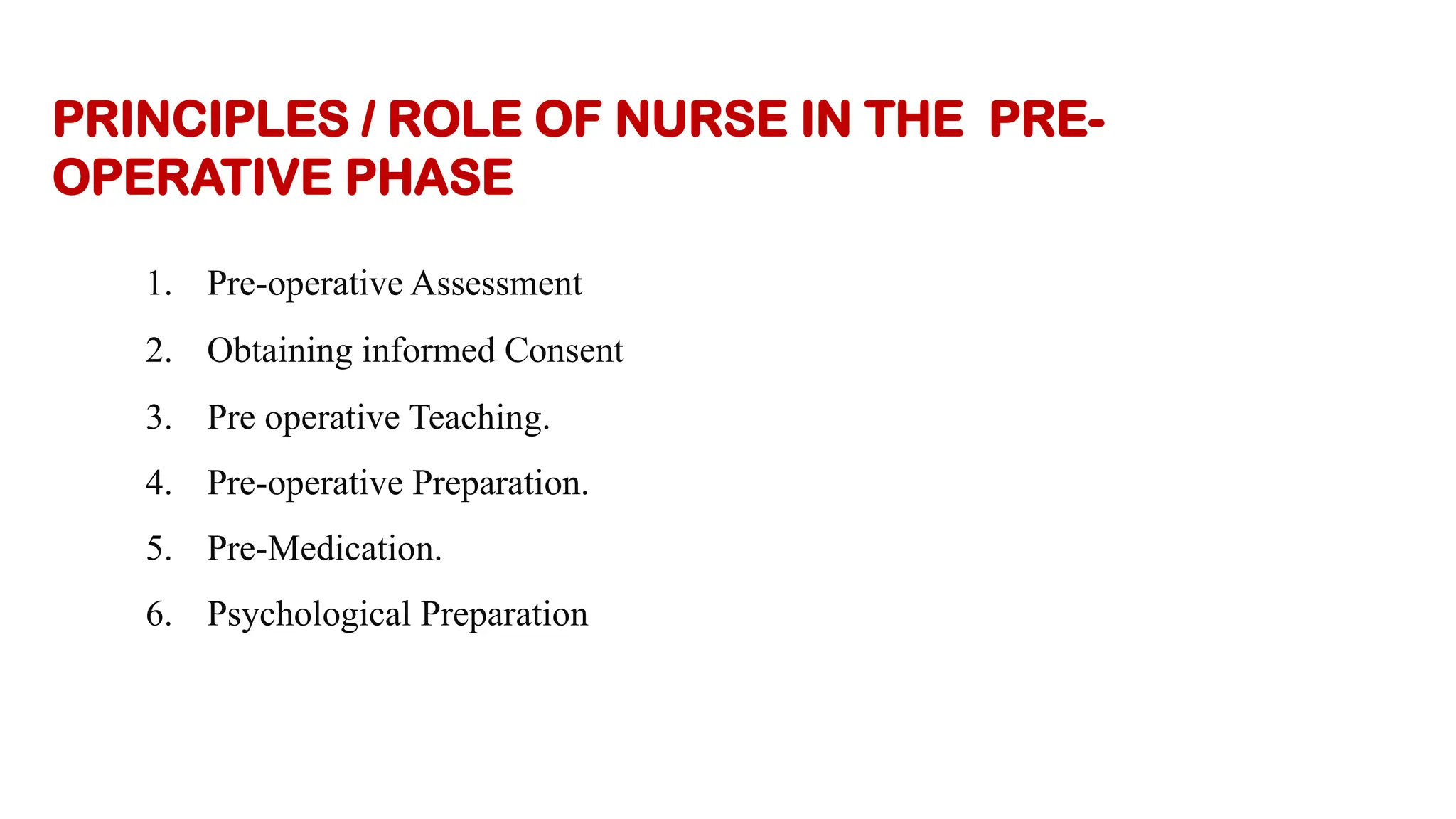
PRINCIPLES / ROLE OF NURSE IN THE PRE-
OPERATIVE PHASE
1. Pre-operative Assessment
2. Obtaining informed Consent
3. Pre operative Teaching.
4. Pre-operative Preparation.
5. Pre-Medication.
6. Psychological Preparation
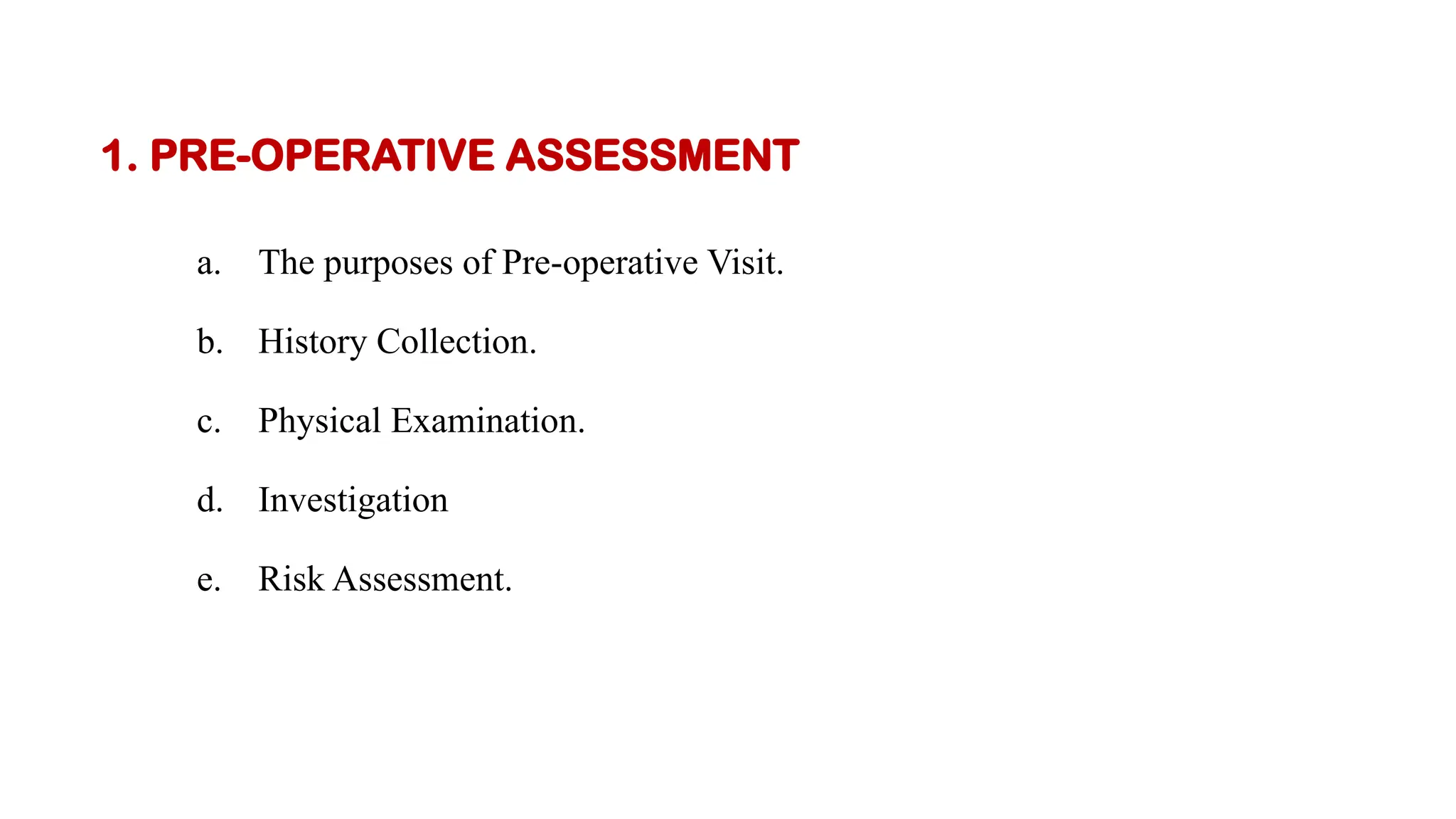
1. PRE-OPERATIVE ASSESSMENT
a. The purposes of Pre-operative Visit.
b. History Collection.
c. Physical Examination.
d. Investigation
e. Risk Assessment.
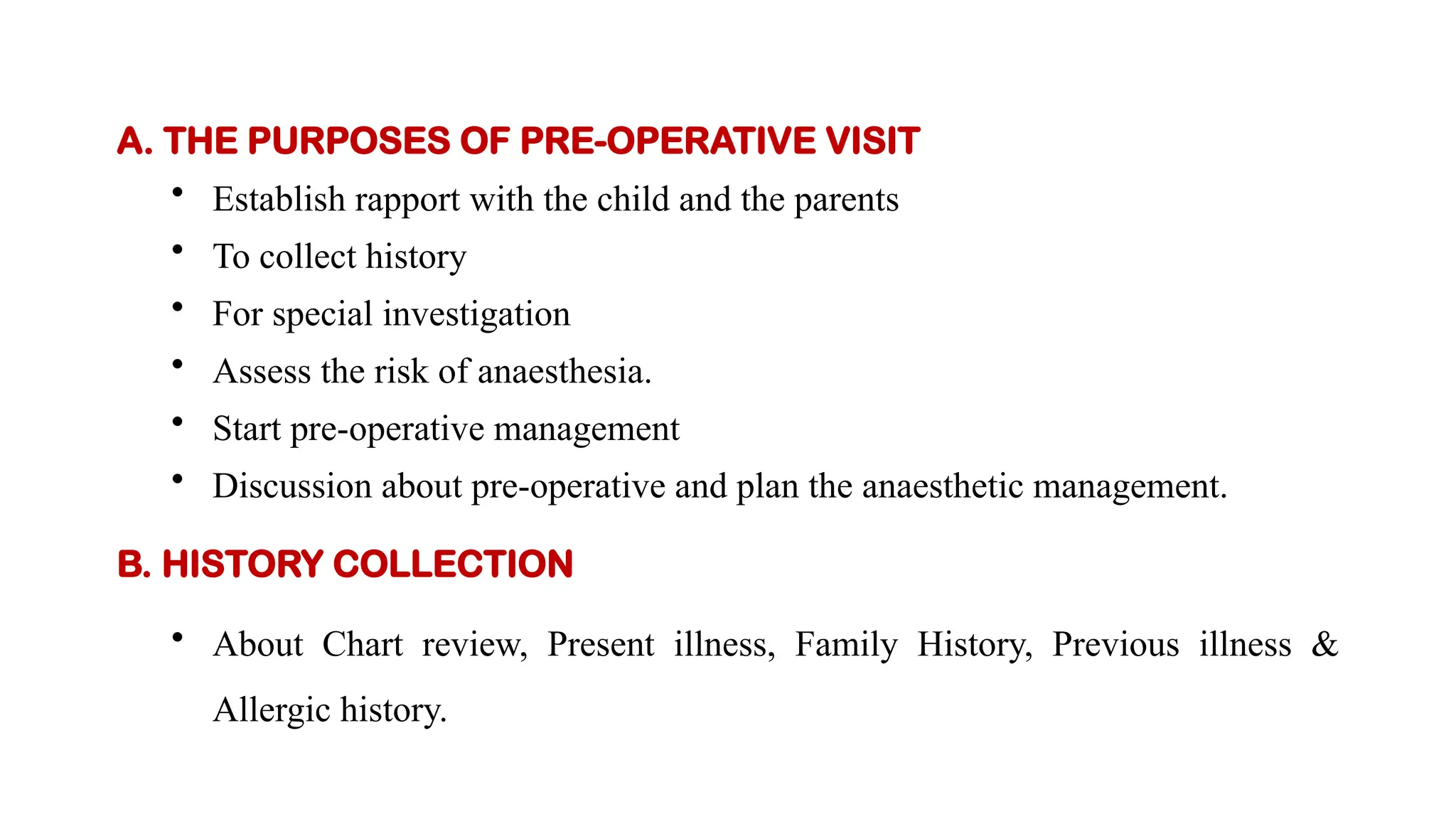
A. THE PURPOSES OF PRE-OPERATIVE VISIT
• Establish rapport with the child and the parents
• To collect history
• For special investigation
• Assess the risk of anaesthesia.
• Start pre-operative management
• Discussion about pre-operative and plan the anaesthetic management.
B. HISTORY COLLECTION
• About Chart review, Present illness, Family History, Previous illness &
Allergic history.
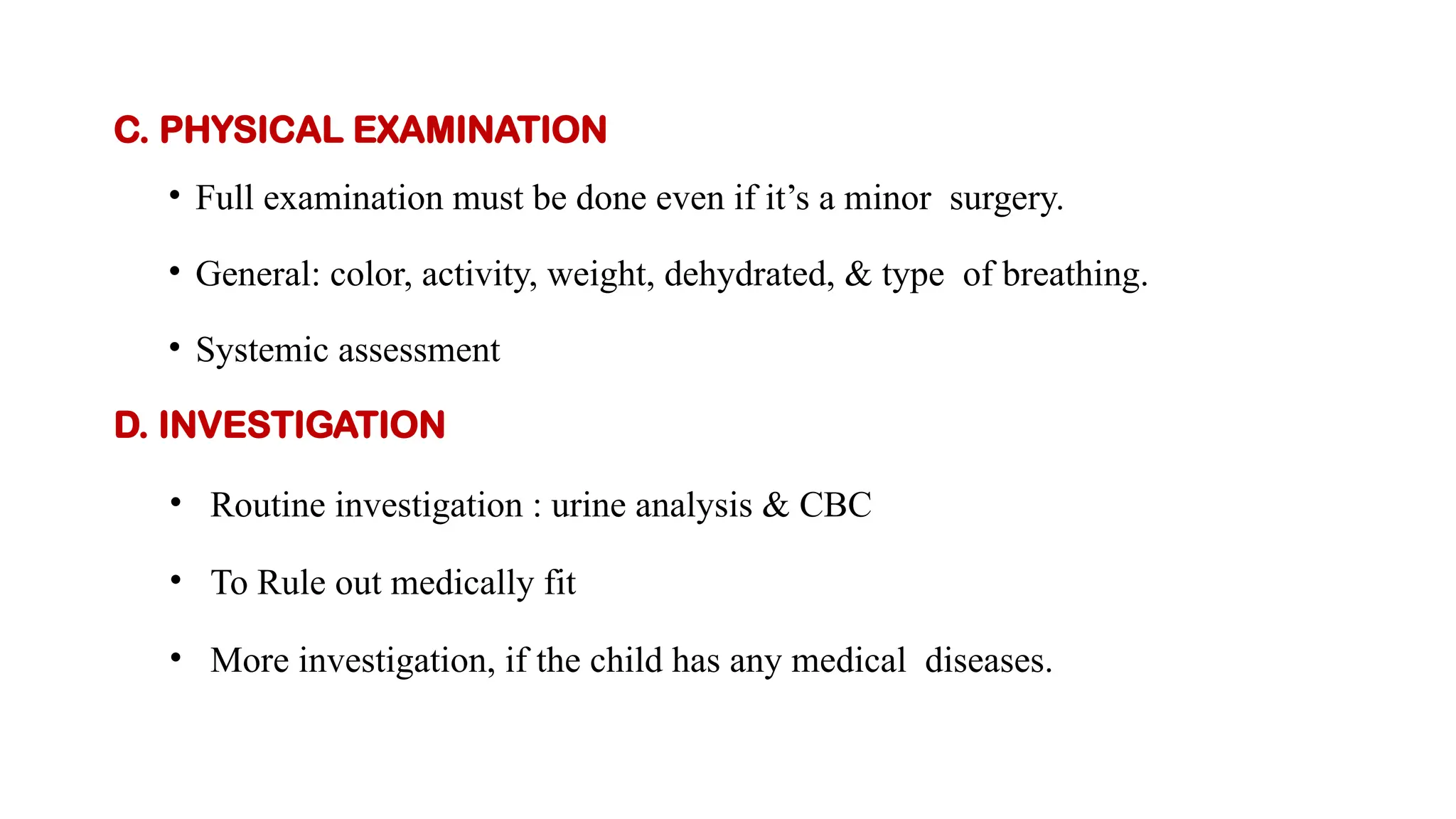
C. PHYSICAL EXAMINATION
• Full examination must be done even if it’s a minor surgery.
• General: color, activity, weight, dehydrated, & type of breathing.
• Systemic assessment
D. INVESTIGATION
• Routine investigation : urine analysis & CBC
• To Rule out medically fit
• More investigation, if the child has any medical diseases.
E. RISK ASSESSMENT
 Assess for chronic conditions (e.g., asthma, diabetes, congenital heart disease).
 Identify any history of allergic reactions (e.g., to medications or anesthesia).
 Use pediatric-specific pain scales (e.g., Wong-Baker Faces Scale, FLACC
Scale).
2. PRE-OPERATIVE PREPARATION FOR SURGERY
 History collection , physical examination & investigation
 Preoperative fasting
 Providing information to the child / parents & gaining a consent
 Collect or Prepare of the blood product
 Physical preparation
 Pre-operative medication
 Organize appropriate staff and equipment in the Operation Theater
 Nursing responsibility in the post- operative management include meeting both
physical and psychological needs of the child.
 Operation bed and necessary articles to be kept ready for receiving the child and
to provide immediate post anesthesia care in the recovery room or in the
pediatric unit.
POST OPERATIVE CARE OF INFANTS AND CHILDREN
POST OPERATIVE NURSING CARE PHASE
I. Transportation to Recovery
II. Initial post-operative Care
III. During the Hospital Stay
IV. Discharge Criteria
II. INITIAL POSTOPERATIVE CARE
 Ensure the safety, airway, breathing, temperature and pain management
 Keep monitoring vitals
 Prevention of infection
 Maintaining the fluid and electrolyte balance
III. DURING HOSPITAL STAY
 Measuring levels of recovery
 Keep monitoring the Vital Signs
 Hygienic measures
 Administration of medication
IV. DISCHARGE CRITERIA
 Nurses plays a vital role in post-operative care
 Ensures better follow-up and compliance
 Clear post-operative instructions and explanations given to parents/ child
 Reducing the patient’s anxiety
 Emphasis on follow up care
REFERENCES
1, Kain, Z. N., Caldwell-Andrews, A. A., & Maranets, I. (2004). Preoperative
psychological preparation of the child for surgery: An update. Advances in
Anesthesia, 22, 47-62.
2. Scrimgeour, A. G., & Condé, C. A. (2017). Postoperative care in pediatric
surgery. Surgery, 35(1), 40-45.
3. American Academy of Pediatrics. (2021). Guidelines for preoperative fasting
and the use of pharmacologic agents to reduce the risk of pulmonary aspiration in
children. Pediatrics, 148(6), e2021054664.
Chapter - I Principles of Pre and Post Operative Care of Infants and Children.pptx

Chapter - I Principles of Pre and Post Operative Care of Infants and Children.pptx

  • 1.
    PRINCIPLES OF PREAND POST OPERATIVE CARE OF INFANT AND CHILDREN PREPARED BY Mr. PRABHU. S Assistant Professor Department of Child Health Nursing Shri Sathya Sai College of Nursing Affiliated by Shri Balaji Vidyapeeth University - PUDUCHERRY
  • 2.
    By the endof this presentation learners will be able to:  describe the principles of pre and post operative care of infant and children  explain the Nursing care phases of pre and post operative care of infant and children  discuss the hospital environment for sick child SPECIFIC OBJECTIVES
  • 3.
    INTRODUCTION  The infantsand children have different types of surgical problems than that of adults. Especially the Congenital Malformation are the important causes of surgical interventions in children.  Surgery can be planned or unplanned i.e. elective or emergency.  It is potentially stressful experience for children.  Potential threat for surgery to the children are physical harm, pain, injury, death, separation from parents, strange and unknown.
  • 4.
     Preparation ofchildren for surgery is an important aspect and should be based on child’s age , development stage, level of personality and past experience.  It should begins with preparation for admission to the hospital.  In emergency surgical intervention, preparation should be done in modified way but basic approach should be same.
  • 5.
    PRINCIPLES / ROLEOF NURSE IN THE PRE- OPERATIVE PHASE 1. Pre-operative Assessment 2. Obtaining informed Consent 3. Pre operative Teaching. 4. Pre-operative Preparation. 5. Pre-Medication. 6. Psychological Preparation
  • 6.
    1. PRE-OPERATIVE ASSESSMENT a.The purposes of Pre-operative Visit. b. History Collection. c. Physical Examination. d. Investigation e. Risk Assessment.
  • 7.
    A. THE PURPOSESOF PRE-OPERATIVE VISIT • Establish rapport with the child and the parents • To collect history • For special investigation • Assess the risk of anaesthesia. • Start pre-operative management • Discussion about pre-operative and plan the anaesthetic management. B. HISTORY COLLECTION • About Chart review, Present illness, Family History, Previous illness & Allergic history.
  • 8.
    C. PHYSICAL EXAMINATION •Full examination must be done even if it’s a minor surgery. • General: color, activity, weight, dehydrated, & type of breathing. • Systemic assessment D. INVESTIGATION • Routine investigation : urine analysis & CBC • To Rule out medically fit • More investigation, if the child has any medical diseases.
  • 9.
    E. RISK ASSESSMENT Assess for chronic conditions (e.g., asthma, diabetes, congenital heart disease).  Identify any history of allergic reactions (e.g., to medications or anesthesia).  Use pediatric-specific pain scales (e.g., Wong-Baker Faces Scale, FLACC Scale).
  • 10.
    2. PRE-OPERATIVE PREPARATIONFOR SURGERY  History collection , physical examination & investigation  Preoperative fasting  Providing information to the child / parents & gaining a consent  Collect or Prepare of the blood product  Physical preparation  Pre-operative medication  Organize appropriate staff and equipment in the Operation Theater
  • 11.
     Nursing responsibilityin the post- operative management include meeting both physical and psychological needs of the child.  Operation bed and necessary articles to be kept ready for receiving the child and to provide immediate post anesthesia care in the recovery room or in the pediatric unit. POST OPERATIVE CARE OF INFANTS AND CHILDREN
  • 12.
    POST OPERATIVE NURSINGCARE PHASE I. Transportation to Recovery II. Initial post-operative Care III. During the Hospital Stay IV. Discharge Criteria
  • 13.
    II. INITIAL POSTOPERATIVECARE  Ensure the safety, airway, breathing, temperature and pain management  Keep monitoring vitals  Prevention of infection  Maintaining the fluid and electrolyte balance III. DURING HOSPITAL STAY  Measuring levels of recovery  Keep monitoring the Vital Signs  Hygienic measures  Administration of medication
  • 14.
    IV. DISCHARGE CRITERIA Nurses plays a vital role in post-operative care  Ensures better follow-up and compliance  Clear post-operative instructions and explanations given to parents/ child  Reducing the patient’s anxiety  Emphasis on follow up care
  • 15.
    REFERENCES 1, Kain, Z.N., Caldwell-Andrews, A. A., & Maranets, I. (2004). Preoperative psychological preparation of the child for surgery: An update. Advances in Anesthesia, 22, 47-62. 2. Scrimgeour, A. G., & Condé, C. A. (2017). Postoperative care in pediatric surgery. Surgery, 35(1), 40-45. 3. American Academy of Pediatrics. (2021). Guidelines for preoperative fasting and the use of pharmacologic agents to reduce the risk of pulmonary aspiration in children. Pediatrics, 148(6), e2021054664.